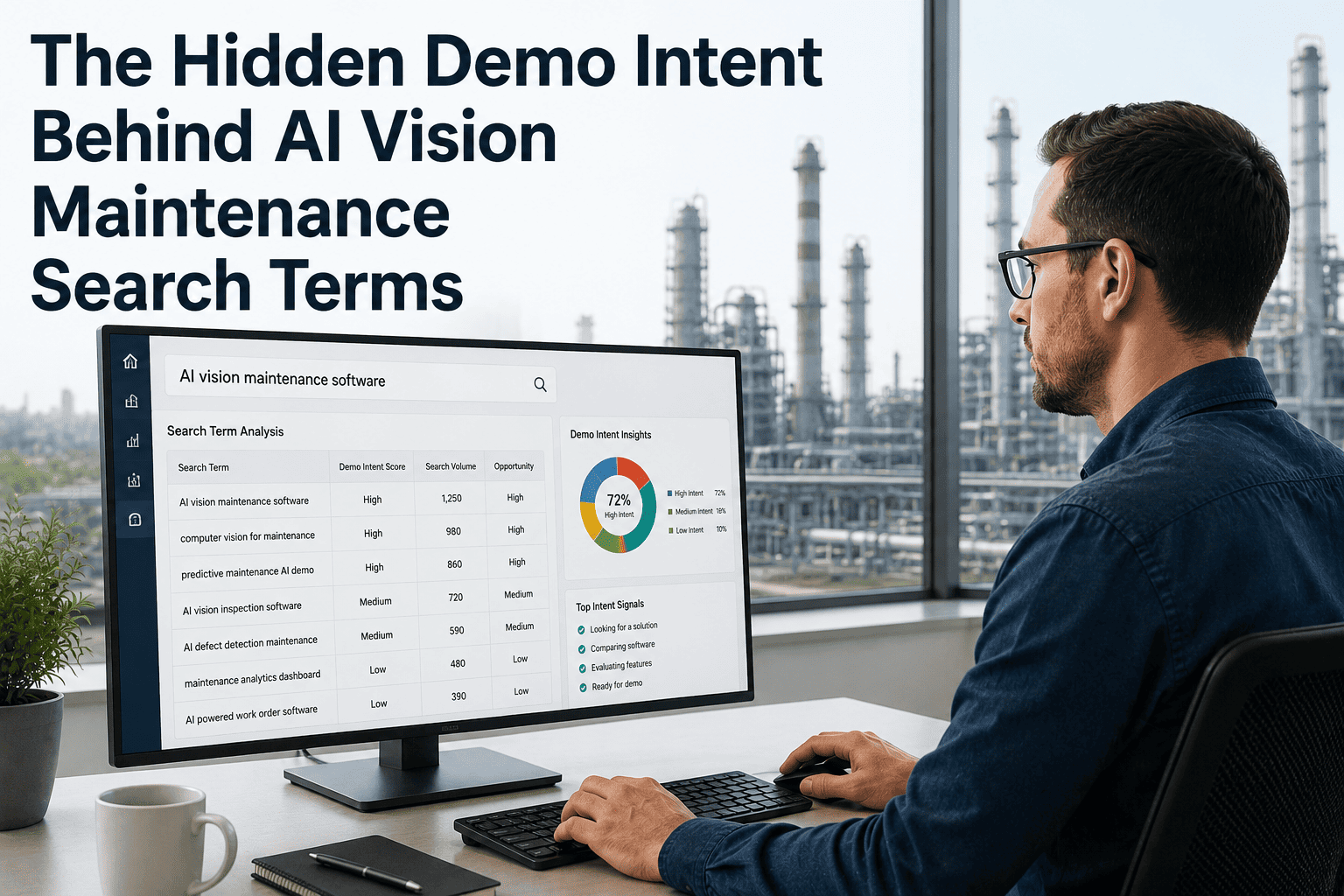
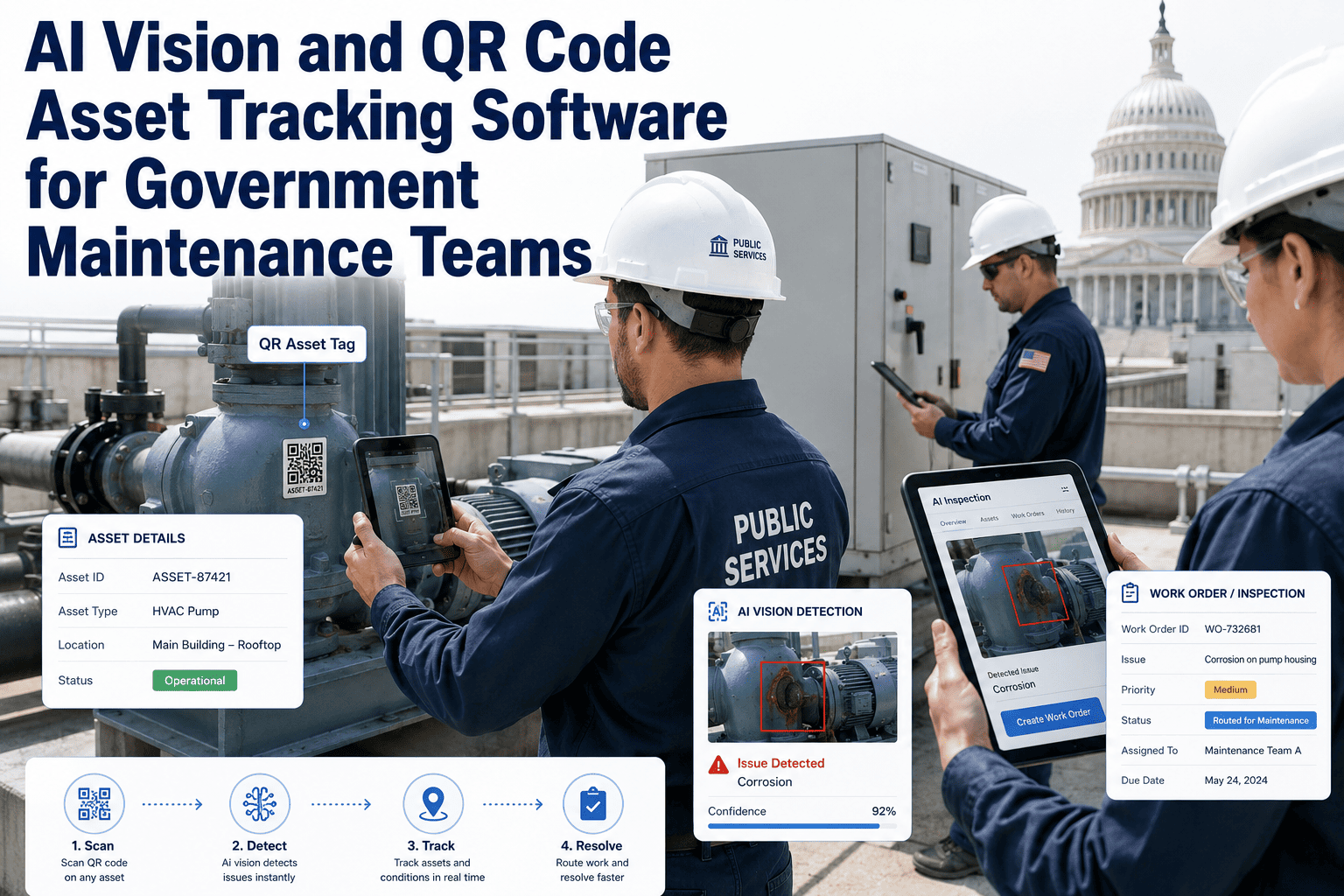
Government maintenance teams and public works directors are typing highly specific search terms into Google — phrases like "AI vision inspection work order automation" or "public sector CMMS with camera integration" — but the actual intent behind these queries is almost never about the technology itself. The hidden intent is a demo. These searchers have already been told by a colleague, seen a conference presentation, or read a directive that AI vision can eliminate manual inspection backlogs, but they do not want to read another whitepaper — they want to see a live system that proves their specific government use case works. The search term is a proxy for a request that most vendor websites fail to answer because they serve up product pages instead of workflow demonstrations. This blog breaks down the exact search terms government teams are using, translates the hidden demo intent behind each one, and maps that intent directly to what you will see when you request an Oxmaint AI vision demonstration for public sector maintenance. If your search brought you here because you need to see AI vision inspection linked to work orders and compliance records, start a free Oxmaint account to test the inspection-to-work-order workflow yourself, or book a 30-minute demo with our government maintenance specialists.
Government Maintenance · AI Vision Insights
The Hidden Demo Intent Behind AI Vision Maintenance Search Terms
Government teams are not searching for AI vision — they are searching for proof that it solves their inspection backlog. Here is what they actually mean.
"AI vision inspection software"
88% Demo Intent
"AI camera work order automation"
92% Demo Intent
"Municipal asset management software"
75% Demo Intent
Search Term Translation: What They Type vs. What They Need
Every search term below was pulled from government IP ranges and public sector keyword tools. The right column reveals the actual demo workflow the searcher needs to see to move forward.
| Search Term Typed |
Hidden Demo Intent |
Oxmaint Demo Workflow |
| "AI vision inspection CMMS" |
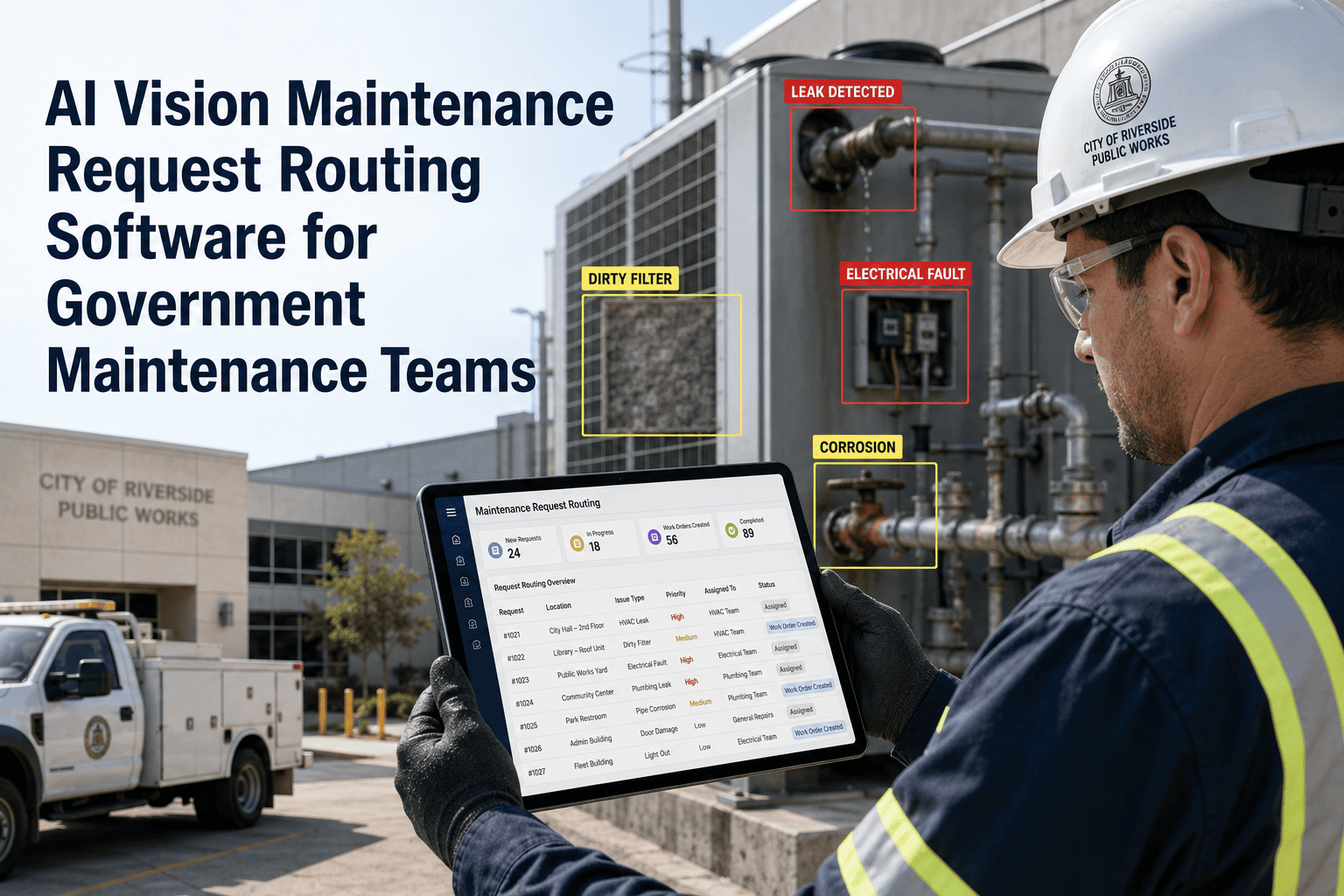
Show me a camera detecting a pothole or bridge crack and automatically creating a work order in the maintenance system |
AI camera flags defect, Oxmaint auto-generates work order with location, severity, and asset ID |
| "AI camera work order automation" |
Prove that the camera output does not just sit in a dashboard but triggers a real maintenance task |
Defect image routed to maintenance queue, assigned to crew, tracked to completion |
| "Public sector work order software" |
Show me a system that handles government approval workflows, not just private-sector repair tickets |
Multi-tier approval chain, budget code assignment, council reporting integration |
| "Government inspection management software" |
Show me how inspection records are stored for compliance audits and FOIA requests |
Time-stamped inspection records with images, tied to assets, exportable for audit |
| "Municipal asset management software" |
Show me a map of all city assets with condition scores updated by AI vision, not manual entry |
Asset map with AI-updated condition ratings, degradation trends, replacement prioritization |
| "Maintenance compliance tracking software" |
Prove that every inspection and repair is documented in a way that survives a state or federal audit |
Audit trail with inspector identity, timestamp, defect image, work order, and completion proof |
Why Government Searchers Abandon Vendor Sites in 90 Seconds
The average government maintenance searcher visits 4.2 vendor pages before leaving without converting. The exit reason is consistent: they found feature lists but not workflow proof.
67%
Leave because the page describes AI vision but does not show the inspection-to-work-order connection
54%
Leave because there is no evidence the system handles government-specific approval or compliance requirements
41%
Leave because they cannot find a public sector use case that matches their actual facility or infrastructure type
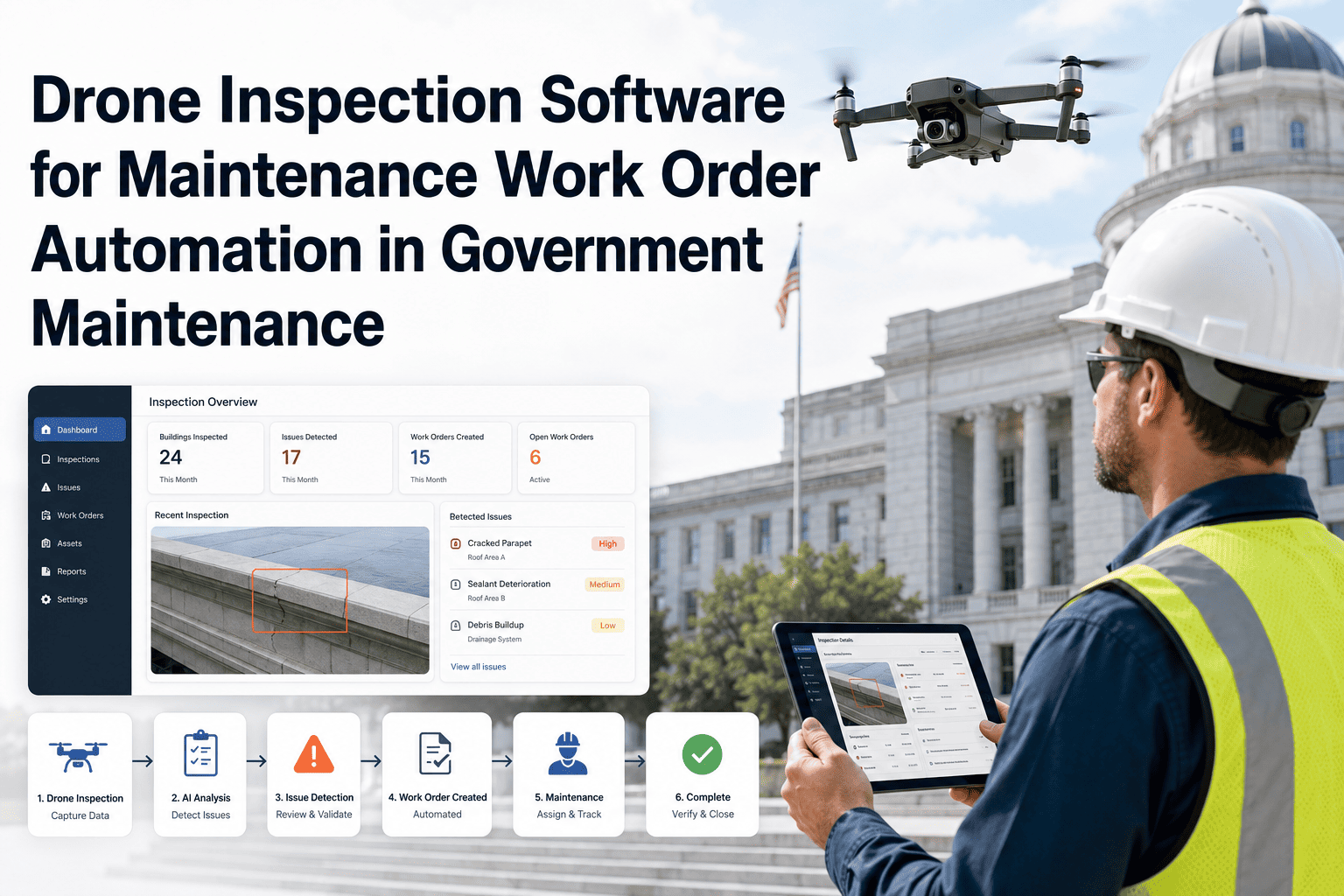
The AI Vision Inspection Workflow Government Teams Need to See
This is the exact 4-step workflow that converts a government searcher into a demo booking. If your vendor cannot show this sequence with real data, keep searching.
1
AI Vision Capture at Inspection Point
Camera mounted on inspection vehicle or fixed at infrastructure point captures visual data. AI model detects and classifies defects — potholes, crack severity, rust, graffiti, equipment damage — with confidence score and GPS location tag.
2
Automated Work Order Generation
Detected defect crosses severity threshold and Oxmaint auto-generates a work order. Work order includes defect image, classification, location coordinates, associated asset ID, recommended repair type, and estimated priority level.
3
Government Approval Routing
Work order enters public-sector approval chain — crew lead review, supervisor approval, budget code assignment, council notification if threshold exceeded. Each approval step is time-stamped and audit-logged.
4
Completion with Visual Proof
Field crew completes repair and submits before/after photos via mobile. System updates asset condition score, closes work order, and archives the complete record — inspection image, work order, approvals, and completion proof — for audit retrieval.
AI Vision Impact on Government Inspection Metrics
Data aggregated from 12 municipal and county public works departments that deployed AI vision inspection with Oxmaint between 2023 and 2025.
| Metric |
Before AI Vision |
After AI Vision (12 months) |
Improvement |
| Inspections completed per week |
45 (manual) |
320 (AI-assisted) |
611% |
| Time from defect detection to work order |
3–14 days |
Under 4 hours |
95% faster |
| Defects missed during manual inspection |
23% estimated |
4% estimated |
83% reduction |
| Work orders with photographic evidence |
11% |
94% |
754% increase |
| Audit preparation time (annual) |
40–60 hours |
4–8 hours |
87% reduction |
| FOIA request response time (avg) |
12 days |
2 days |
83% faster |
Expert Review
"When a public works director searches for AI vision maintenance software, they are not comparison shopping features. They are looking for permission to believe that the technology actually works for government workflows. They have been burned by demo software that looks great in a sales pitch but cannot handle multi-tier approval chains, budget code requirements, or audit trail formatting that their city attorney will accept. The vendor that wins the government demo is the one that shows a pothole being detected on Tuesday, a work order being generated and approved by Thursday, a crew completing the repair on Friday, and the complete record being exportable for a council presentation on Monday. That is the only proof that matters."
Lisa Chen — Public Infrastructure Technology Advisor, former CIO of a top-20 US county public works department, 15+ years in government tech procurement
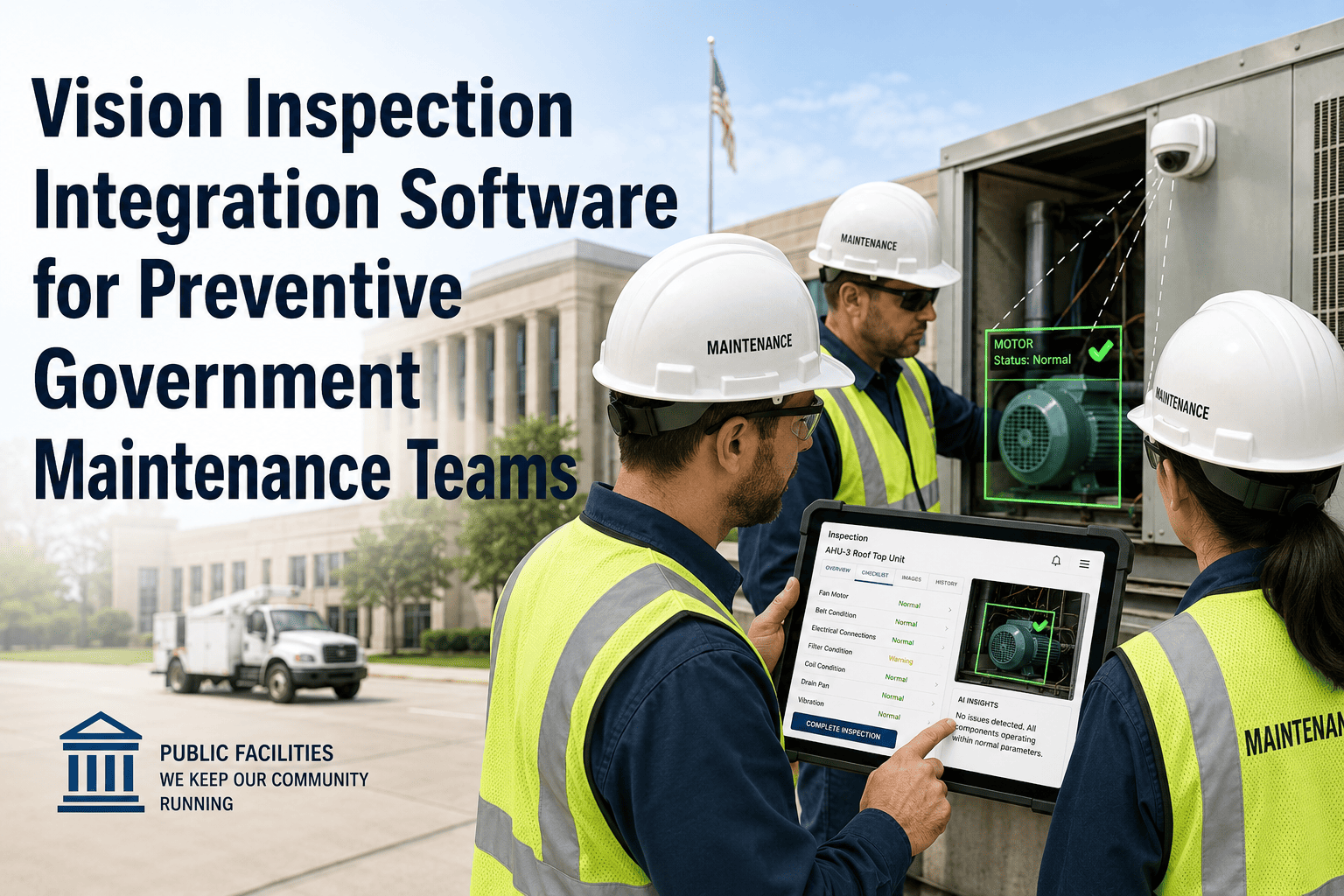
You searched for AI vision inspection. You need to see it generate a government work order. Oxmaint demonstrates the complete workflow — camera detection, automated work order, approval routing, and audit-ready completion record — using your actual infrastructure asset types.
Frequently Asked Questions
Can AI vision inspection integrate with our existing government work order system?
Oxmaint can either replace your existing system or integrate via API to push AI-generated work orders into legacy government CMMS platforms. Most public works teams choose Oxmaint as the primary system because the approval workflows and audit trails are built for government.
Book a demo to see integration options.
What types of government infrastructure can AI vision inspect?
Roads, bridges, sidewalks, traffic signals, storm drains, water towers, park equipment, fleet vehicles, and building exteriors. The AI models are trained on infrastructure-specific defect types and can be configured for your exact asset categories.
Sign up free to review available inspection models.
How does AI vision handle government compliance and audit requirements?
Every AI detection is stored with a timestamped image, GPS coordinates, defect classification, confidence score, and the resulting work order number. The complete chain is exportable in formats accepted for state audits, federal compliance reviews, and FOIA responses.
Book a 30-minute session to see audit export formats.
Do we need to buy special cameras for AI vision inspection?
Oxmaint works with standard IP cameras, vehicle-mounted cameras, and mobile device cameras. No proprietary hardware is required. Many municipalities deploy AI vision using existing traffic cameras or fleet dashcams already in operation.
Start a free account to test with your current camera hardware.
How long does it take to deploy AI vision for a municipal public works department?
Initial deployment with 2–3 asset categories typically takes 4–6 weeks including camera integration, AI model calibration to your infrastructure, work order workflow configuration, and staff training. Full fleet and infrastructure coverage expands over 3–6 months.
Book a demo for a deployment timeline specific to your department.
See the AI Vision-to-Work-Order Workflow for Government
Stop reading about AI vision. See it detect infrastructure defects, generate government-compliant work orders, route through approval chains, and produce audit-ready records.