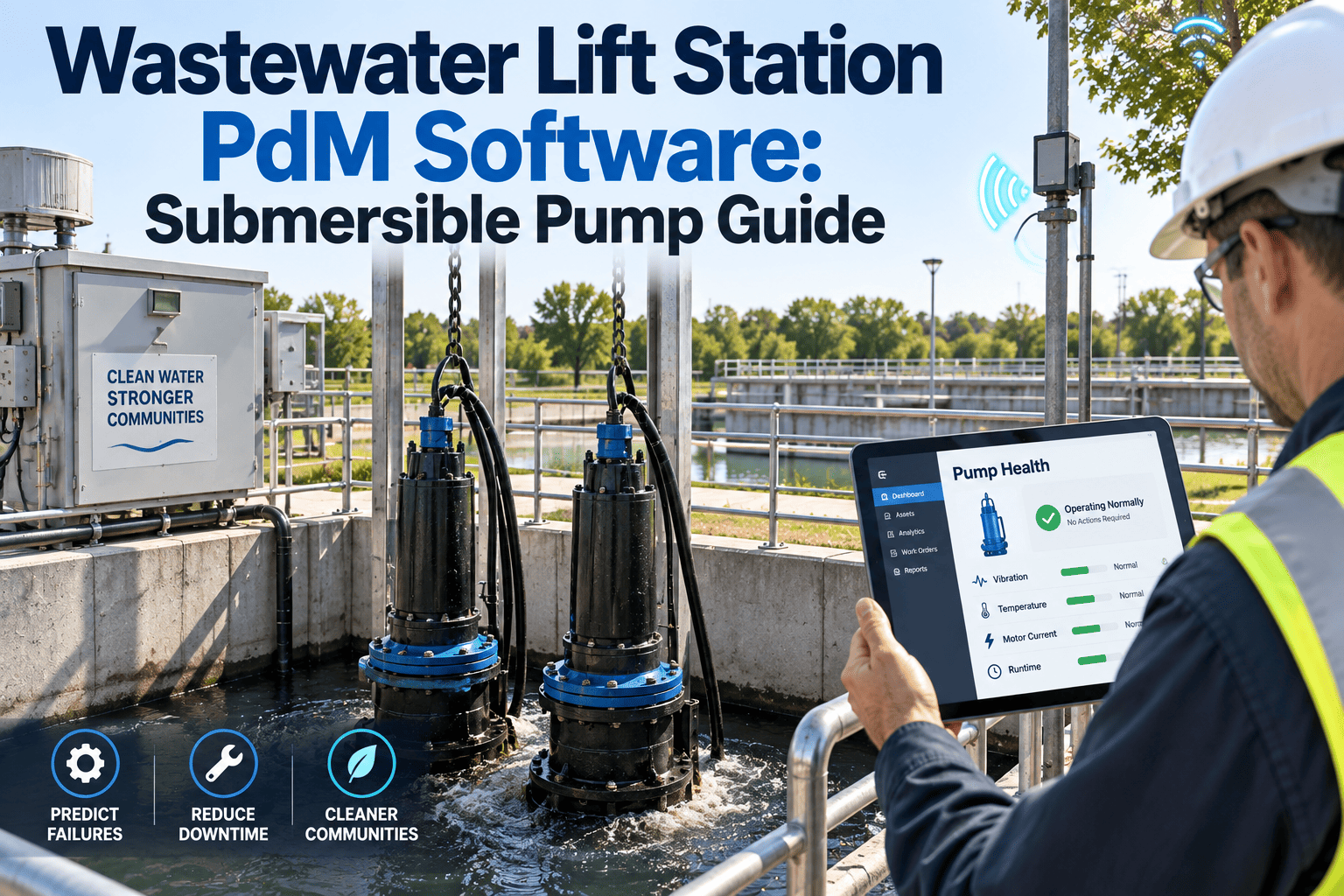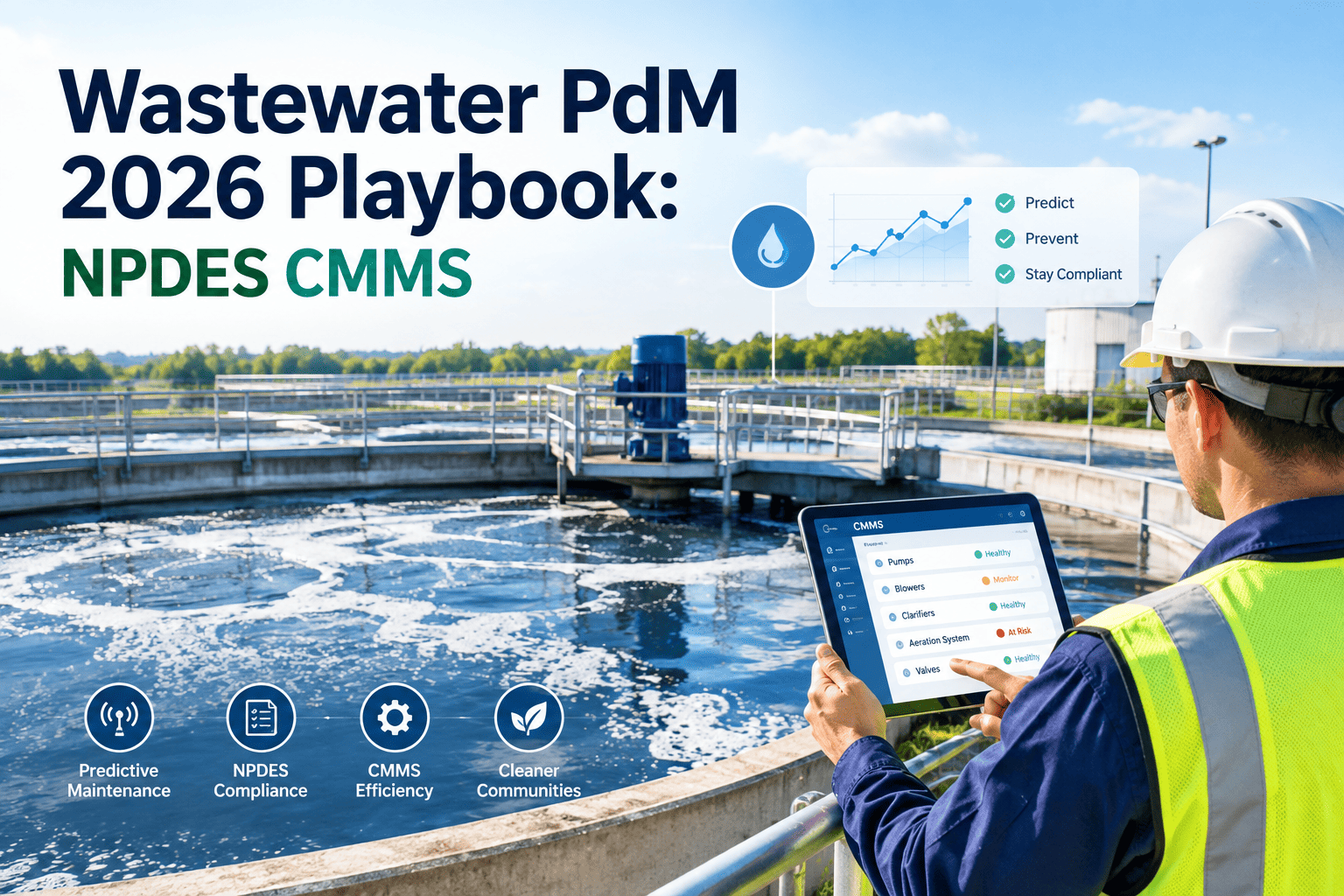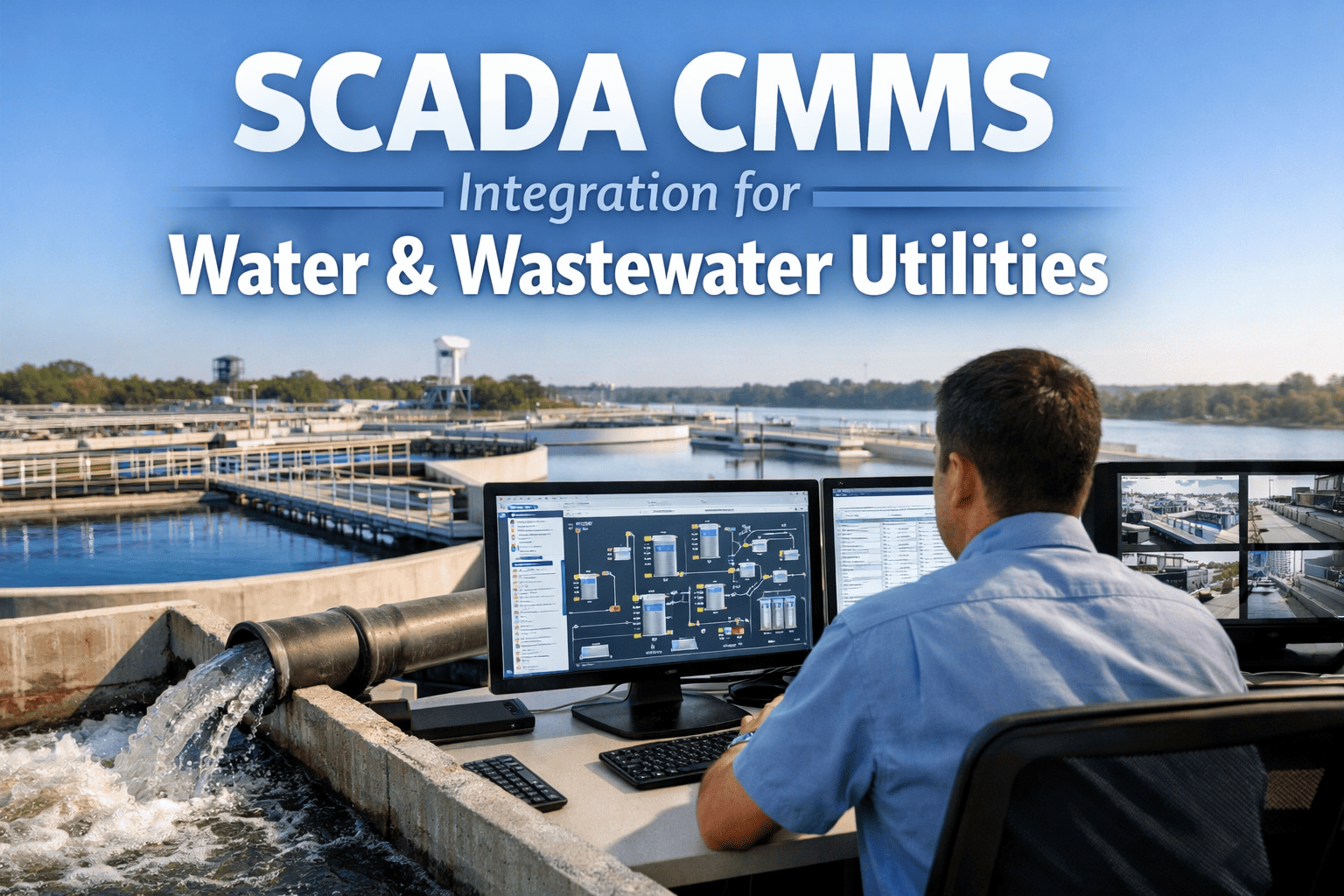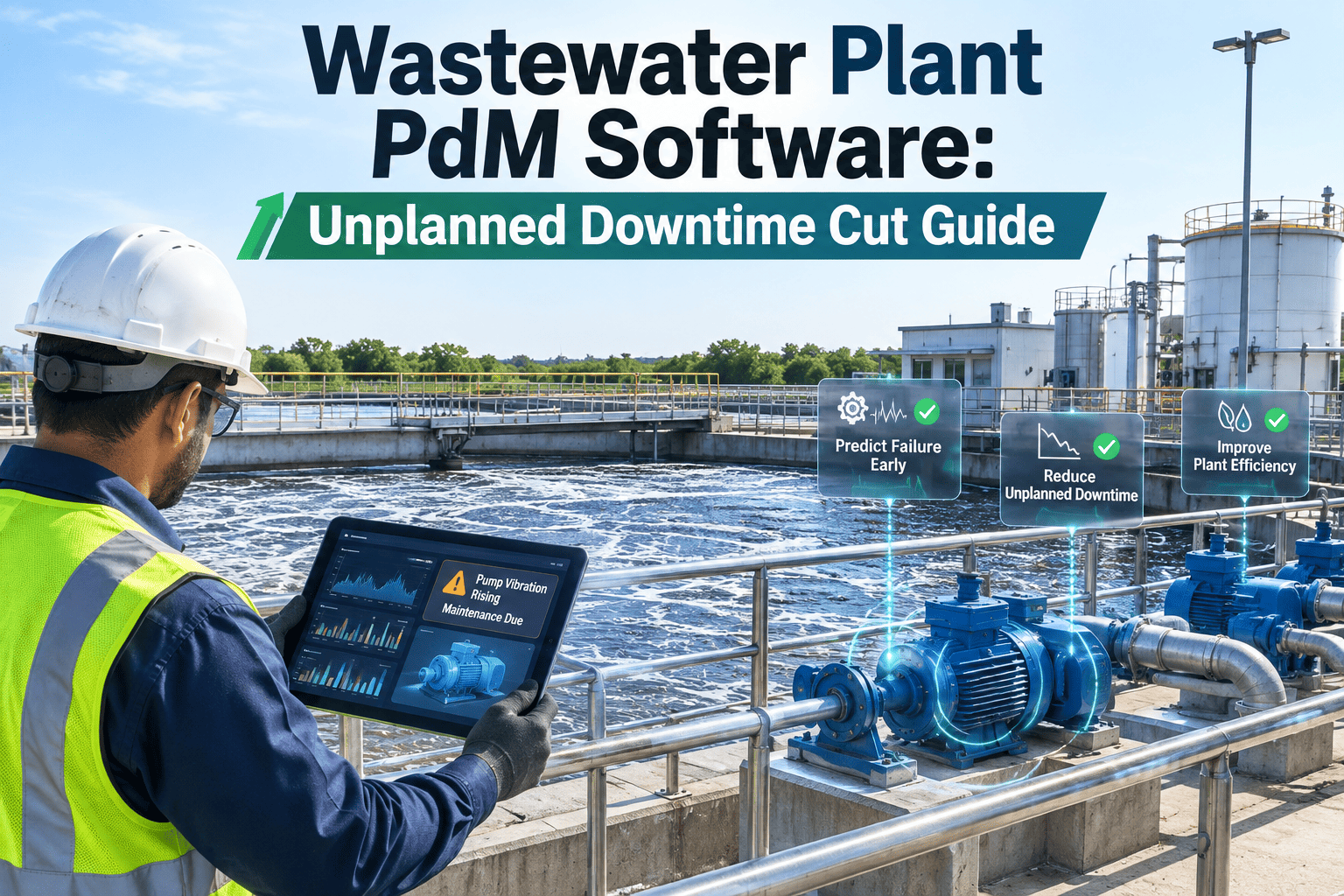
A blower bearing that fails at 2 a.m. does not wait for a maintenance window — it takes dissolved oxygen with it, and nitrification collapses within hours. A RAS pump that seizes mid-shift starves the return activated sludge loop until solids wash over the weir. A secondary clarifier drive that grinds to a halt sends a spike of TSS straight toward your outfall, and the discharge monitoring report writes itself into a permit violation. Predictive maintenance software built for wastewater plants catches these failures as vibration drift and current draw anomalies weeks before they become an NPDES exceedance. See how Oxmaint predicts WWTP equipment failure before it hits your permit — free trial, live in under 60 minutes.
The Problem: Reactive Maintenance and NPDES Permits Don't Mix
Most plants still run PM on calendar dates instead of actual run-hours, which means a blower or RAS pump can drift into failure territory weeks before its next scheduled check. Influent pump failures are EPA's highest sanitary sewer overflow enforcement priority, and a single event triggers mandatory reporting and potential consent decrees. Aeration control failures destroy nitrification within hours because dissolved oxygen above 2.0 mg/L has almost no buffer once a blower trips or a diffuser fouls. Clarifier mechanism drives fail quietly — a slipping chain or a seized rake motor lets solids build until they pass straight into the effluent, and by the time the DMR shows a TSS spike, the damage is already logged. Book a demo to see how PdM protects your discharge monitoring report.
A Bearing Doesn't Fail Instantly. It Tells You for Weeks Before It Does.
Oxmaint turns vibration drift, current draw, and run-hour data into work orders before an aerator, RAS pump, or clarifier drive ever crosses into failure. Free to start. Live in under 60 minutes.
Where PdM Pays Off First
Three asset groups drive most unplanned downtime and most permit risk in a biological treatment plant. Oxmaint targets these first.
Vibration & Condition Alert Thresholds
Oxmaint applies staged thresholds to every monitored asset, so an alert means something specific instead of a generic warning.
Your Next Consent Decree Starts With a Pump Nobody Was Watching.
Oxmaint tracks every aerator, RAS/WAS pump, and clarifier drive against real degradation thresholds — not a calendar reminder that's already three weeks late.
Built for Discharge Compliance
Every PdM alert and completed work order in Oxmaint ties back to the compliance record your permit requires.
Oxmaint vs Competitors
Swipe to view full comparison table
| Capability | Oxmaint | IBM Maximo | Fiix (Rockwell) | UpKeep | MaintainX | Limble CMMS |
|---|---|---|---|---|---|---|
| Vibration & Current Draw Trending | Built-in, staged thresholds | Custom sensor build | Rockwell ecosystem | Not available | Not available | Not available |
| Run-Hour Based PM for Pumps | Automated against wear curves | Configurable | Configurable | Calendar PM only | Calendar PM only | Calendar PM only |
| Clarifier Drive Monitoring | Torque & flow-split alerts | Custom build required | Custom config | Not available | Not available | Not available |
| Confined Space Entry Logs | Built-in OSHA 1910.146 records | Configurable | Custom config | Generic checklists | Generic checklists | Generic checklists |
| NPDES / SSO Compliance Export | One-click regulatory export | Configurable | Custom config | General compliance | General compliance | General compliance |
| Offline Mobile for Plant Rounds | Full offline + sync | Limited | Limited offline | Limited offline | Online only | Limited offline |
| Deploy Time | 2–3 weeks | 6–18 months | 4–12 weeks | 2–4 weeks | 2–3 weeks | 1–2 weeks |
Proven Results
Data Security
Frequently Asked Questions
What equipment should a wastewater plant monitor first with PdM?
How does Oxmaint tell a real bearing failure from sensor noise?
Can PdM alerts help avoid an NPDES permit violation?
Does Oxmaint work for lift station confined space inspections?
How long does it take to get PdM running on an existing plant?
The Next Bearing Failure Is Already Sending a Signal. Are You Reading It?
Vibration and current draw trending. Run-hour based pump PM. Clarifier drive monitoring. NPDES-ready compliance exports. All from one platform, live in under three weeks.