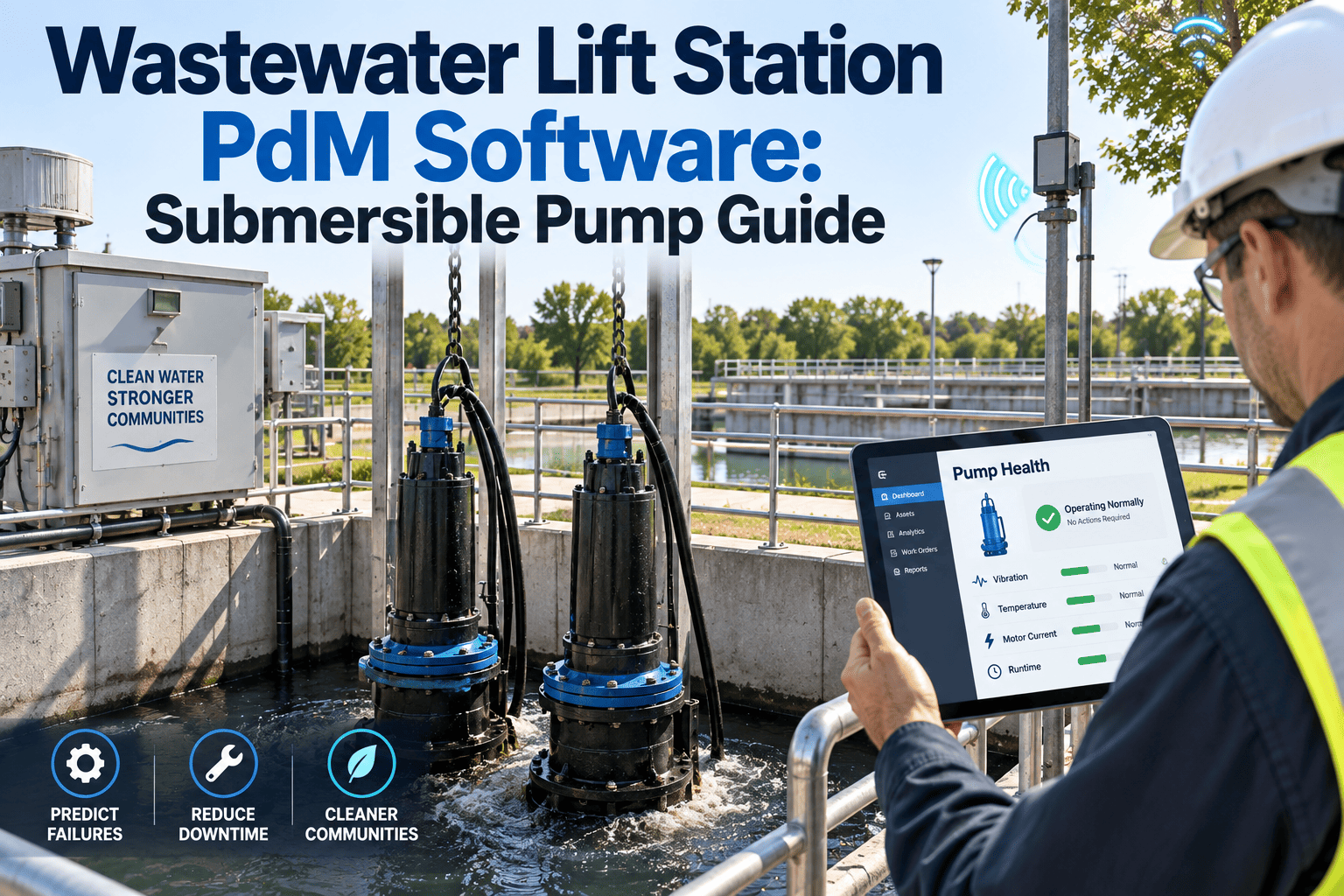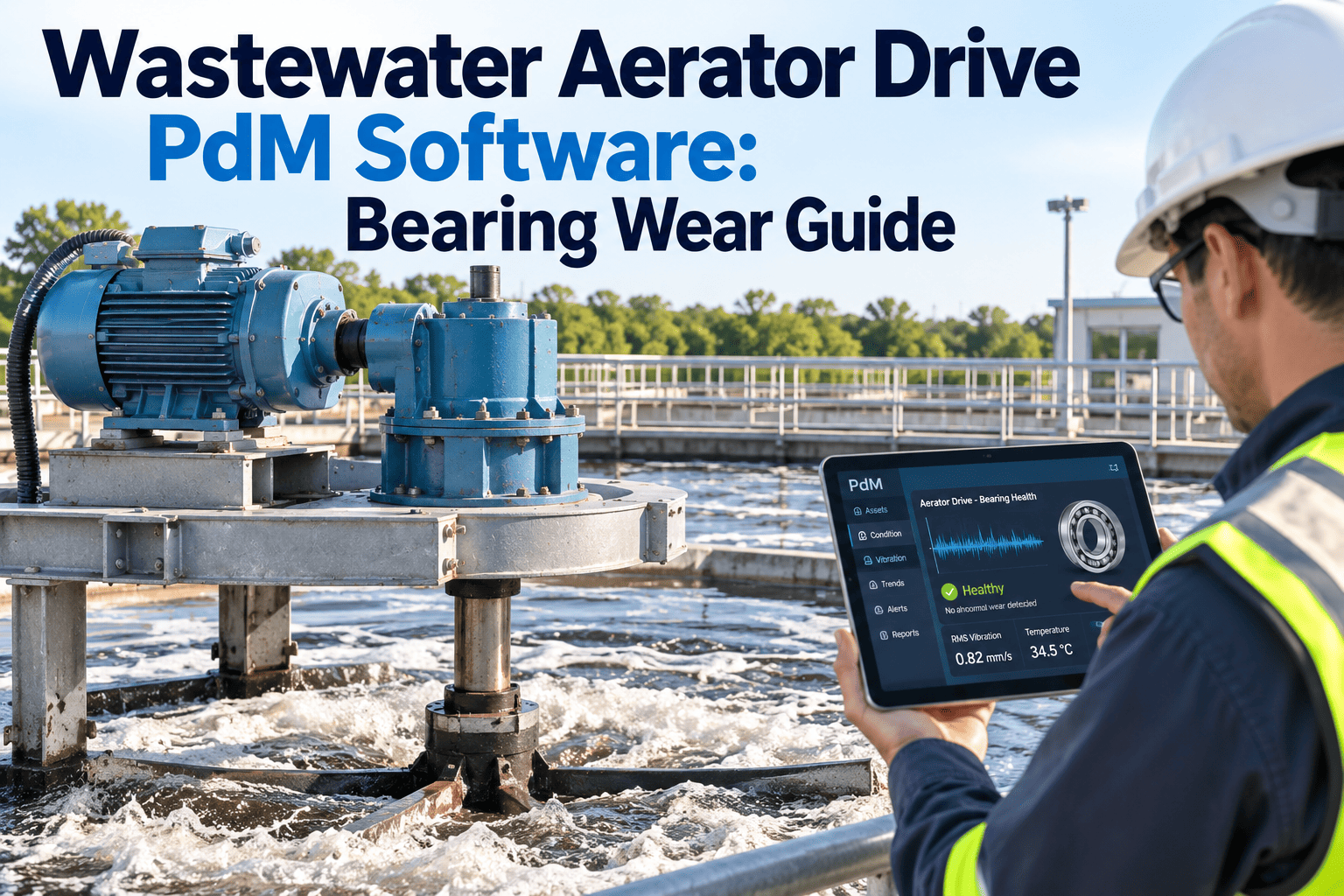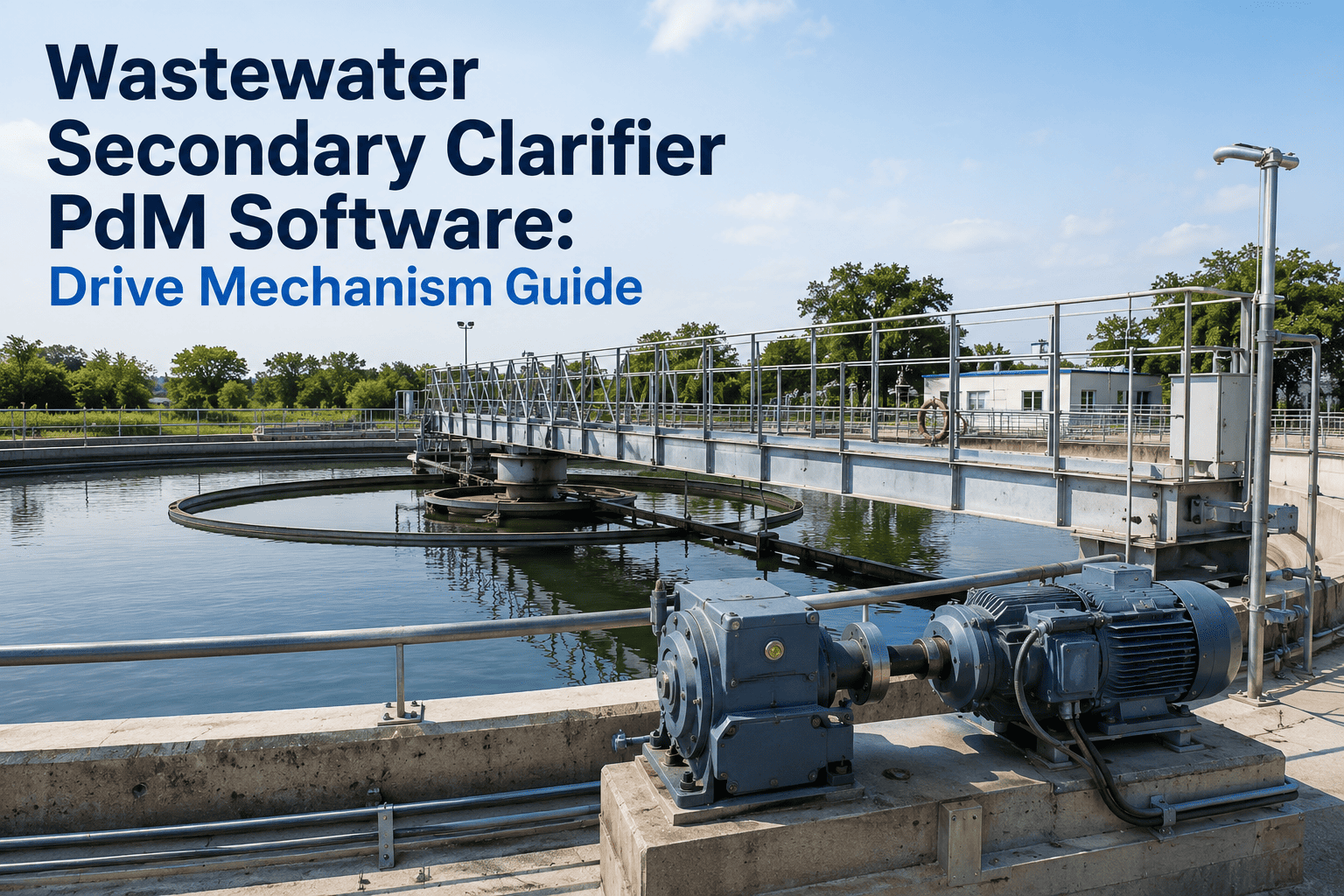
A secondary clarifier looks like the calmest tank on the plant, a wide circular basin with water moving slowly across the surface. Underneath, a drive mechanism most operators only think about when it stops is carrying continuous torque against sludge, grit, and years of accumulated wear on gears that were never designed to be inspected while running. When a drive cage seizes or a skimmer arm bends, the plant does not just lose a piece of equipment, it loses settling capacity across the entire activated sludge process and risks a permit exceedance within hours. Sign up to start tracking clarifier drive health before torque, not after a shutdown, tells you something is wrong.
Wastewater Secondary Clarifier PdM: Catch Drive, Skimmer, and Scraper Wear Before It Costs a Permit Violation
Oxmaint tracks drive torque, skimmer arm position, and scraper wear across every clarifier on your plant, turning a mechanism most crews only inspect during a walkaround into a continuously monitored asset. Every reading ties back to a specific tank and drive, so a trend building on tank two never gets lost in a plant-wide average.
One Stuck Drive Cage Can Take Down a Whole Treatment Train
A secondary clarifier is the last settling step before effluent leaves the activated sludge process, and its drive mechanism runs continuously under torque loads rated for twenty years of service. When that mechanism binds, solids carry over into the effluent, the plant loses return activated sludge flow, and the operations team is suddenly managing an unplanned bypass instead of a scheduled repair. Because most plants only have two or three secondary clarifiers online at a given time, losing even one to an unplanned repair concentrates the full flow onto the remaining tanks and pushes them toward their own hydraulic limit.
Why Clarifier Drives Fail Without Much Warning
Drive mechanisms are built to run continuously for decades, which makes their failure modes slow and easy to overlook rather than sudden. Four causes account for most of the unplanned downtime plants report.
Four Components That Actually Predict Clarifier Drive Failure
Turn Torque, Position, and Wear Data Into Work Orders Before the Cage Binds
Oxmaint connects clarifier drive sensors and inspection rounds into one system, so a torque trend or a skimmer alignment drift generates a work order automatically instead of waiting for the next scheduled round.
What Changes When Drive Monitoring Moves Off the Clipboard
Most plants already inspect clarifier drives on a rounds schedule. The gap is not effort, it is that a manual round only catches wear the inspector happens to notice on that specific day, while a connected system catches the trend building between rounds. A torque reading taken once a week cannot show whether the value climbed steadily or spiked once and settled back down, and that distinction is exactly what separates a normal load variation from the early signature of gear wear.
| Dimension | Manual Walkaround | Connected Drive Monitoring |
|---|---|---|
| Detection Point | Visible wear or an audible change during a round | Torque and position trend catches drift early |
| Frequency | Daily or weekly, depending on staffing | Continuous, with alert thresholds set per asset |
| Record | Paper log or a rounds app with no trend view | Time-series history tied to the specific clarifier |
| Response | Work order created after the round is completed | Work order generated automatically at threshold |
| Failure Mode | Seized cage discovered mid-shift, often at night | Bearing or gear wear addressed on a planned outage |
Three Phases From First Clarifier to Full Plant Coverage
A clarifier drive monitoring program does not need to launch across every tank at once. Most plants start with the clarifier that has the worst failure history or the highest consequence if it goes down, prove the value, and then extend coverage across the rest of the train. This staged approach also gives the maintenance team time to tune alert thresholds against real operating data before rolling the same settings out fleet-wide, which avoids the alarm fatigue that comes from thresholds copied straight from a vendor's generic recommendation.
Measured Outcomes From Connected Clarifier Monitoring
These figures reflect plants that started with their highest-risk clarifier and let the monitoring program prove itself before expanding, rather than trying to instrument the entire train on day one. The pattern is consistent across plant sizes: the earlier a torque trend is caught relative to the point of failure, the cheaper and less disruptive the eventual repair tends to be.
What a Digitized Clarifier Round Should Actually Capture
A paper checklist and a digitized round often ask the same questions. The difference is whether the answers become a searchable trend or disappear into a binder after the shift ends. A digitized round also makes it possible to compare the same reading across every clarifier on the plant side by side, which is difficult to do from a stack of paper logs stored in different operator handwriting.
- Drive torque reading — logged against flow rate and mixed liquor suspended solids concentration at the time of the round, not as a standalone number.
- Skimmer arm sweep — visual confirmation the arm completes a full rotation without hesitation, binding, or visible scum carryover past the beach.
- Scraper blade condition — wear measurement against the last recorded reading, by zone, so a fast-wearing section gets flagged before it fails completely.
- Oil bath level and clarity — checked against the manufacturer's service interval and logged with a photo where discoloration or particulate is visible.
- Weir and launder condition — algae buildup, level uneveness, or weir plate damage that affects effluent quality independent of the drive itself.
Secondary Clarifier PdM and Drive Monitoring — Common Questions
Main gear and bearing wear, oil seal degradation, and skimmer arm pivot bushing failure are the most common causes of unplanned downtime on tanks past fifteen years of service, and all three show a measurable trend well before they cause an actual stoppage. Sign up to start tracking these specific failure modes on your own tanks.
Most torque, temperature, and position sensors mount to the existing drive housing without requiring a mechanism replacement, so a retrofit is typically a bracket and wiring project rather than a capital overhaul, and it can usually be scheduled during a routine maintenance window instead of a dedicated shutdown. Book a demo to scope a retrofit for your drive type.
A prevented clarifier failure keeps return activated sludge flow intact and avoids the solids carryover that can trigger an effluent quality violation, so the monitoring data doubles as documentation supporting permit compliance history during an inspection or audit.
There is no universal number, since torque baselines vary by tank diameter, mechanism type, and solids loading, which is why the first phase of any program focuses on establishing a tank-specific baseline before setting alert thresholds tied to a percentage deviation rather than an absolute figure. Start a free trial to build that baseline for your own clarifiers.
Yes, the same drive torque, position, and wear tracking approach applies to primary clarifiers and gravity thickeners, since they share the same mechanical failure modes even though the process purpose differs, and consolidating all three asset types into one CMMS gives a single reliability view across the whole solids handling train.
Why Drive Monitoring Pays Off Beyond the Next Repair
A clarifier drive mechanism is built for decades of continuous service, which is exactly why its slow failure modes are easy to miss during an occasional walkaround. The plants that catch wear early are not running newer equipment, they are simply watching the right signal, torque trend, position drift, and oil condition, continuously instead of periodically. That shift turns a mechanism that used to fail without warning into one that generates a planned work order weeks ahead of time, and it keeps the entire activated sludge process running at the settling capacity it was designed for instead of scrambling to recover from a bypass. Over time the same discipline extends beyond the drive itself, since a plant that trusts its clarifier data tends to apply the same monitoring habit to blowers, pumps, and other continuously running mechanical assets across the facility.
Every Clarifier Running Without Torque Monitoring Is One Seized Cage Away From an Unplanned Shutdown.
Oxmaint connects drive torque, skimmer position, and scraper wear into one asset history, so your team gets the work order before the tank goes down.