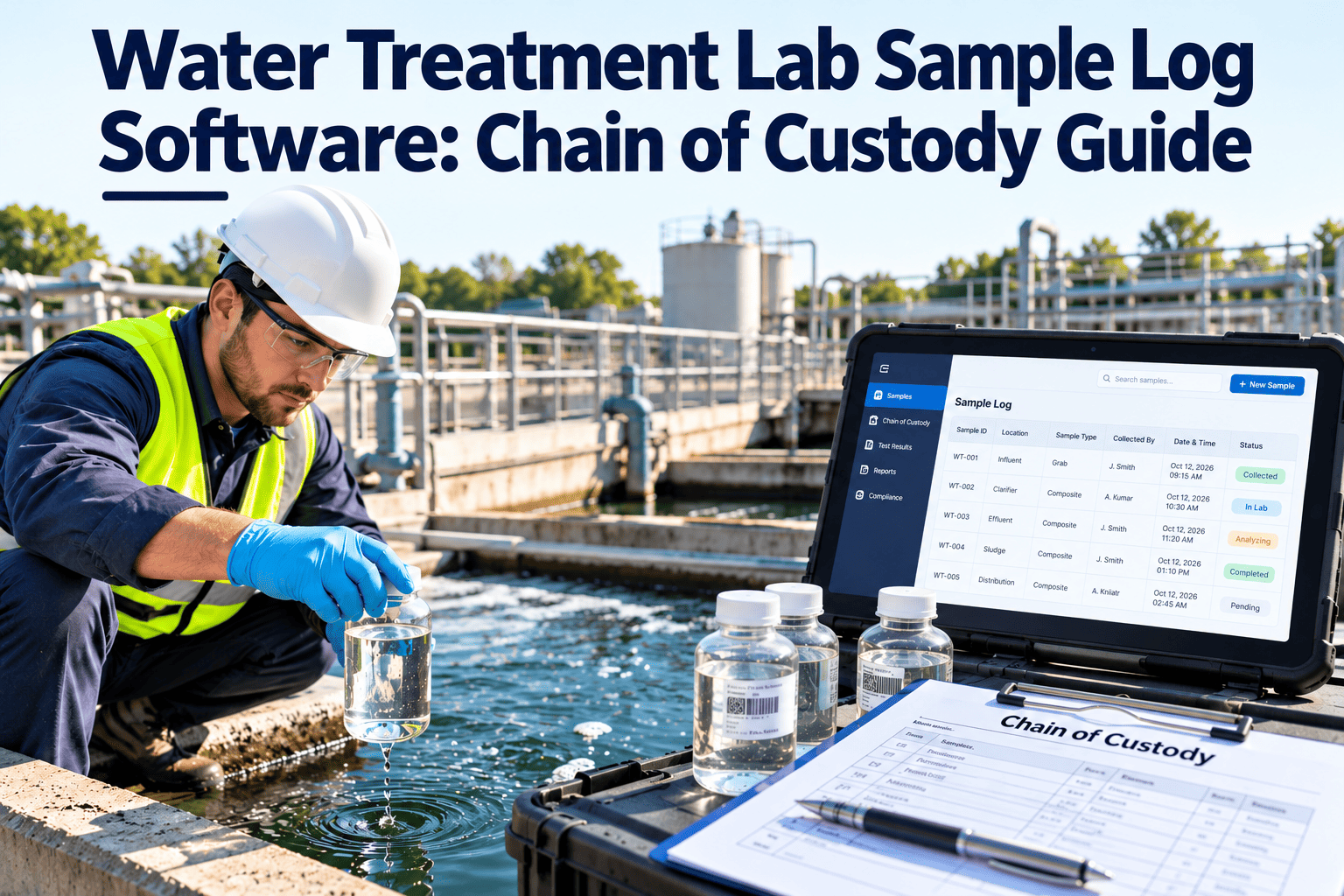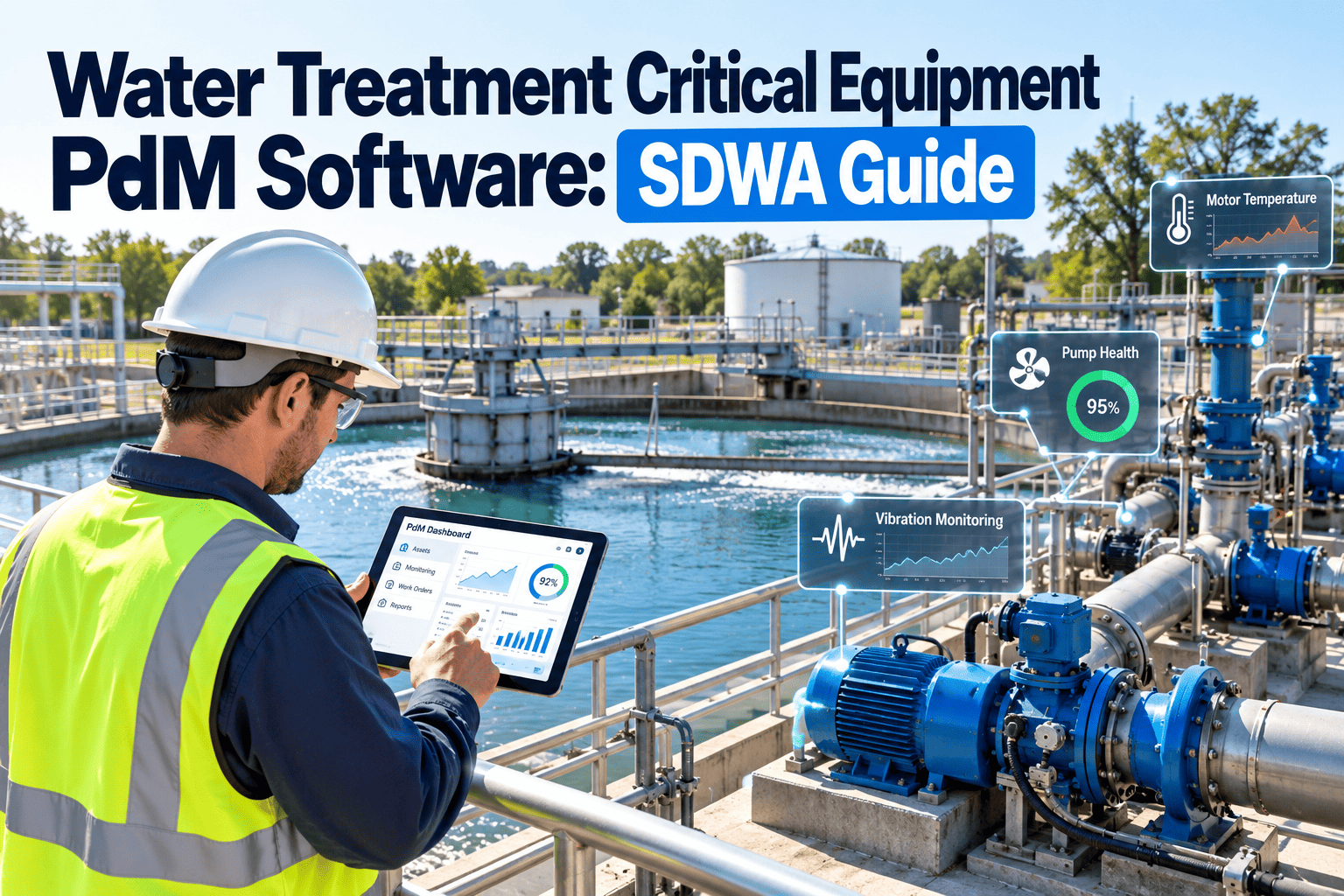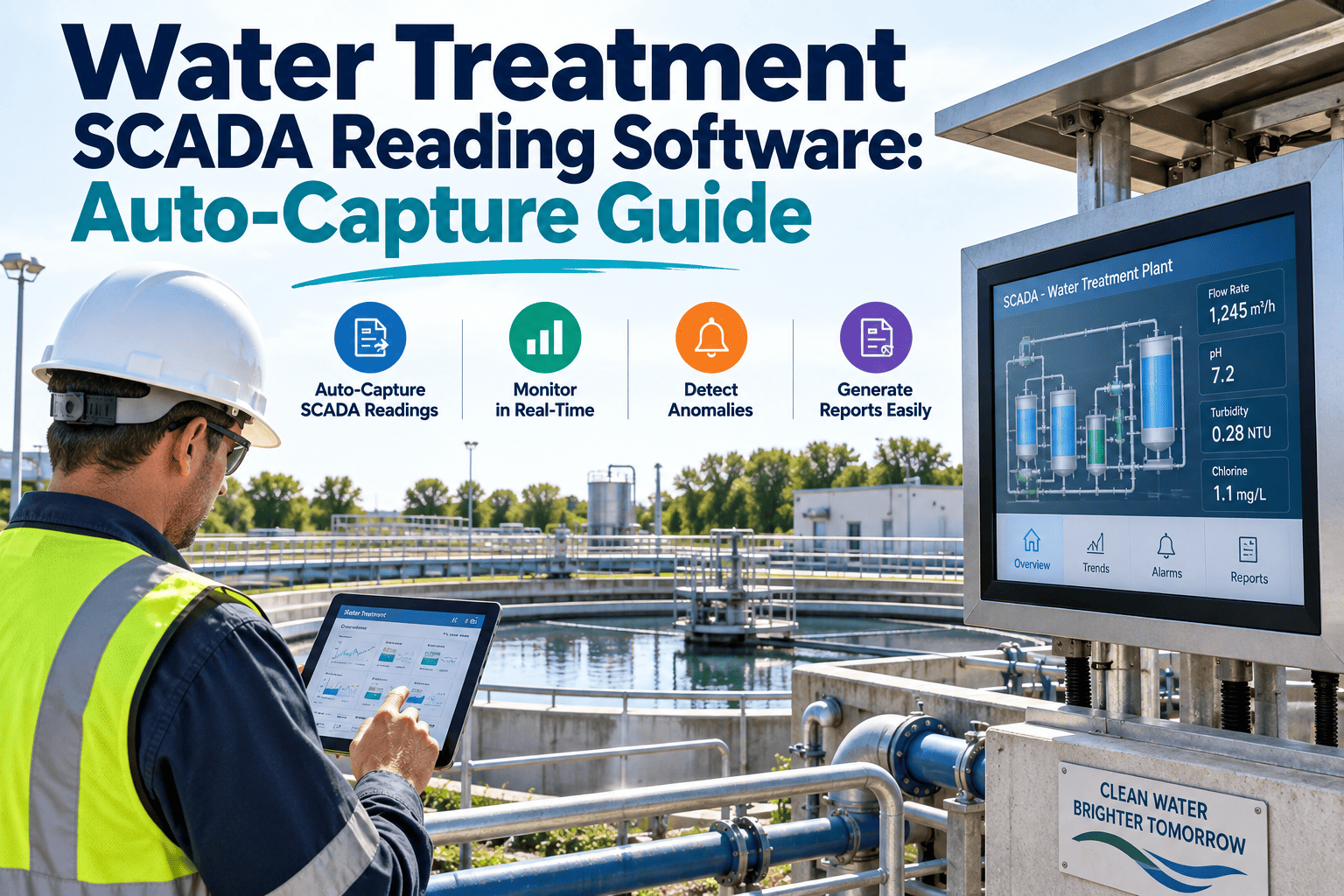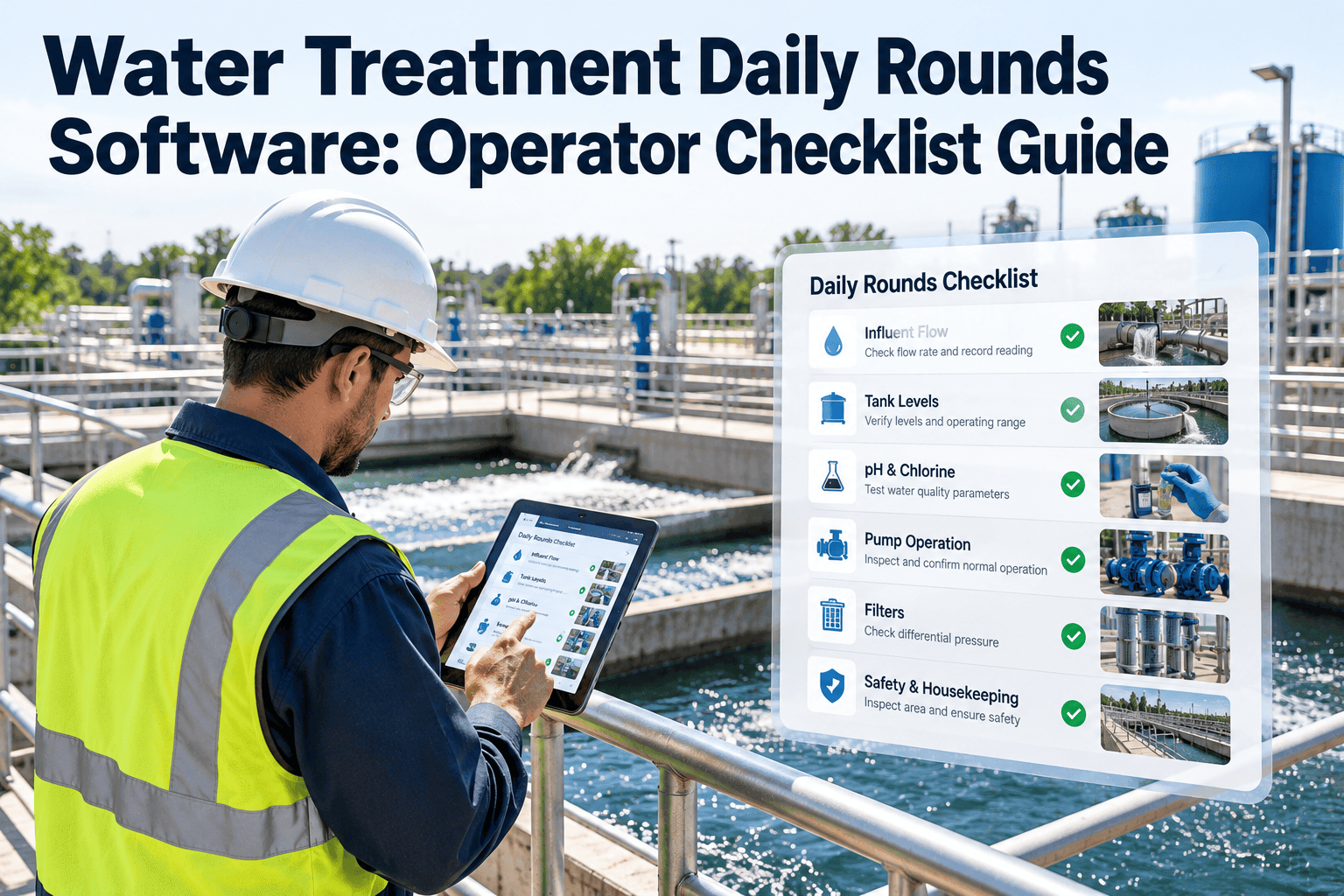
A daily rounds checklist is only useful when every line means the same thing to every operator on every shift. This guide gives water treatment plants a ready-to-adapt operator checklist, organized in walking order from raw water intake to high service pumps. Each item states what to record and what to do when a reading is out of range. Use it to tighten paper rounds today, then move it into a mobile format so timestamps, photos, and follow-up work orders happen automatically. When you are ready, you can create an Oxmaint account and load it as a route.
Water Treatment Daily Rounds Software: Operator Checklist Guide
A walk-order WTP operator checklist, plus the digital rounds workflow that ends missed readings and gives you consistent evidence every shift.
- Filter 1 effluent turbidityRecorded
- Filter 2 headlossRecorded
- Backwash valve operationFlagged: work order
- Surface wash pumpPending
How to use this checklist
Before the round
Review the last shift's open findings and active alarms so you know where to look first.
During the round
Record the actual value, not "OK". Mark anything outside your limit and note what you saw.
After the round
Escalate flagged items, hand over open issues, and sign off with your name and time.
Adapt limits and items to your permit, operating plan, and state primacy agency requirements. The values below are prompts, not regulatory limits.
Section A: Pre-round and handover
- Read the previous shift handover notes and open work orders
- Review active SCADA alarms and note any acknowledged but unresolved
- Check weather, raw water quality changes, and planned deliveries
- Confirm required PPE, handheld gas monitor, and radio are available
- Log your name, certification level, and round start time
Section B: Intake and raw water
- Record raw water flow and wet well or reservoir level
- Record raw turbidity, pH, and temperature from analyzer and compare to field gauge
- Inspect screens for debris loading and differential level
- Check intake pump for noise, heat, vibration, and seal leakage
- Note any algae, odor, or color change and attach a photo
Section C: Chemical feed
- Record day tank and bulk tank levels for coagulant, polymer, caustic, and fluoride if used
- Confirm feed pump stroke, flow, and prime against the setpoint
- Verify calculated dose matches the process target for current flow
- Check containment sumps, hoses, and fittings for leaks or crystallization
- Confirm delivery paperwork and tank labels for any chemical received
Section D: Clarification and filtration
- Observe floc formation and settled water clarity in each basin
- Record individual filter effluent turbidity for every filter in service
- Record headloss and run time since last backwash
- Confirm backwash and filter-to-waste sequence completed normally
- Check sludge removal, blowers, and surface wash equipment
Turn this checklist into a mobile route
Section E: Disinfection and finished water
- Record disinfectant residual from the online analyzer and a grab sample
- Confirm analyzer reagent level, sample flow, and last calibration date
- Verify clearwell level and the contact time basis for the current flow
- Record finished water pH, turbidity, and any other required parameter
- Check high service pump pressure, discharge flow, and motor temperature
Section F: Safety and facility
- Confirm gas detector readings and scrubber status in chlorine areas
- Test eyewash and emergency shower flow where required
- Check ventilation, lighting, walkways, and exit paths
- Verify standby generator, UPS, and fuel level status
- Confirm security, fencing, and hatch locks at tanks and wells
Section G: Instruments and SCADA cross-check
- Compare field gauges to the SCADA value for flow, level, and pressure
- Check online analyzers for drift, communication faults, or stale values
- List any manual overrides or bypasses still active
- Confirm alarm setpoints have not been changed without a record
What to do when an item fails
| Finding | Record | Action |
|---|---|---|
| Process reading outside limit | Value, time, photo of display | Notify supervisor, adjust per operating plan, log the corrective step |
| Equipment noise, heat, or leak | Asset, symptom, photo | Open a corrective work order with priority by criticality |
| Analyzer drift or fault | Analyzer ID, grab sample comparison | Use grab samples and request calibration |
| Safety item failed | Location and condition | Restrict area if needed and escalate immediately |
| Station not reachable | Reason for skip | Document why and schedule a make-up check |
Section H: Sign-off and handover
- Confirm every station was completed or has a documented reason
- Confirm every flagged item has a work order or supervisor notice
- Write handover notes for the next shift
- Record round end time and sign off
Paper checklist versus digital rounds
| Need | Paper sheet | Oxmaint digital round |
|---|---|---|
| Proof of timing | Handwritten time | System timestamp per station |
| Skipped steps | Found later, if at all | Required fields and incomplete-round alerts |
| Abnormal values | Noted in margin | Flagged against limits, linked to work orders |
| Evidence | Signature | Photos, notes, and operator identity |
| Trending | Manual transcription | Searchable history by asset and station |
Oxmaint supports inspection checklists, mobile workflows, work orders, preventive maintenance schedules, asset records, inventory, and reporting in one CMMS. Start with one shift as a pilot, or book a short demo to map your route.
Questions operators ask
How long should a daily round take?
It depends on plant size. Time a pilot round and trim items nobody acts on.
Should rounds record values or just pass and fail?
Record values for process readings. Use pass or fail for visual and safety items.
Can this replace SCADA trending?
No. Rounds verify SCADA and capture physical condition that sensors miss.
Will regulators accept digital logs?
Requirements vary by state, so confirm with your agency. Timestamped, attributable records usually help.
Where do I start?
Pick one shift and one process area, then build a draft route.