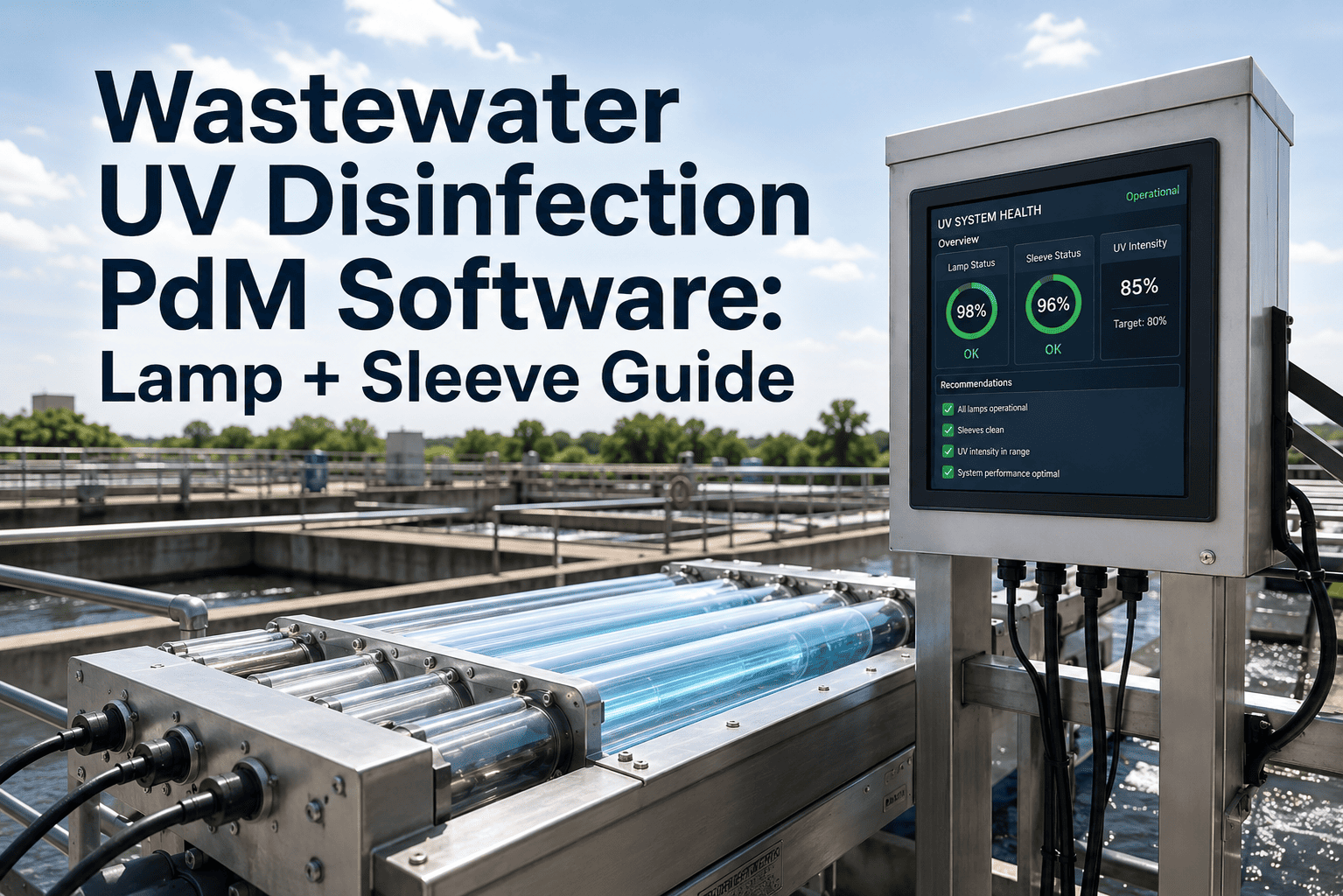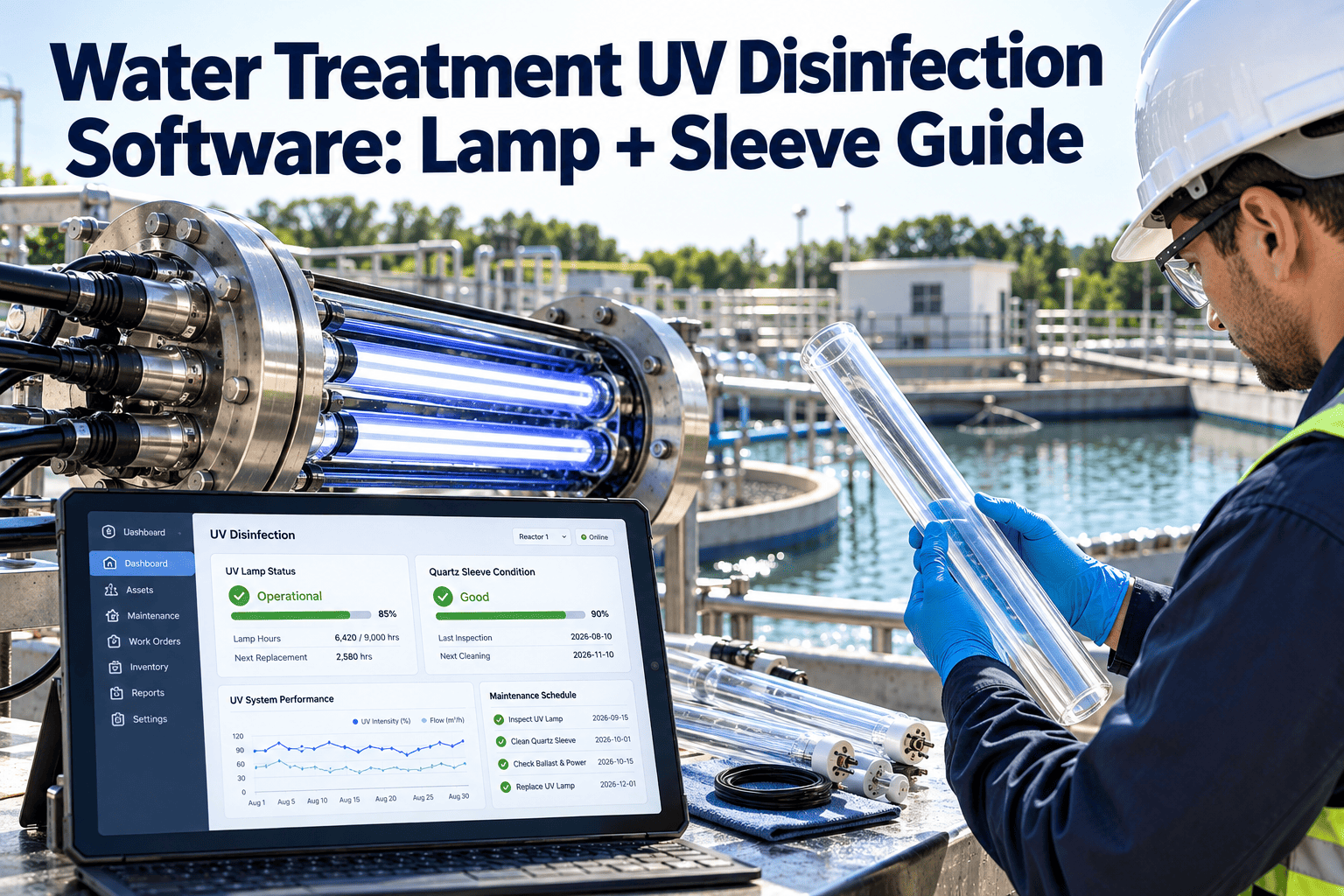
Ultraviolet disinfection looks simple from the control room: lamps on, flow through, dose delivered. In practice the dose depends on lamp output, sleeve cleanliness, sensor accuracy, water transmittance and flow, and every one of those drifts with time. For plants working under the EPA Long Term 2 Enhanced Surface Water Treatment Rule, drift that goes untracked becomes off-spec water and audit exposure. This guide shows how water treatment teams can manage lamps, quartz sleeves and intensity sensors with a maintenance management platform built around asset history and compliance records.
Why UV Disinfection Is a Maintenance Problem Before It Is a Treatment Problem
What operators see
- Reactor online and lamps lit
- Flow within the expected range
- Sensor reading near its setpoint
- No alarm on the SCADA screen
What may actually be happening
- Lamps past their rated life, producing less UV
- A film of scale or iron on the quartz sleeves
- A duty sensor reading high against its reference
- Dose delivered below what was validated
UV reactors are validated at a plant or by a manufacturer for a defined range of flow, UV transmittance and lamp status. Staying inside that range is the operational promise made to the primacy agency, and the maintenance program is what keeps it.
- Cryptosporidium and Giardia inactivation credit depends on dose, measured in millijoules per square centimetre.
- Reactors are generally expected to deliver the required dose for at least 95 percent of the water treated each month.
- Minutes outside validated conditions must be recorded and reported, so the evidence has to exist.
The Four Inputs That Set Delivered Dose
| Input | How It Degrades | Maintenance Control | Record to Keep |
|---|---|---|---|
| UV lamp output | Gradual loss with operating hours and repeated strikes | Hour-based replacement with a lamp aging margin | Install date, hours, strikes, serial number |
| Quartz sleeve clarity | Mineral scale, iron, manganese and biofilm deposits | Wiper checks and scheduled chemical cleaning | Cleaning date, agent, before and after readings |
| Intensity sensor accuracy | Window fouling and sensitivity drift over time | Periodic comparison to a reference sensor | Calibration result, deviation, pass or fail |
| Water UV transmittance | Seasonal and source-water changes | Online monitor verification and grab-sample checks | Analyzer verification log |
Lamp Management: Hours, Strikes and Replacement Planning
Lamp life is a design assumption, not a guarantee. Low-pressure high-output lamps and medium-pressure lamps age differently, so follow the reactor manufacturer's guidance for each model.
Record the reactor, bank position, serial number, lamp type and install date so each lamp has its own history.
Meter-based triggers count operating hours and, where the vendor specifies it, on-off cycles.
Generate work orders at a threshold below rated life so parts and crews are ready.
Avoid swapping an entire reactor at once, which stacks downtime and leaves no baseline for comparison.
Common lamp failure patterns to log
- Early failures in a single bank, which can point to ballast or power quality issues rather than lamp defects
- Lamps that strike repeatedly during flow cycling, shortening useful life
- Mixed lamp ages in one reactor, producing uneven output across banks
- Spare lamps stored beyond the vendor's recommended shelf conditions
Give Every Lamp a Service History Your Auditor Can Read
Quartz Sleeve Fouling: A Slow Loss That Shows Up Late
Sleeves sit between the lamp and the water, so any deposit on the outside surface absorbs UV before it reaches the flow. Hard water, dissolved iron and manganese, and warm conditions all accelerate buildup.
Turn cleaning into a trend, not a calendar chore
- Log the sensor reading immediately before and after each clean to measure how much fouling accumulated.
- Shorten or extend the cleaning interval based on the measured recovery, not a fixed guess.
- Record the cleaning agent and contact time, and attach the safety data sheet and lockout steps to the task.
- Flag sleeves with cracks, etching or permanent staining for inspection and replacement.
- Note whether wiper systems, where installed, are completing full strokes.
Intensity Sensor Drift: The Instrument That Judges the Others
Duty sensors report the UV intensity that the control system uses to estimate dose. If a sensor reads high, the reactor can look compliant while delivering less than reported.
- Calibration dates live in a binder or one person's memory
- Deviation results are filed but not trended
- Sensor swaps are not linked to the reactor record
- Audit preparation means a scramble for paperwork
- Each sensor is an asset with a recurring verification task
- Deviation history shows drift direction and rate
- Replacements and reference checks sit in one record
- Reports are exported by reactor and date range
What a sensor verification record should contain
- Sensor and reference sensor serial numbers and calibration certificate dates
- Readings taken under the same lamp and bank conditions
- Calculated percent deviation and the acceptance limit used
- Technician, date, and corrective action if the limit was exceeded
- Window cleaning performed before the comparison
An End-to-End UV Maintenance Workflow
Compliance Context: What LT2 Expects From Your Records
Under LT2, systems using UV for Cryptosporidium, Giardia or virus inactivation credit must operate within validated conditions and monitor key parameters. Requirements vary by state, so confirm details with your primacy agency.
Maintenance KPIs Worth Watching
Additional measures to trend monthly
- Average lamp power level required to hold target intensity
- Mean time between lamp or ballast failures by bank
- Spare lamp, sleeve and wiper seal stock against lead time
- Corrective work orders per reactor, grouped by failure cause
Pre-Shift and Weekly UV Checklist
Each shift
- Confirm all lamps lit and no active alarms
- Record intensity, power setting and flow
- Check transmittance reading against the analyzer
- Note any lamp or ballast fault codes
Weekly or per schedule
- Inspect cooling or ventilation paths on power cabinets
- Check wiper operation and seals where fitted
- Review trends for intensity falling at constant power
- Confirm spare lamps and sleeves are in stock
How Oxmaint Supports a UV Disinfection Program
Oxmaint is a CMMS, so it organizes work and evidence around your assets rather than replacing validated reactor controls. The features below map directly to the lamp, sleeve and sensor tasks above.
Where to Start in the First 30 Days
- Inventory every reactor, lamp, sleeve and sensor, including serial numbers.
- Import the manufacturer's maintenance intervals as recurring tasks.
- Back-load the last known lamp change and sensor verification dates.
- Set alert thresholds below rated limits, not at them.
- Train operators to enter intensity and cleaning readings from the floor.
- Review the first month of data with operators and technicians, then tighten alert thresholds and cleaning intervals based on what the readings show.
- Schedule a quarterly review of lamp age, sleeve condition and sensor deviation so small shifts are corrected before they affect reported dose.
Reading UV Trends: Three Patterns and What They Usually Mean
| Pattern in the Data | Likely Cause | First Maintenance Action |
|---|---|---|
| Intensity falls slowly while lamp power stays constant | Sleeve fouling or normal lamp aging | Compare readings before and after the next cleaning to separate the two causes |
| Intensity falls suddenly in one bank | Failed lamp, ballast fault or loose connection | Check fault codes, inspect the bank and open a corrective work order |
| Intensity reads stable but dose margin looks tight | Sensor drift or transmittance error | Verify the duty sensor against a reference and check the analyzer against a lab sample |
| Power demand climbs month after month | Cumulative fouling, aging lamps or warmer water | Shorten the cleaning interval and plan lamp replacement earlier |
Common UV Maintenance Mistakes and the Fix
Who Owns What in a UV Maintenance Program
Spare Parts Strategy for UV Reactors
Lamps, sleeves, wiper seals, ballasts and sensors often have long lead times, and a missing part can turn a routine swap into extended off-spec operation.
- Set minimum stock for each critical spare based on supplier lead time and failure history.
- Reserve parts against planned work orders so a swap is not delayed by a stockout.
- Record lot numbers and receipt dates for lamps so aging and storage conditions are traceable.
- Keep one spare duty sensor with a current calibration certificate on hand.
- Review consumption quarterly and adjust reorder points when failure rates change.
Preparing for a UV Outage or Validation Review
Planned outages and agency reviews both go smoother when the evidence is already organized. A little preparation shortens downtime and reduces last-minute searching.
- Confirm bypass or redundancy arrangements so treatment credit is protected during the work.
- Bundle lamp, sleeve and sensor tasks into a single planned outage window.
- Print or export the reactor history, including lamp ages and last verification dates.
- Pre-stage parts, lockout tags, cleaning agents and personal protective equipment.
- Assign a technician to record before and after intensity readings for each bank.
- Close out every task with notes so the next outage starts from accurate history.