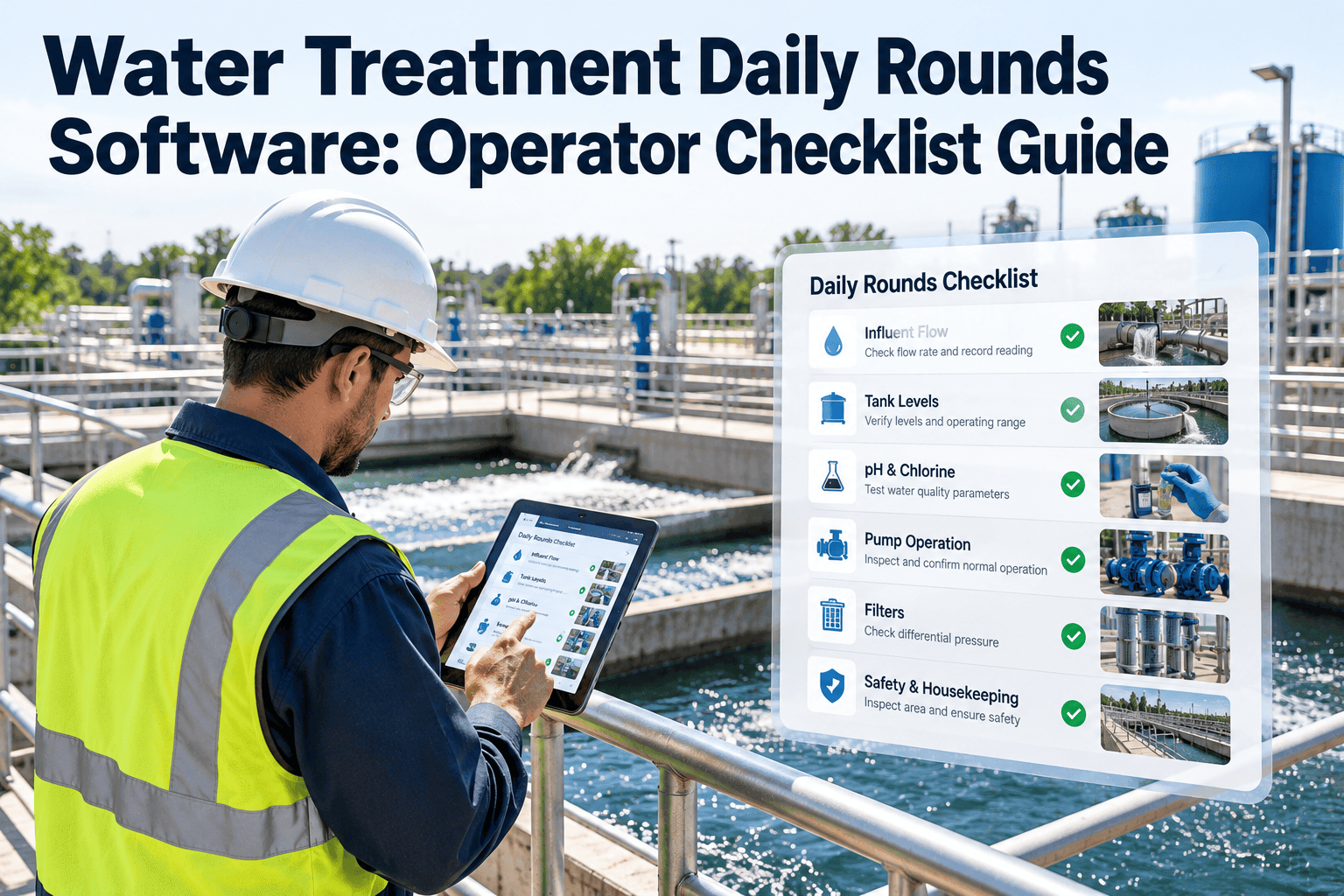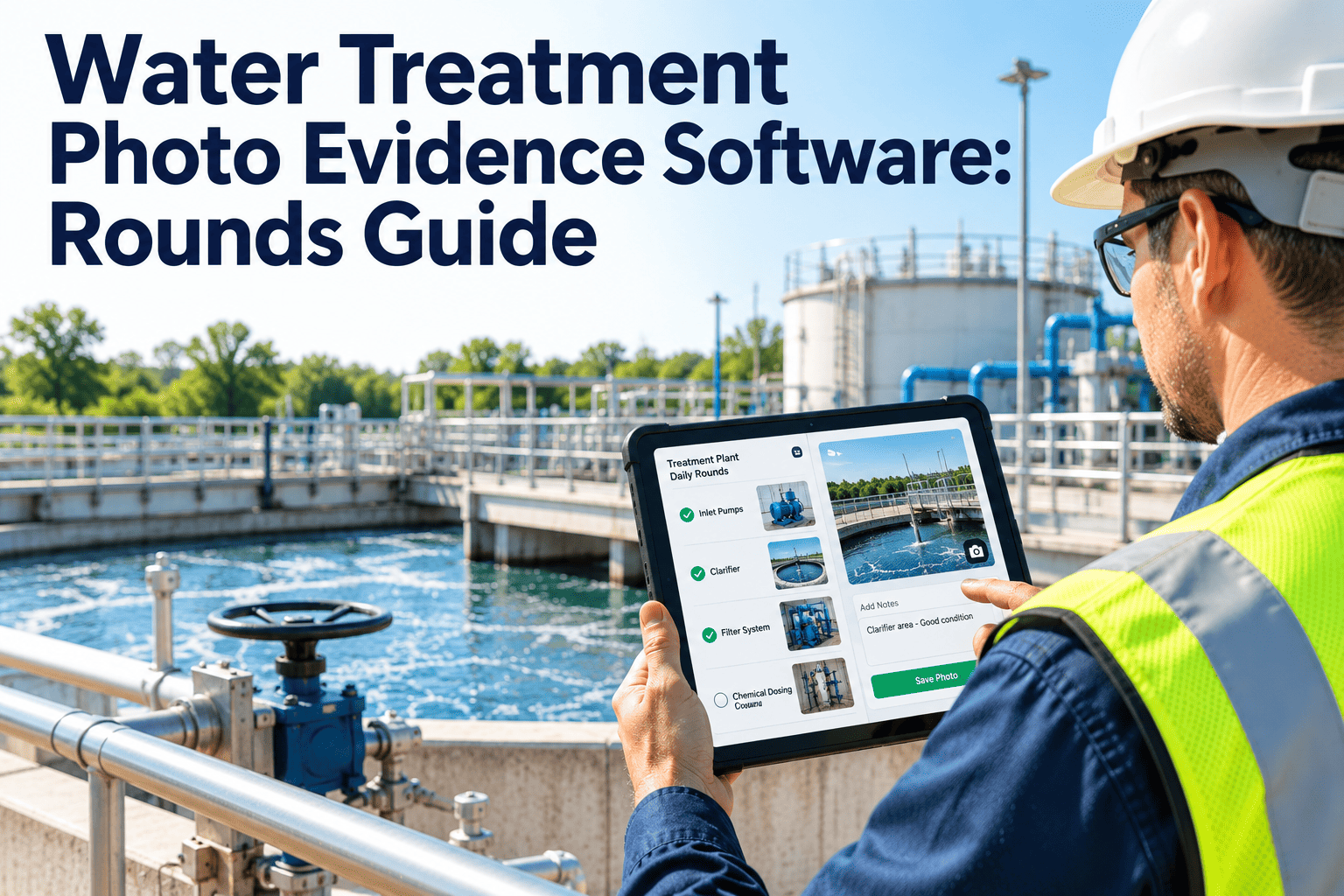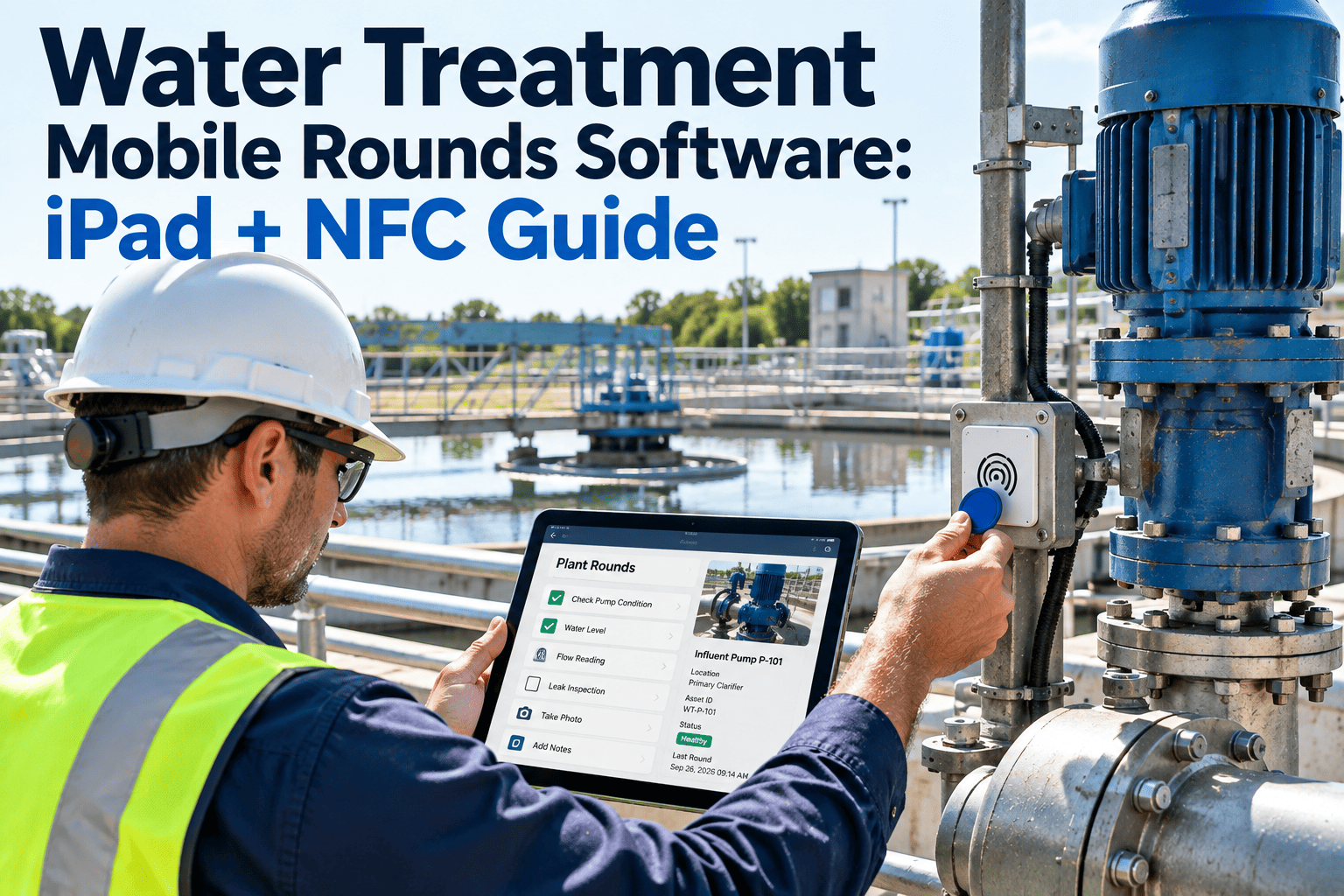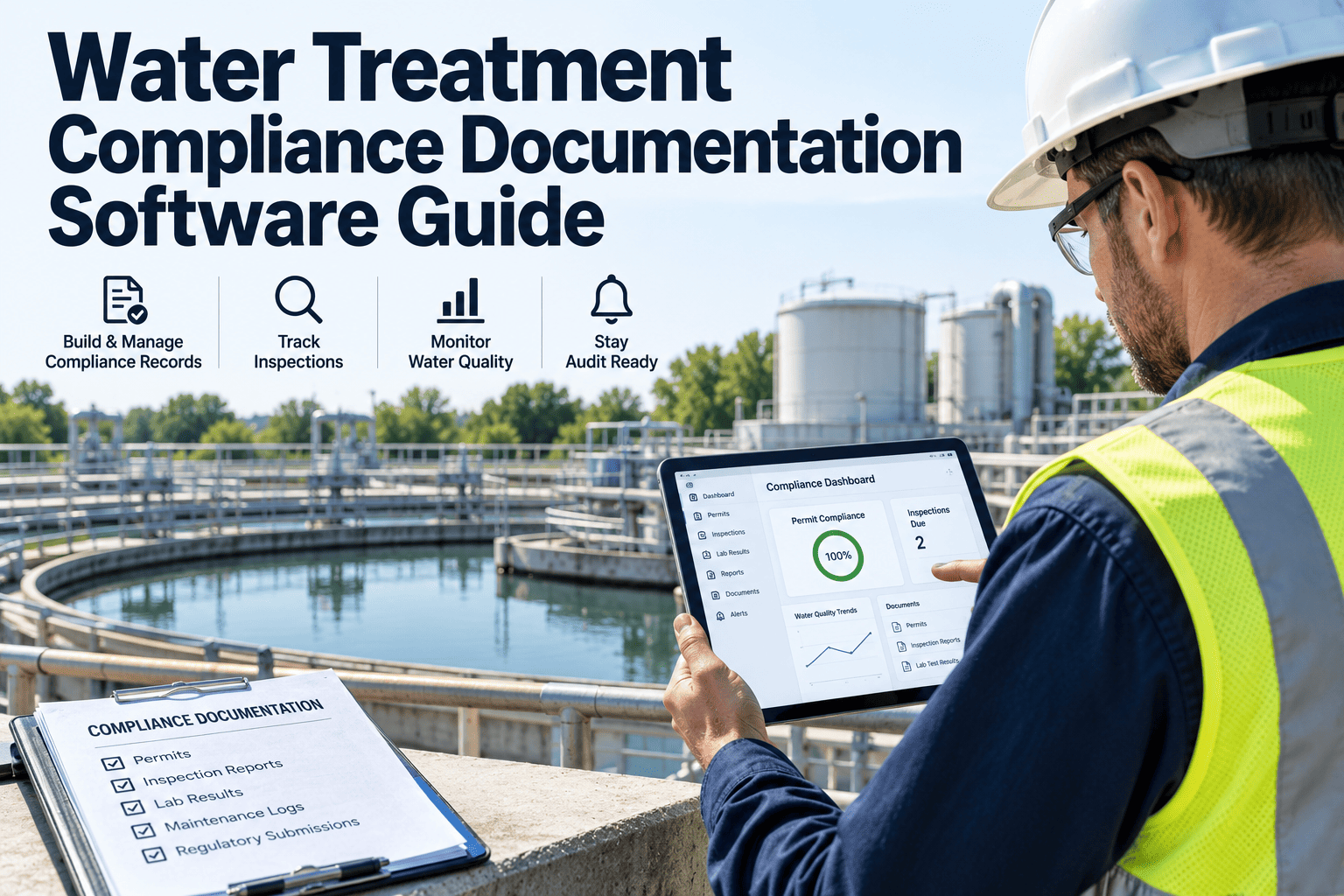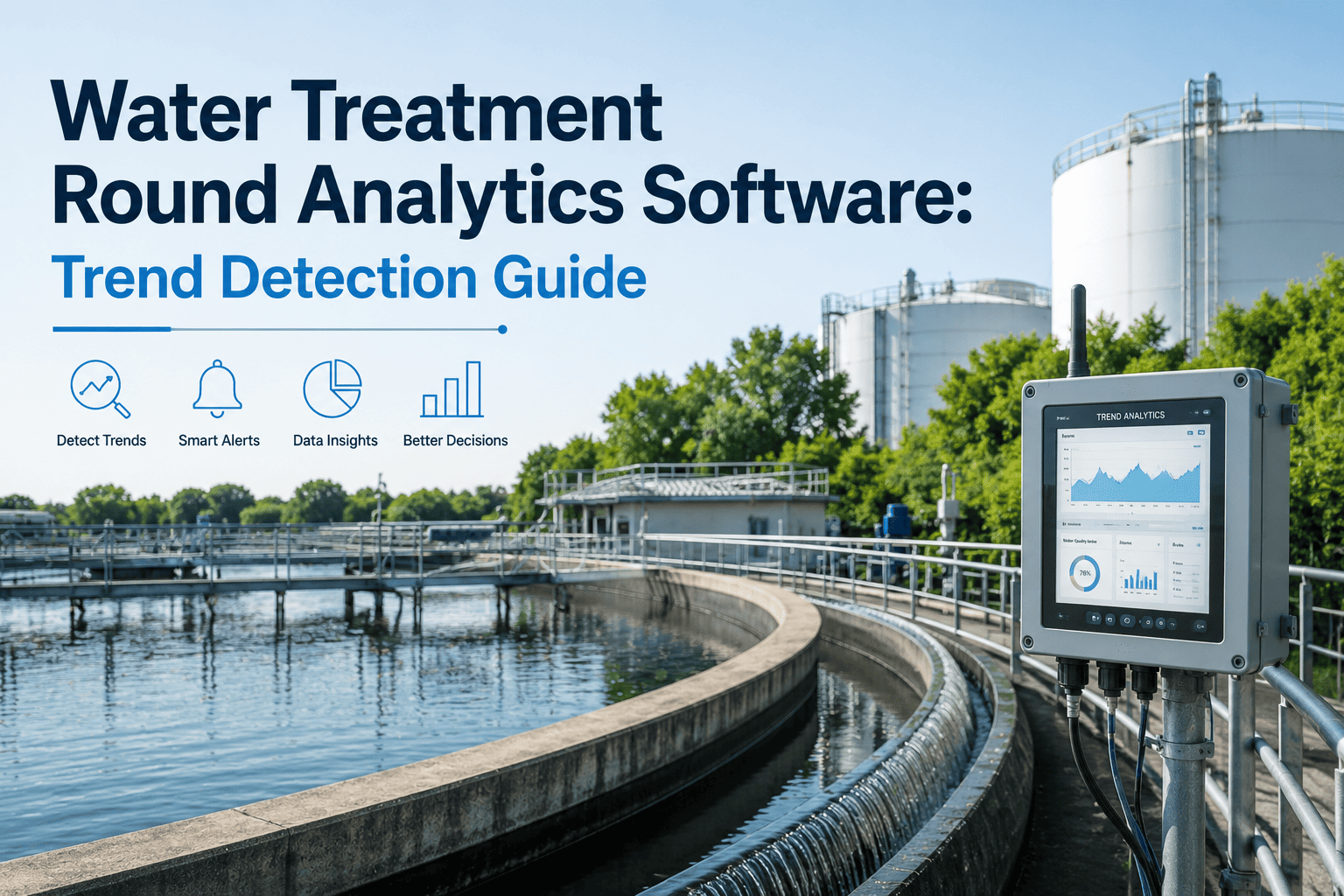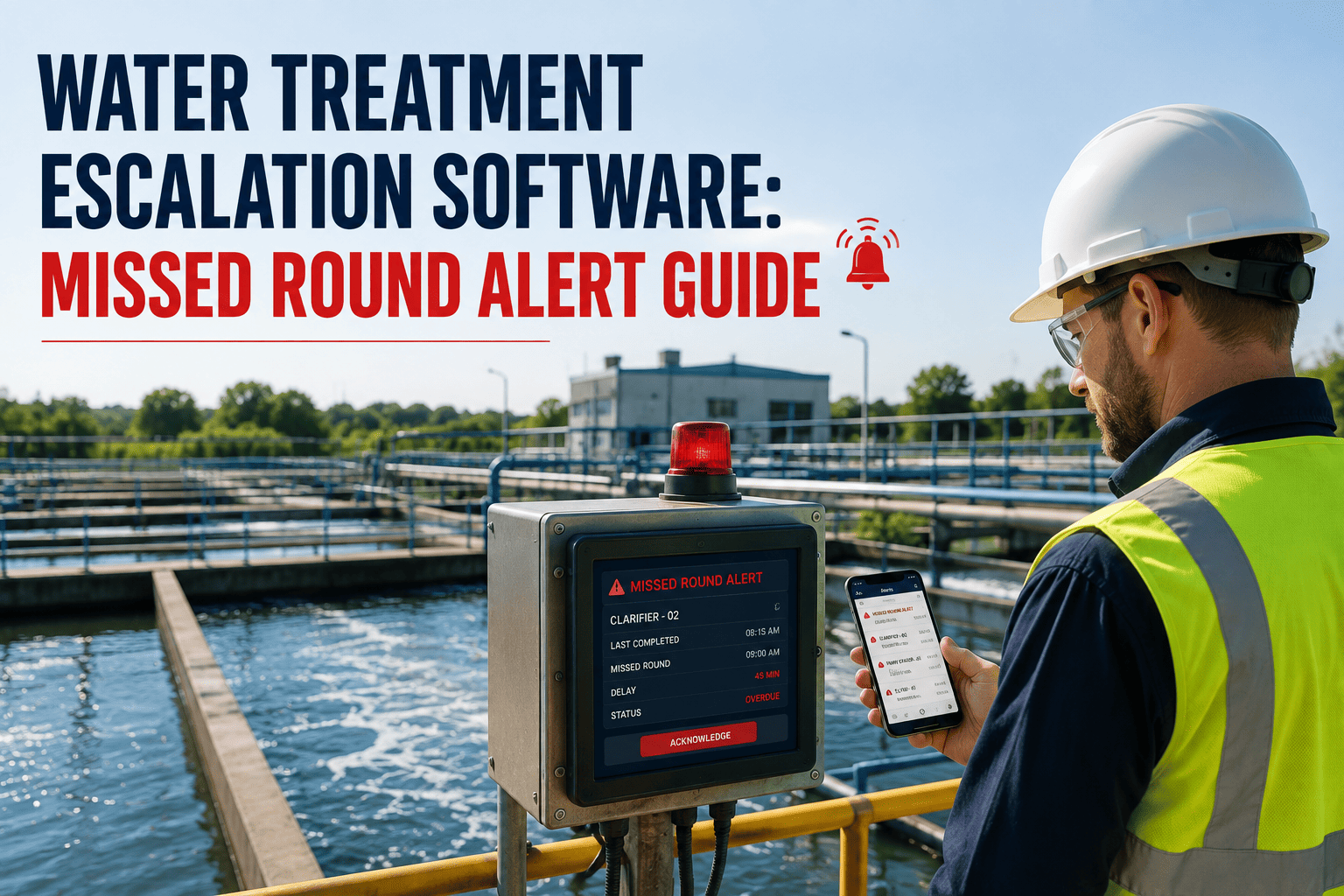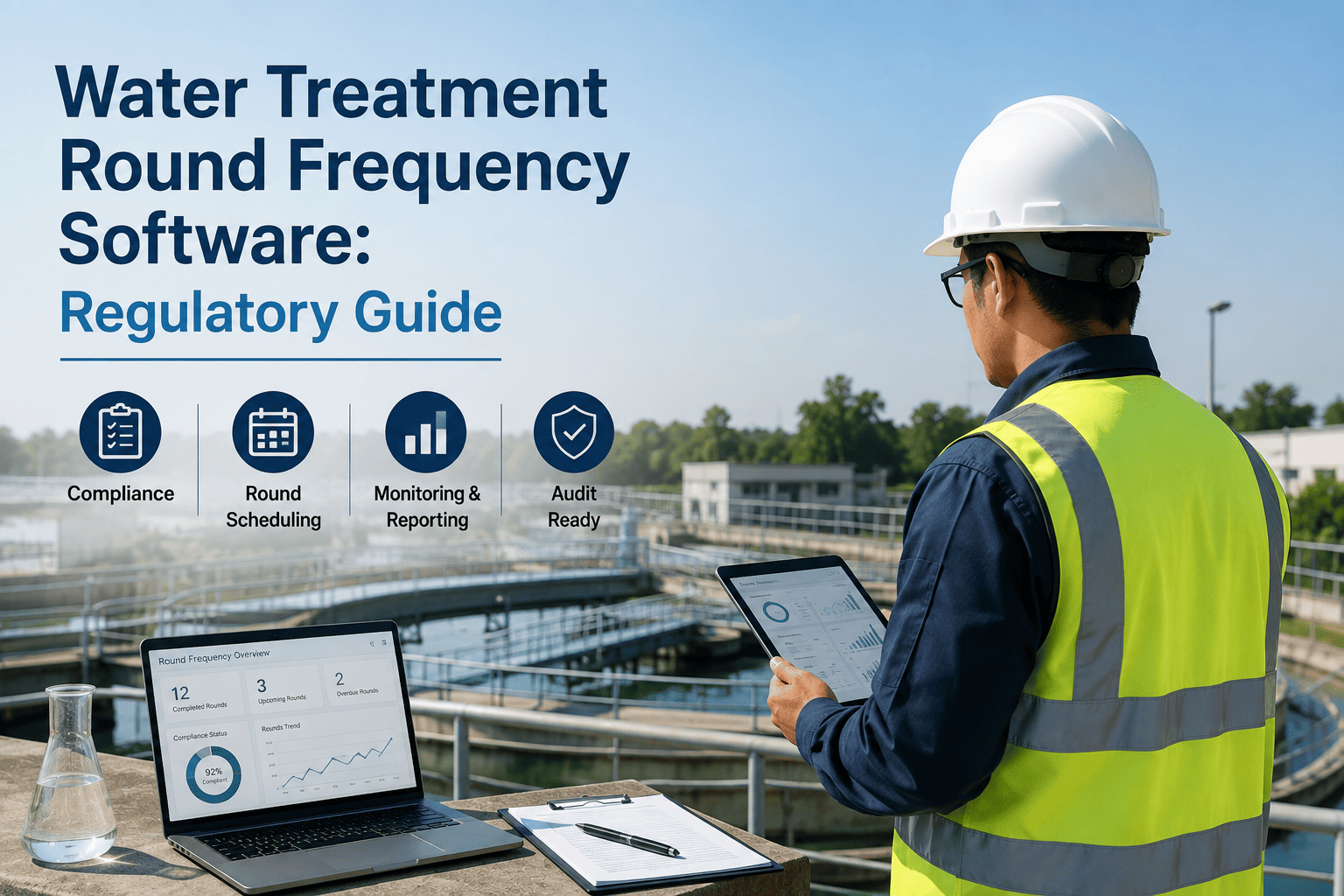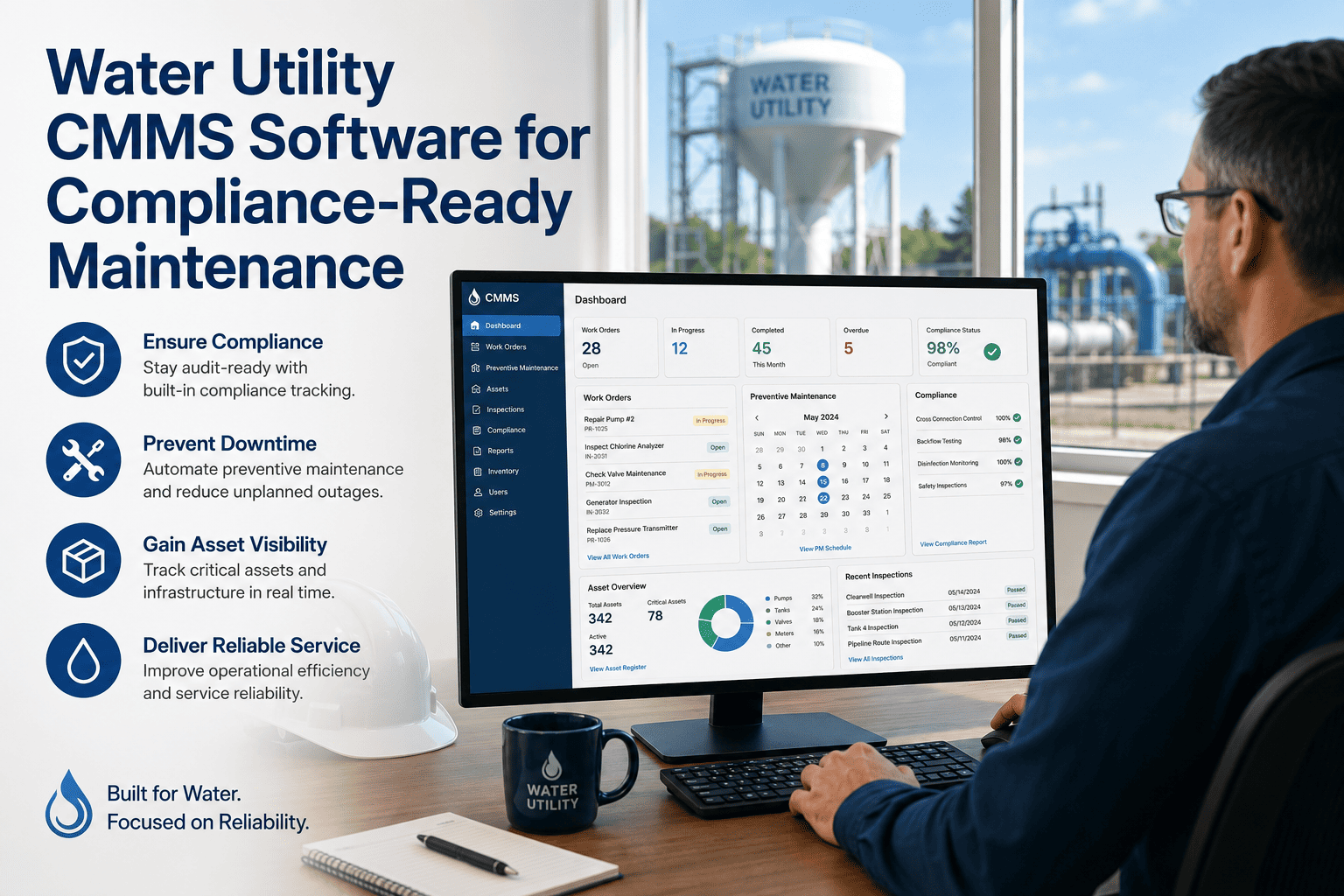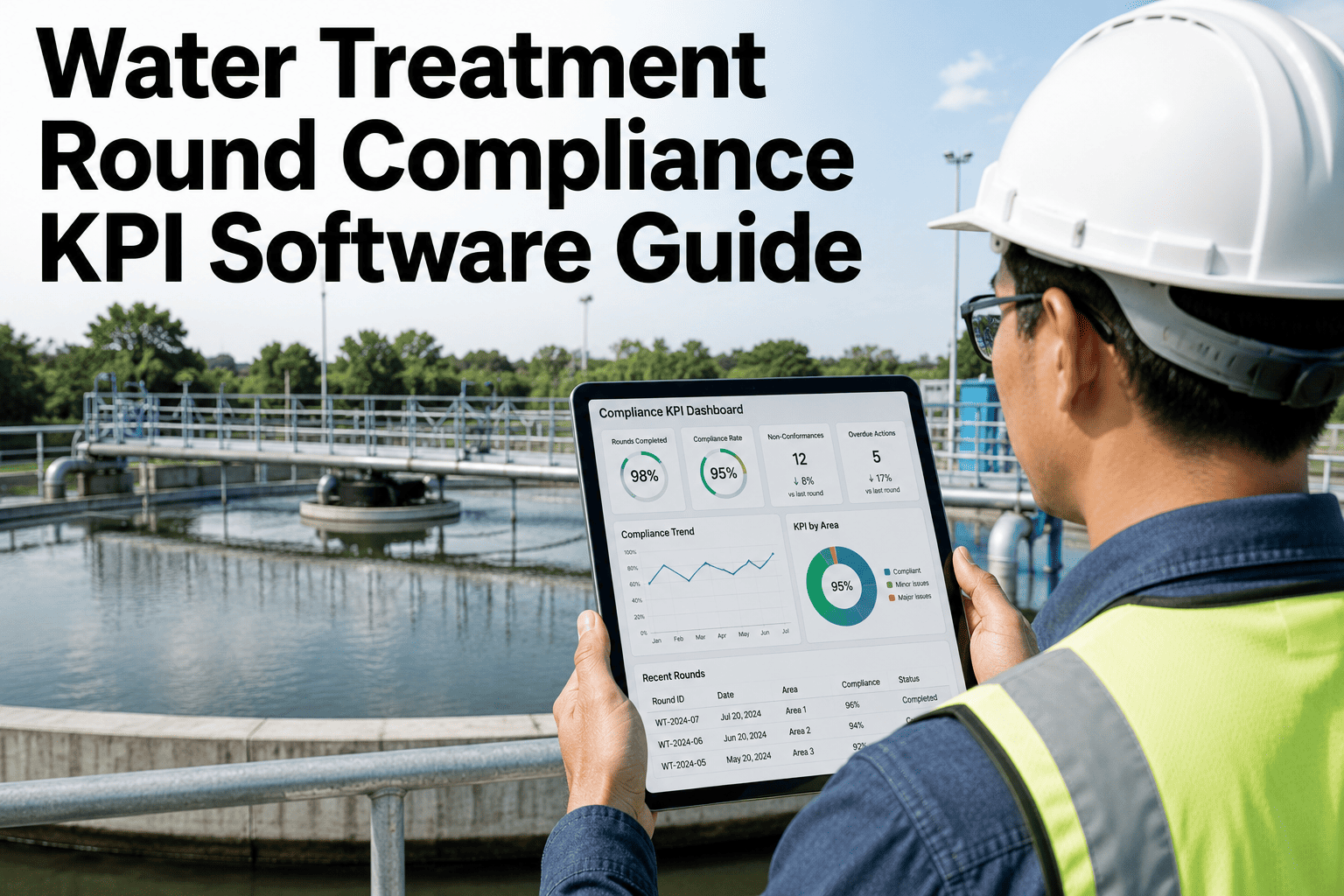
A chief operator's worst morning does not start with an alarm — it starts with a state inspector asking to see the 2 a.m. round log from three weeks ago and finding a gap. Every water treatment plant runs on operator rounds: scheduled walks past chlorine residual readings, turbidity meters, pump pressures, and tank levels that keep the plant inside its permit and keep the public safe. When those rounds live on a paper clipboard or a shared spreadsheet, nobody actually knows the completion rate until an auditor asks for it, and by then a missed round from the overnight shift is no longer a training conversation — it is a documented compliance gap with the primacy agency's name on it. See how Oxmaint turns round completion into a live KPI — free trial, no credit card required.
These numbers matter because a low round completion rate rarely announces itself. A plant can run for months with an 80% completion rate and no visible problem, because the checkpoints that get skipped are usually the ones that read fine most of the time — until the one week they do not, and there is no record showing whether that week's readings were ever taken at all. The gap between "probably fine" and "provably fine" is exactly what a round compliance KPI closes.
What Round Compliance KPI Actually Measures
Round compliance KPI is the percentage of scheduled operator rounds that were actually completed, on time, with a valid reading logged against every checkpoint on the route. It sounds simple, but almost no plant can produce this number reliably from paper logs, because a completed round only counts if every stop was checked, every reading was recorded at the time it happened rather than reconstructed at shift's end, and the log itself has not been altered after the fact. State primacy agencies increasingly expect utilities to demonstrate this discipline as part of routine sanitary surveys, not just after a violation.
This applies whether the facility is a single small groundwater plant with one certified operator covering every shift, or a regional surface water treatment system running three shifts across multiple plants with a chief operator overseeing all of them. Smaller systems often assume round KPIs are only a large-utility concern, but state primacy agencies increasingly ask small and medium systems the same sanitary survey questions, and a one-operator plant has less redundancy to absorb a missed round than a large one does.
Common Objections and How the Data Answers Them
Every operations team raises the same concerns before moving rounds off paper. Here is how the numbers answer each one.
You Cannot Defend a KPI You Cannot Produce on Request.
Oxmaint logs every round the moment it happens, timestamped and location-verified, so your completion rate is a live number instead of a guess before a sanitary survey.
Why Rounds Get Missed in the First Place
Rounds get missed for reasons that have nothing to do with operator competence. A plant running short-staffed overnight has one operator covering a route built for two, and something gets skipped under time pressure. A shift handoff happens verbally at the door with no record of what the outgoing operator actually finished, so the incoming operator assumes a checkpoint was covered when it was not. A paper clipboard gets left in a truck, a reading gets written from memory an hour after the fact, or a whole page goes missing before it reaches the file cabinet. None of these are rare edge cases — they are the normal failure modes of a paper-based round process, and every one of them becomes invisible the moment the page is filed, because nobody reviews a paper log until something has already gone wrong.
The cost of that invisibility is not just a KPI you cannot report — it is the risk sitting underneath it. A missed chlorine residual check that would have caught a disinfection dip early instead surfaces as a boil-water notice. A skipped tank level check on the overnight shift becomes a low-pressure event that triggers a public notification requirement. Round compliance is not a paperwork exercise; it is the early-warning system for the plant, and a KPI that nobody can see in real time is a warning system nobody is actually watching. Book a demo to see how automated round alerts catch a gap the same shift it happens.
Consider a common scenario: an overnight operator skips the hourly turbidity check at a filter because an alarm elsewhere on the plant pulled attention away for twenty minutes. On paper, that gap disappears — the next reading gets logged and looks normal, and nothing in the file suggests anything was ever missed. In a digital system, that same gap triggers an alert before the shift ends, giving a supervisor the chance to review the surrounding readings and confirm nothing slipped through undetected. The difference between those two outcomes is not operator skill — it is whether the system watching the rounds is capable of noticing a gap at all.
The Three Views Every Chief Operator Needs
A single plantwide completion percentage hides more than it reveals. A defensible KPI dashboard breaks the same number down three ways, because the fix for a shift-level gap is different from the fix for an operator-level gap or a plant-level gap, and a chief operator presenting a single blended number to a board or a regulator is presenting a number that cannot actually be acted on.
From Paper Clipboard to Digital Round in Four Stages
Moving a plant off paper rounds does not require a shutdown or a multi-month IT project — most utilities are fully digital within three weeks.
The Next Sanitary Survey Will Ask for This Number.
Digital round tracking is live within three weeks, and every day without it is a day of completion data your plant cannot produce on request.
Primacy & Regulatory Coverage Across Regions
Round documentation standards differ by primacy agency and jurisdiction, and a round compliance record has to hold up in whichever format the local regulator expects. A utility operating across state or provincial lines needs its round data to satisfy the strictest of the jurisdictions it serves, not the most lenient, because a single inconsistent record can undermine confidence in the whole compliance program during a survey.
Oxmaint vs Other Round Tracking Options
Swipe to view the full comparison table
| Capability | Oxmaint | MaintainX | UpKeep | Fiix (Rockwell) | Limble CMMS | IBM Maximo | Hippo (Eptura) |
|---|---|---|---|---|---|---|---|
| Percent-Complete by Shift/Operator/Plant | Automated rollup dashboard | Not available | Limited | Custom config | Not available | Custom build | Not available |
| Missed Round Alerts | Real-time, same shift | Not available | Not available | Enterprise tier | Not available | Configurable | Not available |
| GPS-Verified Checkpoints | Built-in, field-ready | Basic location | Basic location | Enterprise tier | Basic location | Full GIS | Basic location |
| Chain-of-Custody Reading Logs | Timestamped, tamper-evident | General log | General log | Custom config | General log | Configurable | General log |
| Offline Mobile | Full offline + sync | Online only | Limited offline | Limited offline | Limited offline | Limited | Online only |
| Deploy Time | 7–21 days | 2–3 weeks | 2–4 weeks | 4–12 weeks | 1–2 weeks | 6–18 months | 2–6 weeks |
The distinction that matters here is not whether a platform can log a work order — most can. It is whether the platform was built to answer the exact question a sanitary survey asks: what was your round completion rate, broken down by shift, operator, and plant, for the audit period. General-purpose maintenance software treats a round as just another checklist. A round compliance KPI dashboard treats it as a regulatory number that has to be defensible on demand.
Proven Results
Data Security & Chain-of-Custody
A round log carries the same evidentiary weight as any other compliance record, which means it has to be timestamped, attributed to the operator who logged it, and resistant to after-the-fact editing. If a reading is ever questioned during an investigation or a legal proceeding, the record has to show not just what the value was, but who logged it, when, and from where.
Frequently Asked Questions
What counts as a "completed" round for KPI purposes?
How quickly are missed rounds flagged to a supervisor?
Can this data be exported directly for a sanitary survey?
Does the mobile app work at plants with poor cell coverage?
How is operator-level data used without turning into a blame tool?
Know Your Round Compliance Rate Before the Regulator Asks.
Percent-complete by shift, operator, and plant — tracked automatically, exportable on demand. Free to start. Live in under three weeks.