Most water utilities can tell you how old a pipe is. Far fewer can tell you what condition it is actually in — and that gap is exactly what AWIA's risk and resilience requirement was built to close. Community water systems serving more than 3,300 people must evaluate the resilience of their pipes, physical barriers, source water, treatment, storage, distribution, and electronic control systems, then recertify that assessment every five years. A spreadsheet built once for a certification deadline cannot keep up with a distribution system that changes every month. A condition assessment system that scores pipes, valves, hydrants, and plant assets continuously can. Start a free trial with OxMaint to see what a live, always-current condition registry looks like next to a five-year-old binder.
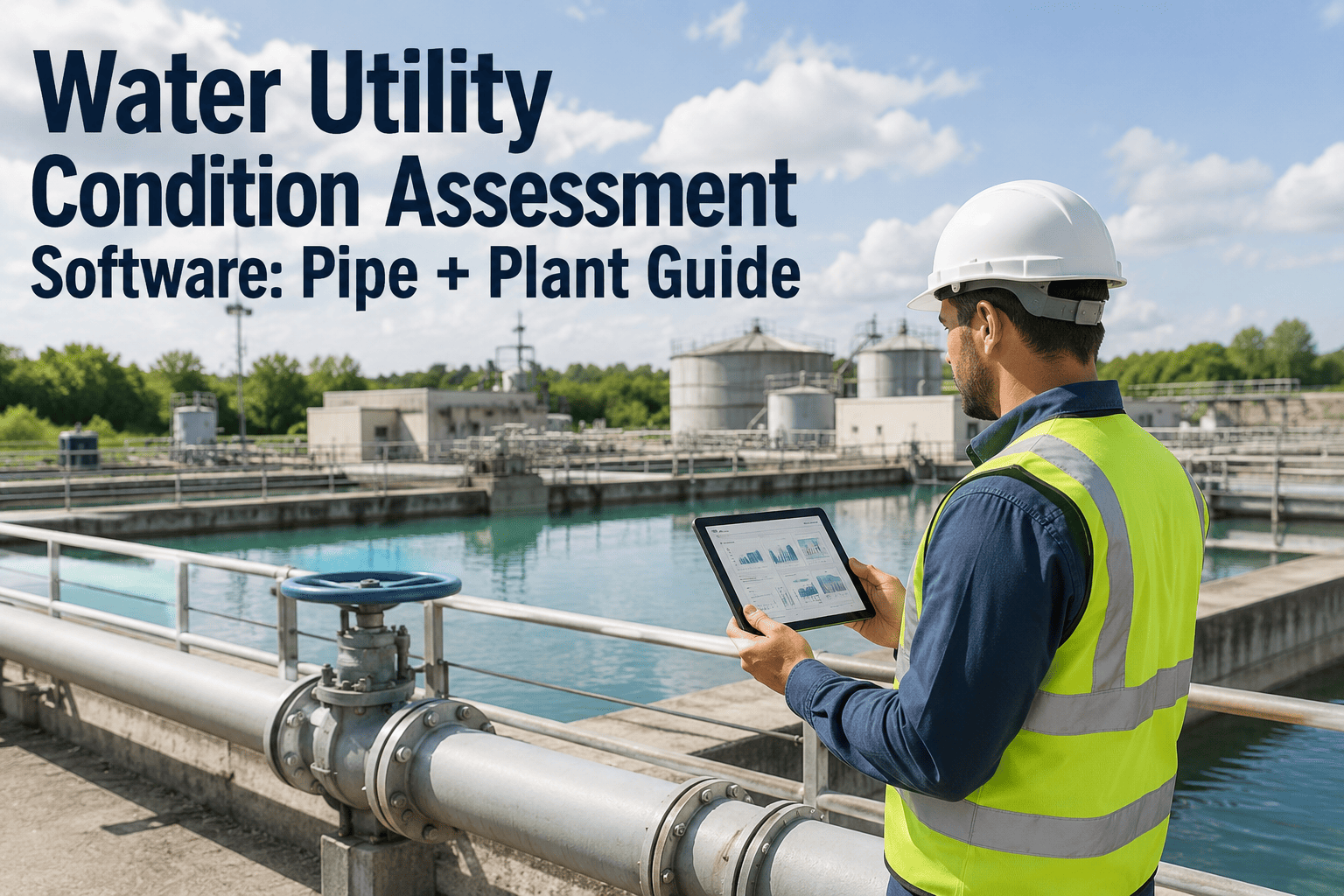
Water Utility Condition Assessment Software for Pipes, Valves, Hydrants, and Treatment Plants
Score every asset in your system on a consistent condition scale, keep the evidence behind every score, and walk into your next AWIA recertification with a registry instead of a reconstruction project.
The Asset Categories Every Condition Assessment Has to Include
AWIA does not leave the scope of a risk and resilience assessment open to interpretation. Section 2013 names the categories directly, and a condition assessment program that skips any of them leaves a gap an auditor or a failure event will find eventually.
Pipes and Conveyances
Transmission mains, distribution pipe, and the conveyances that move water between every other asset in the system.
Physical Barriers
Fencing, gates, hardened doors, and access control at treatment sites, tanks, and well fields.
Source Water and Intake
Wells, reservoirs, and intake structures — the condition of the point where raw water enters the system.
Treatment Facilities
Pretreatment and treatment plant assets, from chemical feed systems to filtration equipment.
Storage and Distribution
Tanks, pump stations, valves, and hydrants that carry treated water the rest of the way to customers.
Electronic and Control Systems
SCADA and automated control systems, including the security of those systems, named explicitly under AWIA.
A Condition Score Is Only Useful If Every Asset Uses the Same Scale
The most common failure in a condition assessment program is inconsistency — one inspector's "fair" is another inspector's "poor." A defensible assessment uses a fixed scale applied the same way across every pipe segment, valve, hydrant, and plant asset in the system.
What a Condition Assessment Looks Like for Pipes, Valves, Hydrants, and Plants
A single condition scale needs different evidence behind it depending on the asset. Here is what inspectors and utilities typically record for each category.
Distribution Pipe
Material, install year, break history, soil corrosivity, and leak survey results combine into a single condition score per segment rather than a system-wide average.
Valves
Exercise history and turn-count records confirm a valve actually operates when needed — a valve that has not been exercised in years is scored as a risk even if it looks fine on paper.
Fire Hydrants
Flow test results, flush records, and physical inspection of the barrel and nozzles determine whether a hydrant is fire-ready, not just present on a map.
Treatment Plant Assets
Pumps, filters, and chemical feed equipment are scored against maintenance history, fault frequency, and remaining useful life rather than a single visual inspection.
Manual Condition Assessment vs a Live Digital Registry
| Factor | Spreadsheet / Binder | CMMS Condition Registry |
|---|---|---|
| How current the data is | As current as the last manual update cycle | Updated as each inspection or repair happens |
| Consistency of scoring | Varies by inspector and by year | Same fixed scale applied to every asset |
| Evidence behind a score | Often just a number, no supporting record | Photos, inspection notes, and history attached per asset |
| Prep time for recertification | Weeks of manual compilation | Exported directly from the live registry |
| Linking condition to capital planning | A separate, disconnected exercise | Condition scores feed replacement prioritization directly |
Replace the Five-Year Scramble With a Registry That's Always Ready
OxMaint keeps a live condition score for every pipe segment, valve, hydrant, and treatment plant asset in your system, backed by inspection records, photos, and maintenance history — so your next AWIA recertification is an export, not a project.
How OxMaint Builds and Maintains Your Condition Registry
Every Asset Gets a Digital Record
Pipe segments, valves, hydrants, and plant equipment are entered once as assets with install date, material, and location, forming the registry that every future assessment builds on.
Inspections Feed a Fixed Condition Scale
Field inspections are logged against the same one-to-five scale for every asset type, with photos and notes attached directly to the record — no separate spreadsheet to reconcile later.
Scores Update as Conditions Change
A new break, a failed flow test, or a completed repair updates the asset's condition score immediately, keeping the registry current instead of frozen at the last audit date.
Recertification Becomes an Export
When the five-year AWIA cycle comes around, the full condition history for every asset category is already documented and ready to hand to whoever is preparing the assessment.
Where Condition Assessment Fits in the Five-Year AWIA Cycle
What Utilities Report After Moving Condition Data Into One System
Water Utility Condition Assessment Software — Common Questions
Does AWIA require a specific condition assessment method or scoring scale? +
Which water systems actually have to complete a condition-based risk and resilience assessment? +
How is a pipe's condition score different from just tracking its age? +
Can condition assessment data support capital improvement and grant applications? +
How long does it take to set up a condition registry for an existing distribution system? +
Build the Condition Registry Your Next Recertification Will Need
OxMaint keeps a live, evidence-backed condition score for every pipe, valve, hydrant, and treatment plant asset in your system — so the five-year AWIA cycle stops being a scramble and becomes a routine export from data you already have.