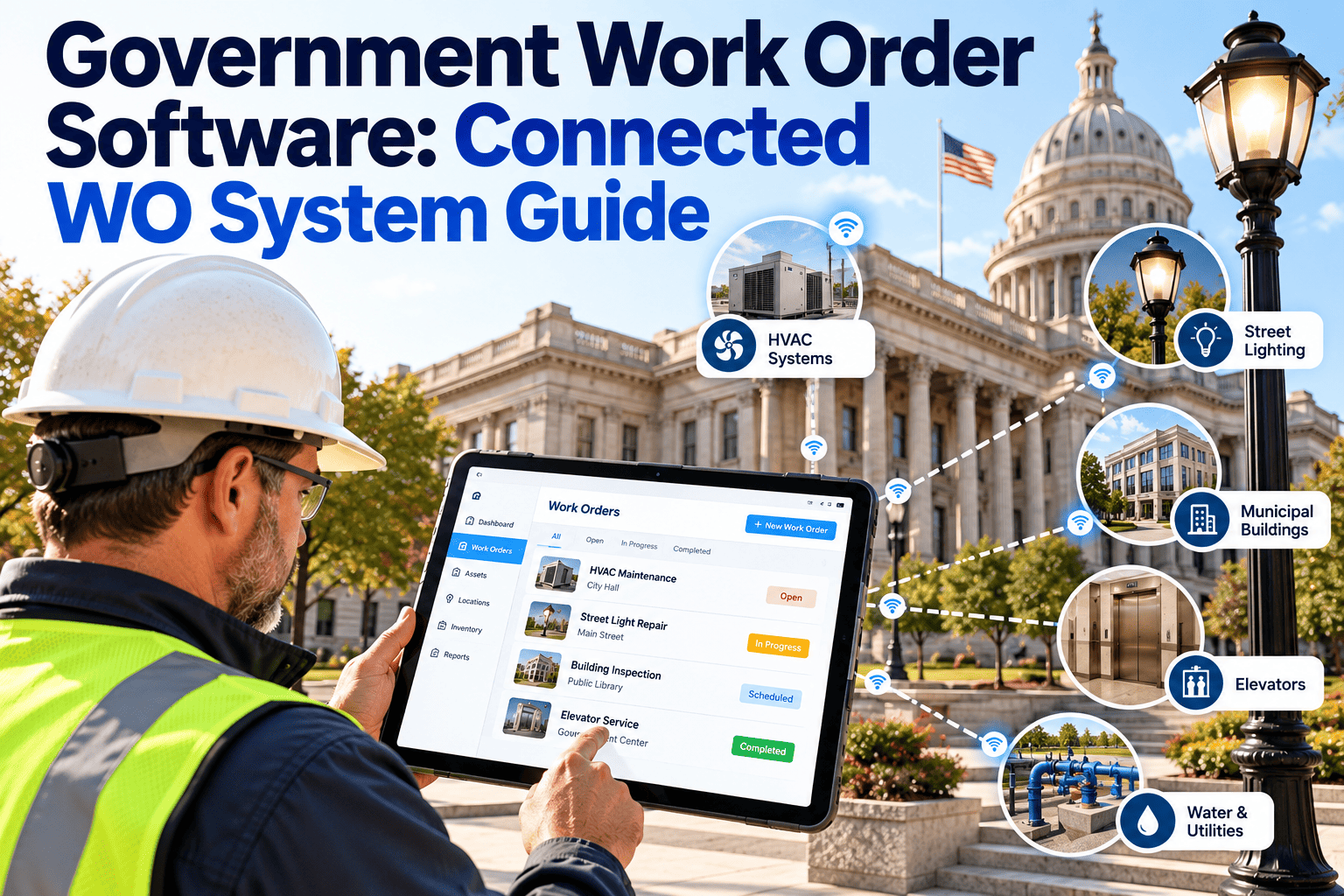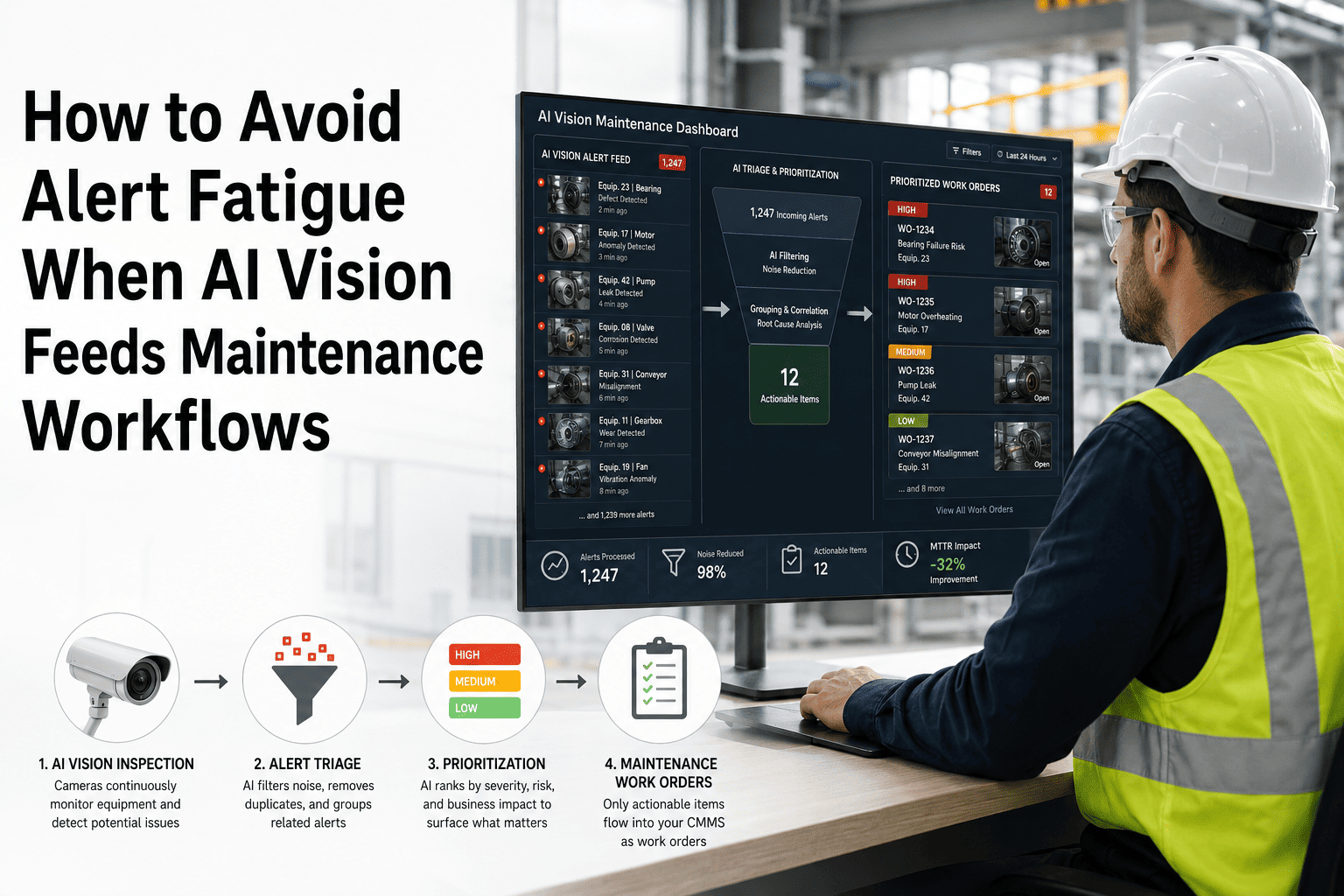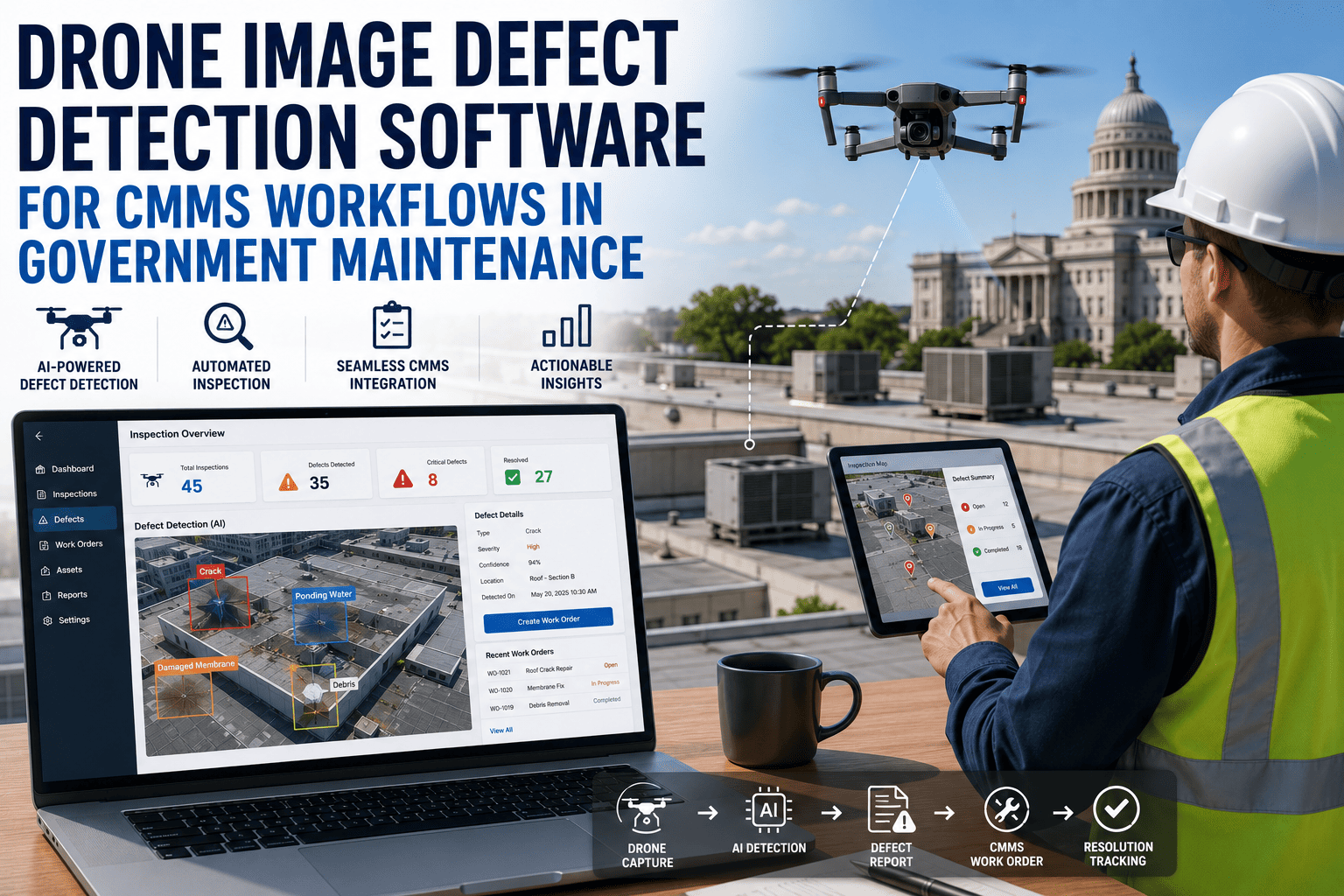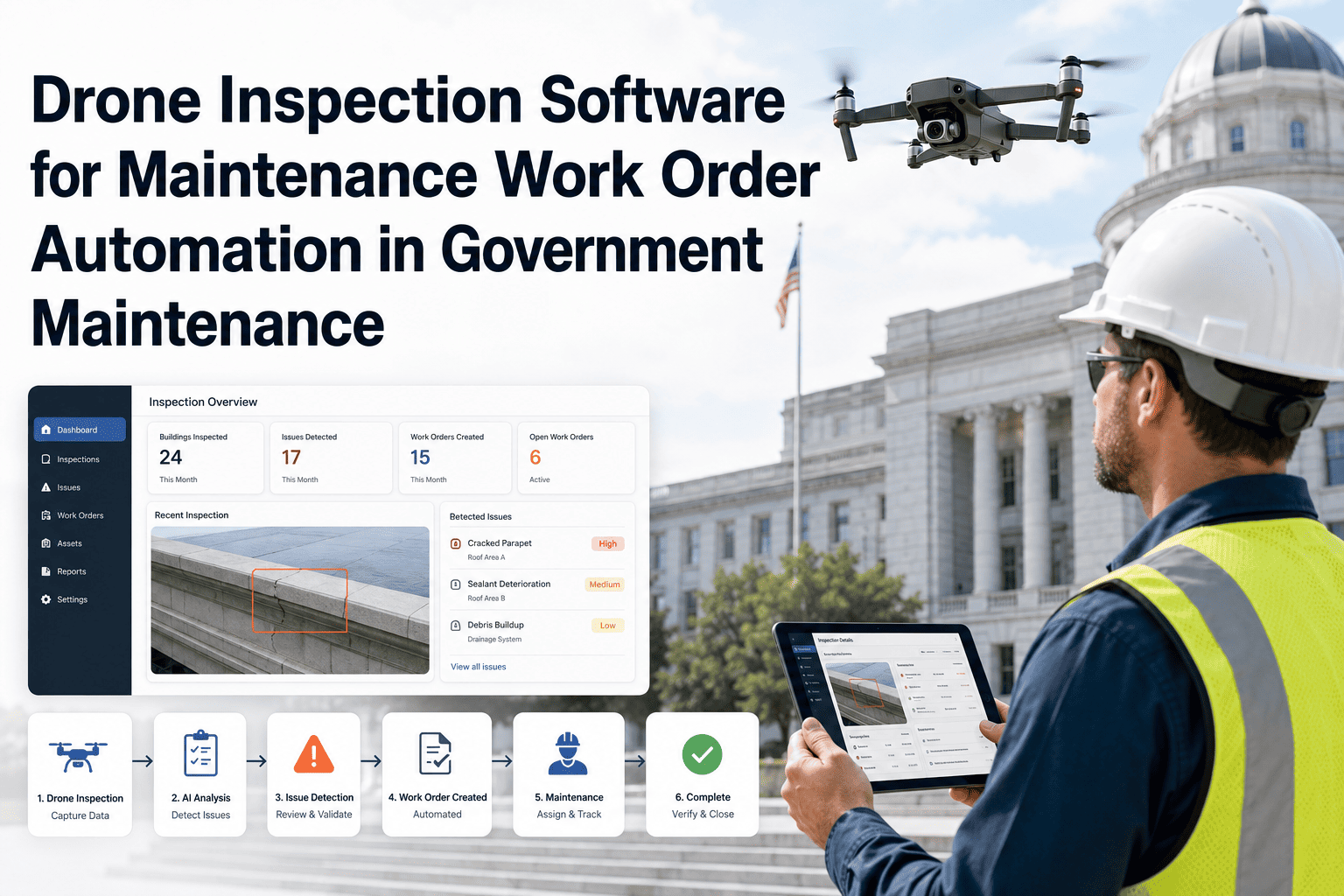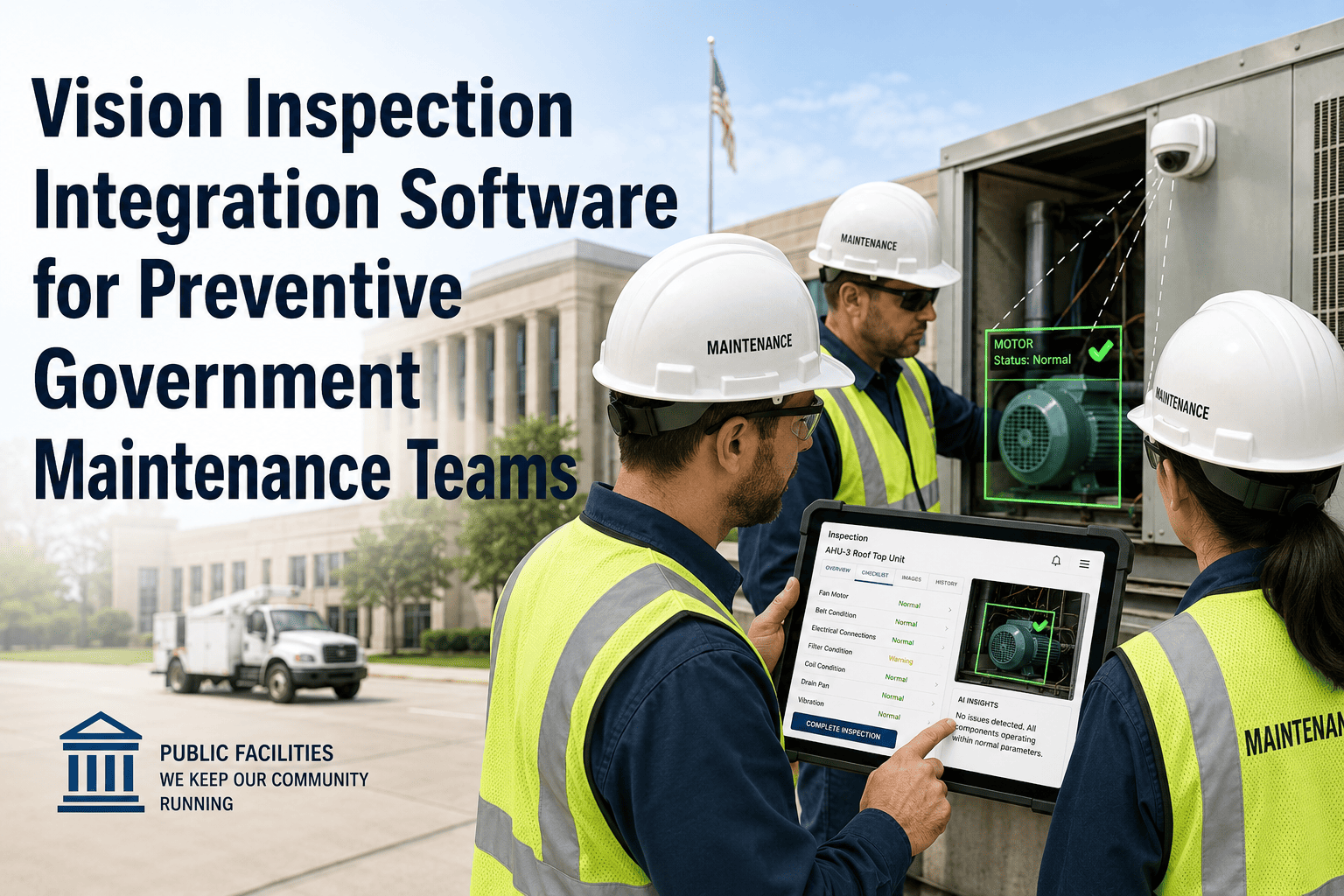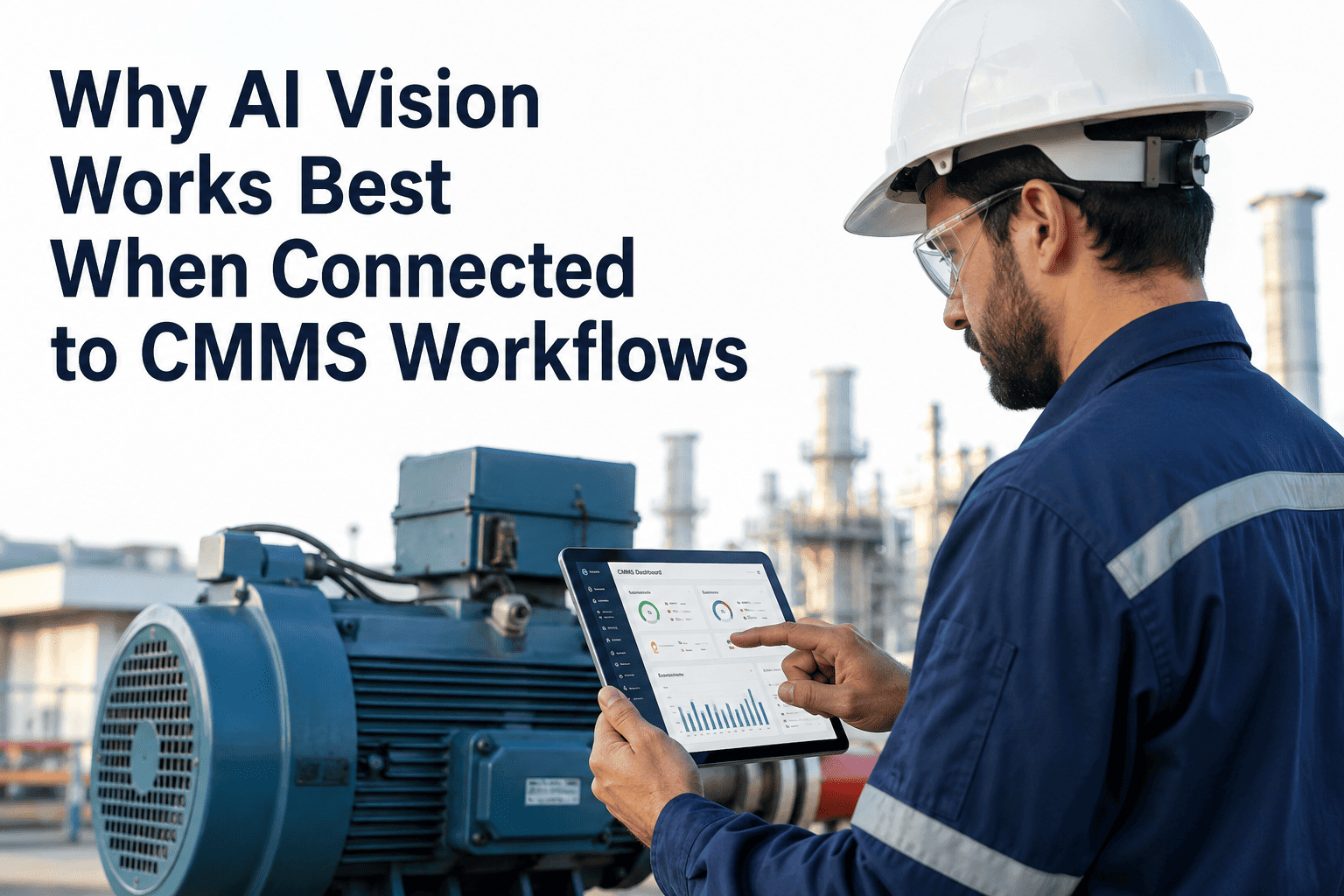
AI vision technology has advanced rapidly — modern systems can detect surface cracks, corrosion, water intrusion, and equipment wear with accuracy that rivals experienced inspectors. But government maintenance teams that deploy AI vision as a standalone system quickly discover its core limitation: detection without action is just surveillance. When a camera flags a failing road joint at 2 AM on a Tuesday, the value is not in the image itself — it is in whether a work order gets created, the right crew gets dispatched, and the finding becomes a compliance record. That chain of events requires AI vision connected to OxMaint's CMMS workflow engine, not AI vision running in isolation.
Why AI Vision Only Delivers Results When It's Wired Into Your CMMS
Detection is the easy part. The value of AI vision comes from what happens after — and that requires a live connection to your maintenance workflow.
Detects
Creates WO
Dispatched
Record
What Happens When AI Vision Runs Without CMMS Integration
AI findings land in a vendor dashboard or email notification. Someone must manually review, prioritize, and create a work order. The human bottleneck is the same as before — just shifted downstream.
A standalone AI system sees a crack. A CMMS-connected system sees a crack on Asset #4471, which has had two prior repair orders in 18 months, is in a high-traffic zone, and is rated P2. Those two scenarios require different responses.
Government audits require a chain of custody from inspection finding to corrective action to closure. When AI findings live in a separate system, that chain must be manually reconstructed at audit time — a costly, error-prone process.
Field crews who don't see AI findings in their CMMS tool find the same issues independently and create duplicate work orders. Two systems, two records, no single source of truth — and reporting becomes unreliable.
AI Vision That Writes Work Orders, Not Just Alerts
OxMaint connects AI vision detection to structured work orders, asset history, and compliance records — automatically, without a human in the middle.
What a Connected AI Vision + CMMS System Looks Like
| AI Vision Event | CMMS Action Triggered | Government Compliance Outcome |
|---|---|---|
| Defect detected, severity high | P1 work order auto-created, supervisor notified | Finding timestamped, response time tracked against SLA |
| Defect detected, severity medium | P2 work order queued, scheduled in next available window | Defect logged to asset history, trend counter incremented |
| Same asset defect — third occurrence | Work order escalated, replacement assessment flag added | Repeat failure record created for capital review |
| Work order completed by field crew | Asset record updated, AI monitoring sensitivity recalibrated | Closure documentation stored, audit trail complete |
| No defect detected — clean inspection pass | Inspection record logged with pass status and timestamp | Compliance inspection frequency requirement fulfilled |
Connected vs Standalone: Government Team Results
We ran AI vision cameras on our highway drainage network for six months before integration. In that period, the system generated over 1,400 alerts. We acted on 190 of them. The rest sat in an inbox, got manually reviewed by someone who didn't have the work order system open, and either got created as duplicate tickets or never got addressed at all. When we connected the AI output directly to our CMMS work order engine with defect-to-priority routing rules, we went from a 14% action rate on AI alerts to 96%. The camera didn't get better. The workflow did.
Frequently Asked Questions
Does connecting AI vision to a CMMS require replacing existing inspection software?
In most cases, no. The connection is typically achieved through API integration — the AI vision system sends structured event data to the CMMS when a defect is detected, and the CMMS creates a work order using predefined rules. OxMaint supports this integration model, meaning government teams can keep their existing inspection workflows while adding AI vision as a continuous monitoring layer that feeds directly into the same work order queue. Replacement is only necessary if the existing system has no API capability or rigid work order schemas that cannot accommodate AI-sourced findings.
How do we prevent AI vision from flooding our CMMS with low-priority alerts?
The solution is threshold-based routing configuration: AI alerts below a defined severity threshold are logged to the asset record but do not generate work orders — they contribute to trend data instead. Only findings above the configured severity threshold automatically create work orders, and the priority level is set by the severity and asset criticality rules you define. This means your CMMS work order queue only receives actionable findings, and cumulative low-severity findings still inform your inspection cycle planning. Book a demo to see how OxMaint configures alert routing rules for government teams.
What happens when AI vision detects something that field technicians can't verify when they arrive?
This scenario — where an AI alert triggers a dispatch but the technician finds no visible defect on arrival — should be handled as a verification outcome, not treated as an error. The technician's finding should close the work order with a "not confirmed" status, and that outcome should feed back into the AI system's calibration data. Over time, the AI detection threshold and confidence requirements adjust based on verified versus unconfirmed findings, improving alert precision. OxMaint's mobile closure workflow includes verification outcome fields specifically designed to capture this feedback loop.
How should government maintenance teams prioritize which AI vision findings get immediate CMMS work orders versus which get logged for periodic review?
The routing decision should be based on two factors: defect severity rating (from the AI system) and asset criticality classification (from your asset register). High-severity findings on critical assets should always generate immediate work orders. Medium-severity findings on non-critical assets can be batched for review during scheduled inspection windows. Low-severity findings on any asset should log to defect history for trend analysis without creating individual work orders. OxMaint's AI vision integration module lets you configure these routing rules by asset class and severity tier — no custom code required.
Can AI vision findings and human inspection findings be stored in the same compliance record structure?
Yes, and they should be. A unified compliance record structure where AI-detected findings and human inspection findings are stored in the same format — with the source identified as AI or field technician — creates a complete picture of asset condition that neither source provides alone. Regulators reviewing government infrastructure compliance records increasingly expect this kind of integrated documentation, and having both sources in one system eliminates the manual reconciliation burden that comes from maintaining separate AI and human inspection archives.
Turn AI Detection Into Government-Ready Maintenance Action
OxMaint connects AI vision detection to structured work orders, asset history, field verification, and audit-ready compliance records — designed for public works teams who need results, not alerts.