Every spring, the same thing happens. Water that seeped into pavement cracks all winter freezes, thaws, and leaves hollow spots under the asphalt, and traffic punches through them within days. Reports flood in faster than any crew can drive. Cities running paper work orders and clipboard patrols often discover that the real problem is not the potholes but the process that tracks them. Here is why manual workflows break under the freeze-thaw surge, and how a digital system such as Oxmaint CMMS restores control.
Municipal roads · Freeze-thaw season · Pothole repair workflow
Why Manual Pothole Workflows Fail Cities Every Spring, and the Best Fix
Replace paper work orders and clipboard patrols with a digital detection, dispatch, and verification loop that holds up when spring reports arrive all at once.
1
Water enters
Meltwater and rain seep through cracks into the base
2
Water freezes
Ice expands and lifts the pavement surface
3
Ice thaws
A void remains under a weakened asphalt layer
4
Traffic breaks it
Wheel loads collapse the surface into a pothole
Spring Is a Queue Problem Before It Is a Pavement Problem
Public works crews do not suddenly forget how to patch. What changes is the arrival rate. A month of freeze-thaw cycles can produce a wave of failures at roughly the same time, and the workflow that handled a quiet autumn cannot absorb it.
Reports arriving
Crew capacity
Paper tracking capacity
When demand exceeds capacity, the order in which work is done becomes the whole game. Manual systems tend to serve the loudest complaint or the most recent call, not the most dangerous defect.
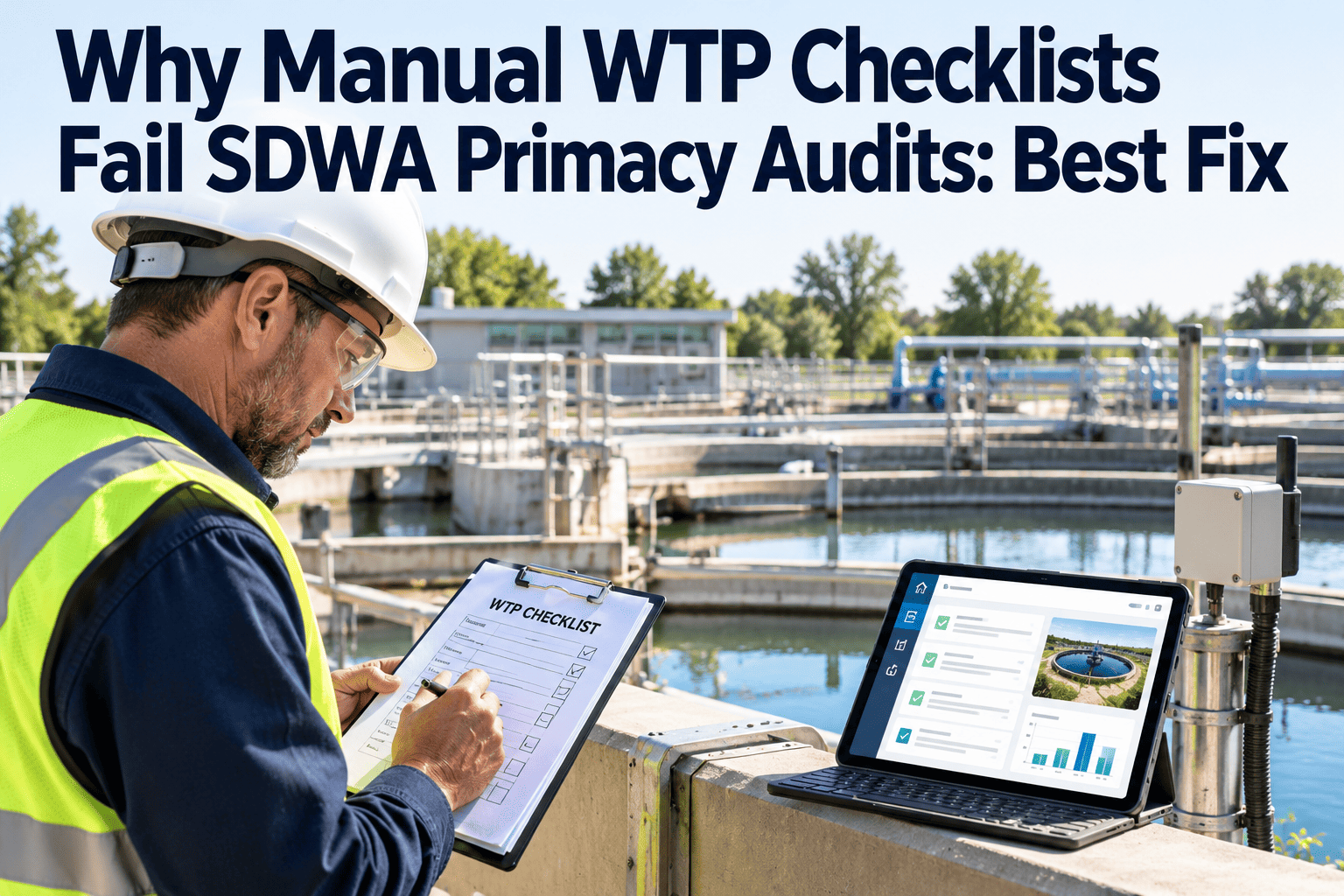
Seven Places Where Paper and Clipboards Break Down
01
Duplicate reports are never merged
The same pothole arrives through a phone call, an email, an app, and a councillor. Without location matching, it becomes four jobs and four visits.
02
Location is vague
"Near the school on Elm" costs a crew twenty minutes of searching. Missing coordinates waste the one resource spring never provides enough of: time.
03
Severity is a guess
Without size, depth, and road class on the record, a deep hole on an arterial can wait behind a shallow one on a cul-de-sac.
04
Dispatch depends on one person
The supervisor who knows the routes becomes the bottleneck. Vacations and sick days stall the whole queue.
05
Completion is not captured in the field
Paper slips return at the end of the week, sometimes illegible. Reports of what was patched lag days behind reality.
06
Temporary patches disappear from view
Cold patch placed in cold weather is often a stopgap. If nothing schedules the permanent repair, the same spot fails again.
07
No reliable proof of response
When a vehicle damage claim arrives, the city must show when it knew and what it did. Scattered paper rarely tells that story.
Stop Losing Potholes in the Paperwork
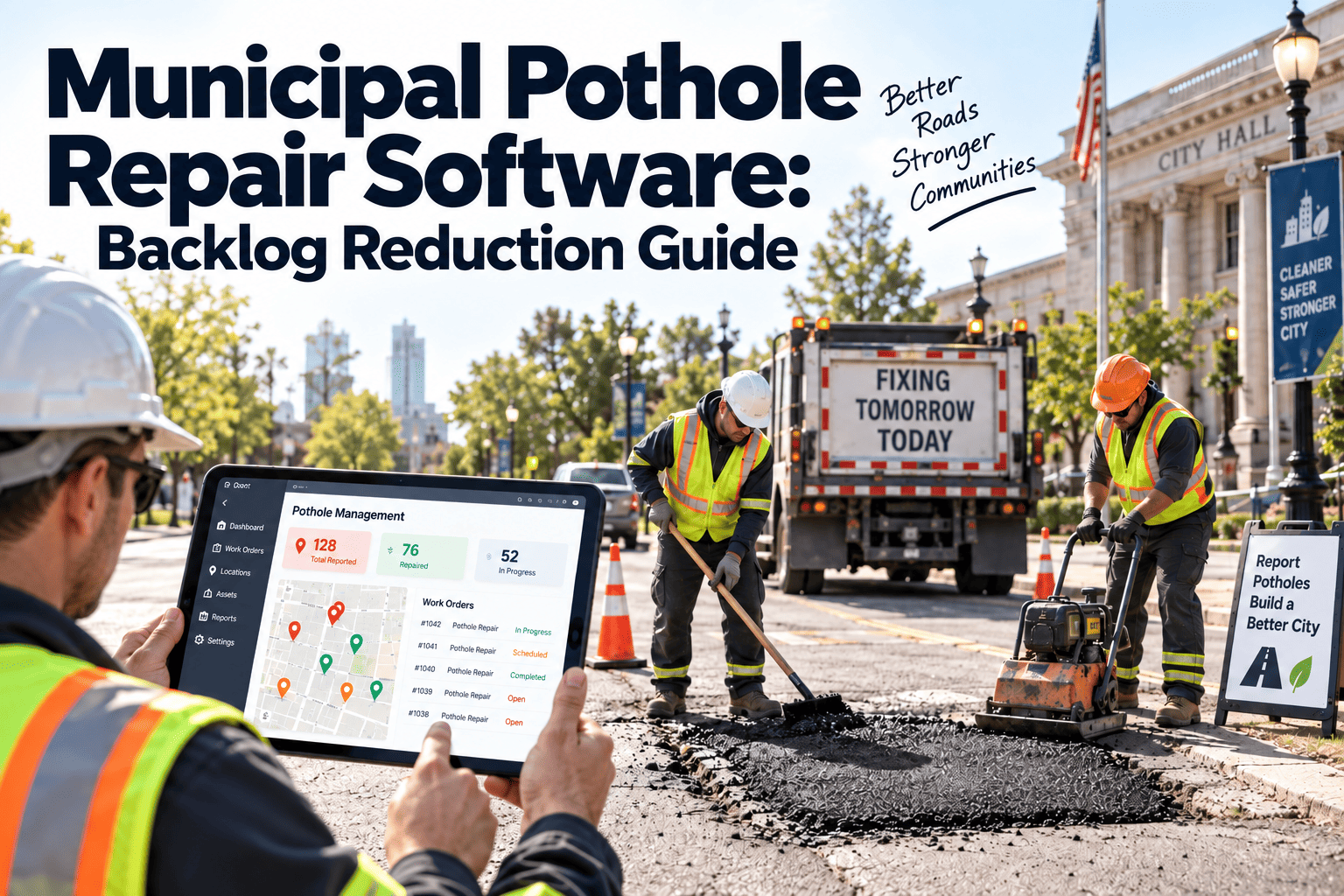
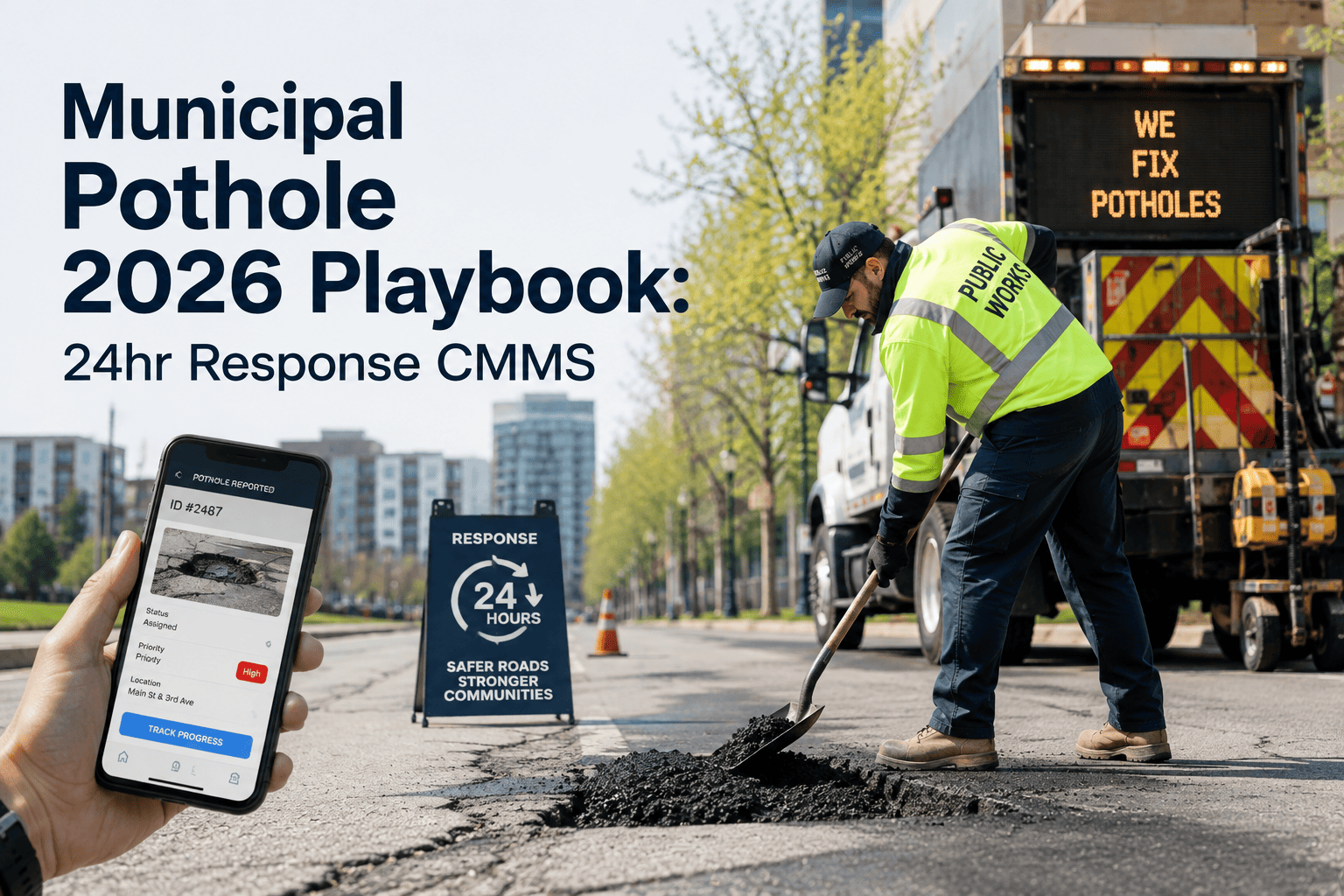
Oxmaint gives your public works team mobile work orders, location-based reports, and a live queue, so spring volume becomes manageable instead of chaotic.
One Pothole Report, Two Workflows
Follow a single report through both systems and the difference becomes concrete.
Manual workflow
- Clerk writes the complaint on a slip
- Supervisor sorts slips each morning
- Crew receives a route sheet with partial addresses
- Crew patches what it finds and notes it on paper
- Slip returns days later and is filed
- No one confirms the patch held
Digital workflow
- Report arrives with a pin and photo
- System flags a nearby open duplicate
- Road class and size set the priority
- Work order routes to a crew on mobile
- Crew logs material, time, and an after photo on site
- Follow-up inspection or reopen rule checks the repair
The Closed Loop That Keeps Spring Under Control
The best fix is not a single tool, it is a loop in which each step feeds the next and nothing leaves the system without proof.
Detect
Collect reports from residents, patrol inspections, crew observations, and, where used, vehicle-mounted camera surveys.
Triage
Merge duplicates, confirm location, and assign priority by size, depth, and road type.
Dispatch
Group work by area so crews patch a neighborhood in one pass instead of crossing the city.
Repair
Record material, crew time, and photos on a phone at the site.
Verify
Close the job only after a check, and reopen it automatically if it fails again.
Detection: Stop Relying on Complaints Alone
Complaint-driven programs measure where residents are vocal, not where roads are worst. Combine several sources, and let the system merge them by location.
| Detection source | Strength | Limit |
|---|---|---|
| Resident reports (phone, web, app) | Fast, broad coverage of busy streets | Duplicates and uneven detail; quiet streets under-reported |
| Scheduled patrol inspections | Consistent, documented coverage by route | Needs staff time during the busiest weeks |
| Crew observations | Expert judgment while already on the road | Lost unless easy to log on the spot |
| Camera or AI survey | Network-wide condition data | Needs validation and a workflow to act on findings |
| Elected officials and partners | Context on sensitive locations | Unstructured unless entered into the same queue |
A Simple Priority Grid for Surge Weeks
Agree on priority rules before the first thaw. The grid below shows one approach that combines road type with defect severity. Your own policy, standards, and local legal requirements decide the actual targets.
Road type
Minor defect
Moderate defect
Severe defect
Arterial or bus route
Priority 2
Priority 1
Priority 1, immediate
Collector road
Priority 3
Priority 2
Priority 1
Local street
Priority 4
Priority 3
Priority 2
Add exceptions for bike lanes, crossings, and school zones, where a smaller defect can still carry a high injury risk.
Temporary Patches Need a Return Trip
Winter and early spring often limit material choices. Hot mix asphalt may be unavailable from nearby plants, so crews use cold patch to make roads safe. That is a reasonable decision, but only if the system remembers it was temporary.
- Tag each cold-weather repair as temporary at the time of work
- Generate a follow-up order for permanent repair once conditions allow
- Reopen any spot that fails again within a set period and flag it for root-cause review
- Use location history to spot streets where base failure, not surface damage, is the issue
Repeat failures on one block usually point to drainage or subbase problems. Patching harder will not fix those, and the maintenance record makes the pattern visible. You can book a demo to see how repeat-location history appears in a work order.
Records, Claims, and Accountability
Rules for municipal liability differ widely. Some jurisdictions require prior written notice of a defect before the city can be held responsible, while others weigh whether the city acted reasonably. Whatever your local rule, the same principle applies: a clear record of when a defect was reported, how it was prioritized, and when it was fixed is your best defense.
What a good record shows
- Date and time of the first report
- Source, location, and photo evidence
- Priority assignment and the reason for it
- Repair date, crew, material, and after photo
What gaps look like
- Slips with no date or address
- Repairs recorded in a weekly summary only
- No link between a claim and its work order
- No evidence of inspection routes completed
Confirm legal specifics with your city attorney. A maintenance system supports your records, but it does not replace legal advice.
Metrics Worth Watching During the Surge
Report-to-repair time
Track by priority tier, not as one citywide average that hides the worst cases.
Open backlog by area
Shows where to send the next crew and where capacity is thin.
Duplicate rate
A high number means the intake process needs location matching.
Repeat failure rate
Patches that failed again, a sign of poor materials or deeper base issues.
Material use per repair
Supports ordering and budget conversations after the season.
Crew hours on travel
Reveals whether work is batched by area or scattered across the city.
Spring Readiness Checklist for Public Works
Complete these steps before the first thaw, while crews still have time to plan.
Winter
Load street inventory and road classes into the system, and agree on priority rules with the council and supervisors.
Winter
Set up work order templates for patching, with fields for dimensions, material, and temporary or permanent status.
Late winter
Equip crews with phones or tablets and train them using real work orders on a pilot route.
Thaw begins
Start patrol inspections on arterials and bus routes, and connect the resident reporting channel to the same queue.
Peak season
Review the backlog daily, batch by area, and reassign crews to the busiest zones.
After the surge
Schedule permanent repairs, review repeat locations, and use season data to support next year's budget.
Beyond Patching: Using the Data to Prevent Next Spring's Potholes
Reactive patching is necessary, but it is the most expensive way to maintain a road. Work order history shows which streets fail every year, which causes are drainage related, and where crack sealing or resurfacing would cost less than repeated patching.
- Rank streets by repair count and feed that into resurfacing plans
- Schedule crack sealing before winter on roads in fair condition
- Clean catch basins and drainage inlets as preventive tasks on problem streets
- Share repair and cost data with council to support capital requests
Pothole Workflow FAQs
Why do pothole reports spike in spring?
Freeze-thaw cycles weaken pavement through the winter, and traffic breaks it once it thaws. Failures cluster in a short window, which overwhelms manual tracking.
Can a CMMS merge duplicate pothole reports?
Location-based reporting lets staff spot nearby open jobs and link duplicates. Teams can start with Oxmaint to set this up.
How are temporary cold patches tracked?
Mark the repair as temporary and generate a follow-up work order for the permanent fix. This stops stopgap patches from being forgotten.
Do crews need new equipment?
Crews need a phone or tablet for mobile work orders and photos. You can schedule a demo to see the field view.
Does it help with vehicle damage claims?
It keeps a dated record of reports, priority, and repairs linked to the location. Your city attorney decides how that evidence applies.
Go Into Next Spring With a System, Not a Stack of Slips
Build your road asset list, priority rules, and mobile workflow now, and meet the freeze-thaw surge with a queue your whole team can see.