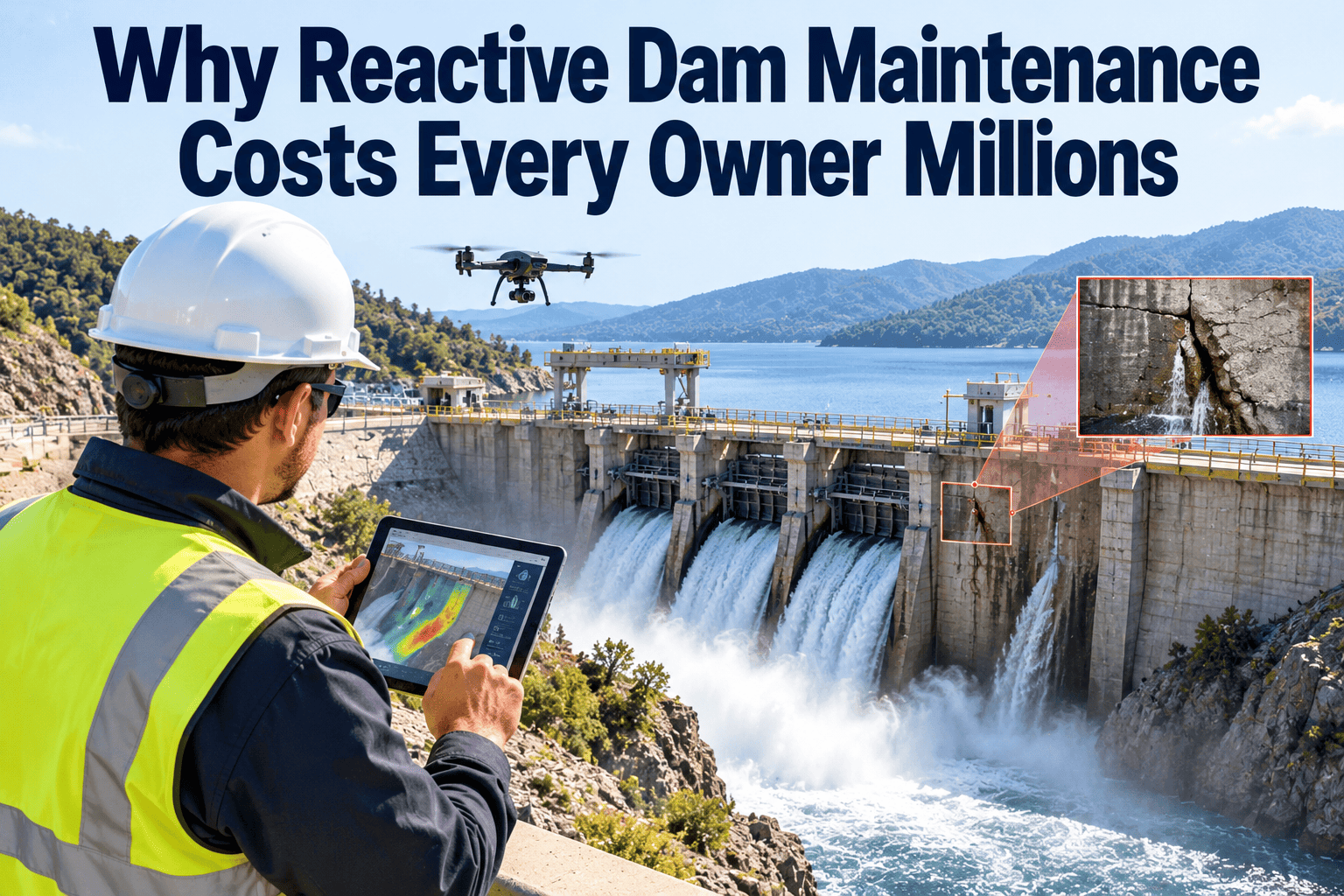
Dams rarely fail without warning. Seepage grows, a gate sticks, a drain clogs, a crack widens, and each small sign is cheap to address early and expensive to address late. Owners who wait for a problem to demand attention end up paying for emergency rehabilitation, regulatory pressure and, in the worst case, downstream consequences. A calendar of identical inspections does not solve that. This article explains why reactive dam maintenance costs so much and how a CMMS supports risk-based asset management instead.
What Reactive Maintenance Looks Like on a Dam
Reactive pattern
- Work starts after an inspection finding becomes urgent
- Repairs are scoped under time pressure
- Instrument readings are filed but rarely trended
- Budgets are set by last year's crisis
Risk-based pattern
- Work is ranked by consequence and condition
- Trends trigger action before limits are reached
- Critical components get more frequent attention
- Budgets follow a documented risk register
The distinction matters because dams are not typical assets. A failed pump can be replaced, but a failed spillway gate during a flood or an eroding embankment can threaten lives and property.
- The National Inventory of Dams lists roughly ninety thousand dams across the United States, and many are aging.
- Hazard classification reflects what would happen if a dam failed, not how good its condition is.
- State dam safety programs and federal guidelines expect owners to inspect, maintain and plan for emergencies.
Why Calendar-Only Preventive Maintenance Falls Short
The Cost Ladder: How Small Issues Become Large Ones
A weir reading rises slightly, or vegetation grows on a slope. Cost to address is low, and an owner can respond with extra monitoring or routine clearing.
Seepage turns cloudy or a drain clogs. Repairs are still planned work using normal crews or a small contract.
Erosion, concrete spalling or gate damage requires engineering design, permits and a funded project.
Pool restrictions, drawdown, emergency contractors and regulator involvement drive cost sharply higher and disrupt operations.
Failure or uncontrolled release carries downstream, legal and reputational costs that dwarf the original repair.
Move Dam Work Left on the Cost Curve
Where Reactive Programs Usually Break Down
| Dam Component | Typical Warning Sign | Reactive Outcome | Risk-Based Response |
|---|---|---|---|
| Embankment slope and crest | Erosion, sinkholes, animal burrows, wet spots | Large repair after a storm or high pool event | Targeted inspection and repair when first observed |
| Seepage and drainage | Rising flow or cloudy water at toe drains | Internal erosion concerns and emergency studies | Trend flows and clarity, clean drains on schedule |
| Spillway and gates | Slow operation, corrosion, seal leakage | Gate fails to operate when most needed | Exercise tests, lubrication and condition-based overhaul |
| Outlet works and valves | Stiff operation, leakage, debris buildup | Unable to lower pool during an incident | Regular operation tests and documented repairs |
| Concrete structures | Cracking, spalling, joint movement | Structural rehabilitation project | Crack mapping and measured trend review |
| Instrumentation | Missing or suspect readings | Blind spots that hide developing problems | Calibration schedules and data review |
Risk-Based Asset Management in Practice
Risk-based management does not require perfect data. It asks owners to rank components by what happens if they fail and how likely that is, then focus effort where both are highest.
Inputs that feed the ranking
- Hazard potential classification and downstream population or infrastructure.
- Potential failure modes identified by engineers during periodic reviews.
- Age, design standards, past repairs and known deficiencies.
- Instrument trends, inspection findings and operator observations.
- Criticality of each component to safe operation during floods.
A Maintenance Cadence That Reflects Risk
Closing the Loop on Inspection Findings
- Enter each deficiency from an inspection report as a trackable item with a priority.
- Link it to the dam, component and location so it appears in the asset history.
- Create a work order or capital project request with an owner and a due date.
- Attach photos, readings and engineering notes as the work progresses.
- Close the item only when verified, then show the completion in the next inspection cycle.
Compliance and Documentation Pressure
- State dam safety offices typically expect inspection records, operation and maintenance plans, and emergency action plans for higher-hazard dams.
- Owners of hydropower or federally regulated projects face additional reporting and inspection requirements.
- Insurers, lenders and boards increasingly ask for evidence that known issues are being managed.
- Requirements vary by jurisdiction, so confirm details with your regulator and engineer of record.
Instrumentation and Monitoring: Data Only Helps If Someone Acts on It
Common instruments
- Piezometers measuring water pressure in embankments and foundations
- Weirs and flow meters at seepage collection points
- Survey monuments and inclinometers tracking movement
- Pool level and rainfall gauges
Maintenance links
- Schedule instrument calibration and replacement as preventive tasks
- Create a work order when a reading crosses an action level
- Record who reviewed the data and what they decided
- Track broken or unreliable instruments as corrective work
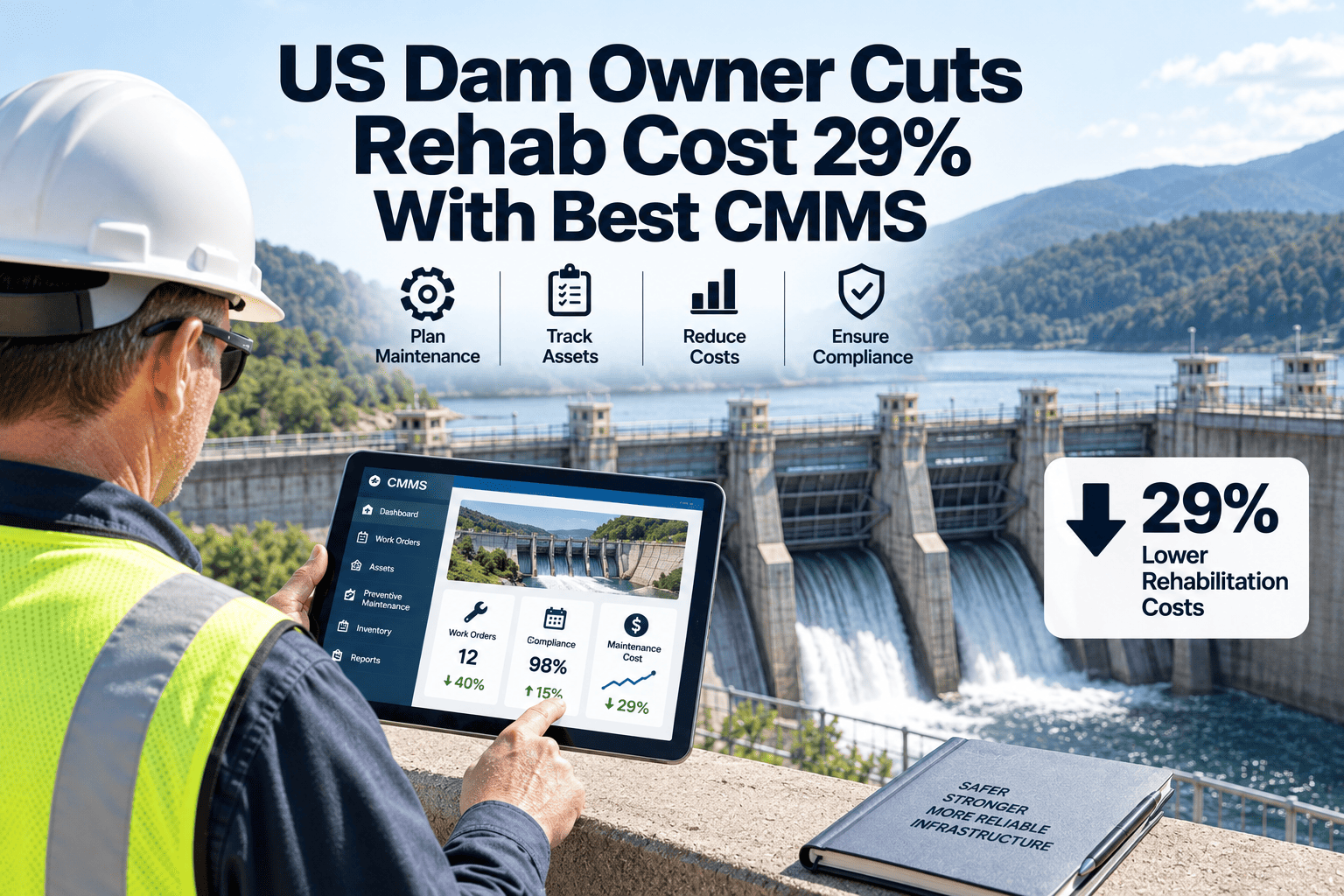
How Oxmaint Supports Risk-Based Dam Maintenance
Oxmaint is maintenance management software, so it organizes work, assets and records rather than replacing engineering judgment. It helps owners turn risk rankings into scheduled, documented action.
Metrics That Show Whether the Program Is Getting Ahead of Risk
Building the Business Case for Funding
- List the open deficiencies and show how long each has been open.
- Estimate the cost of addressing each now versus after it advances, using engineer input.
- Show historical emergency spending and the share it represents of the annual budget.
- Map priority projects to the risk matrix so decision makers see the reasoning.
- Present a multi-year plan with realistic phasing rather than a single large request.
First Ninety Days: A Practical Starting Plan
Failure Modes Worth Planning Around
| Failure Mode | What Often Precedes It | Maintenance Role |
|---|---|---|
| Internal erosion of an embankment | Increasing or discolored seepage, sinkholes, wet areas on the downstream slope | Frequent walkdowns, drain maintenance, instrument review and fast follow-up on any change |
| Overtopping during a flood | Spillway capacity concerns, blocked channels, gates that cannot open fully | Gate testing, debris removal and verified backup power |
| Spillway or outlet malfunction | Corrosion, seized components, worn seals and unreliable controls | Scheduled exercise, lubrication and condition-based overhaul |
| Concrete or foundation deterioration | Widening cracks, movement at joints, uplift or leakage patterns | Crack monitoring, joint inspection and timely repairs |
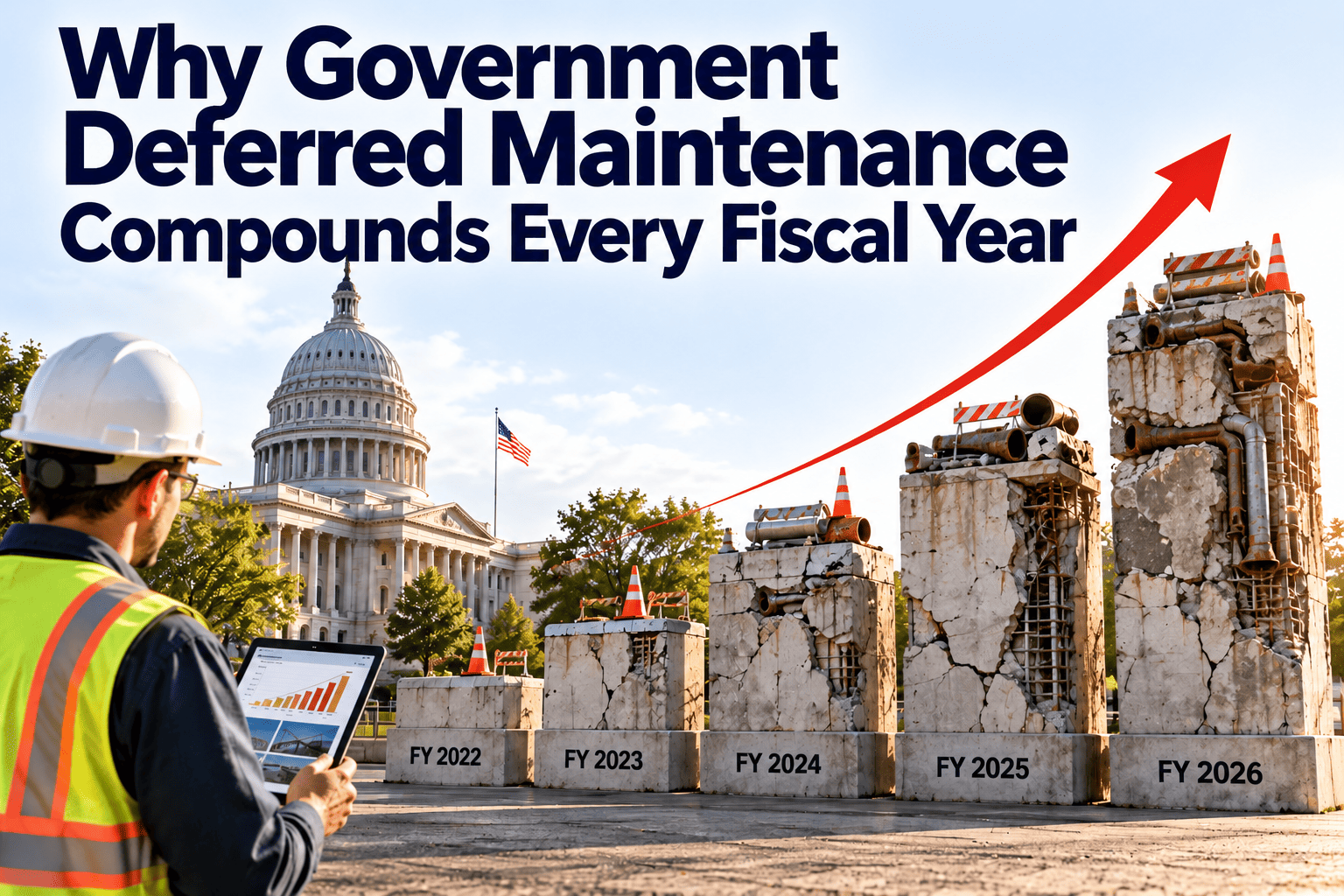
Deferred Maintenance Behaves Like Compounding Debt
Each postponed task looks affordable by itself. Together they build a backlog that is harder to fund and harder to prioritize, because every item seems equally overdue.
- Small repairs that are skipped become design projects with permits and engineering fees.
- Cleaning and vegetation work that is deferred reduces inspection visibility, so new problems hide.
- Gates and valves that are not exercised may fail the first time they are really needed.
- Documentation gaps make regulators and boards less confident in the owner's overall program.
- Staff time is consumed by emergencies, leaving less time for the preventive work that avoids them.
Why Owners Stay Reactive, and How to Break the Pattern
Gate and Valve Reliability: A Practical Checklist
Mechanical checks
- Operate each gate through its range and record time and any binding
- Inspect seals, hoists, cables, stems and guides
- Lubricate according to the manufacturer schedule
- Check for corrosion, debris and visible leakage
Power and control checks
- Test standby power sources under load
- Verify limit switches, position indicators and alarms
- Confirm remote and manual operation both work
- Record results, defects and repairs on the asset
Emergency Action Plan Readiness and Maintenance
- Keep contact lists, notification procedures and inundation information current and easy to retrieve.
- Schedule annual reviews and drills as recurring tasks with documented attendance.
- Track access roads, communication equipment and warning devices as assets that need maintenance.
- Record lessons learned after exercises and convert them into corrective actions.
- Make sure operators can reach critical documents from the field, including during outages.
Who Owns What in a Dam Maintenance Program
Reading the Backlog: Sorting Findings by Urgency
| Priority | Typical Finding | Suggested Handling |
|---|---|---|
| Immediate | New or accelerating seepage, gate that will not operate, sinkhole near the crest | Notify the engineer, restrict operations if needed and start corrective work at once |
| Near term | Clogged drains, moderate erosion, failing seals, uncalibrated instruments | Schedule within weeks with a named owner and due date |
| Planned | Surface cracking, minor corrosion, aging equipment nearing end of life | Add to the annual plan and budget, and monitor on a defined interval |
| Watch | Stable features with historical notes | Keep on the inspection checklist and compare against previous readings |
Questions Boards and Executives Often Ask
- Which findings from the last inspection are still open, and how long have they been open?
- How much of last year's maintenance spending was emergency work?
- Which components would have the greatest consequence if they failed, and when were they last tested?
- Are instrument readings reviewed on schedule, and who signs off on the review?
- What is the plan, with dates and budget, to close the highest-priority items?
- Do we have enough qualified staff and contractor capacity to complete the planned work this year?
- How would we demonstrate to a regulator that known issues are being managed on schedule?
- Which assets are approaching end of life, and when should replacement funding be requested?