Dam owners answer to more than one reviewer. A federal program, a state dam safety office and an insurer may each ask for a report package, and each expects the same underlying facts: inspections, instrument readings, maintenance, deficiencies and emergency planning. When those records sit in separate folders, every review becomes a hunt for evidence. Assembling the package from a live maintenance record is faster and easier to defend, and a dam maintenance platform is built for that purpose.
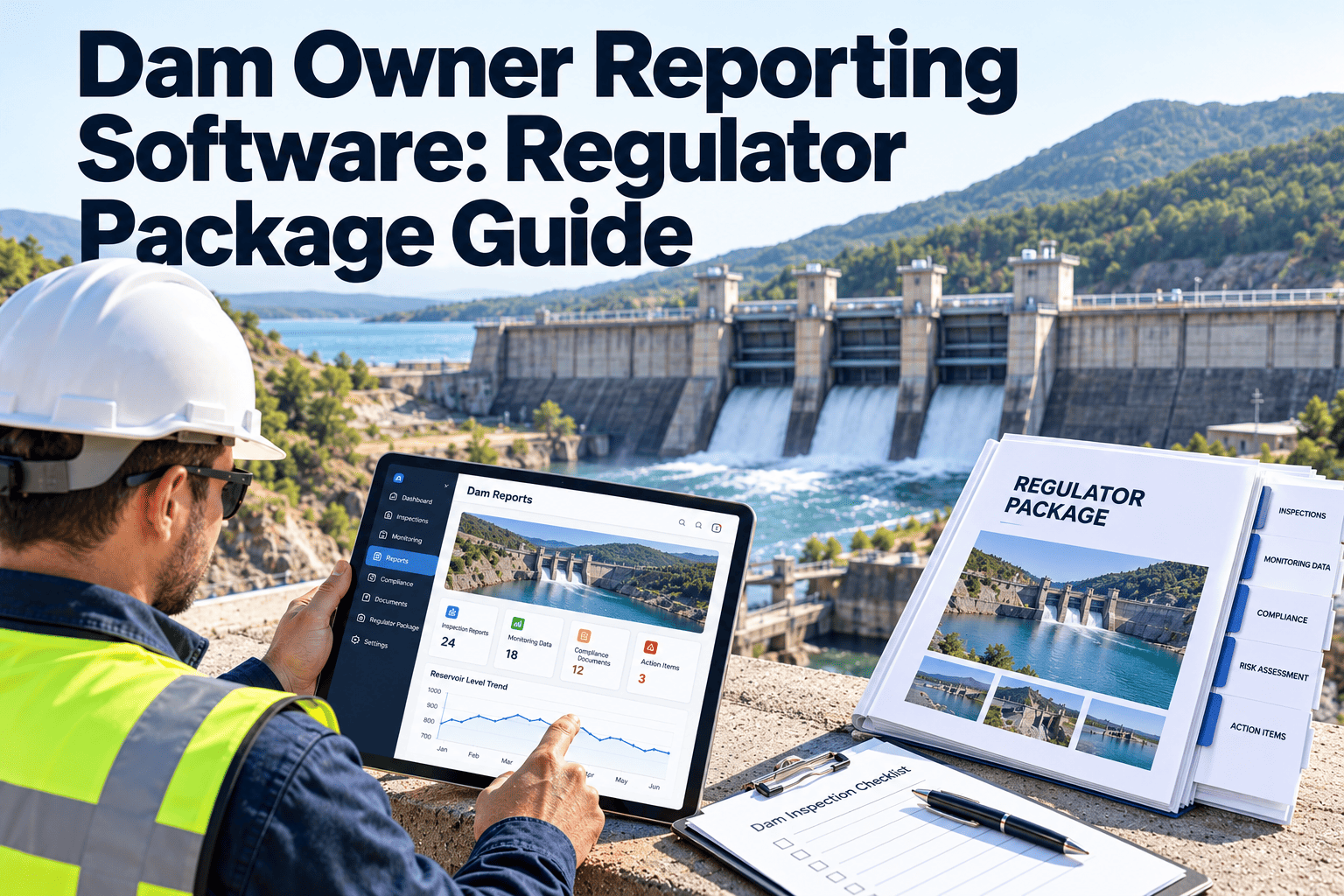
Dam Owner Reporting Software for Regulator Packages
Gather inspection, instrumentation, maintenance and corrective action records into annual, periodic and five-year review packages for USACE, Reclamation and state dam safety programs.
Why Report Packages Take Weeks to Assemble
- Inspection notes, photos and instrument data are kept by different people in different formats.
- Deficiencies from a prior review are tracked in a document that no one updates between inspections.
- Maintenance performed on gates, spillways, drains and outlet works is not linked to the findings it addresses.
- Emergency action plan updates, contact lists and exercises are filed separately from inspection work.
- Each regulator uses its own template, so the same data is retyped several times.
What reviewers want to see
Reviewers look for a clear line from each finding to a response, an owner and a result. A package that shows that line builds confidence even when issues exist.
Who Reviews Your Dam and What They Expect
| Program | Typical review focus | Records to have ready |
|---|---|---|
| USACE | Periodic inspections and assessments for dams in its portfolio, plus national inventory data | Inspection reports, deficiency status, operation and maintenance history, inventory updates |
| Bureau of Reclamation | Facility examinations and reviews tied to its dam safety program | Operation records, instrumentation data, maintenance and corrective action logs |
| State dam safety office | Hazard classification, inspection frequency, permits and emergency planning | Annual inspection reports, EAP, repair plans, owner certifications |
| Other regulators and insurers | Independent reviews and risk evidence, depending on ownership | Five-year review reports, financial plans for repairs, test records |
Stop Rebuilding the Same Package From Scratch
Keep inspections, findings and repairs in one record, then generate the evidence each regulator asks for.
Anatomy of a Regulator Package
Dam identification and hazard data
Owner, location, dam type, height, storage, hazard potential classification and downstream conditions.
Inspection findings
Visual observations of embankment, concrete, spillway, outlet works, abutments and reservoir rim, with photos.
Instrumentation and monitoring
Piezometer, seepage, settlement and movement readings, with notes on trends and out-of-range values.
Operation and maintenance
Gate exercises, spillway and outlet checks, vegetation control, drain cleaning and repair history.
Deficiencies and corrective actions
Each issue with priority, responsible party, due date, status and closure evidence.
Emergency action plan status
Plan revision date, notification list checks, training and exercise records.
Review Rhythm: Annual, Periodic and Five-Year
Why ongoing records make the larger reviews easier
A five-year review is mostly a summary of what happened in the preceding years. If those years are documented as they occur, the review team spends time on engineering rather than on finding paperwork.
Tracking Deficiencies Through to Closure
Typical gap
- Findings listed in a report appendix
- Responsibility assumed, not assigned
- Repairs done without linking back to the finding
- Status reconstructed at the next inspection
Tracked workflow
- Each finding becomes a work order or action item
- Owner and due date recorded
- Completion photos and notes attached
- Open items visible on a dashboard
Operations and Maintenance Evidence Regulators Ask About
- Gate and valve exercise logs showing date, operator, result and any problems found.
- Spillway and outlet channel inspections, including debris and obstruction removal.
- Drain and relief well cleaning records, with flow observations.
- Vegetation management on embankments, with before and after photos.
- Backup power and communication equipment tests that support emergency operation.
- Instrument calibration and replacement history, so readings can be trusted.
Preventive schedules reduce surprises
Recurring work orders for these tasks create the evidence trail automatically. Missed or overdue items become visible before an inspector finds them.
Emergency Action Plan Records in the Same System
- Schedule annual reviews of notification lists and contact details.
- Log drills and tabletop exercises with participants and outcomes.
- Track plan revisions, with dates and approval records.
- Link EAP triggers to monitoring thresholds so staff know what to watch.
- Store distribution records showing who received the current plan.
Reporting Readiness Indicators
Getting Started Checklist
- List each dam with its hazard classification, regulator and review cycle.
- Load recurring inspection and maintenance tasks as scheduled work orders.
- Import open deficiencies from the latest reports and assign owners.
- Register instruments as assets, with reading schedules and thresholds.
- Define report templates that match each regulator package outline.
- Test the process by preparing a mock package for one dam.
Dam Owner Reporting FAQs
Does software replace the engineer's inspection report?
Can one dam serve several regulators?
How do we track instrumentation?
What about small private dams?
Can past reports be stored?
Be Ready for the Next Dam Safety Review
Build a continuous record of inspections, repairs and emergency planning that your regulator can follow without chasing files.