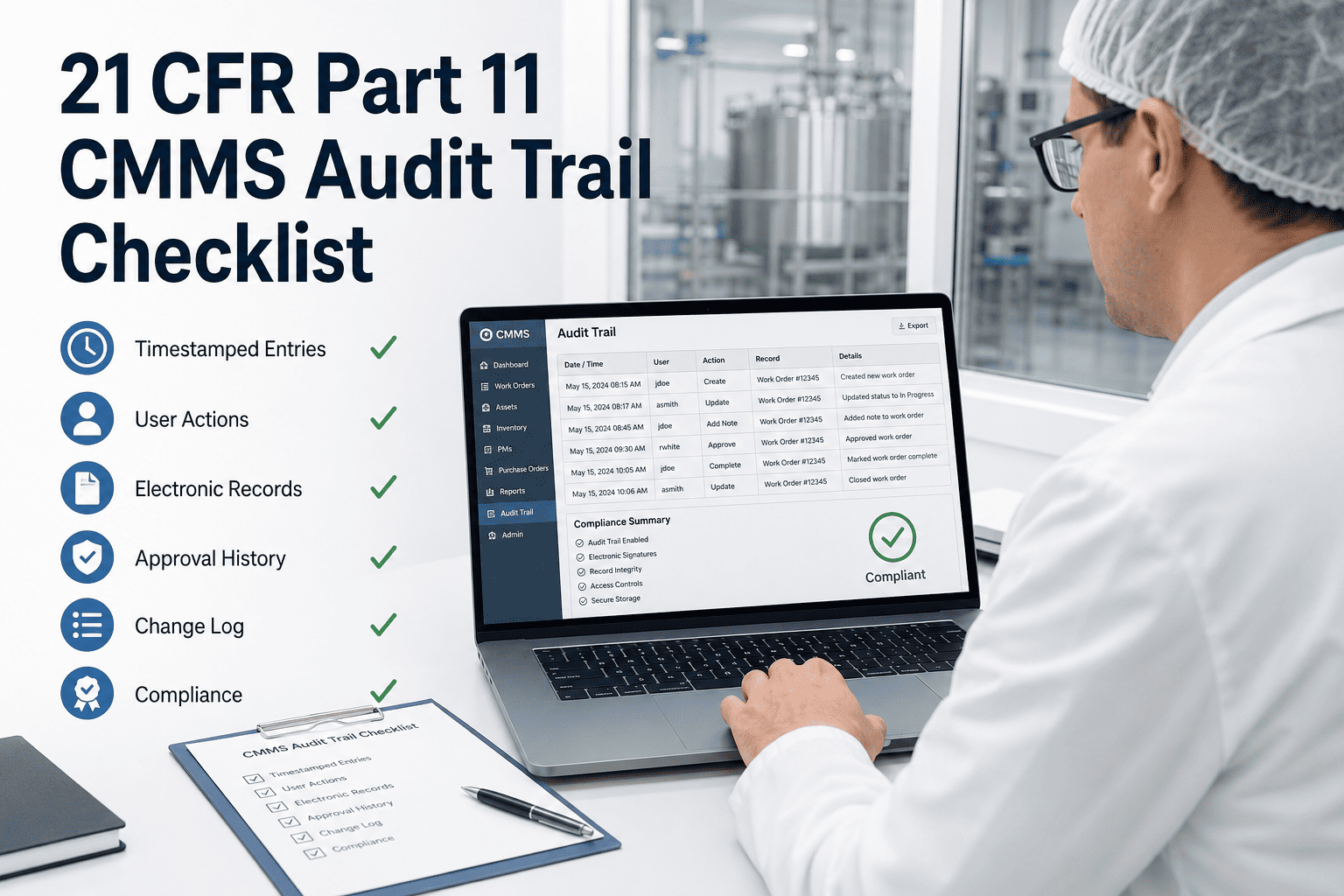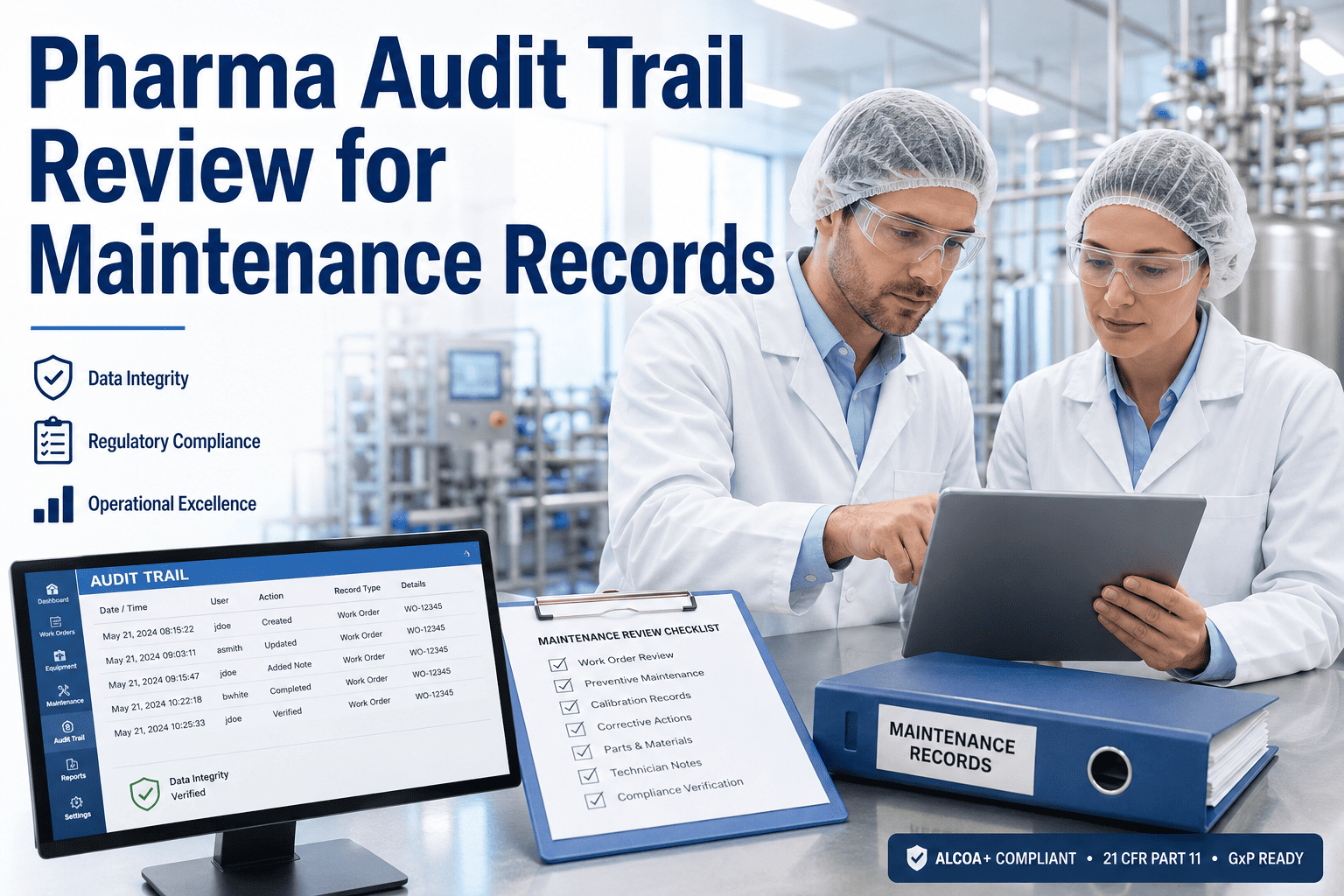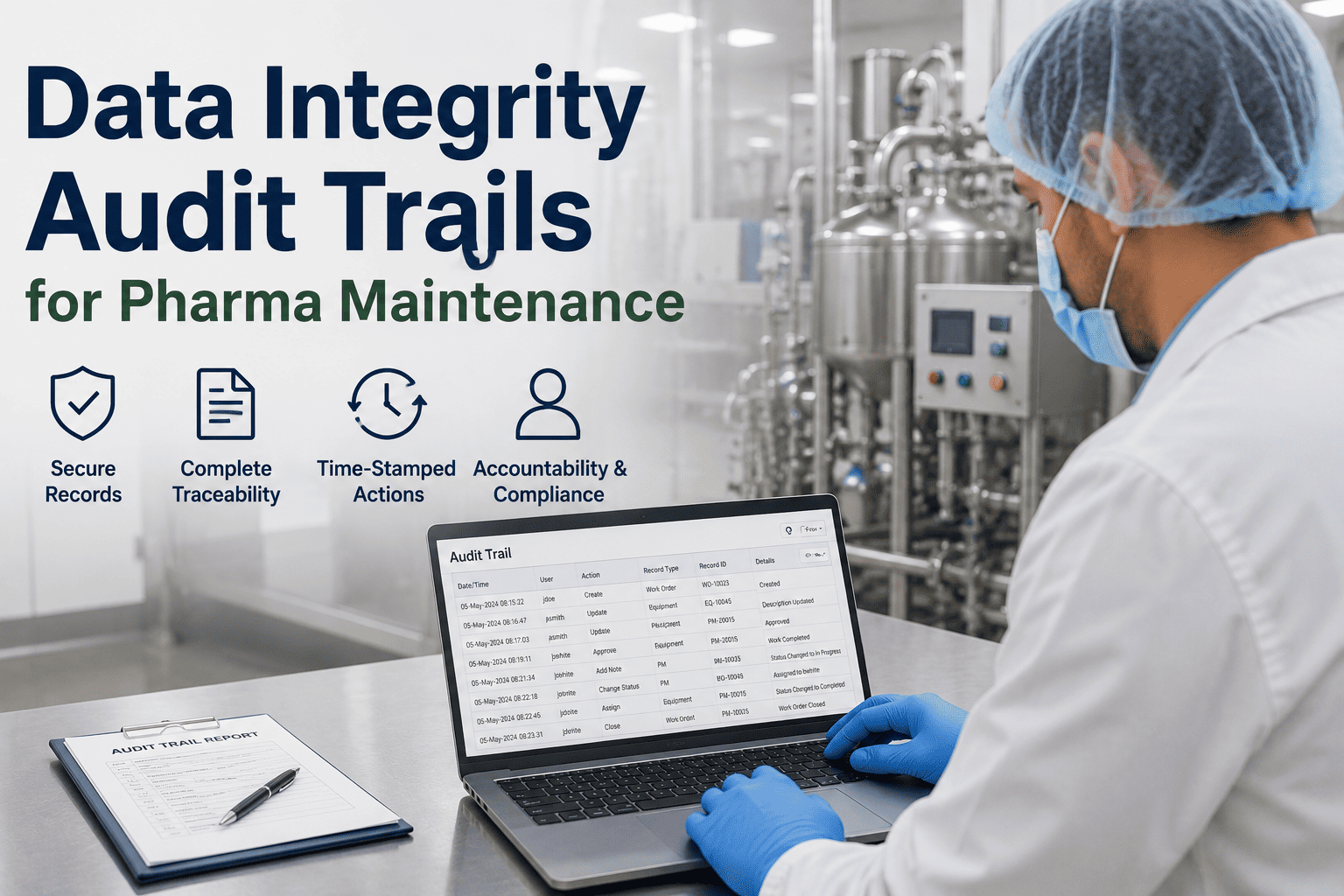
Maintenance log errors in pharma plants are rarely acts of bad faith — they are structural failures. A technician signs a record hours after completing the work. A supervisor approves an entry without reviewing it. A date gets entered wrong and no one has a reason code to correct it. Individually, each event seems minor. Collectively, they accumulate into an ALCOA compliance gap that can define an entire FDA inspection. Book a demo with OxMaint to see how controlled CMMS entries prevent ALCOA errors before they reach a record, or start a free trial and configure your role permissions and timestamp controls today.
ALCOA Maintenance Log Errors in Pharma Plants
The most common ALCOA violations found in pharma maintenance records — and how controlled CMMS entries, enforced timestamps, and role-based permissions eliminate them before they become inspection findings.
| Action | Technician | Supervisor | QA | Admin |
|---|---|---|---|---|
| Create and complete work orders | Yes | Yes | View only | Yes |
| Edit measurement data before QA approval | With reason code | With reason code | No | With reason code |
| Edit measurement data after QA approval | No | No | QA override required | No |
| Change PM due dates | No | With reason code | Yes | Yes |
| Close deviation records | No | No | QA sign-off required | No |
| View or export audit trail | No | No | Yes | Yes |
Most ALCOA errors in maintenance records are not caught by QA before inspection because QA is reviewing finished records, not the process by which they were created. The errors are baked into the record at the moment of entry — a late signature, a placeholder value, a shared login. You cannot review your way out of structural data entry problems. The only effective solution is a CMMS that enforces ALCOA requirements at the point of entry: the record cannot be submitted without meeting the standard. Enforcement before the fact is the only thing that survives a data integrity inspection.
OxMaint enforces every ALCOA requirement structurally — timestamps at activity, individual attribution, mandatory fields, and preserved original values — so your maintenance records are always inspection-ready.