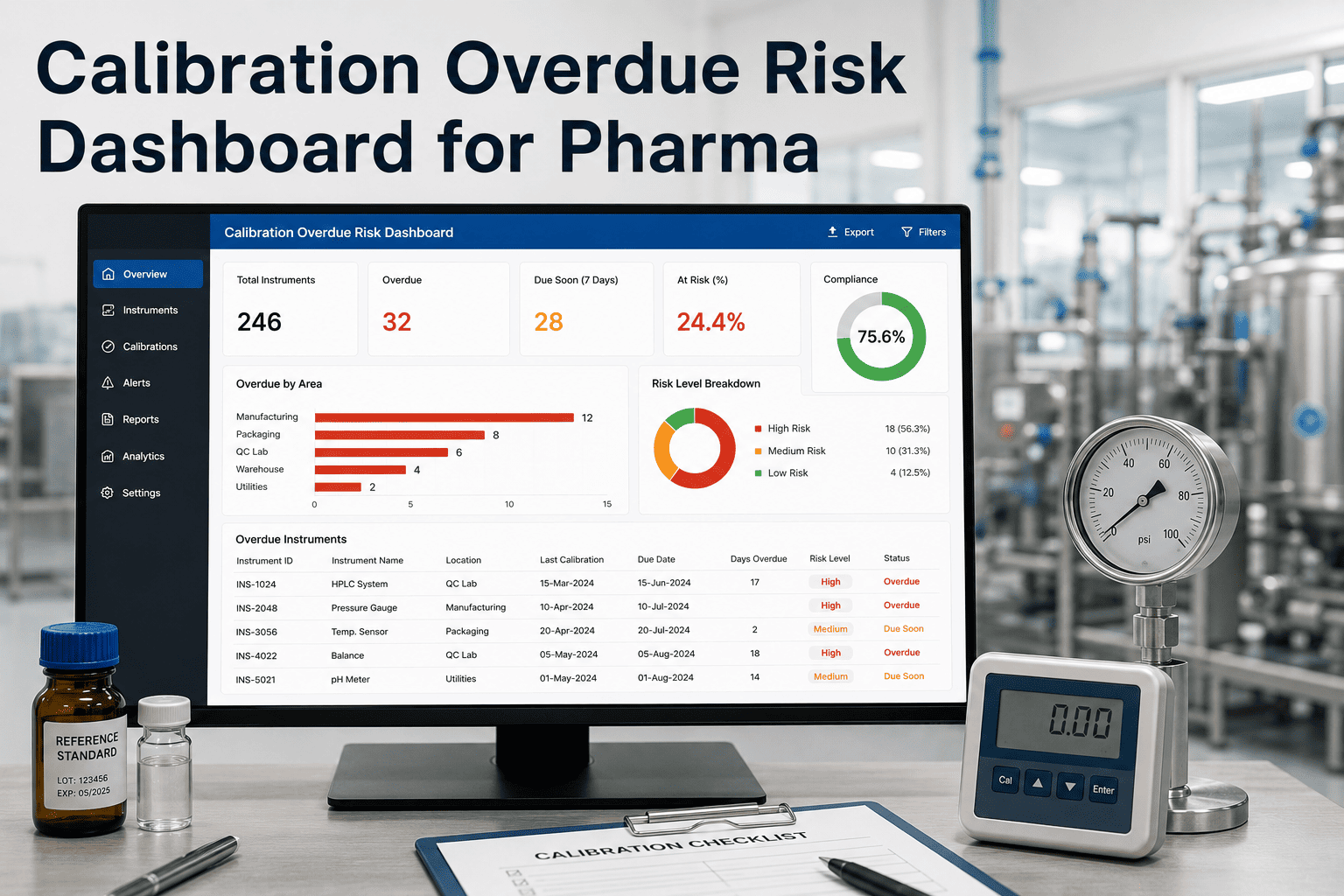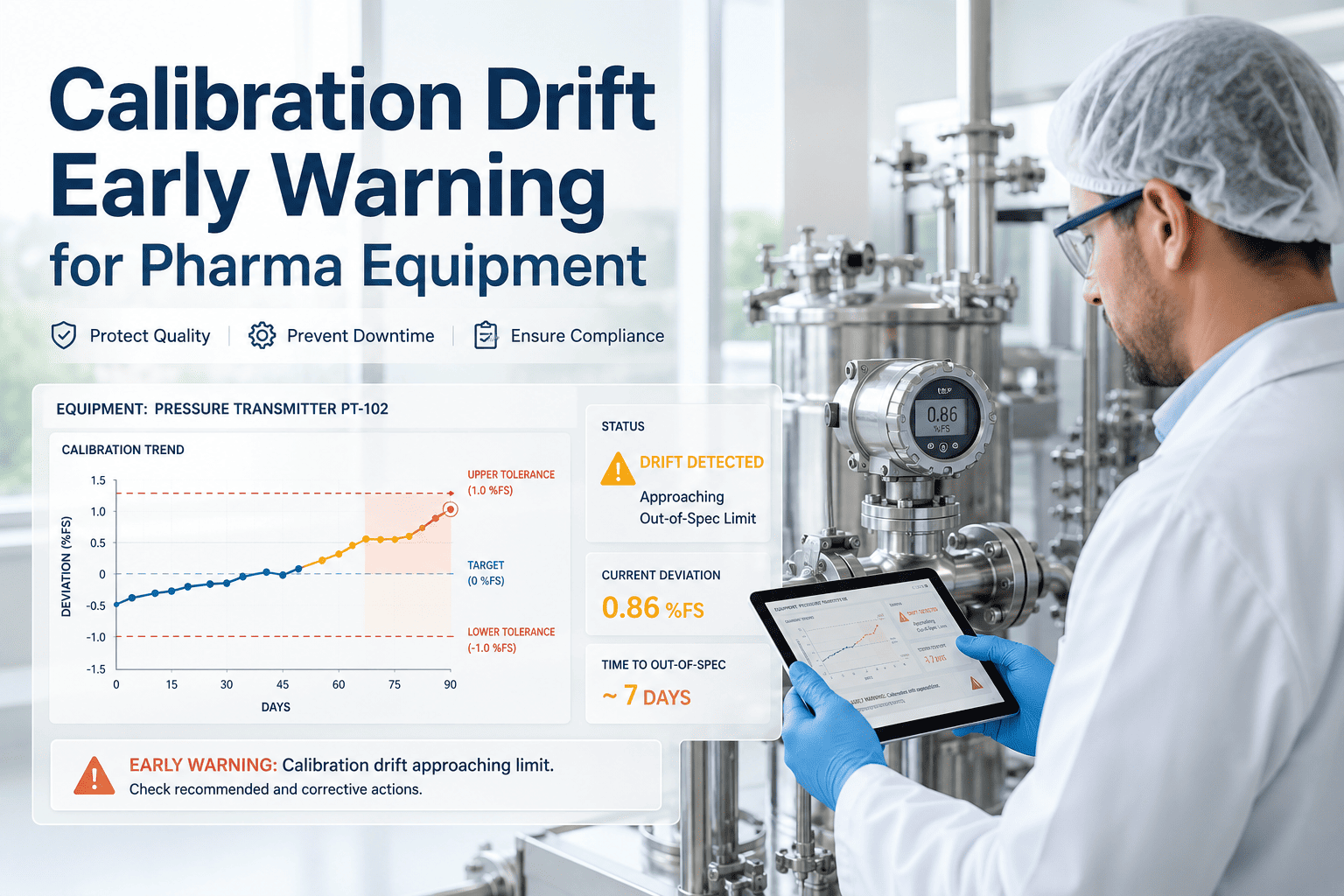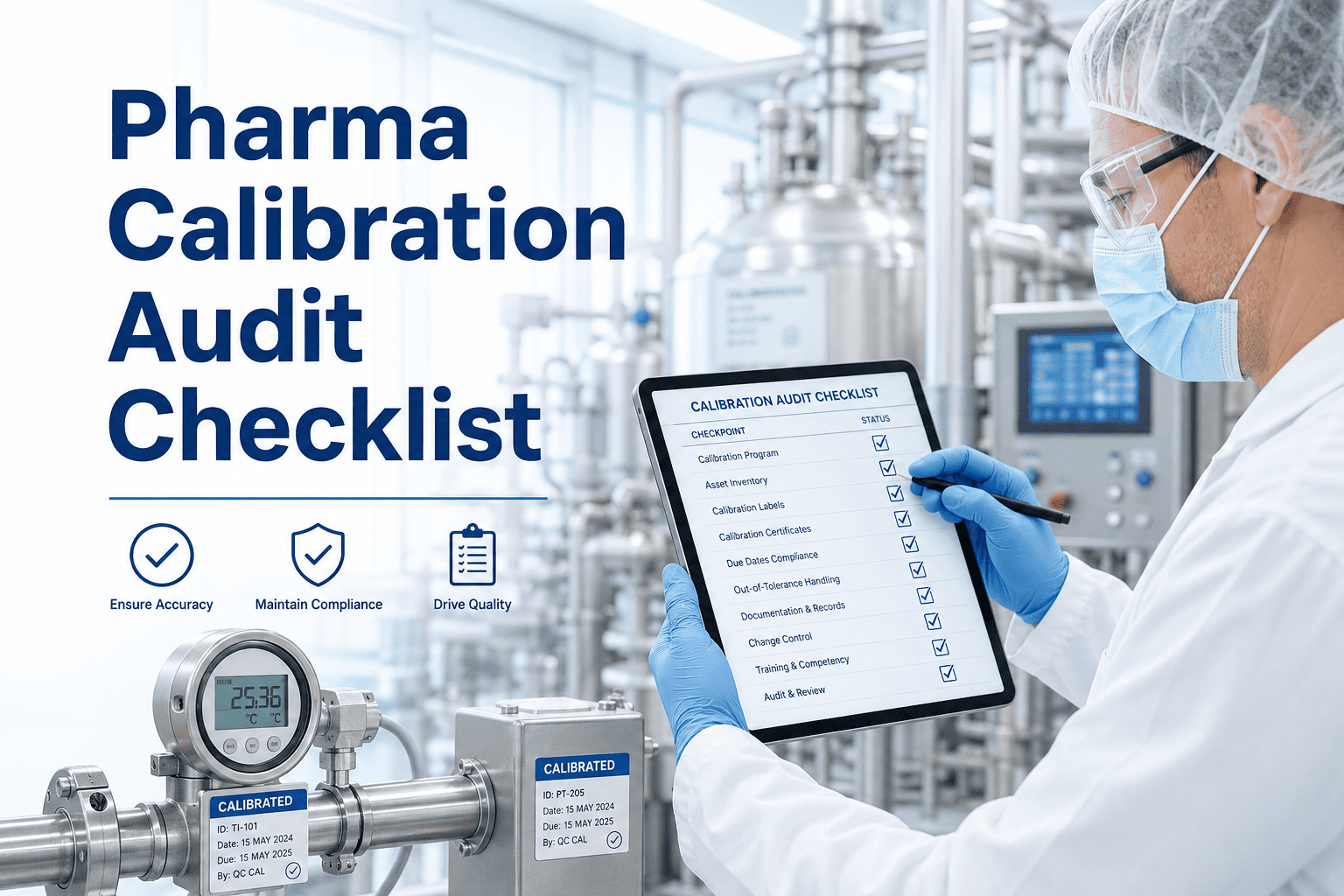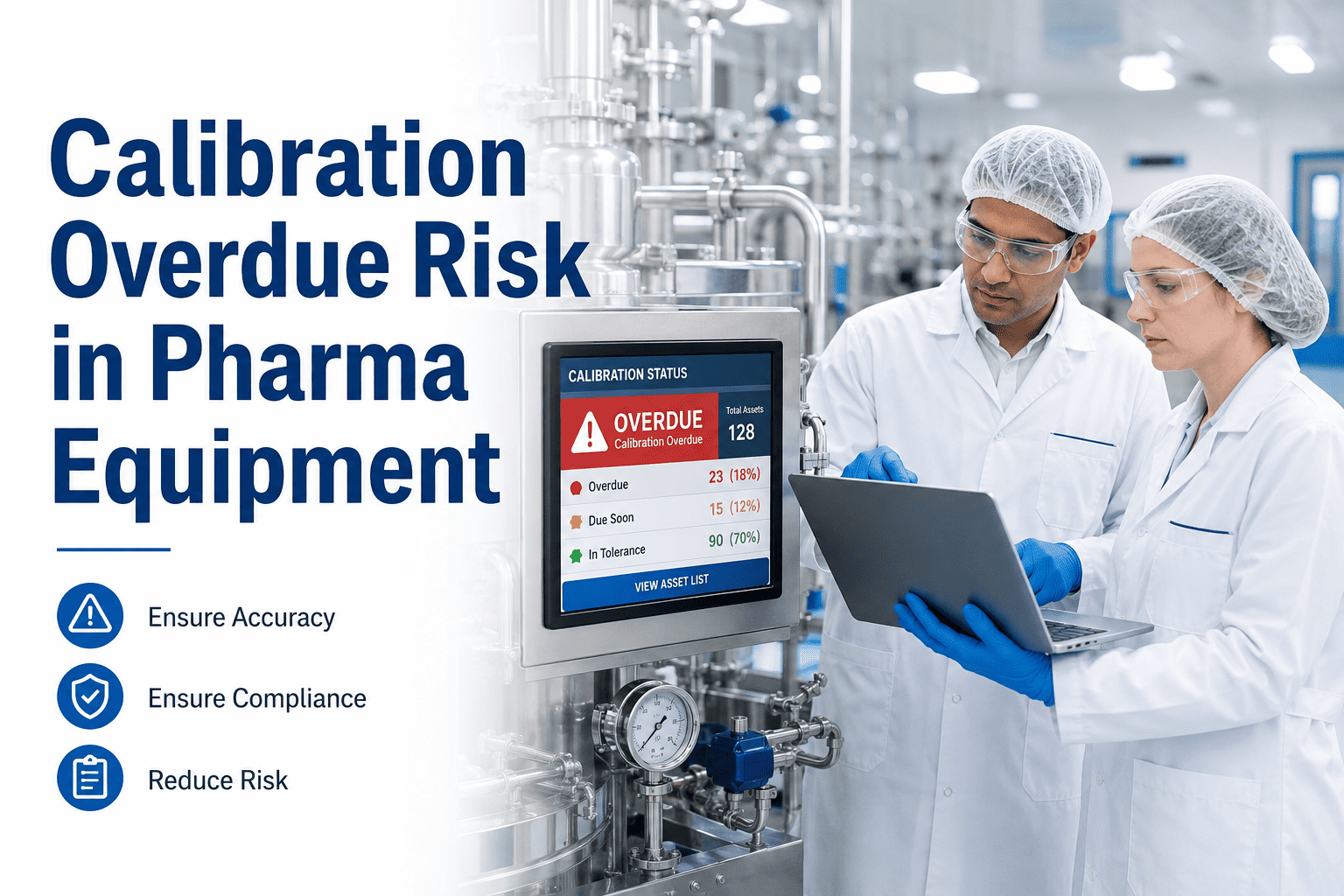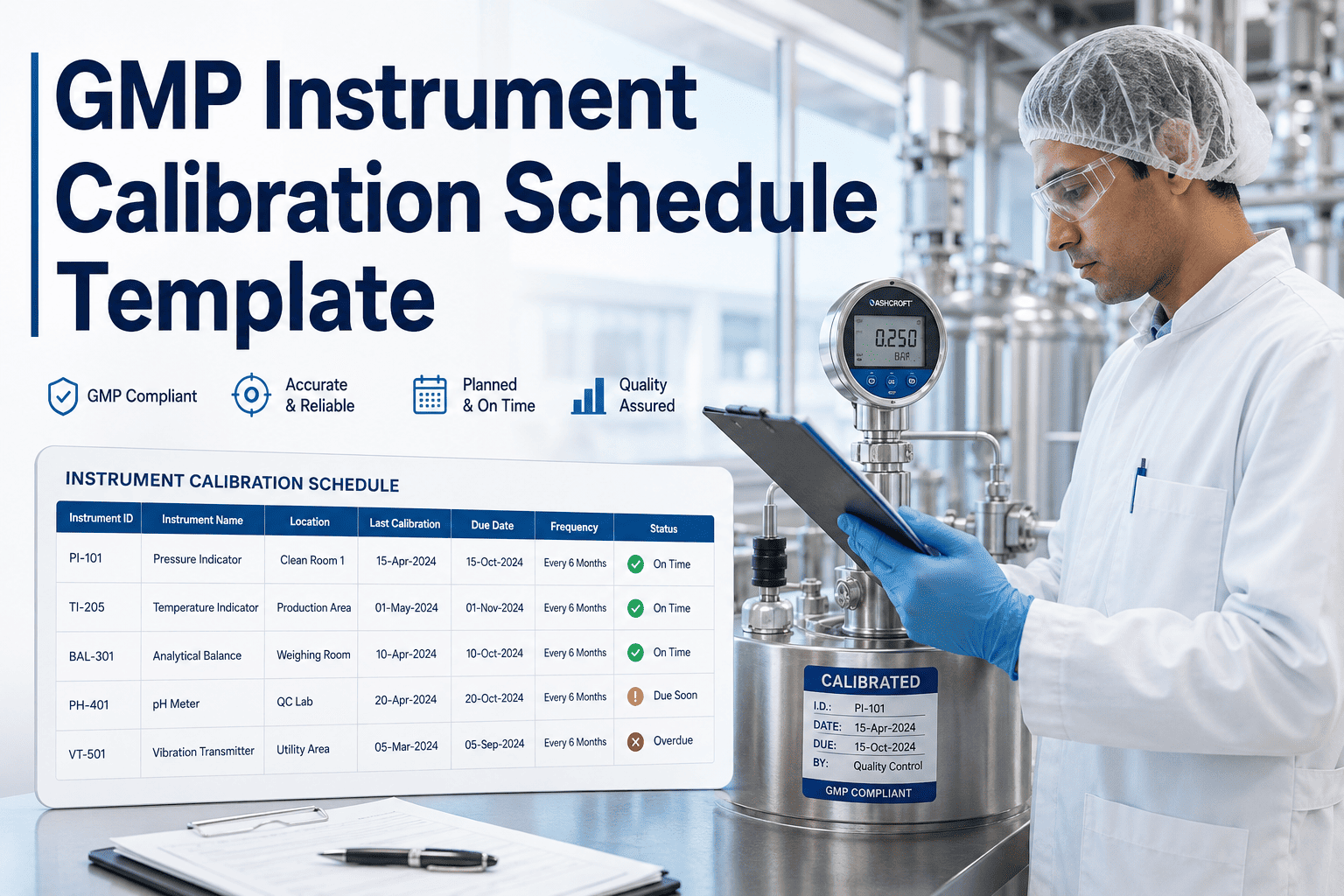
A GMP instrument calibration schedule is not a spreadsheet of due dates — it is the documented proof that every instrument affecting product quality, patient safety, or regulatory decision-making is calibrated at defined, justified intervals with traceable standards. Under 21 CFR 211.68(b) and EU GMP Chapter 3, calibration intervals must be established in writing, and instruments must be calibrated, inspected, or checked according to that written programme. The calibration schedule template on this page covers the full instrument inventory typical of a pharmaceutical manufacturing site — analytical balances, HPLC systems, pH meters, temperature probes, pressure gauges, humidity sensors, particle counters, and environmental data loggers — with GMP-justified intervals, acceptance criteria, criticality classification, and the regulatory references that support each schedule decision. Book a demo to see how OxMaint manages your live calibration schedule in a digital, audit-ready system — or start free and build your instrument master list today.
GMP Instrument Calibration Schedule Template
A ready-to-use calibration schedule covering balances, HPLC systems, pH meters, temperature probes, pressure gauges, humidity sensors, and environmental monitoring instruments — with criticality classification, GMP intervals, and acceptance criteria for each.
Section 1 — Analytical Laboratory Instruments
| Instrument | Criticality | Calibration Interval | Acceptance Criteria | Standard / Reference | Who Performs |
|---|---|---|---|---|---|
| Analytical Balance (<220 g) | Critical | Daily (pre-use) + Monthly full calibration + Annual external | ±0.1 mg or within 0.1% of certified weight — per USP <41> | OIML E2 / ASTM Class 1 certified weights; USP <41> | Daily: analyst; Monthly: QA or metrology; Annual: external lab |
| Top-loading Balance (220 g–10 kg) | Critical | Daily (pre-use) + Quarterly full + Annual external | ±0.5% of reading across working range, minimum 3 test points | OIML F1 / ASTM Class 2 certified weights; USP <41> | Analyst (daily); QA/metrology (quarterly/annual) |
| HPLC System (pump, detector, column oven) | Critical | Performance check each use day; System suitability each run; Formal calibration quarterly | Pump flow rate ±2% of set; wavelength accuracy ±1 nm; system suitability RSD <2% for 5 injections | USP <621>, <1058>; Pharmacopoeia system suitability parameters | Analyst (daily SST); QA or qualified vendor (quarterly) |
| pH Meter (benchtop) | Critical | 2-point or 3-point buffer calibration before each use; Electrode replacement per performance trend | ±0.02 pH units after buffer calibration; slope 95–105% (Nernst equation); asymmetry potential within spec | NIST-traceable certified pH buffers; USP <791> | Analyst (each use); QA (periodic verification) |
| UV-Vis Spectrophotometer | Critical | Wavelength and absorbance verification quarterly; Full IQ/OQ annually or after service | Wavelength accuracy ±1 nm; absorbance accuracy ±0.005 AU against NIST SRM 930; stray light <0.1% | NIST SRM 930 / EP 2.2.25; USP <857> | QA or qualified vendor |
| Karl Fischer Titrator | Critical | System verification each use day with water standard; Formal calibration semi-annually | Water content determination within ±3% of certified value of water standard | Certified water standard (Hydranal or equivalent); USP <921> | Analyst (daily); QA or vendor (semi-annual) |
| Dissolution Apparatus (USP Types I & II) | Critical | Mechanical calibration (basket/paddle alignment, wobble, rpm, temperature) — quarterly; Performance verification with reference tablets annually | Vessel centricity ±1 mm; shaft wobble ±0.5 mm; rpm ±4%; bath temperature ±0.5°C | USP <711>; CDER guidance; Prednisone RS reference tablets | QA or qualified vendor (mechanical); analyst (temperature daily) |
Section 2 — Process and Environmental Instruments
| Instrument | Criticality | Calibration Interval | Acceptance Criteria | Standard / Reference | Who Performs |
|---|---|---|---|---|---|
| Temperature Probe / RTD (autoclave, stability chamber, incubator) | Critical | Semi-annually for process-critical; Annually for monitoring-only; After any repair or replacement | ±0.5°C at all calibration points (typically 0°C ice bath and 100°C boiling point or NVLAP dry-block); 3-point minimum | NIST-traceable reference thermometer; ITS-90; 21 CFR 211.68 | QA or external calibration lab |
| Thermocouple (Type K, Type J) | Critical | Annually; Earlier if exposed to oxidising atmosphere or mechanical stress | ±1.5°C or 0.4% of reading (Type K standard tolerance per IEC 60584-1), whichever is greater; 3-point verification | NIST-traceable reference; IEC 60584-1; 21 CFR 211.68 | QA or external calibration lab |
| Pressure Gauge (autoclave, process vessel, cleanroom differential) | Critical | Semi-annually for process-critical; Annually for monitoring-only; After any shock or overrange event | ±0.5% of full scale (ASME B40.100 Grade 2A); ±1% for lower-accuracy gauges; 5 ascending + 5 descending test points | ASME B40.100; traceable dead-weight tester or reference gauge; 21 CFR 211.68 | QA or external calibration lab |
| Humidity / RH Sensor (cleanroom, stability chamber) | Critical | Annually; After cleaning, relocation, or suspected contamination | ±2% RH across 20–80% RH working range; traceable to NIST-calibrated hygrometer reference | NIST-traceable reference hygrometer; ITS-90; WHO Technical Report 953 | QA or external calibration lab |
| Environmental Data Logger (temperature + RH) | Critical | Annually; Before and after temperature mapping studies | Temperature ±0.5°C; RH ±2%; battery condition verified; logging interval confirmed; download integrity check | WHO TRS 961 Annex 9; GDP guidelines for drug storage; 21 CFR 211.68 | QA or external calibration lab |
| Particle Counter (cleanroom, LAF units) | Critical | Annually; After repair or sampling pump service | Flow rate ±5%; counting efficiency verified with ISO 21501-4 standard particles; zero count ≤0.1 count/ft³ against filtered air | ISO 21501-4; ISO 14644-1 classification; EU GMP Annex 1 (2023) | External calibration lab (OEM-recommended) |
| Conductivity / Resistivity Meter (WFI, purified water) | Critical | Quarterly verification; Annually full calibration; After electrode cleaning or replacement | ±2% of reading; temperature compensation accuracy ±1°C; cell constant within ±1% of certified value | NIST-traceable conductivity standards; USP <645> Water Conductivity | QA or external calibration lab |
| Torque Tester / Torque Wrench (container closure) | Major | Annually; After overrange events | ±2% of reading across working range; 3 ascending test points with calibrated torque standard | Calibrated torque standard traceable to national standard; 21 CFR 211.68 | QA or external calibration lab |
| Vacuum Gauge (lyophilizer, process) | Major | Semi-annually for lyophilisation-critical; Annually for monitoring | ±1% of full scale; 5-point ascending + descending; tested at operational vacuum levels | Traceable reference; ASME B40.100; manufacturer specification | QA or external calibration lab |
| Flow Meter (process utility, purified water) | Major | Annually; After any modification to piping configuration | ±2% of reading at minimum 3 flow rates across working range | Traceable volumetric reference; 21 CFR 211.68 | External calibration lab or vendor |
| Timer / Clock (process, lab) | Minor | Annually | ±0.1% of elapsed time over calibration interval (NIST time signal traceable) | NIST time broadcast reference; 21 CFR 211.68 | QA or in-house |
This Schedule Lives in OxMaint — Not a Spreadsheet
OxMaint auto-generates calibration work orders at the correct interval per instrument, assigns them to the right technician or external lab, requires calibration data entry before closure, and flags overdue instruments before they appear in an FDA inspection.
How to Set and Justify Calibration Intervals — The GMP Logic
Calibration intervals cannot be arbitrary. Regulators expect documented justification for every interval decision in the Calibration Master Plan. The three-factor model below is the GMP-accepted approach to setting and adjusting intervals across a pharmaceutical instrument fleet.
Expert Review
Frequently Asked Questions
A Calibration Schedule in a Spreadsheet Is a Compliance Risk. In OxMaint, It Is an Audit Asset.
OxMaint auto-schedules every instrument in this template, generates work orders at the correct interval, captures calibration results with electronic signatures, and produces the audit-ready calibration history per instrument that FDA inspectors and Qualified Persons expect on demand.