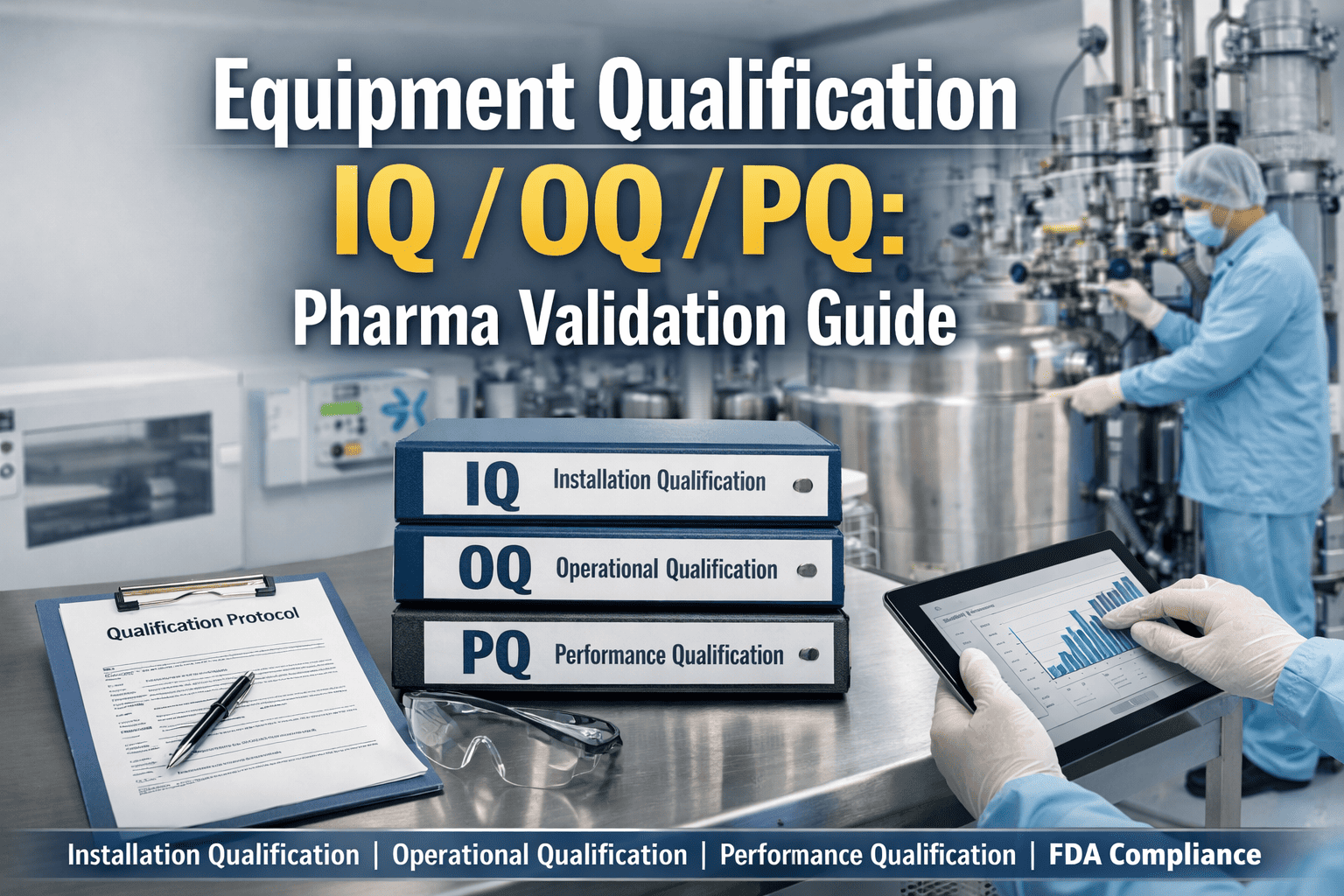
Walk any FDA Form 483 from the last five years and one pattern repeats: the IQ/OQ/PQ documentation looked clean on paper, but the maintenance trail underneath it didn't hold up. A calibration certificate that expired three weeks before OQ execution. A PM completion record signed by a technician without the qualifying training on file. A deviation closed without root cause. Equipment qualification fails on the maintenance side far more often than on the protocol side — and the gap is almost always traceable to assets that were never properly prepared for the validation event. OxMaint's calibration and qualification module closes that gap by linking every asset, every calibration record, every PM, and every deviation into a single audit-defensible trail before IQ even begins. This readiness checklist walks through what your maintenance team must verify across all three qualification stages — and shows where most pharma sites get caught.
Calibration & Qualification · Pharma Validation · Readiness Checklist
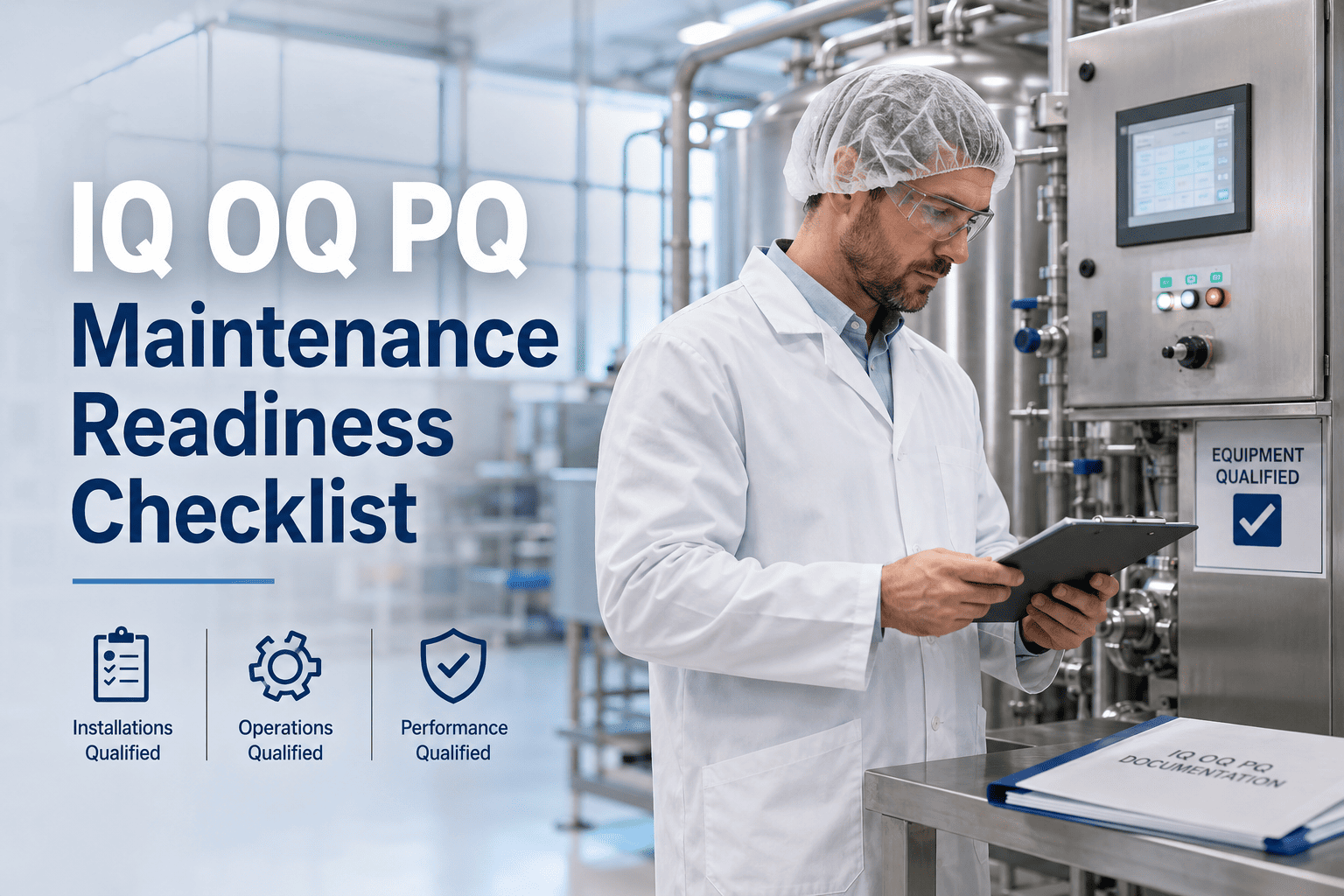
IQ OQ PQ Maintenance Readiness Checklist for Pharma Asset Validation
A stage-by-stage maintenance readiness verification — covering Installation Qualification, Operational Qualification, and Performance Qualification — built around FDA 21 CFR 211.63 and EU GMP Annex 15 expectations.
Stage 01
IQ
Installation Qualification
Equipment installed per spec · utilities verified · documentation complete
Stage 02
OQ
Operational Qualification
Equipment operates within design limits across full parameter range
Stage 03
PQ
Performance Qualification
Equipment performs reproducibly under real production conditions
68%
Of FDA 483 observations cite maintenance or calibration gaps under qualification scope
4–16 wk
Typical IQ/OQ/PQ cycle time for complex pharma equipment
21 CFR 211.63
FDA regulation requiring documented installation, operation, and performance evidence
3–5 yrs
Requalification cycle for minor equipment; annual for critical assets
Why Maintenance Readiness Decides Whether Qualification Passes or Fails
Most pharma teams treat IQ/OQ/PQ as a validation exercise. Inspectors treat it as a maintenance evidence audit. The difference matters: a perfectly written protocol cannot save you if the asset's calibration history has a gap, if the executing technician's training record is expired, or if a PM was skipped during the qualification window. Calibration management under GMP is the single most cited gap on equipment qualification audits — not because protocols are wrong, but because the supporting maintenance evidence wasn't ready when needed.
Top 4 Maintenance Failure Patterns That Block Qualification
01
Calibration Certificate Expired Mid-Qualification
A pressure transmitter calibrated 11 months ago expires 6 days before OQ execution. Every OQ test result generated against that transmitter is challenged at audit. Retroactive recalibration cannot restore data integrity.
Stops OQ
02
Technician Training Record Not Linked to Work Order
The technician who executed an IQ checklist step is missing the documented training record for that procedure. The signature is invalid under
Stops IQ
03
PM Skipped or Late During Qualification Window
A scheduled lubrication PM on a tablet press was deferred two weeks during PQ runs. Inspectors flag this as an unvalidated change to equipment condition. PQ runs may need to be repeated under the now-current PM state.
Stops PQ
04
Open Deviation on Asset at Qualification Start
A historical deviation on the same asset remains open without root cause closure. Qualification cannot proceed until the deviation is closed with Quality approval and impact assessment documented in the asset history file.
Stops All Stages
Stage 01 — Installation Qualification (IQ) Maintenance Readiness
IQ verifies that the equipment is installed and configured according to manufacturer specification. From a maintenance perspective, this is the stage where the asset master record, the calibration baseline, the PM schedule, and the as-built documentation must all be created, linked, and signed before any IQ test step is executed.
Asset Master & Documentation
Asset created in CMMS with unique ID, tag number, manufacturer, model, serial number, and GMP criticality classification
Owner Asset Engineer · Evidence CMMS asset record export with audit trail
As-built drawings, P&ID references, electrical schematics, and OEM manuals attached to asset record and version-controlled
Owner Engineering · Evidence Document control reference numbers per drawing
Spare parts list defined, BOM cross-referenced, and critical spares stocked with traceable supplier certificates
Owner MRO Coordinator · Evidence Spare BOM linked to asset in CMMS
Utilities & Environmental Baseline
All utility connections verified against spec — compressed air dew point, WFI conductivity, clean steam quality, electrical phase and load
Owner Utilities Maintenance · Evidence Utility verification reports per OEM tolerance
HVAC environmental conditions in the installation room verified — temperature, humidity, room pressure, particle counts within design class
Owner Facilities · Evidence EMS data log for 7 consecutive days pre-IQ
Calibration Baseline
Every critical instrument identified in instrument schedule with calibration range, accuracy tolerance, and traceability to national standard
Owner Calibration Lead · Evidence Instrument schedule signed by Quality
Initial calibration completed on all critical instruments with certificate, technician ID, and reference standard ID recorded in CMMS
Owner Calibration Lead · Evidence Calibration certificates attached to asset
Calibration due dates set in CMMS with automated alerts 30, 14, and 7 days before expiry to prevent overdue events during qualification
Owner Calibration Lead · Evidence CMMS alert configuration screenshot
PM Programme & Training
Preventive maintenance schedule loaded from OEM manual with task templates, intervals, lubricants, torque values, and replacement parts
Owner Reliability Engineer · Evidence PM template printout from CMMS
All technicians assigned to execute IQ steps have current training records on file for the specific equipment and procedure
Owner Training Coordinator · Evidence Training matrix linked to asset
All historical deviations on related assets reviewed and closed with documented root cause and CAPA effectiveness check
Owner Quality Engineer · Evidence Deviation closure report
Get Every IQ Prerequisite Ready Before the Protocol Goes for Quality Approval
OxMaint pre-flights every asset for IQ — calibration status, PM completeness, training records, deviation state, document linkage — in one readiness dashboard. No more discovering gaps after the protocol is signed.
Stage 02 — Operational Qualification (OQ) Maintenance Readiness
OQ tests whether the equipment operates correctly across its full design range — upper and lower limits of every critical parameter, alarms, interlocks, fail-safes, and computer system functions. Maintenance readiness at this stage is about ensuring that nothing in the asset's state will compromise test data, and that every measurement instrument used during OQ is itself within calibration.
IQ Closure & Asset State
IQ report approved by Quality with no open IQ deviations — stage gate must be closed before OQ access is granted
Owner Validation Lead · Evidence Signed IQ summary report
No open work orders, no open change controls, no pending modifications on the asset at OQ start
Owner Maintenance Planner · Evidence CMMS open work order report filtered by asset
Test Instrument Calibration
Every external test instrument used during OQ (data loggers, reference thermometers, pressure standards) calibrated with current certificate
Owner Calibration Lead · Evidence Test instrument calibration log per OQ run
Calibration tolerance of test instruments verified to be at least 4× tighter than the parameter being measured on the asset
Owner Calibration Lead · Evidence Tolerance ratio documented per measurement point
All asset-installed instruments verified in calibration window with at least 30 days margin to the planned OQ completion date
Owner Calibration Lead · Evidence Calibration due date export
Alarms, Interlocks & Safety
All critical alarms tested with simulated input and response time documented — audible, visual, and logged in the BMS or PLC history
Owner Controls Engineer · Evidence Alarm test record per point
Safety interlocks and emergency stops tested per OEM procedure with documented response and recovery sequence
Owner Safety Engineer · Evidence Interlock test sheet
Software & Data Integrity
PLC and HMI software version, parameter set, and audit trail enabled — all changes since IQ tracked with change control reference
Owner Controls Engineer · Evidence Software version verification record
Electronic signature configuration verified per 21 CFR Part 11 — dual component, role-based access, immutable timestamps
Owner IT Validation · Evidence Part 11 configuration test report
Data integrity check completed — no orphan records, no overwritten files, no manual entries in fields requiring system-generated values
Owner Data Integrity Lead · Evidence ALCOA+ verification checklist
Stage 03 — Performance Qualification (PQ) Maintenance Readiness
PQ proves the equipment performs reproducibly under actual production conditions across multiple consecutive runs. Maintenance readiness here is the most operationally demanding: the asset must be in steady-state, PMs must be either complete or formally deferred under change control, and every consumable, utility, and environmental condition must mirror routine production exactly. Any drift from the routine production state invalidates the PQ data.
Steady-State Verification
OQ report approved with all deviations Quality-closed — PQ gate cannot be unlocked until OQ is signed and exception reports are resolved
Owner Validation Lead · Evidence Signed OQ summary report
All scheduled PMs that fall within the PQ window completed before run start, or formally deferred under approved change control with QA sign-off
Owner Maintenance Planner · Evidence PM completion report covering PQ window
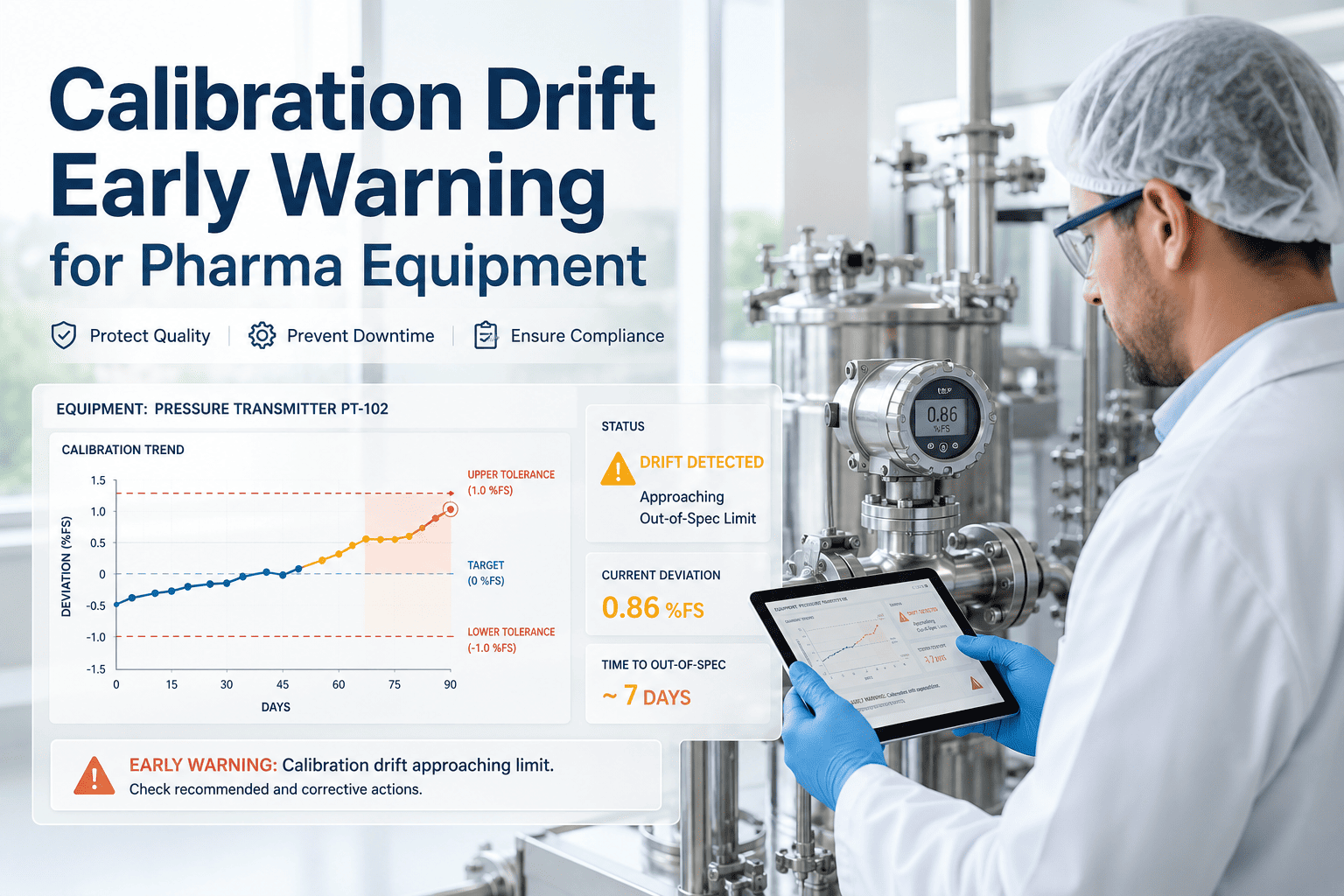
Asset run hours, cycle counts, and condition monitoring trends reviewed to confirm normal operating range — no early warning signs of failure
Owner Reliability Engineer · Evidence Condition trend report 30 days pre-PQ
Production Realism
Consumables (filters, gaskets, single-use components) match the routine production specification — no test-only or out-of-spec materials
Owner Production Engineer · Evidence Material certificate per consumable
Operators executing PQ runs are the same shift personnel who will run the equipment in routine production — not a hand-picked validation crew
Owner Production Manager · Evidence Operator assignment matrix
Environmental conditions in the production room within routine operating range — no extraordinary HVAC adjustments or cleanroom suppression of activity
Owner Facilities · Evidence EMS data log throughout PQ window
Run Continuity & Documentation
Minimum 3 consecutive successful runs planned with the same equipment configuration, same operators, and same input materials
Owner Validation Lead · Evidence Approved PQ protocol with run plan
Any deviation during PQ runs triggers automatic work order creation, root cause investigation, and CAPA assignment before PQ can continue
Owner Quality Engineer · Evidence Deviation workflow in CMMS
Periodic review schedule established — annual for critical assets, every 2–3 years for major, every 3–5 years for minor — loaded as recurring CMMS tasks
Owner Reliability Engineer · Evidence Requalification PM created in CMMS
Calibration Evidence Requirements by Qualification Stage
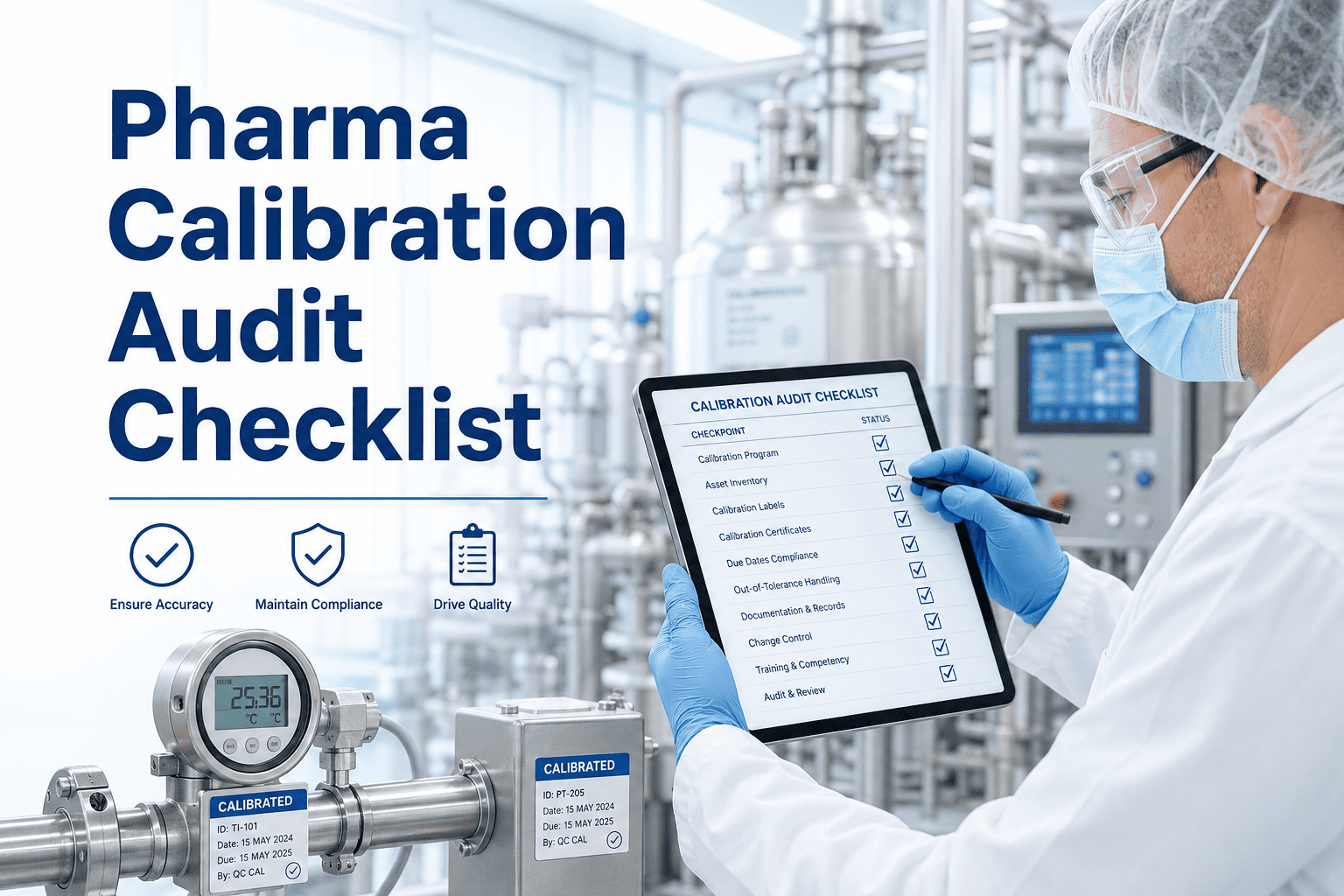
Inspectors review calibration records as the load-bearing evidence behind every qualification claim. The table below shows what each stage demands and where most pharma sites are caught short. A missing certificate, an unsigned record, or a tolerance miscalculation can void the qualification of the entire asset — not just the failed test step.
| Calibration Evidence |
IQ Required |
OQ Required |
PQ Required |
Most Common Audit Finding |
| Initial calibration certificate per installed instrument |
Yes |
Reference |
Reference |
Certificate present but not signed by qualified calibrator |
| Traceability to NIST or national standard |
Yes |
Yes |
Yes |
Reference standard certificate expired or unavailable |
| Calibration due-date alerts in CMMS |
Configured |
Active |
Active |
Alert never triggered — overdue event found by inspector first |
| Tolerance ratio vs measured parameter |
Documented |
Verified |
Verified |
Test instrument tolerance not 4× tighter than asset parameter |
| As-found / as-left readings per calibration event |
Yes |
Yes |
Yes |
Only as-left recorded — no evidence of pre-adjustment drift |
| Out-of-tolerance impact assessment on prior data |
If triggered |
If triggered |
If triggered |
OOT found but no batch impact review documented |
| Electronic signature on every calibration record |
Required |
Required |
Required |
Paper signature only — fails Part 11 if e-records claimed |
The Stage-Gate Model — How OxMaint Enforces Readiness Before Each Stage Unlocks
Manual checklists fail because nothing prevents a team from starting OQ before IQ is closed, or from running PQ while a calibration is overdue. OxMaint enforces stage-gating at the platform level — each stage's readiness items must be Quality-approved closed before the next stage's work orders become accessible. This is the single biggest reduction in qualification deviation rates that pharma maintenance teams report after rollout. CMMS validation under 21 CFR Part 11 is what makes this audit-defensible.
01
IQ Readiness Dashboard
Asset must show green on all 12 IQ prerequisites. Calibration certificates uploaded, PM templates active, training records linked, deviations closed. Quality reviews and approves before IQ work orders generate.
02
IQ Closure Gate
All IQ test steps executed, deviations documented and closed, IQ report approved by Quality. OQ work orders remain locked until this gate clears. No exceptions, no manual override without QA electronic signature.
03
OQ Closure Gate
OQ tests complete across full design range, alarms verified, Part 11 audit trail validated. PQ access blocked until OQ deviations are Quality-closed and impact assessments documented per deviation.
04
PQ Release to Routine Production
3 consecutive successful runs documented, periodic requalification schedule loaded, asset moved to validated production state. CMMS automatically generates the next requalification work order at the risk-based interval.
What Stage-Gated Readiness Saves a Pharma Site
Average cost of a single qualification re-execution (complex equipment)
$45,000–$120,000
Average qualification cycle time with manual readiness checks
12–16 weeks
Cycle time with CMMS-enforced readiness gates
6–9 weeks
Reduction in qualification-related FDA 483 observations (year 1)
60–80%
Typical payback period after OxMaint calibration & qualification rollout
4–6 months
Maintenance Readiness KPIs to Track Before Every Qualification Event
Target 100%
Calibration Currency Rate
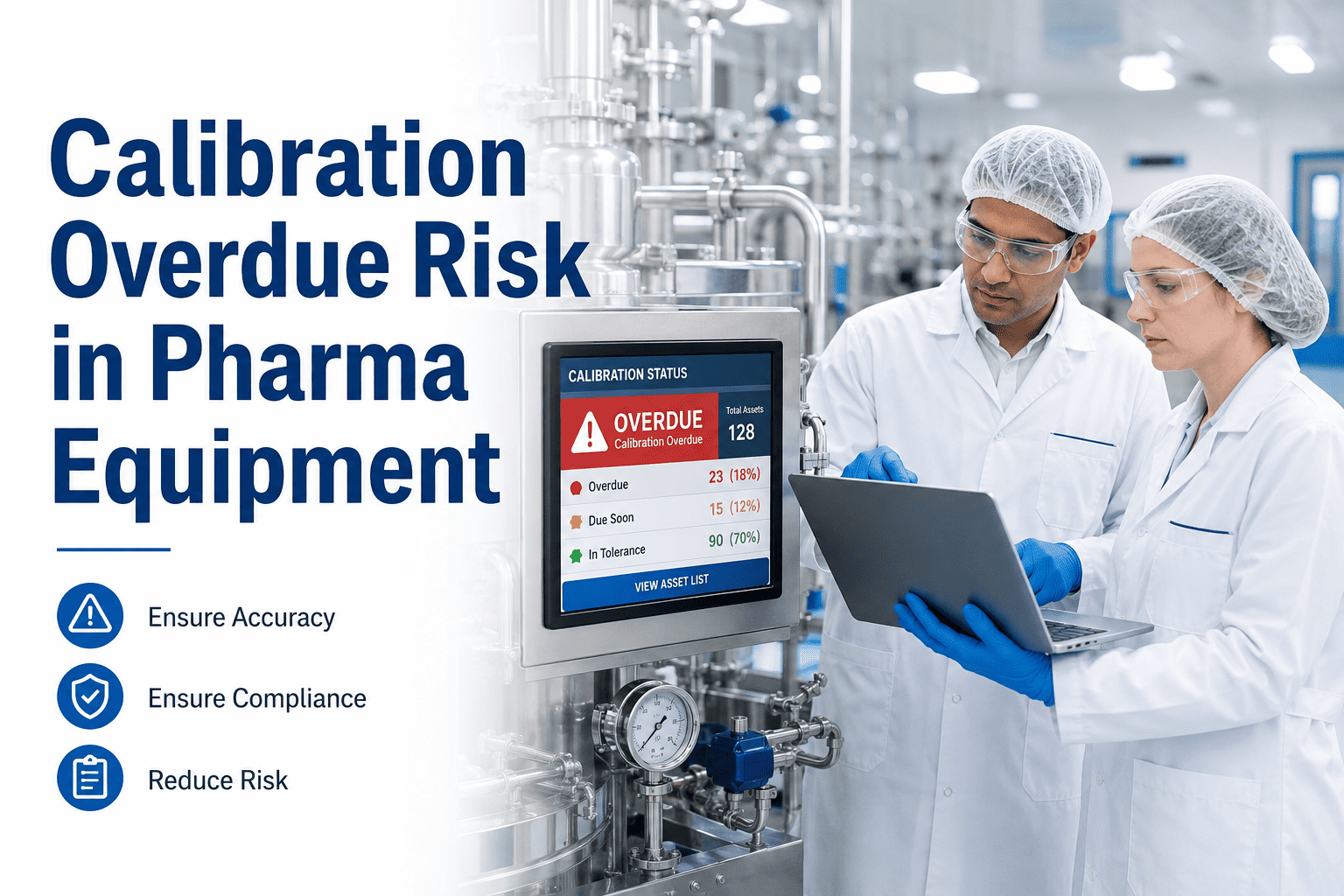
Percentage of asset-installed and test instruments within their calibration window at qualification start. Anything below 100% blocks the stage. Track 30 days pre-event with automated alerts at 30, 14, and 7 days to expiry.
Target Greater than 95%
PM Completion in Qualification Window
Percentage of scheduled PMs within the qualification window completed on time. Skipped PMs require change control approval before qualification proceeds. Below 95% signals a planning gap that will accumulate audit findings.
Target Zero
Open Deviations at Stage Start
Number of open deviations on the asset at the start of each qualification stage. Any non-zero count blocks the gate from opening. Closure requires root cause, CAPA assignment, and Quality approval recorded in CMMS.
Target 100%
Training Record Currency
Percentage of technicians assigned to execute qualification steps who hold current, documented training on the specific procedure and equipment. Missing records void electronic signatures under 21 CFR Part 11.
Target Less than 5 days
Deviation Closure Cycle Time
Average days from deviation creation to Quality-approved closure during qualification. Long closure cycles extend the qualification window and create new compliance exposure as adjacent records age.
Target 100%
Documentation Linkage Completeness
Percentage of asset records with full linkage to drawings, manuals, calibration certificates, PM templates, and training records. Missing linkages are the most common audit observation under documentation control sub-section 211.182.
"
In nineteen years working both inside FDA as an investigator and now consulting for pharma manufacturers, the single most consistent pattern I see in qualification failures has nothing to do with the validation team. It is the maintenance organisation that creates or destroys qualification credibility. A perfectly executed IQ protocol means nothing if the calibration certificate behind the critical pressure transmitter expired three days into OQ — and the calibration team did not know because their alert system was set to a 24-hour window instead of 30 days. I have seen this exact failure cost a site eight figures in remediation. The CMMS-enforced readiness model — where the system mechanically prevents OQ from starting until IQ is Quality-closed, and PQ from starting until OQ is signed — eliminates the procedural discipline gap that catches most pharma sites. It is not about the protocol. It is about the maintenance trail underneath it.
Dr. Catherine Lindqvist, RAC
Regulatory Affairs Certified (US) · Former FDA Investigator, CDER · Pharma Validation Specialist · 19 years in 21 CFR Parts 210, 211, and 11 compliance · Senior consultant for sterile injectable and biologics manufacturing qualification programmes
Frequently Asked Questions
01
What is the difference between maintenance readiness and qualification itself?
Qualification — IQ, OQ, and PQ — is the documented testing that proves equipment meets specification. Maintenance readiness is everything the maintenance team must have in place before that testing can produce defensible evidence. This includes calibration currency, completed PMs, training records, closed deviations, and linked documentation. A protocol cannot pass if the underlying maintenance state is not audit-ready.
OxMaint links every prerequisite to the asset record so readiness is verified before protocol execution begins.
02
How does OxMaint enforce that OQ cannot start before IQ closes?
OxMaint applies stage gating at the platform level. Work orders for OQ test steps are programmatically locked until the IQ report is approved by Quality with electronic signature and all IQ deviations are formally closed. PQ work orders remain locked until OQ closes the same way. The gate is system-enforced rather than procedural — there is no manual workaround without Quality electronic sign-off.
Book a demo to see how stage gates are configured per asset class.
03
What calibration evidence does an FDA inspector typically ask for during a qualification audit?
Inspectors ask for the initial calibration certificate at IQ, the test instrument calibration certificates used during OQ, the as-found and as-left readings for every calibration event, the tolerance ratio against the measured parameter, traceability to NIST or national standard, and the impact assessment if any out-of-tolerance event occurred. The most common gap is when only as-left readings are recorded — auditors view this as a data integrity concern because pre-adjustment drift cannot be evaluated.
04
How often does pharma equipment need requalification after the initial IQ/OQ/PQ?
Requalification frequency is risk-based. Critical equipment with direct product contact is typically requalified annually. Major equipment is requalified every 2–3 years. Minor equipment is requalified every 3–5 years. Requalification is also triggered by change events — major maintenance, software upgrades, relocation, or accumulated minor changes that exceed change control thresholds.
OxMaint generates the requalification work order automatically at the risk-based interval and triggers ad-hoc requalification when change control events accumulate.
05
Can a CMMS itself be used to generate the IQ/OQ/PQ records that auditors will accept?
Yes, provided the CMMS itself is validated under 21 CFR Part 11. This means immutable audit trail, dual-component electronic signatures, role-based access control, computer-generated timestamps, and a documented validation package covering the CMMS infrastructure. Pharma manufacturers are responsible for validating the CMMS in their specific environment — the vendor provides the validation package but cannot validate on the customer's behalf.
Book a demo to review OxMaint's Part 11 architecture and validation kit.
Make Qualification a Maintenance Outcome, Not a Last-Minute Scramble
OxMaint links every asset, every calibration, every PM, every training record, and every deviation into one audit-ready trail. Stage gates enforce readiness automatically. Quality approves with electronic signature. Inspectors see the evidence in one click.