
Every breath a patient takes in your acute care hospital depends on systems most never see: the intricate network of air handlers, pressure differentials, and ventilation controls that separate sterile surgical environments from infectious disease isolation. When a 63-year-old immunocompromised patient enters your bone marrow transplant unit, the positive pressure environment protecting them from airborne pathogens isn't just an engineering specification—it's the invisible barrier between recovery and potentially fatal infection. Yet across American hospitals, HVAC compliance failures remain among the most frequently cited deficiencies during Joint Commission surveys, with infection prevention citations appearing in over 77% of hospitals surveyed in 2023-2024.
The stakes extend far beyond regulatory checkboxes. ASHRAE Standard 170 mandates minimum air changes per hour ranging from 6 ACH in general patient rooms to 20+ ACH in operating rooms, with precise pressure relationships that must be maintained continuously. A single pressure reversal in an airborne infection isolation room—where negative pressure should contain tuberculosis, measles, or emerging pathogens—can expose staff, visitors, and vulnerable patients throughout the corridor. Hospital-acquired infections affect approximately 1 in 31 hospital patients on any given day, with airborne transmission pathways representing a significant and preventable risk factor when ventilation systems fail to perform as designed.
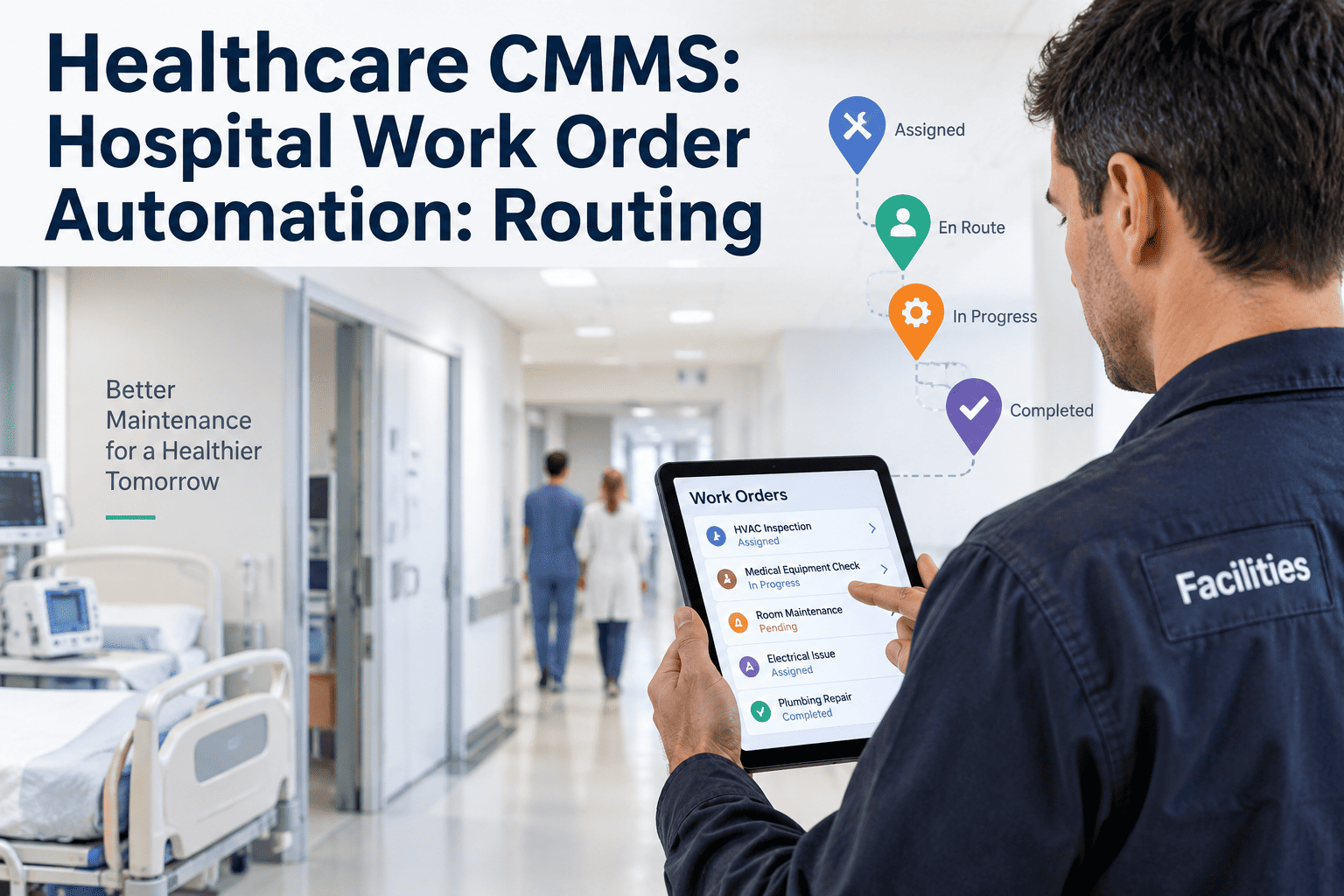
Reimagine healthcare compliance using mobile inspections
Traditional HVAC compliance in hospitals relies on a patchwork of paper logs, periodic contractor visits, and reactive responses to obvious failures. This approach systematically misses the gradual degradation that precedes catastrophic compliance failures: the filter slowly loading beyond acceptable pressure drops, the damper actuator drifting out of calibration, the sensor providing readings that no longer match reality. By the time a pressure relationship reverses or air changes fall below minimum thresholds, patients may have already been exposed to preventable risks—and the documentation trail required to demonstrate due diligence often exists only in fragmented, illegible, or missing records.
Mobile inspection platforms transform this reality by embedding compliance verification into daily operations. When a facilities technician walks past an AII room, a single QR scan triggers the inspection protocol: verify the visual pressure indicator, confirm the door seals properly, document current conditions with timestamped photos. These micro-inspections accumulate into continuous compliance evidence that no quarterly contractor visit can replicate. For healthcare facilities managing complex ventilation requirements across hundreds of spaces, this shift from periodic verification to continuous monitoring represents the difference between demonstrating compliance and hoping for it. Organizations exploring this transition should connect with maintenance technology specialists who understand healthcare-specific requirements.
The Air Changes Per Hour Compliance Challenge
ASHRAE 170 specifies minimum total air changes per hour and outdoor air requirements for 81 different healthcare space types—a complexity that overwhelms manual tracking systems. Operating rooms require a minimum of 20 total ACH with at least 4 outdoor air changes, while general patient rooms need only 6 total ACH with 2 outdoor air changes. Airborne infection isolation rooms mandate 12 total ACH with all air exhausted directly outdoors or through HEPA filtration before recirculation. Each space type carries specific pressure relationships, filtration requirements, and documentation obligations that must be maintained continuously and verified periodically.
The challenge intensifies when considering that ACH calculations depend on actual measured airflow, not design specifications. A system designed for 20 ACH may deliver only 15 ACH after filters load, dampers drift, or ductwork develops leaks. Without regular measurement and documentation, facilities operate on assumptions that may have diverged significantly from reality. Joint Commission surveys increasingly request evidence of ongoing ACH verification, not just original commissioning reports. Healthcare facilities seeking to establish robust verification programs can schedule consultations with implementation specialists to design workflows matching their specific infrastructure.
Making audits painless — a healthcare architecture with AI
Joint Commission surveys arrive unannounced, and surveyors expect immediate access to maintenance documentation demonstrating ongoing compliance with Environment of Care standards. The traditional scramble—pulling paper logs from multiple locations, explaining gaps in records, defending why certain inspections were missed—creates stress that compounds the inherent pressure of accreditation surveys. Modern CMMS platforms eliminate this scramble by maintaining continuous, searchable, audit-ready documentation that surveyors can access in seconds rather than hours.
The architecture of effective healthcare CMMS extends beyond simple work order management. It encompasses asset hierarchies that map every air handling unit, fan coil, and pressure monitor to the spaces they serve. It includes inspection templates aligned with ASHRAE 170 requirements, automatic scheduling based on regulatory intervals, and escalation workflows that prevent tasks from falling through cracks. When a surveyor asks "Show me the maintenance history for your AII rooms," the response should be a comprehensive digital record—not a promise to gather paperwork. Facilities exploring this level of documentation capability should request detailed implementation guidance from healthcare CMMS specialists.
Expert Review: Industry Perspectives on Healthcare HVAC Compliance
The complexity of healthcare ventilation compliance has outpaced what manual systems can reliably track. With 81 different space types under ASHRAE 170, each with unique ACH, pressure, and filtration requirements, the documentation burden alone justifies digital transformation. But the real value is in the continuous verification that prevents compliance gaps from becoming patient safety events.
Conclusion: From Compliance Burden to Patient Safety Asset
HVAC pressurization and air changes in hospitals will never be optional concerns—they are fundamental to the infection control infrastructure that protects patients, staff, and visitors from airborne disease transmission. The complexity of managing 81 space types under ASHRAE 170, maintaining precise pressure relationships across hundreds of rooms, and documenting continuous compliance for Joint Commission surveys represents a genuine operational challenge. But this challenge also represents an opportunity: facilities that invest in systematic, digital compliance management gain not only regulatory confidence but also genuine patient safety improvements through early detection and prevention of ventilation failures.
The choice facing healthcare facility leaders is whether to continue managing this complexity through fragmented manual systems—with their inherent gaps, documentation weaknesses, and reactive failure patterns—or to embrace digital platforms designed specifically for healthcare compliance requirements. Modern CMMS solutions offer mobile inspection capabilities, automated scheduling, deficiency tracking, and audit-ready reporting that transform HVAC compliance from administrative burden to operational asset. For acute care hospitals committed to both regulatory excellence and patient safety outcomes, the path forward is clear: systematic digitization of ventilation compliance management, with the documentation depth and verification frequency that today's regulatory environment demands. Healthcare facilities ready to explore this transformation can schedule a demonstration to see how digital compliance workflows operate in practice.

.jpg)

