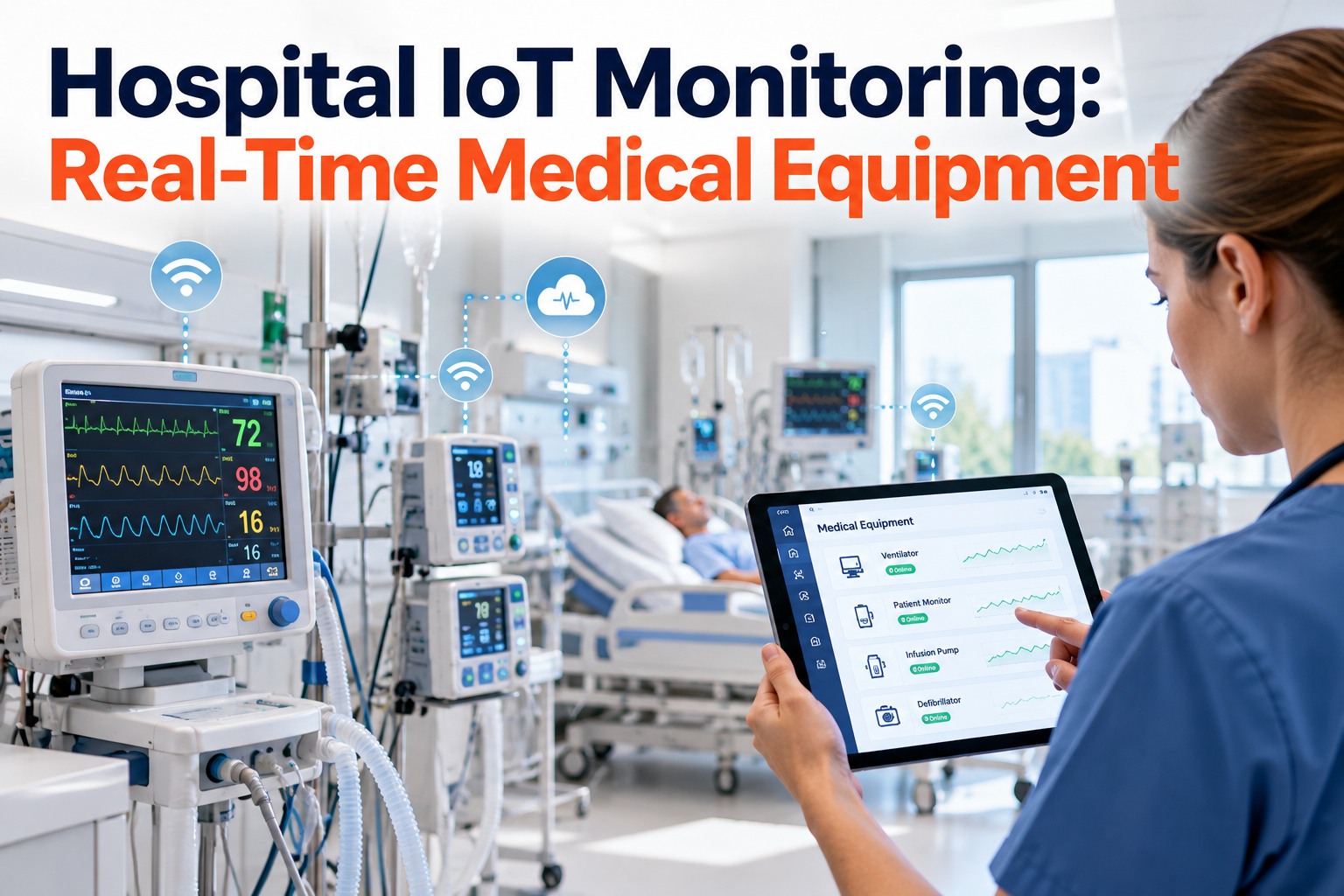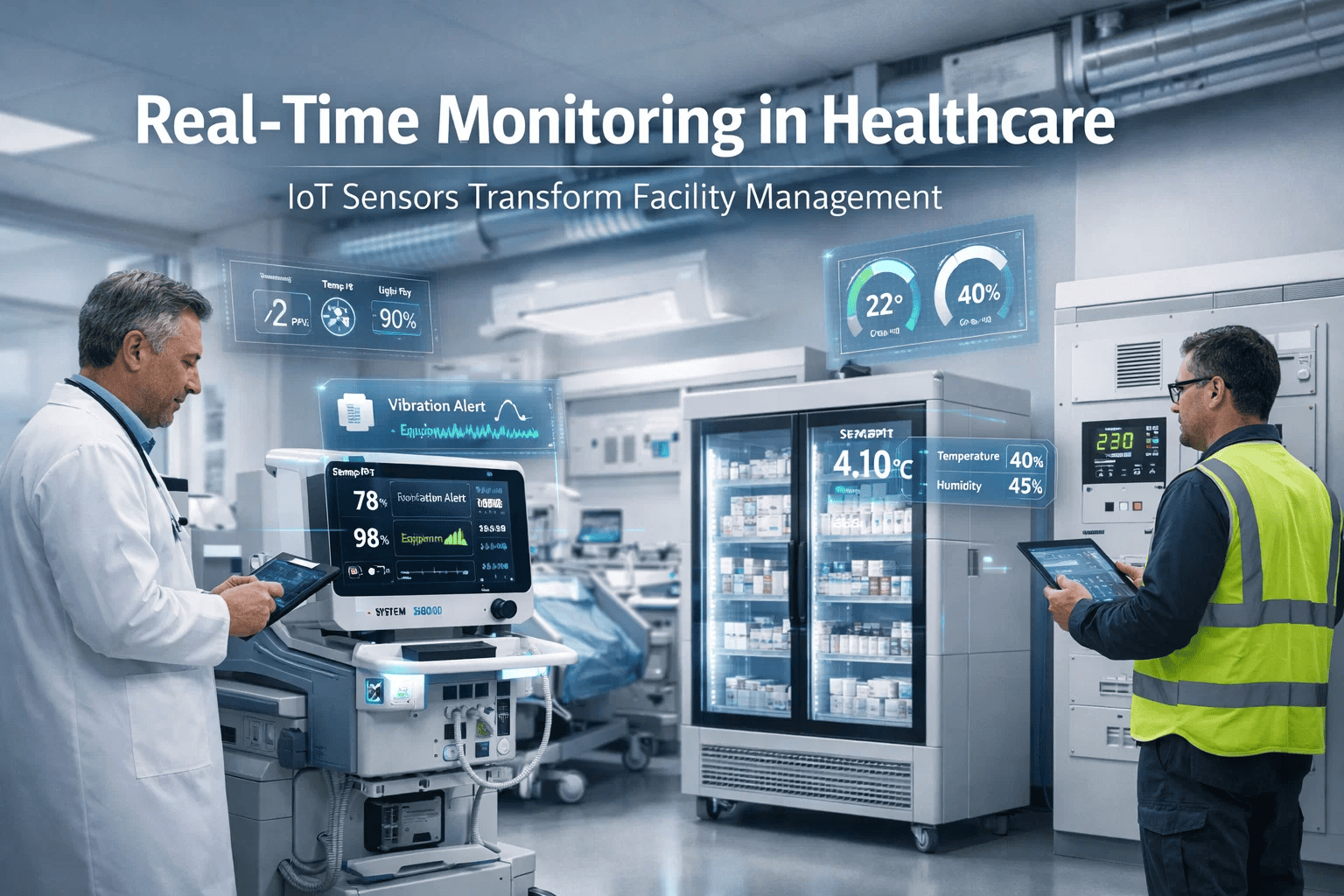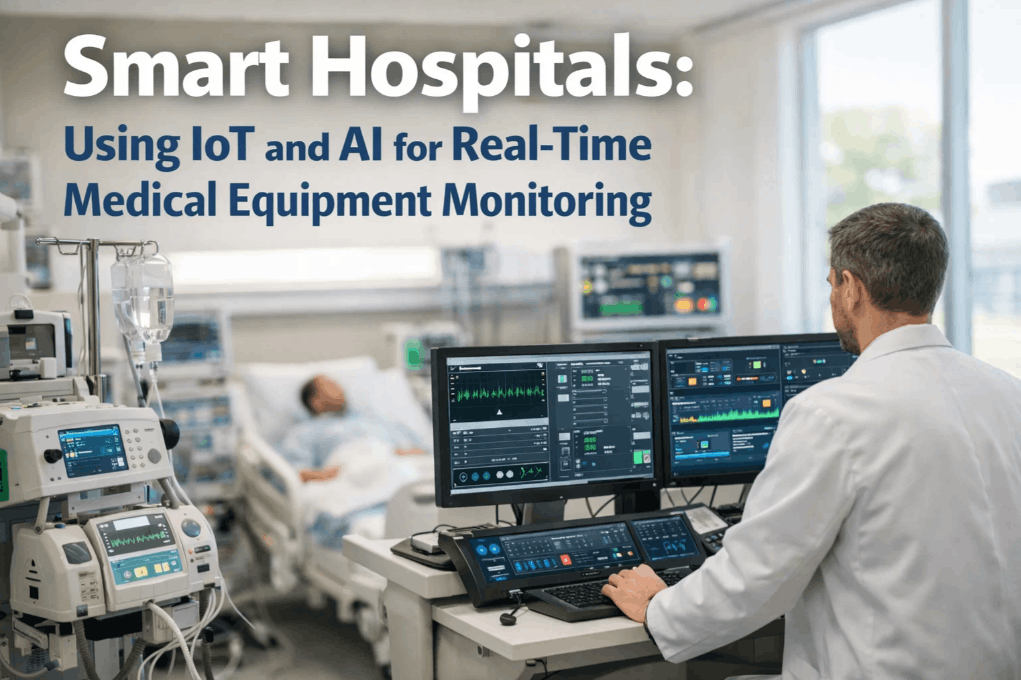
A modern hospital collects more equipment sensor data in a single afternoon than a biomed team could read in a year — helium pressure from the MRI, valve cycles from every ventilator, motor current from every infusion pump, tube temperature from the CT. The problem was never gathering data; the problem is turning it into the right work order at the right time. Studies show 80% of medical equipment failures are preventable when the failure signature is caught early, and IoT + AI predictive systems typically catch that signature 2–4 weeks before breakdown. This guide walks through exactly which sensors matter on which devices, what a healthy signal looks like versus a degrading one, and how to build the sensor-to-work-order pipeline your team can actually run. Every workflow below runs inside OXMAINT AI, the AI-powered CMMS/maintenance management software that ingests IoT streams, grades anomalies into defects, and issues predictive work orders on a single platform.
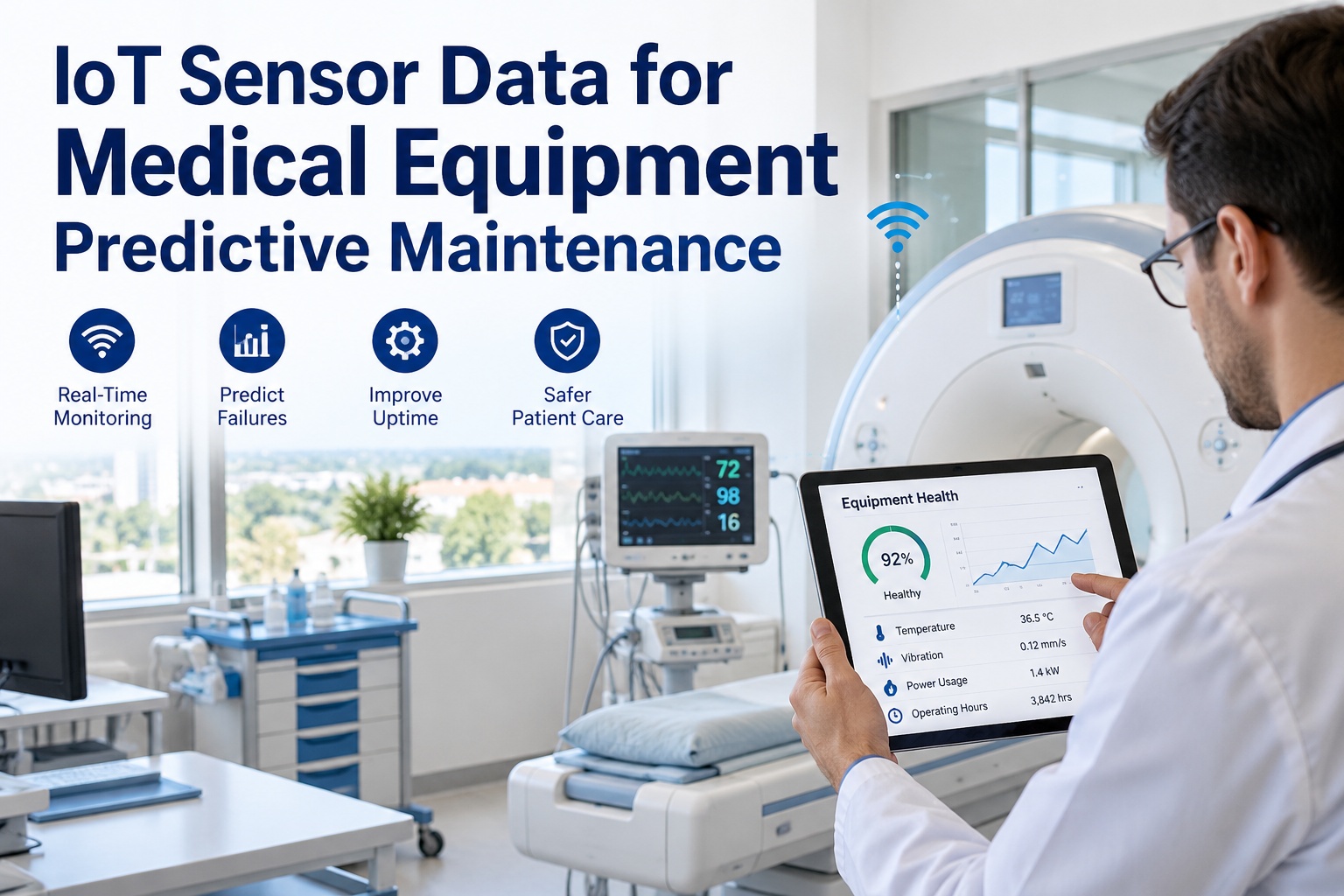
IoT Sensor Data for Medical Equipment Predictive Maintenance
Vibration, temperature, pressure, current, cycle counts — every clinical device broadcasts its own health. OXMAINT AI is the AI-powered CMMS/maintenance management software that captures those signals, learns each asset's normal, and turns a drifting reading into a graded defect and a scheduled work order — before the device stops mid-scan or mid-infusion.
The Six Sensor Signals That Do the Real Work
Every clinical device broadcasts dozens of readings — but only a handful actually predict failure. These six sensor families are the workhorses of medical predictive maintenance. OXMAINT AI captures each stream, compares it to the asset's learned baseline, and grades any drift into a defect record for biomed to action. Sign up free and start streaming your first six signals in OXMAINT AI.
Signal-to-Defect Matrix — Which Sensor Matters on Which Device
Not every sensor helps on every device. The matrix below shows the primary and secondary signals biomed teams actually rely on for the highest-cost failure modes on core clinical equipment. In OXMAINT AI, each cell corresponds to a device-class rule that turns the stream into a graded defect. Book a demo to walk the matrix on your equipment mix.
| Device | Primary signal | Secondary signals | Failure it catches | Cost avoided |
|---|---|---|---|---|
| MRI scanner | Helium pressure | Gradient coil temp · vibration · chilled-water flow | Quench risk, cold-head degradation | $150k–$400k per quench event |
| CT scanner | X-ray tube temp | Anode current · exposure cycles · vibration | Tube burnout, anode wear | $80k–$150k tube replacement |
| Ventilator | Pressure & flow sensor drift | Valve cycle count · motor current · alarm rate | Compressor decay, valve wear, calibration drift | ICU downtime + patient risk |
| Infusion pump | Motor current | Cycle count · alarm history · battery cycles | Actuator wear, delivery accuracy drift | Ward-wide recall + rework |
| Sterilizer / autoclave | Chamber pressure & temp | Cycle count · steam quality · door-seal cycles | Sterility failure, cycle abort | Batch rejection, OR delay |
| Lab analyzer | Calibration drift | Pump vibration · reagent temp · error codes | Assay drift, QC failure | Result rerun, patient recall |
| Medical gas manifold | Line pressure | Alarm history · outlet flow · cylinder switch cycles | Supply drop, leak, regulator wear | NFPA 99 compliance risk |
Healthy Signal vs Drifting Signal — What You're Actually Looking At
Predictive maintenance is not "watch a number." It's watching a shape. Below is what "normal" and "developing failure" look like on the two most-instrumented families of clinical equipment. OXMAINT AI learns each asset's own baseline over the first two to four weeks, then flags shape changes — not fixed thresholds. Sign up free — let OXMAINT AI learn your equipment's baseline.
A Sensor Reading Isn't Predictive Maintenance. A Graded Defect With a Named Owner Is.
Most hospitals already have the sensors. What's missing is the software that turns a stream of numbers into a work order — with the right technician, the right part, the right date. OXMAINT AI is that platform, and it was built for medical devices.
The Packet-to-Work-Order Pipeline
A sensor packet only helps a patient if it becomes an action. OXMAINT AI runs the five stages below on one platform — no exports, no CSV bridges, no biomed inbox scramble. Each stage is a step your team can trust to happen automatically. Book a demo to see the pipeline on live device data.
The False-Alarm Problem — And How OXMAINT AI Handles It
Every IoT-in-healthcare project starts strong and dies in a river of false alerts. A pump beeps because someone changed a syringe; the ventilator "vibration" is a nurse leaning on the cart. If every ping becomes a work order, biomed stops trusting the software inside a month. OXMAINT AI addresses this with layered filtering, not louder alarms. Sign up free and see how OXMAINT AI grades alerts in your environment.
Live Asset Health Snapshot
Here's what a biomed lead sees on a Tuesday morning — a rolling health view across the most-instrumented devices in a hospital. Every asset carries a health score computed from its live signals, and the score is what routes attention. Book a demo to see your own live snapshot in OXMAINT AI.
Regulatory Records — Built From the Sensor Stream
The bonus of predictive maintenance for medical devices is that the same sensor stream that triggers a work order also produces the record every regulator wants to see. OXMAINT AI stitches the sensor reading, the graded defect, the work order, the technician signature and the photo evidence into one immutable trail per asset. Sign up free — turn every sensor packet into an audit-ready record.
What OXMAINT AI Gives a Biomed & Facilities Team
OXMAINT AI is the AI-powered CMMS/maintenance management software that connects medical-device IoT signals to the maintenance workflow biomed and facilities teams already run. Below are the platform capabilities that make it work. Sign up free and switch on the first signal in OXMAINT AI.
We were drowning in alerts before we tightened up baselines. The first month with OXMAINT AI, the software flagged a slow helium-pressure walk on our newer MRI that our quarterly PM had missed twice. Cold-head service was scheduled 12 days out, no quench, no cancelled scans, and the same fingerprint was already being watched on the sister-site machine. That was the moment biomed stopped treating this as an experiment.
Frequently Asked Questions
Turn Every Sensor Packet Into a Better Maintained Device.
Move medical-device predictive maintenance out of dashboards and into the workflow with OXMAINT AI — signal-to-defect-to-work-order on one platform, per-asset learned baselines, and an evidence chain your regulators can actually query.