It's Friday at 7:12 PM—peak dinner service. The walk-in cooler alarm triggers: internal temperature has climbed to 48°F. Your kitchen team scrambles to relocate $4,200 worth of perishable inventory while a technician charges emergency rates to replace a condenser fan motor clogged with grease and dust. This wasn't a freak failure—it was weeks of skipped maintenance made visible at the worst possible moment. Equipment breakdowns during service account for nearly one in three unplanned restaurant closuresyet most hospitality kitchens still maintain equipment only after something stops working. A structured commercial kitchen equipment maintenance checklist changes this equation entirely.
30%
Of unplanned restaurant closures stem from equipment breakdowns
$10K–$50K
Average annual emergency repair cost per commercial kitchen
2–3×
Longer equipment lifespan with preventive maintenance vs. reactive
Hospitality kitchens with structured preventive maintenance programs report 30-40% fewer breakdowns and 20-30% lower total maintenance costs annually.
The True Cost of Reactive Kitchen Maintenance
Emergency repair bills are only the surface cost. When a commercial oven fails mid-service, you lose covers. When a dishwasher breaks down, you risk health code violations. When refrigeration fails overnight, you write off thousands in spoiled product. Properties that implement systematic kitchen maintenance tracking catch compressor strain, burner inefficiency, and drain blockages long before they interrupt operations or trigger inspection failures.
Stage 1
Condenser coils accumulate grease and dust
Refrigeration efficiency drops 20-25%, energy costs spike
Stage 2
Compressor runs continuously to compensate
Component wear accelerates, temperatures fluctuate
Stage 3
Unit fails to hold safe temperatures
Food safety risk, potential health code violations
Stage 4
Compressor failure during peak service
Emergency repair: $2,000-$5,000 + food spoilage + lost revenue
Prevention Cost
$15 coil cleaning supplies + 20 minutes monthly service
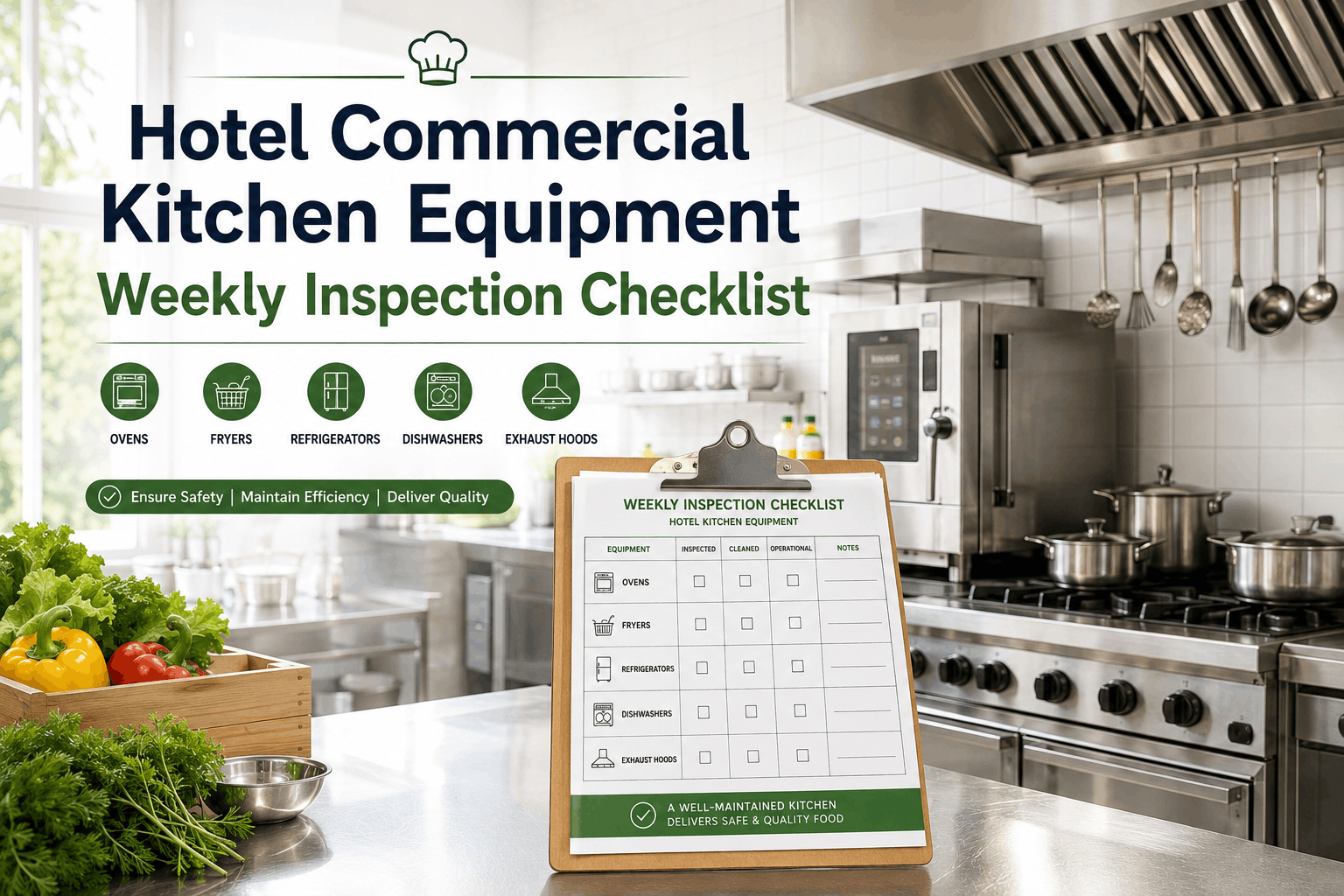
Complete Commercial Kitchen Equipment Inspection Checklist
This 12-point checklist covers the critical equipment zones where commercial kitchen systems most commonly fail. Each item includes recommended inspection frequency and the failure modes it prevents, designed specifically for hospitality environments running high-volume operations.
Walk-in cooler/freezer temperature verification
Log temperatures twice daily. Cooler: 35-38°F. Freezer: 0°F or below.
Daily
Condenser coil cleaning
Remove grease, dust, and debris from all refrigeration condensers. Inspect fan motors.
Monthly
Door gasket inspection
Check seals on walk-ins, reach-ins, and prep tables. Replace if torn, cracked, or loose.
Weekly
Drain line flush
Clear condensate drain lines to prevent ice buildup and water leaks on kitchen floors.
Monthly
Burner and pilot light calibration
Verify even flame distribution on ranges, ovens, and broilers. Adjust gas valves as needed.
Weekly
Fryer oil quality and thermostat check
Test oil with quality strips. Verify thermostat accuracy within ±5°F using probe thermometer.
Daily
Oven temperature calibration
Use independent thermometer to verify accuracy. Recalibrate if off by more than 10°F.
Monthly
Griddle/flat-top surface inspection
Check for warping, hot spots, and thermostat drift. Season surface per manufacturer specs.
Weekly
Exhaust hood and grease filter cleaning
Remove and degrease filters. Inspect hood interior for grease accumulation and airflow.
Weekly
Fire suppression system inspection
Verify Ansul/fire suppression tags are current. Check nozzle alignment and pull station access.
Monthly
Commercial dishwasher service
Descale wash/rinse arms. Verify sanitizing temperature: 180°F (heat) or 50ppm chlorine (chemical).
Weekly
Grease trap and floor drain service
Pump grease trap before reaching 25% capacity. Flush floor drains to prevent backups and odors.
Monthly
Managing this across a full hospitality kitchen—often 30+ pieces of equipment—is where spreadsheet-based tracking breaks down. A single hotel kitchen running weekly burner checks and monthly coil cleanings generates hundreds of tasks per quarter. Properties that automate their kitchen maintenance scheduling ensure nothing slips through the cracks during the busiest service periods.
Digitize Your Kitchen Maintenance Program
See how hospitality kitchens use OXmaint to schedule equipment inspections, track technician completion, and generate work orders the moment issues are found.
Building a Layered Kitchen Maintenance Schedule
Commercial kitchens operate under extreme conditions—high heat, moisture, grease, and constant use. Maintenance must be layered across multiple frequencies to match. Daily checks catch operational drift, weekly service prevents grease buildup, monthly deep maintenance extends component life, and quarterly professional servicing handles what in-house teams can't.
Daily
10 min total
Temperature logs (all units)
Fryer oil quality check
Equipment wipe-down
Kitchen Staff
Weekly
45 min total
Hood filter degreasing
Gasket & seal checks
Burner calibration
Maintenance Technician
Monthly
2-3 hours total
Condenser coil cleaning
Grease trap pumping
Oven calibration
Senior Technician
Quarterly
Half day
Full equipment audit
Dishwasher descaling
Electrical inspections
Senior Technician
Semi-Annual
Full day
Exhaust duct cleaning
Fire suppression service
Refrigerant & gas checks
Licensed Professionals
The highest-performing hotel kitchens integrate their maintenance checklists with kitchen maintenance management software that tracks trends over time. When data shows a reach-in cooler needing repairs three times in six months, you plan a capital replacement before it fails during a 300-cover banquet. That's the difference between managed operations and constant firefighting.
Expert Perspective: What Separates Top-Performing Kitchens
Health inspectors don't just check food handling—they examine equipment condition, temperature logs, and hood cleanliness. Kitchens that maintain a documented preventive maintenance program consistently score higher on inspections and experience 40% fewer critical violations. The difference isn't budget; it's discipline and documentation.
Health Code Readiness
Documented maintenance logs demonstrate due diligence. Properties with CMMS records pass health inspections at significantly higher rates than those relying on memory.
Energy Cost Control
Dirty condenser coils increase refrigeration energy use by 20-35%. Clean cooking equipment operates more efficiently. Preventive care directly reduces utility bills.
Staff Safety & Retention
Well-maintained equipment reduces burn risks, gas leaks, and slip hazards. Kitchen staff stay longer at properties where equipment works reliably and safely.
The kitchens achieving the strongest results pair their inspection protocols with software that auto-generates work orders, manages parts inventory for filters, gaskets, and cleaning supplies, and produces cost-per-equipment reports for capital planning. Ready to see how automated kitchen maintenance workflows operate? Our team can demonstrate implementations at hospitality properties like yours.
Stop Kitchen Breakdowns Before They Start
Join hospitality kitchens using OXmaint to automate equipment inspections, ensure health code compliance, and eliminate costly emergency repairs. See the results for yourself.
Frequently Asked Questions
How often should commercial kitchen equipment be inspected?
Use a layered approach: daily temperature logs and equipment wipe-downs by kitchen staff, weekly burner checks, gasket inspections, and hood filter cleaning by maintenance technicians, monthly condenser coil cleaning, grease trap service, and oven calibration, quarterly full equipment audits and dishwasher descaling, and semi-annual professional exhaust duct cleaning and fire suppression servicing. This multi-frequency system catches problems at every stage.
What are the most common commercial kitchen equipment failures?
Top failures include: refrigeration breakdowns from dirty condenser coils or worn gaskets, oven and fryer temperature inaccuracies from uncalibrated thermostats, dishwasher failures from mineral scale buildup, grease trap overflows causing drain backups, and exhaust hood inefficiency from clogged filters. All of these are preventable through regular scheduled maintenance.
How much can hospitality kitchens save with preventive maintenance?
Hospitality kitchens with structured preventive maintenance programs typically report 30-40% reductions in total maintenance costs. Clean refrigeration coils alone cut energy consumption by 20-35%. Equipment lifespan extends from 5-8 years under reactive maintenance to 12-20 years with proper care. Emergency repairs—costing 3-5× standard rates and often occurring during peak service—are nearly eliminated.
What should a basic commercial kitchen maintenance checklist include?
Essential items include: daily temperature logging for all refrigeration units, weekly hood filter degreasing and burner calibration, monthly condenser coil cleaning and grease trap service, oven and fryer thermostat verification, dishwasher sanitizing temperature checks, door gasket inspections, drain line flushing, fire suppression system verification, and floor drain maintenance. Gas line testing and refrigerant checks require licensed professionals.
How does a CMMS improve commercial kitchen maintenance?
A Computerized Maintenance Management System automates inspection scheduling across all equipment, provides mobile checklists for consistent technician execution, tracks completion rates and flags overdue tasks, stores maintenance history for health inspection documentation, generates work orders automatically when issues are found, manages parts inventory for gaskets, filters, and cleaning supplies, and produces cost-per-equipment reports for capital planning decisions.