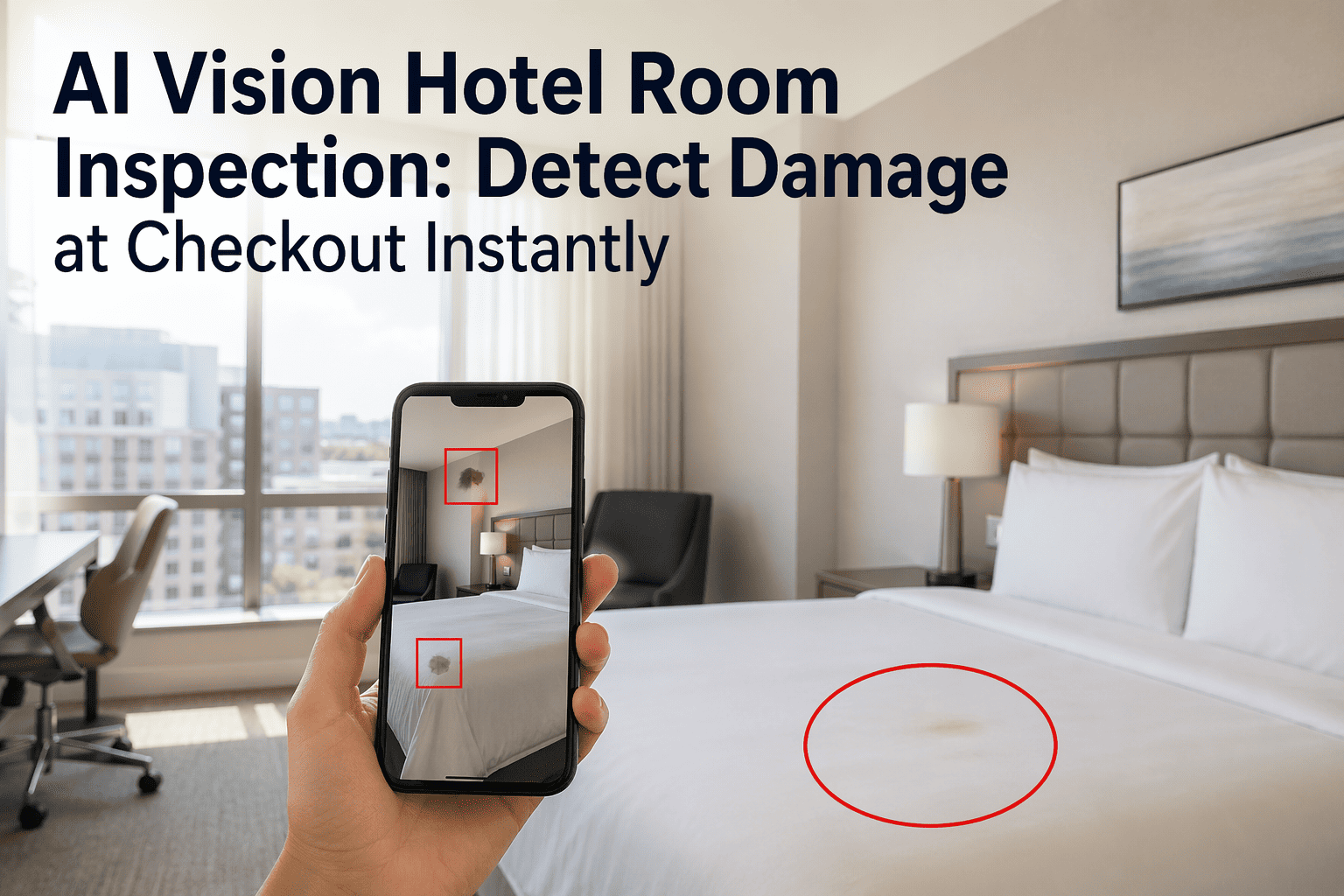
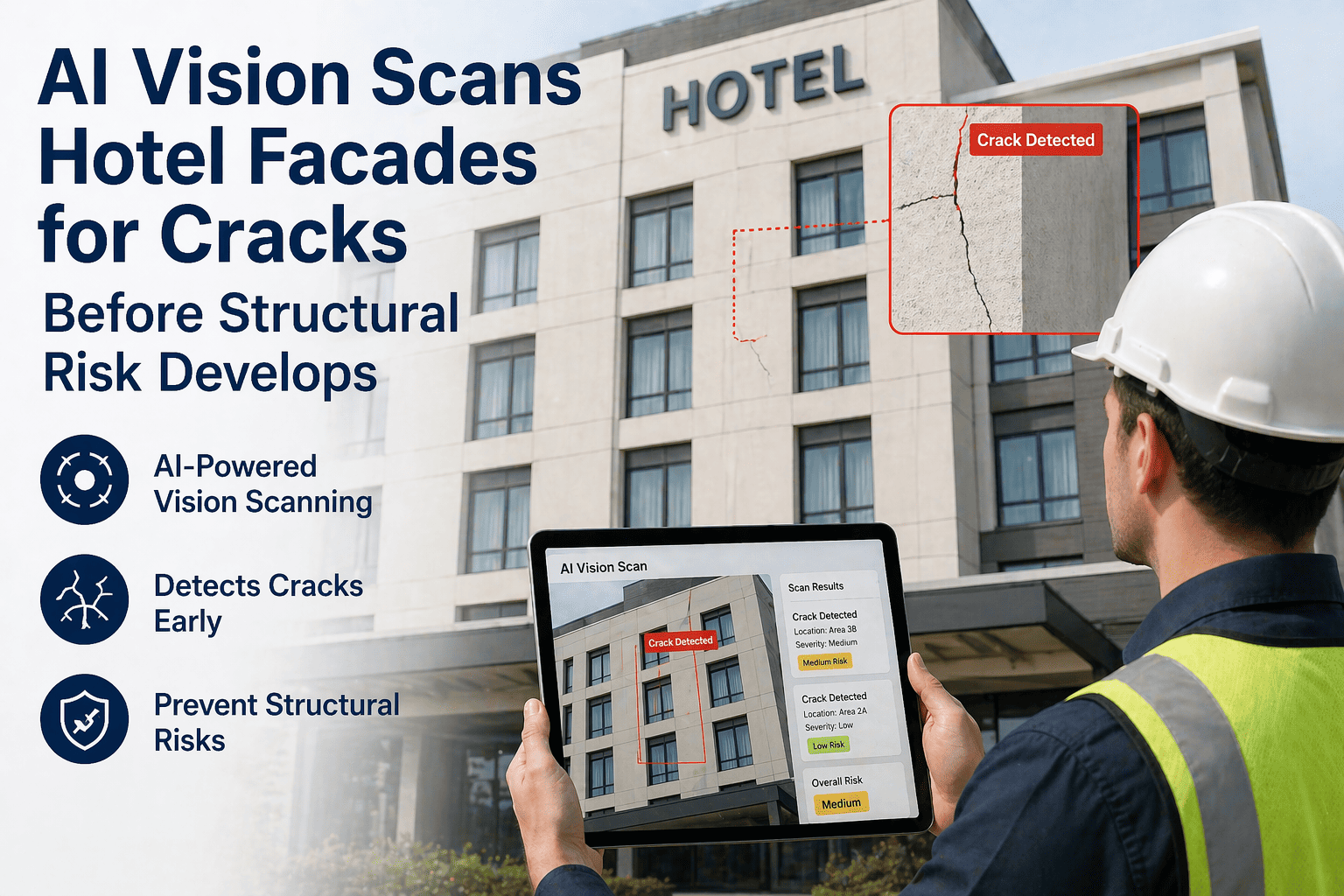
Room 412 checks out at 10:47 AM. By 10:49, a housekeeper is inside. She cleans, she checks — but she has 14 other rooms on her list, 60% of the property is checking out in the next 90 minutes, and the supervisor is two floors away. The burn on the nightstand from a cigarette? Missed. The cracked towel rail bracket? Not her job to log. The missing USB port cover on the bedside panel? She doesn't know that's a maintenance item. By the time room 412 is assigned to the next guest, nobody knows those three issues exist. One becomes a complaint. One becomes a liability. One becomes a repair that costs four times more than it would have caught immediately. AI vision at checkout changes what gets seen — and what gets done about it.
AI-Powered Hotel Room Inspection
Detect Room Damage at Checkout — Instantly
Automate hotel room inspections with AI vision. Flag damage, missing items, and maintenance needs with photo documentation — and generate CMMS work orders before the next guest checks in.
22–30 min
Checkout turn — too short for thorough manual damage audit
74%
Annual housekeeping turnover — inconsistent inspection coverage
60 sec
AI vision scan time per checkout room — full coverage, every time
65%
Of North American hotels faced staffing shortages in 2025
What AI Vision Detects at Checkout
Every checkout room is a snapshot. AI vision reads that snapshot in detail — not just cleanliness, but surface condition, item inventory, fixture integrity, and maintenance triggers. Here is what it catches that manual inspection routinely does not.
01
Surface Damage
Burn marks on furniture, nightstands, desks
Scratches on hardwood, laminate, and tile surfaces
Carpet stains, pulls, and edge fraying
Wall scuffs, gouges, and paint damage
02
Missing Items
Remote controls, USB covers, in-room device components
Toiletry baseline inventory (shampoo, conditioner, soap)
Towels, robes, and linen item count vs. standard
Hangers, room guides, menu cards, notepads
03
Maintenance Triggers
Loose fixtures: towel rails, curtain tracks, door handles
Cracked or broken tile in bathroom or floor
Lighting fixture condition and visible damage
Window seal integrity, blind or curtain track alignment
04
Cleanliness Verification
Bed-making standard compliance by zone
Bathroom surface residue and fixture cleanliness
High-touch surface condition (switches, remote, phone)
Under-bed and corner zone debris detection
The Cost of Not Catching It
Undetected room damage follows a predictable cost escalation curve. The earlier the detection, the lower the remediation cost — and the better the documentation for recovery. Damage caught at checkout costs a fraction of damage discovered by the next guest.
The issue compounds at scale. A 200-room hotel averaging even two missed damage items per day across checkout rooms accumulates significant unrecovered costs and deferred maintenance backlogs within weeks.
Caught at checkout (AI vision)
Repair cost + documented recovery
Lowest cost
Caught before next guest checks in
Repair cost — recovery harder, attribution window closed
Moderate cost
Discovered by the next guest
Repair + guest compensation + negative review exposure
High cost
Escalated after deferred maintenance
Full replacement + room out-of-service + reputation damage
Highest cost
From Camera to Work Order: The Complete Loop
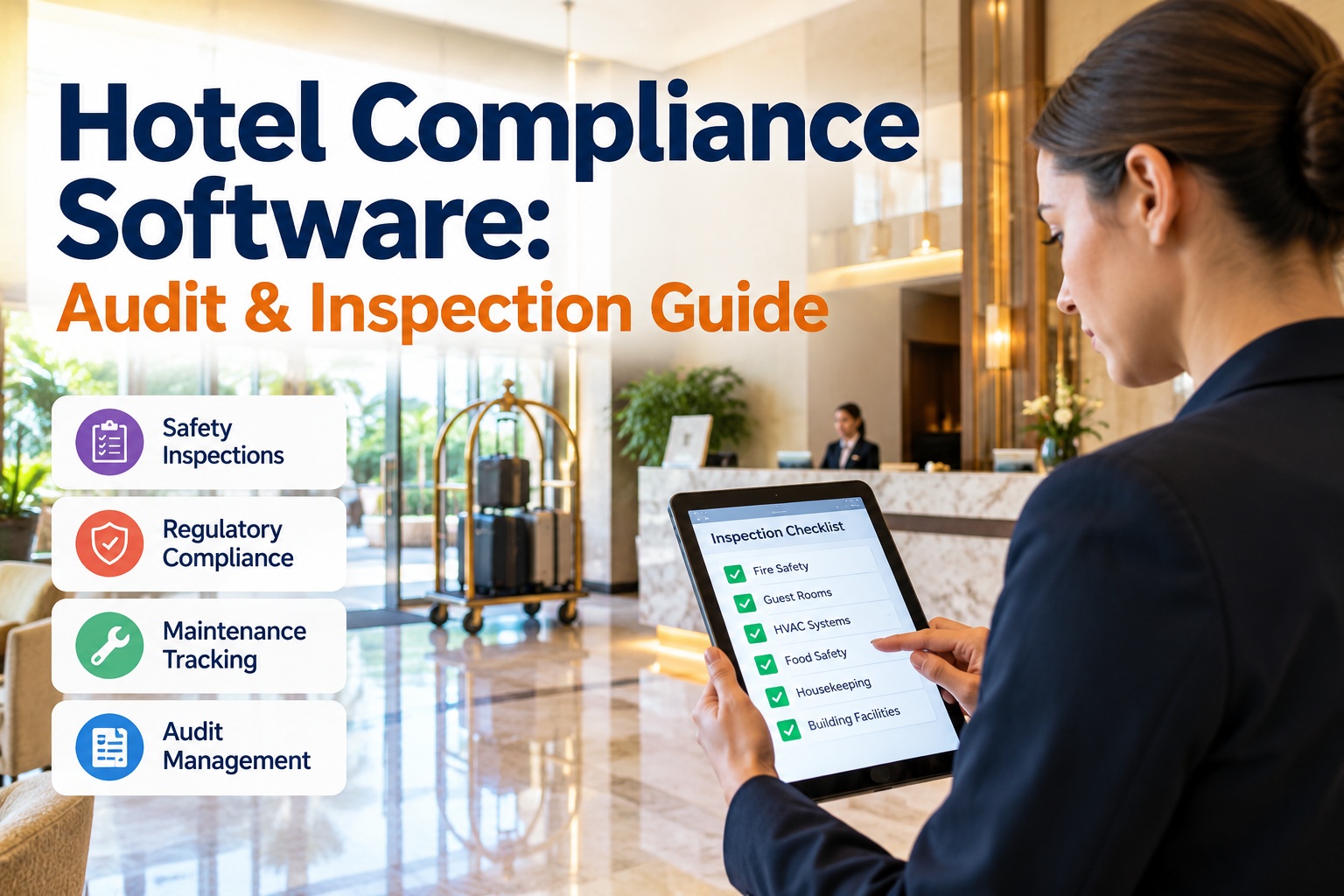
The value of AI vision is not detection alone — it is the closed loop between what is seen and what gets actioned. Detection without workflow integration creates alerts that pile up in dashboards nobody checks. Oxmaint connects the AI inspection layer directly to CMMS work orders, so every flagged item becomes a documented, assigned, and tracked task.
Step 01
Room Scan at Checkout
A housekeeper, supervisor, or fixed room camera captures the checkout room — wall-to-wall, bathroom included. Mobile app scan or fixed camera; takes under 60 seconds for a standard room.
Step 02
AI Analysis and Classification
Computer vision models analyze the room image set — classifying findings by type (damage, missing item, maintenance need, cleanliness flag), location, and suggested priority level.
Step 03
Automatic Work Order Creation
Each classified finding generates a work order in Oxmaint — pre-populated with room number, defect type, photo evidence, and suggested action. No manual logging; no items forgotten.
Step 04
Team Assignment and Routing
Maintenance items route to the engineering team. Missing items route to housekeeping. Damage items route to the relevant team with photo documentation. All in real time, before the next guest arrives.
Step 05
Audit Trail and Reporting
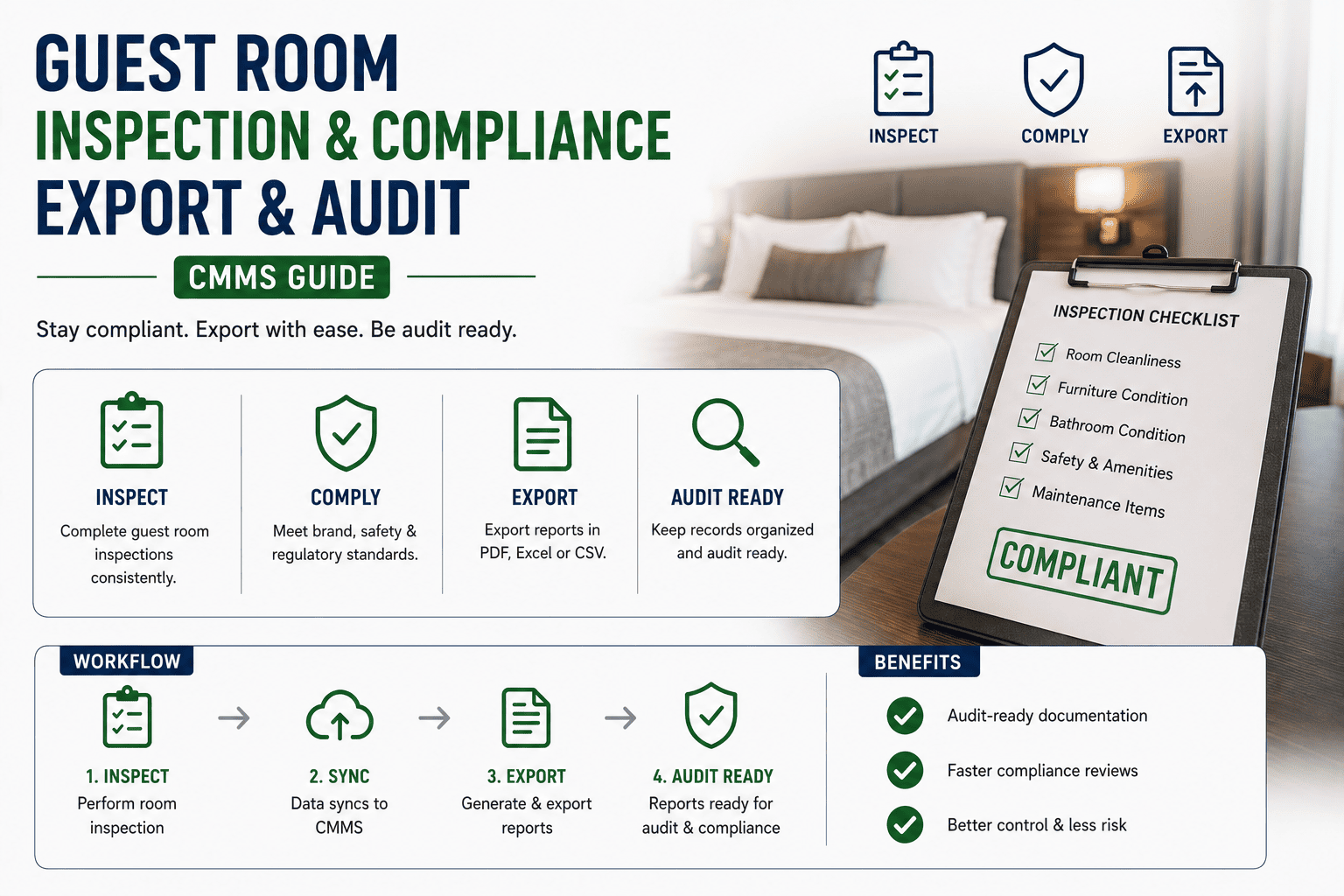
Every scan, detection, work order, and resolution is timestamped in the asset record. Damage patterns by room, floor, and property become visible for capital planning and guest history analysis.
Connect AI Room Inspection to Your Maintenance Workflow
Oxmaint turns every checkout scan into documented, assigned work orders — automatically. No paper logs, no missed items, no unrecovered damage.
Where AI Vision Changes Operations
Housekeeping
Faster Turnovers, Higher Standards
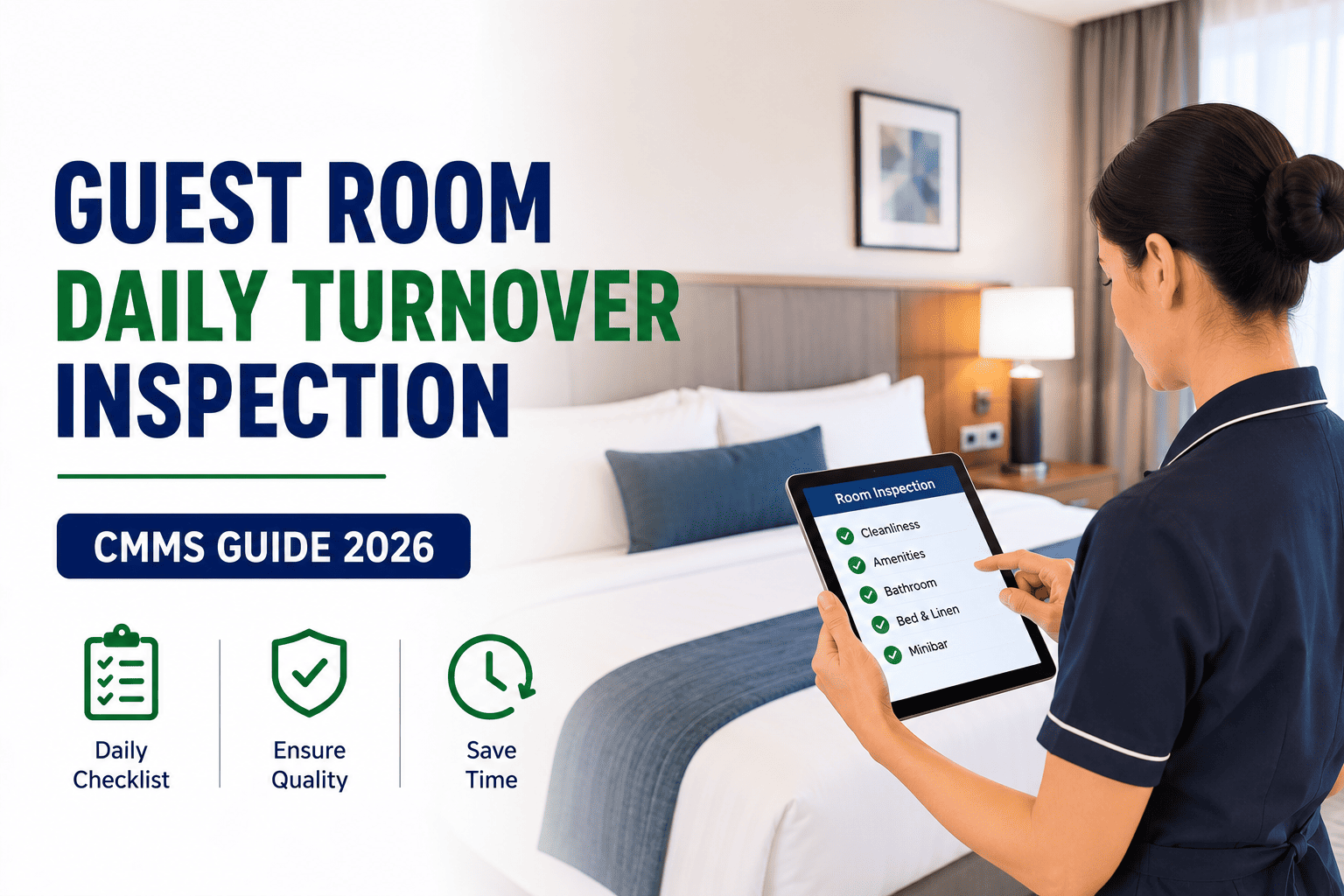
AI inspection does not slow turnaround — it accelerates it. Room attendants spend cleaning time cleaning, not auditing. The AI audit happens in parallel, flagging items the team needs to address without requiring them to slow down or second-guess what to report.
20%
Faster room preparation with AI-coordinated workflow
Maintenance
Defects Found Before Guests Do
Maintenance teams stop receiving vague verbal reports and start receiving photo-documented work orders with exact location, defect type, and priority level. Issues that would have been discovered by a guest complaint are now resolved before check-in — with documentation proving the resolution.
40%
Reduction in reactive maintenance triggered by guest complaints
Operations Management
Damage Trends Become Visible
When every checkout is inspected and every finding is logged, patterns emerge: which room types sustain the most damage, which floor has recurring fixture issues, which asset category has the highest replacement frequency. Data that was previously invisible is now the basis for capital planning and refurbishment decisions.
100%
Checkout room coverage — every room, every time
Dispute Resolution
Timestamped Visual Evidence
When a guest disputes a damage charge, the timestamped inspection record shows the room condition at checkout — before and after the stay. When a guest claims a room was not clean on arrival, the inspection record shows otherwise. Photo documentation eliminates ambiguity in both directions.
97%+
Of scanned rentals at AI-equipped Hertz locations showed no billable damage — reducing disputes significantly
Frequently Asked Questions
Does AI vision require fixed cameras in every room?
No. The most practical deployment uses mobile app scanning — a housekeeper or supervisor captures the room with a smartphone or tablet on checkout. This requires no fixed hardware and integrates naturally into existing checkout workflows. Fixed cameras are an option for properties wanting fully automated, zero-staff-required scanning, but most hotels start with mobile-first deployment to minimize capital outlay.
How does AI room inspection handle high-turnover housekeeping staff?
This is one of AI inspection's strongest arguments. With 74% annual housekeeping turnover at many properties, experienced staff who know what to look for are constantly being replaced by new hires who miss damage patterns the previous team would have caught. AI vision applies consistent detection standards regardless of staff experience level — a first-week hire scanning with the app achieves the same detection coverage as a five-year veteran.
How does the system know what a room should look like versus damage?
The AI model is trained on hospitality-specific imagery and establishes a baseline for each room type at your property. Normal wear is distinguished from actionable damage by comparing against the baseline and applying confidence thresholds. Items below the damage threshold are logged for trend monitoring; items above it trigger work orders. The system adapts to your property's specific furnishing and finish standards over time.
What happens with the work orders generated — how do they reach the right team?
Work orders created by Oxmaint from AI inspection findings are classified by type and routed automatically. Damage needing repair goes to the maintenance team with priority level and estimated repair window. Missing items go to housekeeping as a resupply task. Cleanliness issues go back to the room attendant for re-clean. Every assignment is tracked from creation to resolution with timestamps — creating the documented completion record that proves rooms were ready-state for each guest.
Can AI inspection also track room condition trends over time?
Yes — this is one of the most valuable long-term benefits. Every inspection finding is logged against the room's asset record in Oxmaint, building a condition history that shows damage frequency, repair recurrence, and asset degradation rate per room. This data informs refurbishment cycles, helps identify rooms needing priority capital attention, and builds the evidence base for renovation planning based on actual condition data rather than time-based assumptions.
Hotel Room Inspection Intelligence
Every Checkout. Every Defect. Every Work Order — Automatically.
Oxmaint's AI vision inspection connects checkout scanning to CMMS workflows in one platform. Start free today, or let our team show you how it works across your room inventory in a live 30-minute walkthrough.