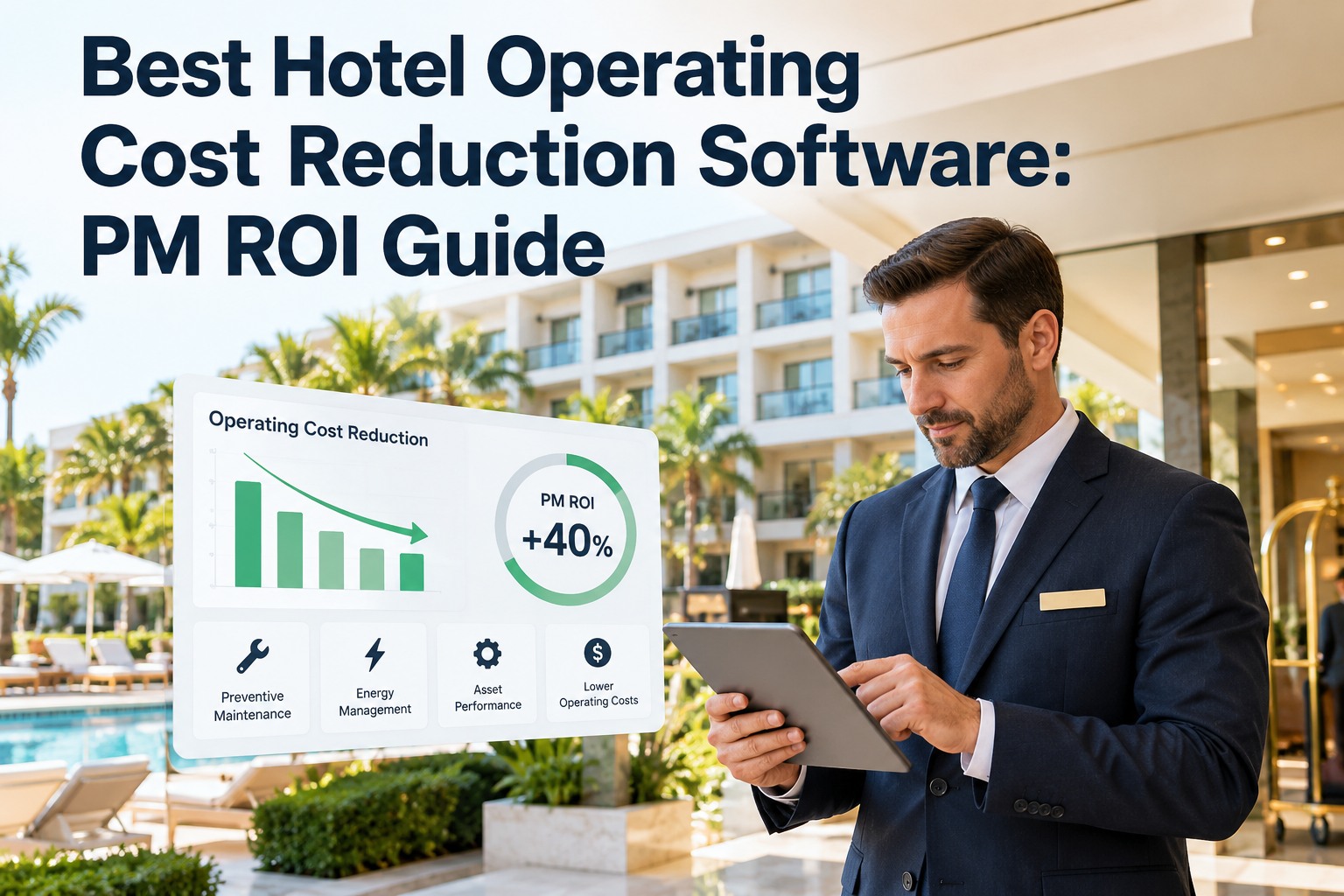
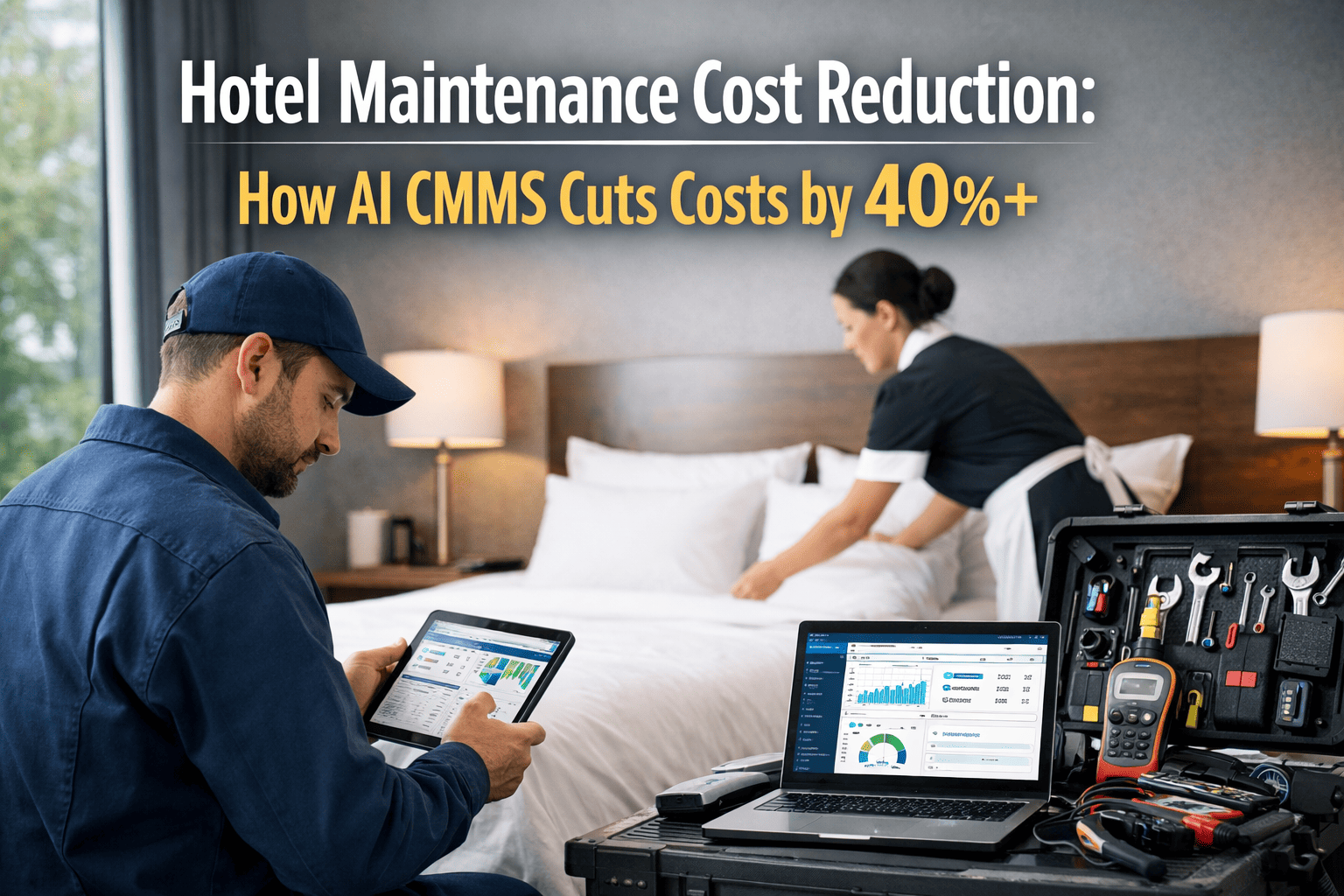
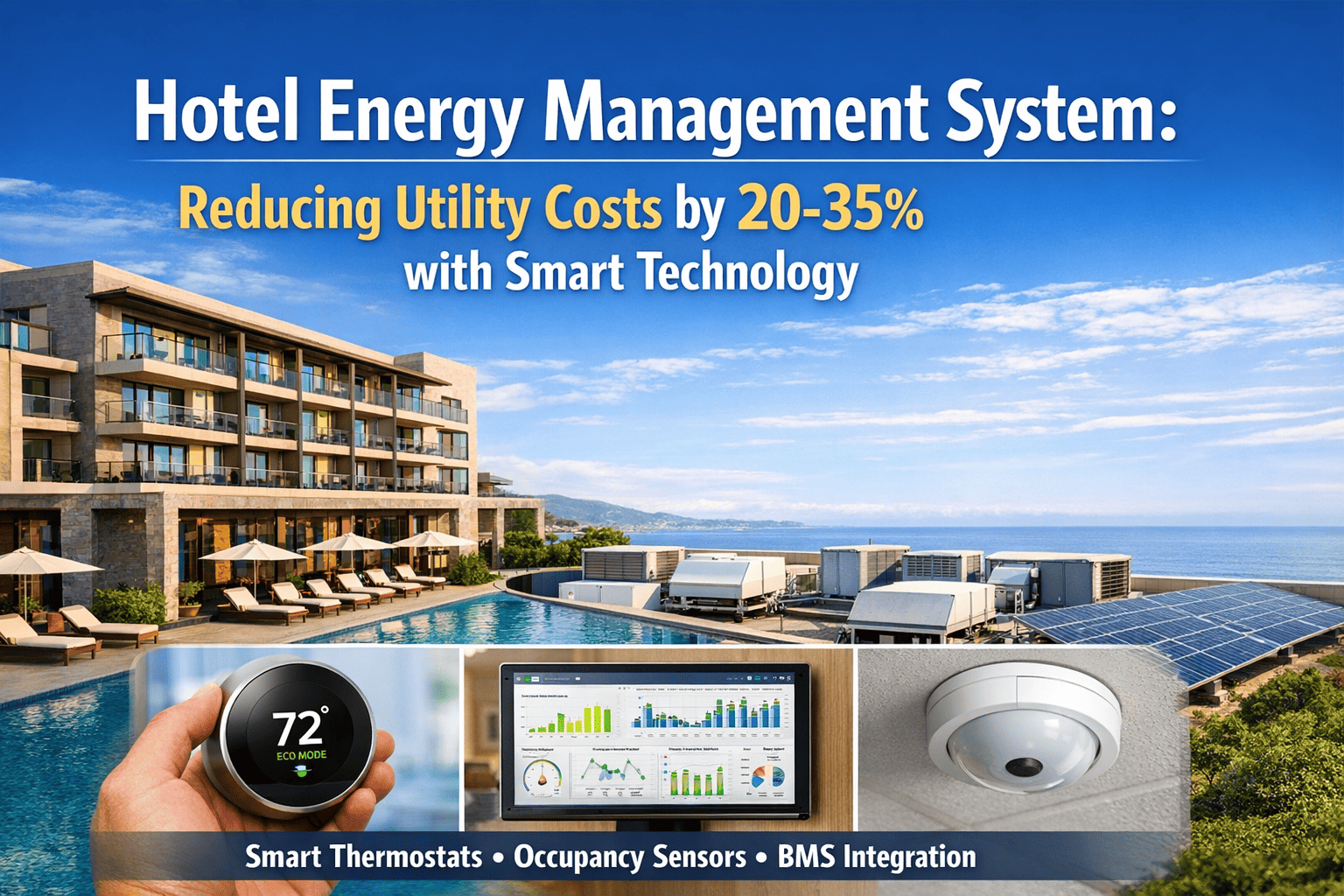
The financial pressure on boutique hotels is have never been more intense. With maintenance costs consuming 4-8% of total operating budgets and labor shortages driving wages up 15-20% since 2020, property managers face a critical challenge: how do you maintain guest satisfaction while controlling spiraling maintenance expenses? According to the American Hotel & Lodging Associationhotels that implement digital maintenance management systems reduce operating costs by 25-40% within the first 18 months. The difference between profitable and struggling properties isn't the age of their buildings or size of their maintenance teams—it's whether they're managing costs reactively with spreadsheets or proactively with data-driven systems that predict failures before they become expensive emergencies. Start your free trial today and see immediate visibility into your maintenance costs.
The True Cost of Reactive vs. Proactive Maintenance
Understanding where your maintenance dollars actually go
Reactive Approach
Emergency Repairs
$3,200/room/year
Equipment Downtime
18-25 hours/year
Guest Complaints
3.2x higher
Overtime Labor
40% of maintenance hours
Proactive Approach
Planned Maintenance
$1,850/room/year
Equipment Downtime
4-6 hours/year
Guest Complaints
Baseline level
Overtime Labor
8% of maintenance hours
Annual Savings for 30-Room Property: $40,500
Track Real-Time Maintenance Expenses with Mobile CMMS
The challenge for boutique hotels isn't just reducing maintenance costs—it's gaining visibility into where those costs actually occur. Properties operating without digital tracking systems typically experience 30-50% budget overruns because expenses accumulate invisibly across hundreds of small work orders. Mobile CMMS platforms solve this by capturing every cost at the point of service: technician labor hours, parts consumption, contractor invoices, and energy usage all flow into real-time dashboards that reveal exactly which systems consume your maintenance budget. Sign up free—no credit card required and start tracking your first maintenance work orders within minutes. Our intuitive mobile interface requires zero training, so your team can begin capturing cost data immediately.
Cost Intelligence Metrics Every Hotel Should Track
Cost Per Room
$1,500-$2,500/year
Industry benchmark: $2,000
Emergency vs. Planned
Target: 20/80
Current average: 55/45
Maintenance ROI
Target: 400%+
Through avoided failures
PM Completion Rate
Target: 95%+
Directly reduces reactive costs
First-Time Fix Rate
Target: 85%+
Reduces repeat labor costs
Mean Time to Repair
Target: <2 hours
Minimizes guest impact
Strategic Cost Reduction Tactics for Hotel Maintenance
Cost reduction in hotel maintenance isn't about cutting corners—it's about eliminating waste while improving service quality. The most effective strategies focus on four levers: reducing emergency repair premiums through preventive maintenance, optimizing labor productivity with mobile tools, negotiating bulk purchasing for common consumables, and extending asset lifecycles through systematic care. Want to see exactly how much your property could save? Schedule a 30-minute savings analysis with our maintenance optimization experts—we'll review your current costs and show you a customized ROI projection based on your property's specific needs.
Four-Pillar Cost Management Strategy
01
Preventive Maintenance
Schedule equipment PM by manufacturer specs
Automate filter replacements and inspections
Track PM compliance rates by asset
Cost Reduction: 25-35%
02
Labor Optimization
Mobile work orders eliminate paperwork
Route technicians by location proximity
Capture labor hours at point of service
Productivity Gain: 20-30%
03
Parts Management
Negotiate volume pricing for consumables
Track parts usage by asset for optimization
Minimize emergency ordering premiums
Cost Reduction: 15-20%
04
Asset Lifecycle
Extend equipment life through systematic care
Data-driven replacement timing decisions
Avoid premature capital expenditures
CapEx Savings: 25-40%
Labor costs represent 40% of typical maintenance budgets, making workforce efficiency a primary cost control target. Mobile CMMS platforms deliver 20-30% labor productivity gains by eliminating time wasted on paperwork, searching for asset information, and coordinating with dispatch. When technicians receive work orders directly on smartphones with QR code asset access, location mapping, and parts availability checks, they complete more work orders per shift while maintaining higher quality standards. For properties paying $50,000 annually in maintenance labor, a 25% productivity improvement represents $12,500 in savings that flow directly to operating margin. Not sure if CMMS is right for your property? Book a personalized demo where we'll walk through the platform using your actual maintenance scenarios and show you exactly how it works for hotels your size.
Quantified Savings Calculator
Properties that transition from reactive to preventive maintenance models typically see 25-40% cost reductions within 18 months by eliminating the premium pricing that emergency service calls command. For a 30-room boutique property spending $60,000 annually on maintenance, implementing systematic preventive scheduling can save $15,000-$24,000 per year—funds that directly impact bottom-line profitability.
Estimated Annual Savings Calculator
Based on 30-room boutique property averages
Reduced Emergency Repairs
60% reduction × $18,000 current cost
$10,800
Labor Productivity Gain
25% efficiency × $24,000 labor cost
$6,000
Parts Optimization
18% reduction × $15,000 parts budget
$2,700
Energy Efficiency Gain
20% reduction × $9,000 waste
$1,800
Extended Equipment Life
30% lifecycle extension value
$4,200
Total Annual Savings
$25,500
Implementation cost typically recovered in 3-5 months. 18-month ROI exceeds 400% for most properties.
These aren't theoretical projections—they're actual results from boutique hotels that made the switch from reactive to preventive maintenance. The typical implementation takes just 2-3 days, with most properties seeing measurable cost reductions within the first 30 days. Create your free account now and get instant access to our implementation checklist, video tutorials, and dedicated onboarding support. You'll be tracking costs and scheduling preventive maintenance by this time tomorrow, with zero upfront investment or long-term contracts required.
Transform Maintenance from Cost Center to Profit Driver
Join boutique hotels already using Oxmaint to reduce maintenance costs 25-40%, extend asset lifecycles, and improve guest satisfaction through systematic preventive maintenance.
Conclusion: Cost Control Through Visibility and Prevention
Hotel maintenance cost management succeeds or fails on two factors: visibility into where money goes and prevention of expensive failures before they occur. Properties operating without digital maintenance management systems lack both—they can't see cost patterns that reveal optimization opportunities, and they can't schedule preventive maintenance systematically enough to eliminate the reactive premium that destroys budgets. The boutique hotels winning this battle aren't those with newer buildings or larger maintenance teams; they're properties that recognized maintenance as a strategic function requiring the same data-driven management as revenue and marketing. When you implement CMMS platforms that track every cost, automate preventive schedules, and provide predictive analytics, maintenance transforms from an uncontrollable expense into a competitive advantage worth 3-5% of operating margin.
Frequently Asked Questions
What's a reasonable maintenance cost per room for a boutique hotel?
Industry benchmarks for full-service boutique hotels range from $1,500-$2,500 per room annually, depending on property age, location, and service level. Luxury properties typically spend $2,800-$3,500 per room due to more complex systems and higher service expectations. Properties on the lower end of this range typically implement structured preventive maintenance programs that minimize emergency repairs, while properties exceeding $2,500 per room often operate reactively with high emergency repair costs and deferred maintenance accumulation. The most important metric isn't absolute spend—it's the ratio of planned versus reactive maintenance, with best-in-class properties maintaining 80/20 planned-to-reactive ratios versus industry average of 45/55.
How much can hotels realistically save by implementing CMMS?
Research from the American Hotel & Lodging Association shows hotels implementing digital maintenance management systems reduce operating costs by 25-40% within 18 months. For a 30-room boutique property spending $60,000 annually on maintenance, this translates to $15,000-$24,000 in savings. The savings come from multiple sources: 60% reduction in emergency repair costs by preventing failures through systematic PM, 20-30% labor productivity gains from mobile tools eliminating paperwork and information search time, 15-20% parts cost reduction through better inventory management and volume purchasing, and 20-30% energy savings from properly maintained HVAC systems. Implementation costs for cloud-based CMMS typically run $100-$300 per month, meaning payback periods of 3-5 months are common for properties currently operating reactively.
Should boutique hotels hire maintenance staff or outsource everything?
The optimal approach typically combines in-house staff for routine maintenance and preventive tasks with specialized contractors for complex systems and emergency coverage. Properties with 25+ rooms usually benefit from at least one full-time maintenance technician who can handle daily work orders, perform scheduled PM tasks, and coordinate contractor activities. The total cost of employment including wages, benefits, and training typically runs $45,000-$65,000 annually, which breaks even against outsourcing around the 20-25 room threshold. However, the real value of in-house staff isn't just cost—it's response time for guest issues and institutional knowledge of property systems. The most cost-effective model uses in-house technicians for 80% of work volume (routine maintenance, minor repairs, PM tasks) and contractors for specialized work (HVAC system repairs, elevator service, major plumbing) and after-hours emergency coverage.
What preventive maintenance tasks deliver the highest cost reduction ROI?
HVAC system maintenance delivers the highest return on prevention investment for hotels. Regular filter replacements ($40-$80 quarterly) prevent $2,000-$4,000 compressor failures, coil cleaning ($200-$400 annually) prevents 15-25% efficiency losses that cost thousands in utility waste, and refrigerant checks ($150 semi-annually) prevent complete system failures requiring emergency replacement. The second highest ROI comes from water heater maintenance—annual flushing and anode rod inspection ($120-$180) prevents premature tank failure ($1,500-$3,000 replacement cost) and maintains efficiency. Third is plumbing drain maintenance—quarterly enzyme treatments and annual inspections ($300/year) prevent emergency main line clogs that require $800-$1,500 emergency service. These three categories alone typically represent 60% of potential emergency repair costs, making them the foundation of any cost-focused preventive maintenance program.
How do you know when to repair versus replace aging equipment?
The decision point occurs when annual repair costs exceed 50% of replacement cost for multiple consecutive years, or when a single major repair costs more than 60% of replacement value. For example, an HVAC unit with $22,000 replacement cost reaches economic end-of-life when annual repairs consistently exceed $11,000, or when a single compressor replacement quotes at $13,000+. However, this calculation requires comprehensive cost tracking that many properties lack—without digital records showing repair history by asset, you're making emotional decisions rather than financial ones. Beyond pure economics, consider reliability impact: equipment requiring 3+ emergency repairs annually creates guest satisfaction risks that justify replacement even if repair costs remain below the 50% threshold. Energy efficiency also factors in—a 15-year-old HVAC unit may cost only $8,000 annually in repairs but consume $6,000 more in energy than a modern replacement, making the true comparison $14,000 versus $22,000 financed over 5 years.
What is the biggest mistake hotels make with maintenance budgets?
The biggest mistake is treating maintenance as a variable cost that can be reduced during slow periods. When hotels defer preventive maintenance to "save money" in the short term, they guarantee exponentially higher costs within 6-18 months. Every $1 of deferred preventive maintenance creates $4-5 in future repair costs. Properties that skip scheduled filter changes, lubrication, calibration, or inspections to reduce quarterly expenses inevitably face emergency system failures that cost 3-4x more than the planned maintenance would have cost. The second biggest mistake is not tracking maintenance costs by asset—without knowing which equipment consumes your budget, you can't make informed replacement decisions or identify optimization opportunities. Properties operating with spreadsheets or paper-based systems lack the visibility needed to transform maintenance from a reactive expense into a strategic investment.
Ready to Take Control of Your Maintenance Costs?
Stop letting maintenance expenses drain your profitability. Oxmaint's CMMS platform gives you complete visibility, preventive scheduling, and predictive analytics that transform maintenance into a competitive advantage. Join hundreds of boutique hotels already saving 25-40% on maintenance costs.