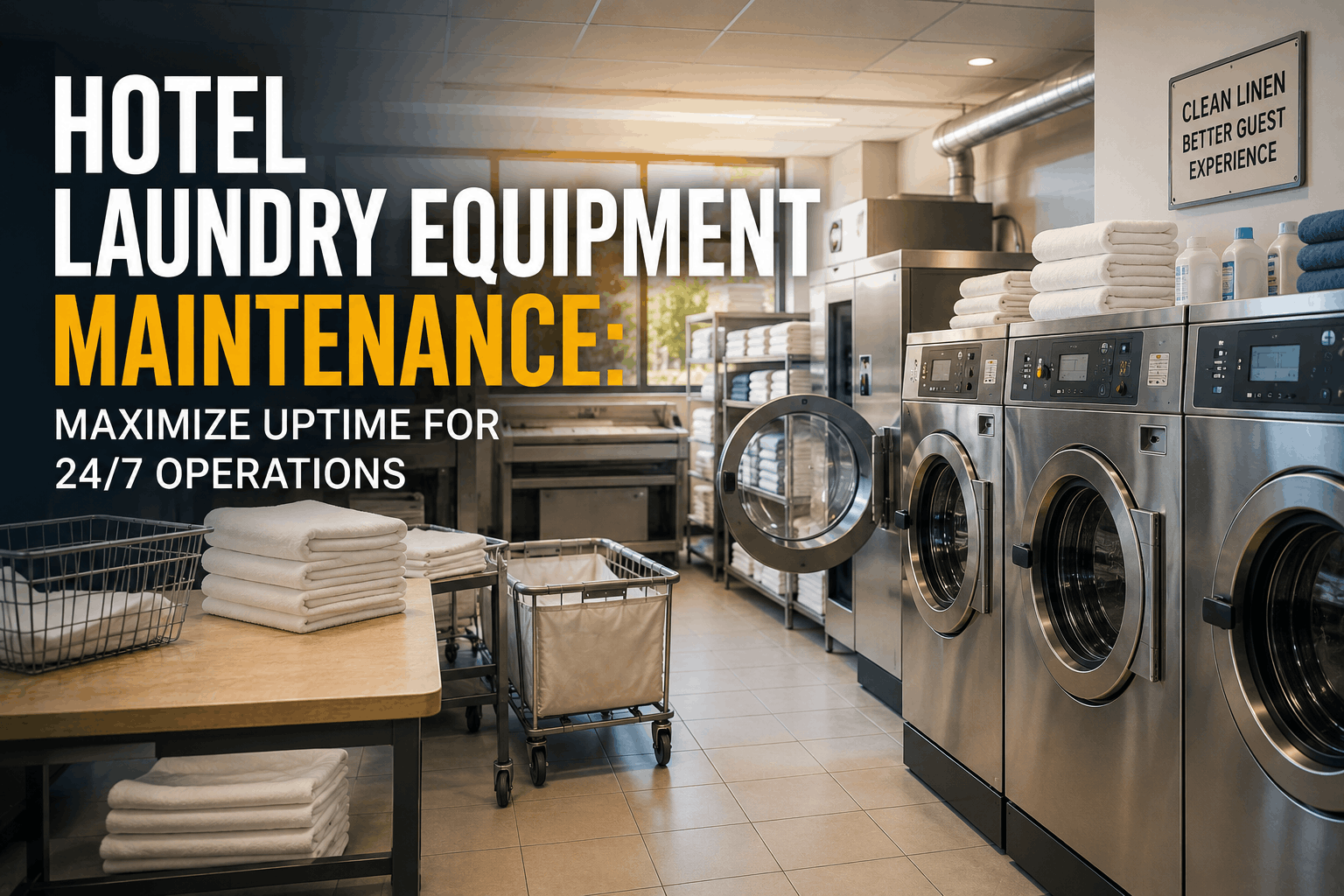
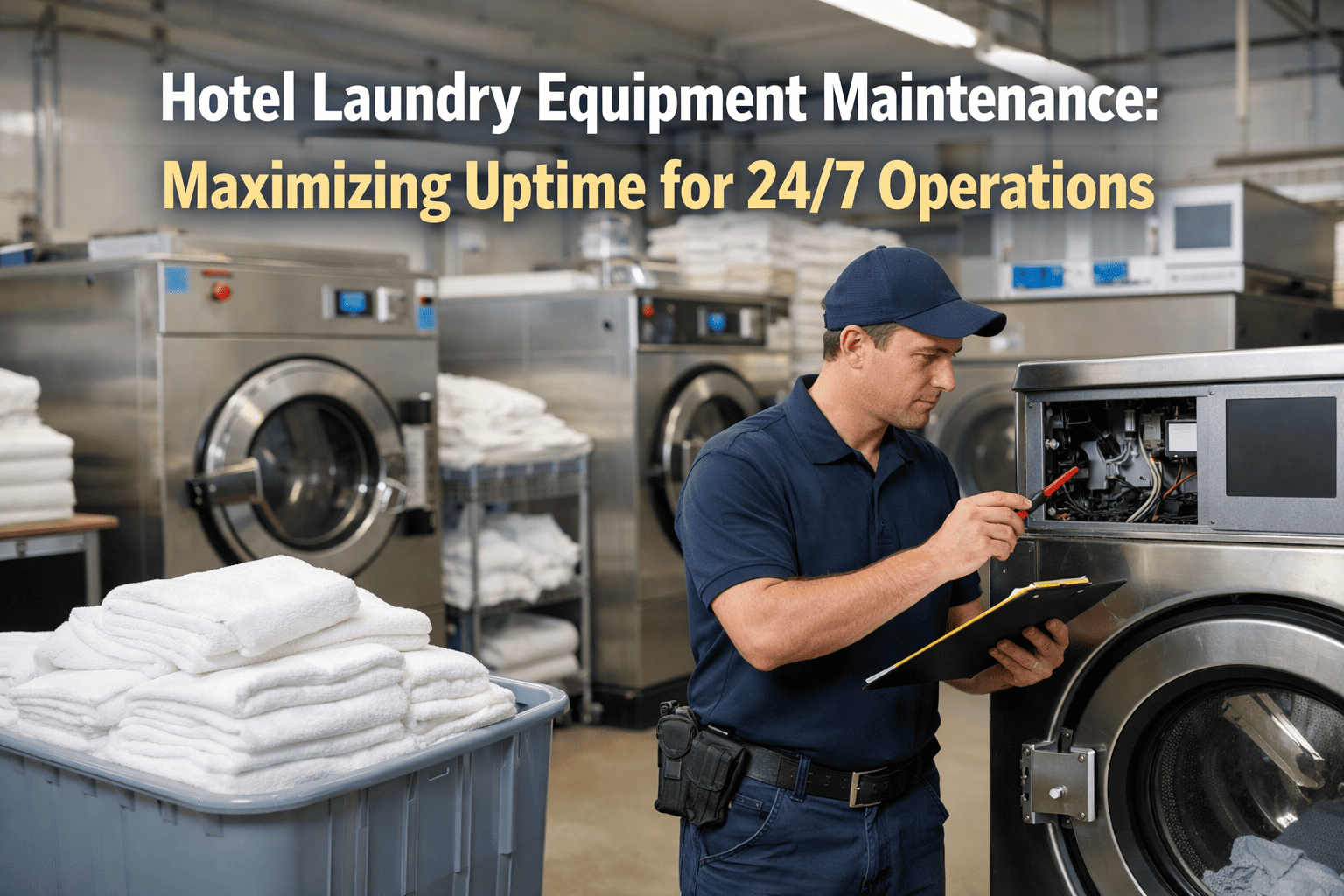
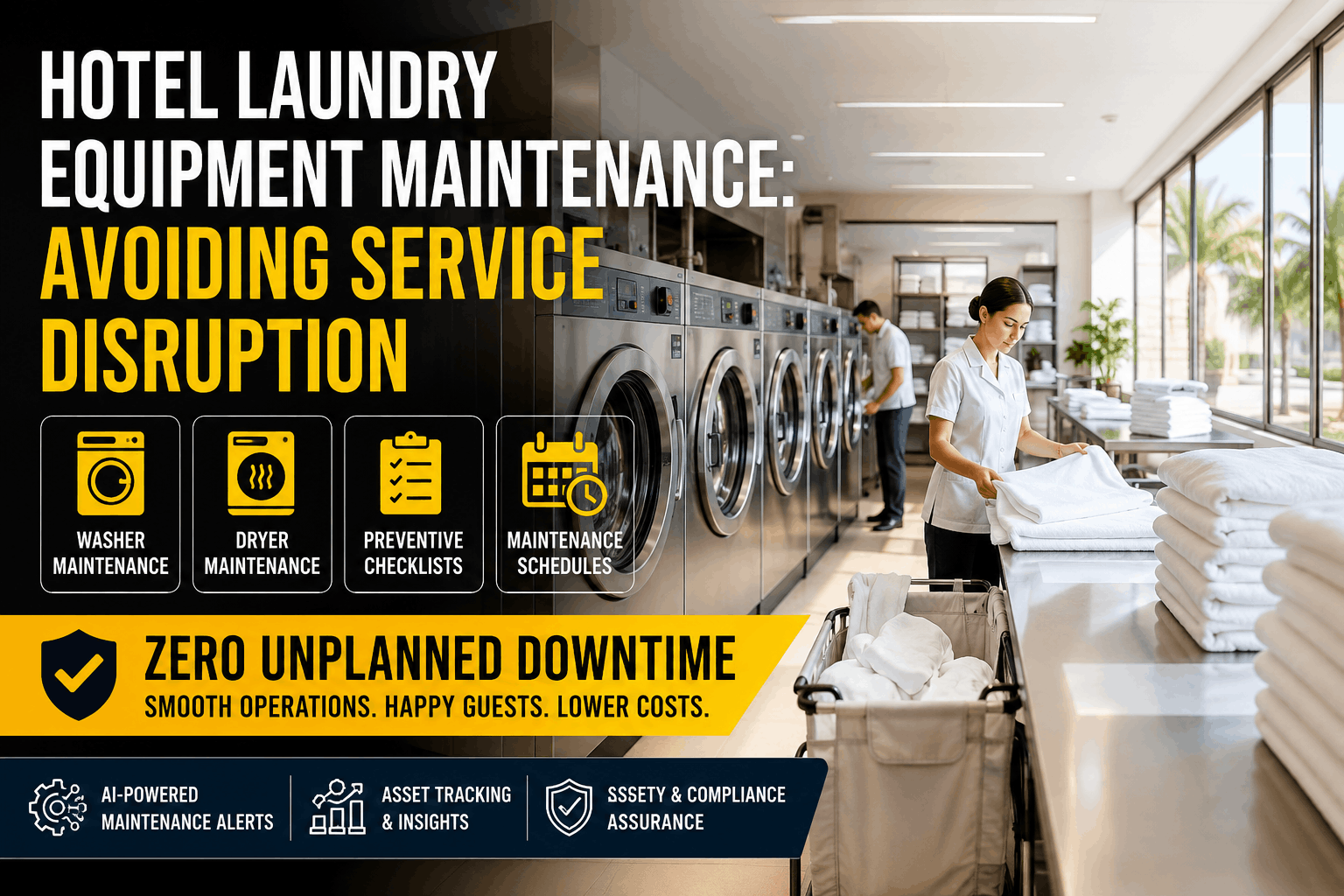
Hotel laundry equipment operates continuously under extreme stress—commercial washers run 500–2,000 cycles monthly while dryers run 10–15 hours daily. A single washer failure in a 200-room hotel costs $3,000+ in daily outsourcing fees; a dryer failure creates 6–8 hour linen backlogs forcing staff overtime. Equipment with proper preventive maintenance lasts 40–60% longer than neglected equipment and operates 25–35% more efficiently, reducing utility costs by 30–45% annually. Weekly inspections of door gaskets, drum bearings, drive belts, and hose connections prevent failures before they impact room turnover. Daily lint trap cleaning prevents dryer fires (the leading laundry room ignition source per NFPA 37). Monthly bearing lubrication and water inlet filter cleaning extend equipment life by 4–6 years. Oxmaint's laundry equipment PM system automates weekly checklists, tracks filter replacement dates, monitors dryer lint accumulation trends, schedules professional bearing maintenance, and documents all service history for equipment warranty claims and insurance coverage verification. USA hospitality chains report 12–18% improvement in linen turnaround time and 40–55% reduction in emergency service calls after implementing structured laundry PM.
Maximize Laundry Equipment Uptime & Efficiency
Weekly maintenance checklists, drain line monitoring, lint prevention schedules, bearing lubrication tracking, and emergency repair prevention for all washers, dryers, and finishing equipment.
1. Daily Dryer Lint & Fire Prevention Tasks
Lint accumulation is the primary cause of dryer fires in commercial laundry—NFPA 37 identifies lint as the leading ignition source. Daily cleaning and weekly deep inspection prevent fires and maintain dryer efficiency.
2. Weekly Washer & Dryer Inspection & Preventive Tasks
Weekly inspections catch mechanical wear before it becomes catastrophic failure. Door gaskets, drum bearings, hoses, and inlet screens require systematic checking every 7 days.
3. Monthly Water Inlet Filter & Chemical System Maintenance
Water inlet filters accumulate sediment and mineral deposits, restricting water flow and forcing longer wash times. Chemical feed pump tubing can become stiff or cracked. Monthly inspection prevents poor wash quality and equipment stress.
4. Quarterly Bearing Lubrication & Professional Service Tasks
Many commercial washers and dryers have grease lubrication ports on drum bearings. Quarterly lubrication extends bearing life and prevents squeaking. Annual professional service catches internal wear before catastrophic failure.
5. Equipment Replacement Planning & Efficiency Documentation
Equipment with documented PM history has predictable lifespan and resale value. Maintenance records support insurance coverage and warranty claims. Efficiency metrics reveal when replacement is more cost-effective than repair.
Prevent Laundry Equipment Failures
Daily lint cleaning automation, weekly maintenance checklists, bearing lubrication tracking, and professional service scheduling for all washers, dryers, and finishing equipment.
Frequently Asked Questions — Hotel Laundry Equipment Preventive Maintenance
1. What's the typical cost of a laundry equipment failure during peak season?
Washer failure: $3,000–$5,000 daily outsourcing cost for 200-room hotel (3–5 day lead time for replacement = $9,000–$25,000 indirect cost). Dryer failure: $2,000–$3,000 daily outsourcing cost. One prevented failure pays for 10 years of preventive maintenance. The economic case for PM is overwhelming—preventing one failure ROI is 1000%+.
2. How much can preventive maintenance reduce utility costs in laundry operations?
Typical USA hotel laundry spends $8,000–$12,000 annually on water and natural gas. Proper filter maintenance, lint prevention, and bearing lubrication improve efficiency 25–35%, saving $2,000–$4,200 per year. Over 10 years, that's $20,000–$42,000 in energy savings—pure bottom-line profit from maintenance discipline alone.
3. What causes lint accumulation in dryers and why is it a fire hazard?
Lint is compacted fabric fibers that shed from drying clothes. It escapes the lint trap and accumulates in exhaust ducts and inside the dryer. Lint is highly flammable—as little as 1/8 inch lint layer on heating element surface can ignite from small spark or excessive heat. NFPA 37 cites dryer lint as the leading cause of laundry room fires. Daily lint trap cleaning plus quarterly exhaust duct cleaning eliminates 99% of fire risk.
4. When is equipment replacement more cost-effective than repair?
Typical rule: if repair cost exceeds 50% of new equipment cost, replacement is economically favorable. Example: bearing replacement costs $1,500; new washer costs $2,800. If machine is 8+ years old with remaining useful life of 2 years, replacement makes sense. Additionally, if equipment has failed twice in 12 months, replacement is preferable to repeated emergency repairs.
5. How do you prevent water damage from inlet hose bursts?
Replace inlet hoses every 5–7 years proactively—don't wait for leaks. Cost is $20–$40 per hose; prevention saves $5,000+ from water damage to adjacent equipment or structure. Keep emergency shut-off valve accessible if hose bursts. Install water leak detector sensors near washers to alert staff immediately if water is leaking. Many property managers now use 90-degree quick-disconnect hose connections for easy hose swapping during maintenance.
6. What's the difference between sealed-bearing and grease-port dryers?
Sealed-bearing dryers (post-2010 equipment typically): factory-sealed bearings require no lubrication—they're "sealed for life." Attempting to grease them causes overheating. Grease-port dryers (older equipment): have accessible grease ports requiring quarterly lubrication. Check manual to determine bearing type. Never assume—over-greasing sealed bearings is damage, not maintenance.
7. How do you coordinate laundry equipment PM without disrupting guest linen service?
Schedule major maintenance (bearing replacement, drain cleaning) during low-occupancy periods or mid-week when room turnover is lightest. Perform quick checks (lint cleaning, filter inspection) during daily operations—these take 5–10 minutes per unit. Maintain backup equipment or linen buffer (extra sets on-hand) to allow rotating equipment offline without service disruption. Proactive scheduling prevents emergency downtime far more costly than planned maintenance windows.
8. What training do laundry staff need for equipment maintenance responsibility?
Staff should be trained on: daily lint trap cleaning (most critical), weekly drain inspection, inlet hose visual check, abnormal noise recognition, and when to escalate to maintenance technician. Digital checklists with photo examples train staff visually—"this is a clogged lint screen, clean it" is clearer than written instructions. Most staff can master daily PM tasks in one 30-minute training session. Professional repairs (bearing replacement, seal replacement) require certified technicians—staff should only report issues, not attempt repairs.
"We had three washer bearing failures and two dryer motor failures in one year—cost us $18,000 in emergency repairs and equipment rental. After we implemented Oxmaint's laundry PM system with daily lint checks, weekly gear/bearing inspections, and quarterly professional service, we had zero equipment failures for 18 months. The preventive maintenance cost was $3,000—we saved $15,000 on avoided emergency repairs. Every hotel operator needs to see this ROI calculation."
— Thomas Morrison, Director of Operations, USA-based 280-room hospitality chain
Eliminate Laundry Equipment Downtime
Daily lint prevention, weekly mechanical inspections, monthly filter cleaning, quarterly bearing lubrication tracking, and professional service coordination for continuous linen production.


.png)