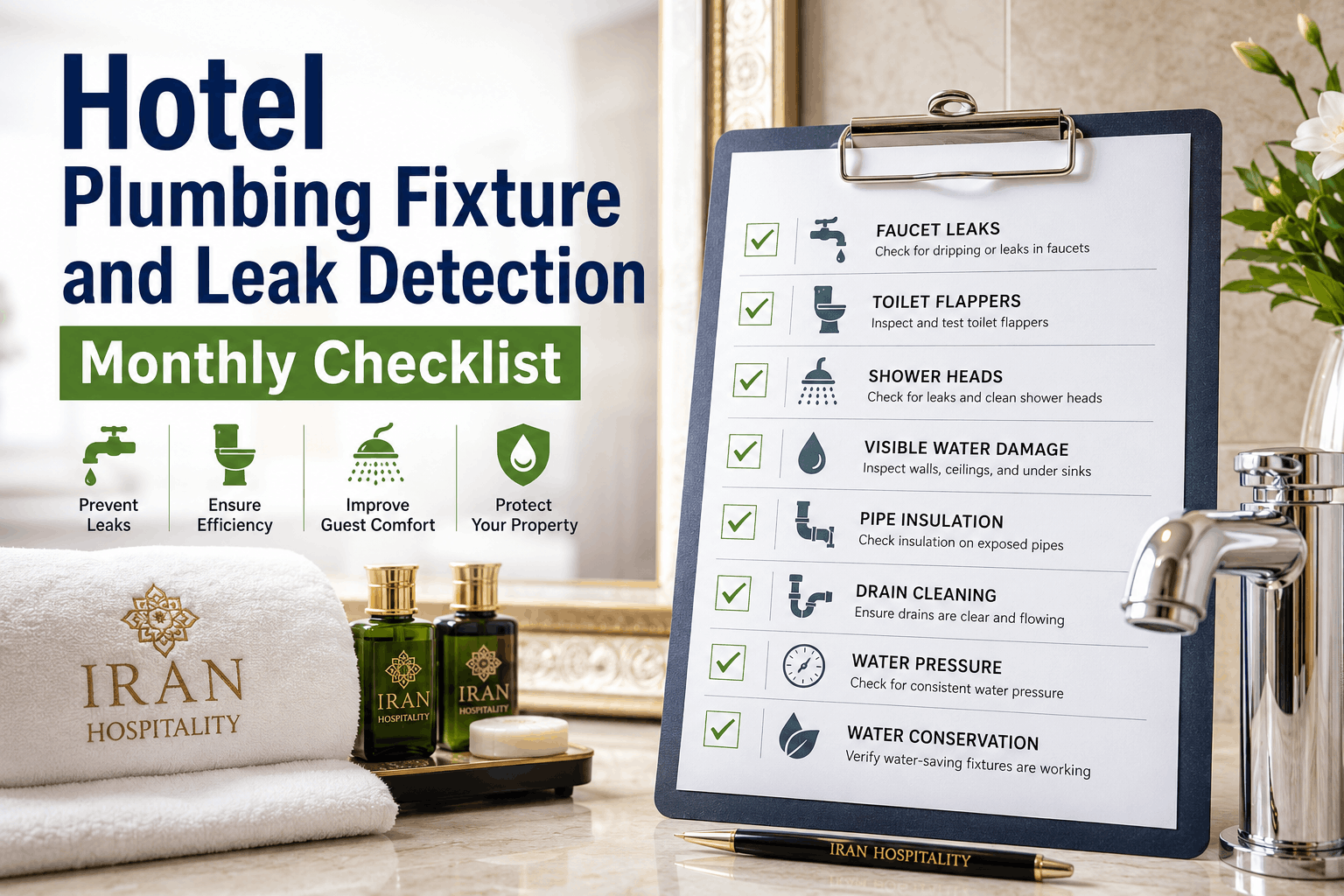
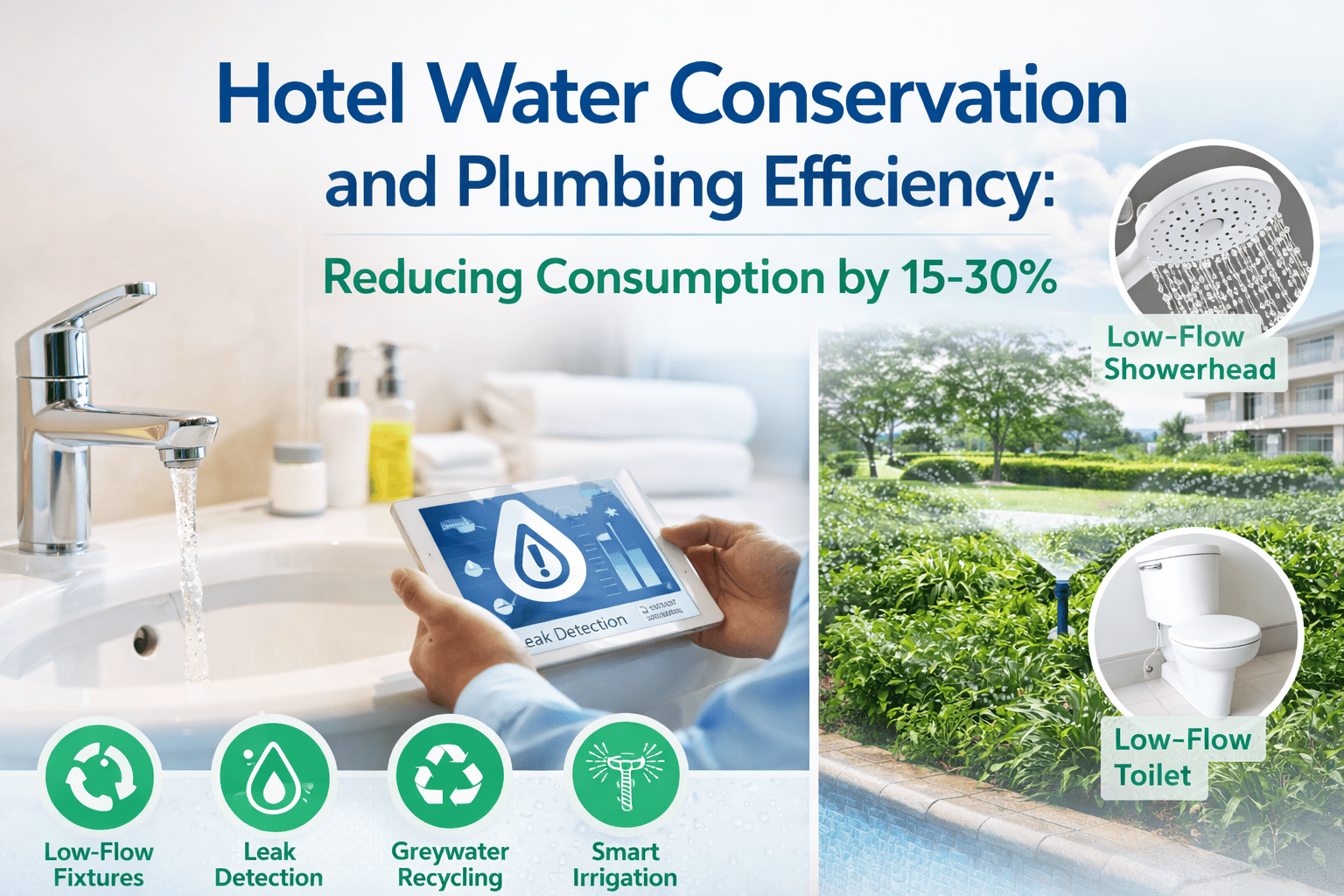
Hotel Plumbing Fixture and Leak Detection Monthly Checklist
By Alex Jordan on June 6, 2026
Hotel plumbing systems are among the least visible but most critical infrastructure—continuously operating under demand from 150–500 guest rooms, kitchen facilities, laundry systems, and public restrooms. Plumbing failures create catastrophic cascading effects: a single burst pipe behind walls floods adjacent rooms within hours, creating mold colonization within 24–48 hours and permanent structural damage within 72 hours. Guest room water damage claims average $75,000 per incident—multiplied by 5–10 incidents annually in unmonitored properties, plumbing failures generate $400,000–$800,000 annual liability that one structured PM program prevents. Running toilets (silent leaks not heard from hallway) waste 200+ gallons per day per unit, undetected for months, adding $4,000–$6,000 annually to water bill per property. Guest complaints about low water pressure, no hot water, or cloudy water are first indicators of plumbing system decline—by the time complaints reach management, the underlying problem has been degrading for weeks. Monthly plumbing inspections catch early indicators before they cascade into guest-impacting failures or catastrophic water damage. Daily checks (leak inspection, pressure testing) identify acute failures immediately. Monthly fixture testing and water quality checks identify degradation patterns early. Professional drain camera inspection annually detects root intrusion and mineral scaling before backup occurs. Oxmaint's plumbing module automates monthly checklists across 150–500+ guest rooms, tracks water pressure by floor/zone, documents all leak findings with photos, schedules professional drain cleaning automatically, maintains water quality test logs, and generates reports showing water waste trends and conservation opportunities. USA hospitality chains report 40–55% reduction in emergency plumbing service calls and $100,000+ annual water savings after implementing structured plumbing PM with monthly fixture testing and automated leak detection alerts.
Prevent Water Damage & Guest ComplaintsMonthly fixture testing, leak detection via dye testing, water pressure monitoring, flow rate verification, visible damage inspection, and water conservation tracking for all guest rooms and common areas.
Guest room fixtures are the most common failure points—toilet flappers wear within 3–5 years, faucet seals degrade with mineral buildup, shower valves leak internally (water running continuously without control). Monthly inspection of 20–30 random rooms (rotating through entire property quarterly) catches common failures before guest complaint.
2. Water Pressure Testing & Flow Rate Verification
Water pressure directly impacts guest experience and equipment longevity. Pressure too low creates weak shower experience (guest complaint); pressure too high accelerates seal wear in fixtures and appliances. Monthly pressure testing identifies pressure regulation issues early—preventing guest complaints and extending equipment life.
3. Common Area Plumbing & Drain System Maintenance
Public area plumbing (restrooms, hallways, corridors) receives higher usage and heavier contamination than guest rooms. Monthly drain testing and visual inspection prevent backup incidents that create liability and guest experience damage.
Eliminate Water Damage & Guest ComplaintsMonthly fixture testing, leak detection via dye testing, water pressure/flow monitoring, drain camera inspection, backflow testing, and water quality tracking.
4. Annual Professional Plumbing Inspection & Capital Planning
Annual comprehensive plumbing inspection identifies hidden failures, structural issues, and equipment end-of-life—allowing capital replacement to be planned and budgeted rather than emergency-driven.
Frequently Asked Questions — Hotel Plumbing Maintenance
1. How much water does a running toilet waste over time?
A continuously running toilet (flapper leak) wastes 200+ gallons per day = 6,000 gallons per month = $30–$50 monthly water/sewer cost. One running toilet undetected for 6 months costs $200–$300 in wasted water, plus potential water damage if overflow occurs. Monthly dye testing prevents this waste.
2. What is the typical cost of water damage from a burst pipe in a hotel?
Average water damage claim is $75,000 per incident. Damage includes: drywall replacement, mold remediation, flooring/carpet replacement, guest refunds, lost revenue from room closure. One prevented burst pipe pays for 50+ years of preventive maintenance programs.
3. How often should guest room plumbing be inspected?
Monthly inspection of 20–30 rotating sample rooms (covering entire property every quarter) is standard PM protocol. Daily inspection of main areas (lobbies, public restrooms) is also typical. Focus on highest-risk areas (guest rooms with frequent guest turnover, public restrooms with high usage).
4. What water pressure range is optimal for hotel plumbing systems?
Normal range is 40–80 PSI. Below 40 PSI causes weak shower experience (guest complaint). Above 80 PSI accelerates fixture seal wear and increases pipe stress. High pressure also causes more water waste. Pressure regulator should maintain 60–70 PSI setpoint.
5. How is a running toilet detected if it's silent and no water is visible?
Dye test (food coloring in tank) is gold standard—color migration without flushing indicates flapper leak. Professional leak detector (acoustic listening device) can also detect slow water movement in pipes. Water meter reading tracking reveals leaks through consumption increase.
6. What causes plumbing fixture failure rate to increase over time?
Hard water (mineral deposits causing seal wear), high pressure (exceeding design limits), poor water quality (acidic water causing corrosion), age (most fixtures last 10–15 years), and manufacturing defect (rare). Soft water, pressure regulation, and water treatment reduce failure rates 40–50%.
7. Is whole-building water treatment necessary for hotel properties?
Yes, if local water supply is hard (120+ PPM) or acidic (pH below 6.5). Water softener removes hardness (preventing scale in heaters and fixtures). Corrosion control treatment prevents pipe corrosion. Cost $2,000–$5,000 installation, $100–$200 monthly maintenance—prevented repair costs far exceed treatment cost.
8. What is the expected lifespan of typical guest room plumbing fixtures?
Toilets: 15–20 years (flappers wear out at 5–8 years). Faucets: 10–15 years (seals degrade). Shower valves: 10–15 years. Hot water heater: 10–15 years. Piping: 40–75 years depending on material (galvanized corrodes faster, copper lasts longer, PEX plastic is durable). Document installation dates to track expected end-of-life.
"We discovered through monthly inspections that three running toilets had been undetected for months. Water bill was $800/month higher than normal. We implemented systematic monthly dye testing and within 6 months fixed 12 running toilets, reduced water bill by $12,000 annually, and eliminated five water damage incidents that could have cost $375,000. That single inspection protocol paid for itself 30 times over in just one year."— Patricia Hernandez, Chief Engineer, 310-room USA hotel chain
Prevent Water Damage & Reduce Operational CostsMonthly fixture testing, leak detection, water pressure monitoring, drain inspection, annual professional assessment, and water conservation tracking.