At 7:14 AM on a Saturday in peak season, the executive chef of a 220-room resort hotel walked into her kitchen to find the walk-in refrigerator at 48°F. The compressor had failed overnight. Two hundred pounds of seafood, three cases of prepared mise en place, and $14,000 in food cost were unsalvageable. Breakfast service was delayed 90 minutes. The Sunday brunch — a $28,000 revenue event — was cancelled. The compressor failure had been preceded by three weeks of abnormal condenser noise that no one had logged. Sign up for Oxmaint and put your hotel's commercial kitchen equipment on a preventive maintenance program before the next peak weekend.
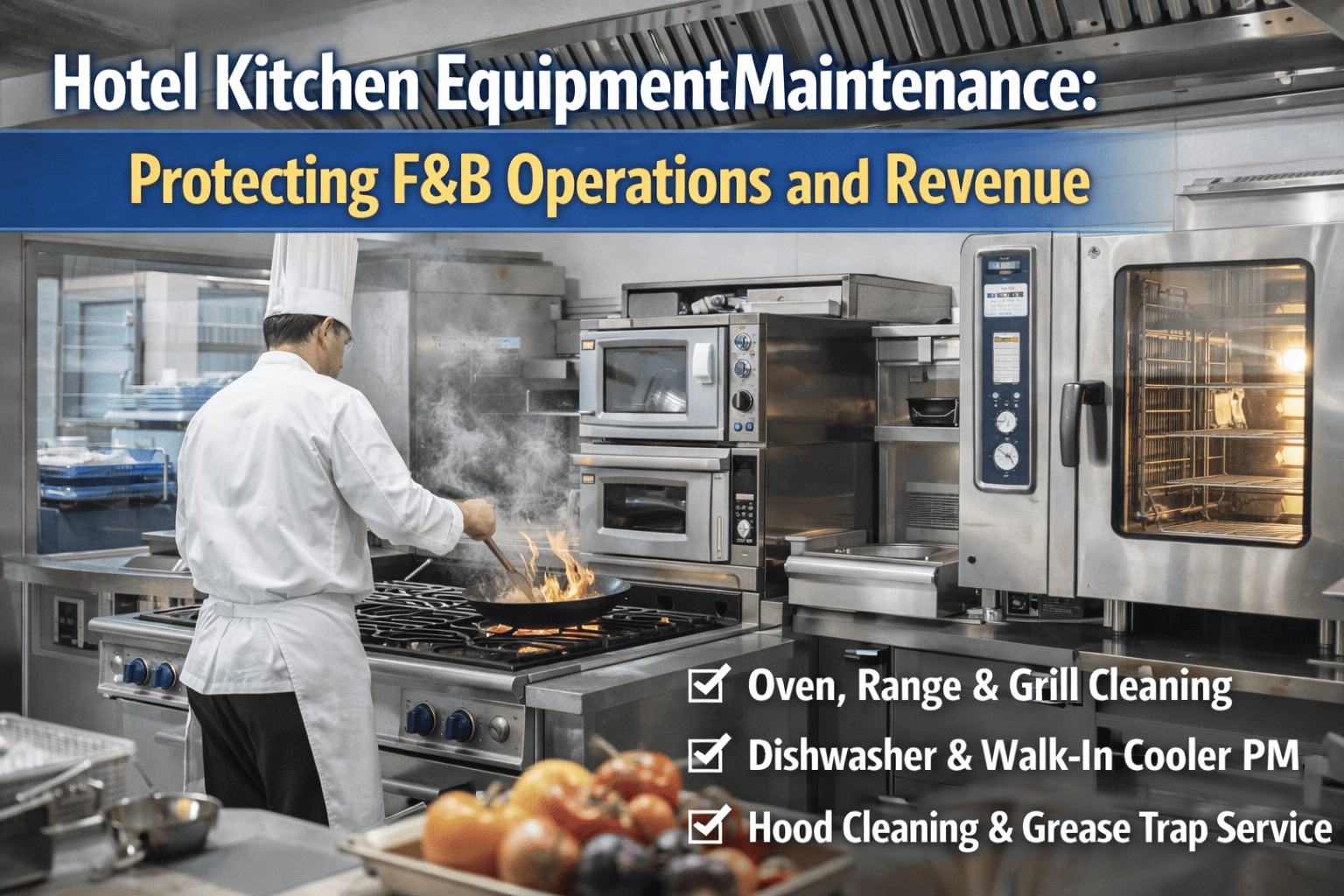
Hotel Kitchen Equipment Maintenance: Protecting F&B Operations and Revenue
The commercial kitchen is the revenue engine behind hotel dining, room service, banquets, and catering. When equipment fails — ovens, walk-ins, dishwashers, exhaust hoods, grease traps — the impact is immediate: food cost loss, service delays, health department violations, and F&B revenue that does not recover. This guide covers the maintenance framework that keeps it running.
The True Cost of Reactive Kitchen Maintenance
Most hotel operators track food cost and labor cost as primary F&B profitability levers. Equipment maintenance cost is treated as a separate line — a capital and facilities matter, not an F&B matter. That framing is wrong. A failed convection oven on a banquet morning does not cost the price of the oven repair. It costs the banquet revenue, the labor sunk into preparation, and the guest relationship with the event organizer who will not rebook. Oxmaint tracks kitchen equipment repair costs against F&B revenue events — giving operations managers the data to make the PM investment case in revenue terms, not maintenance terms.
- Equipment fails during peak revenue periods
- Emergency service at 2–3x standard repair rates
- Parts sourced overnight at premium cost
- Health department citations from deferred hood cleaning
- Walk-in failures destroy food inventory with no warning
- Dishwasher downtime forces disposable serviceware — brand impact
- Failures detected and resolved before peak periods
- Scheduled service at standard rates with preferred vendors
- Parts in stock before they are needed
- Hood cleaning on compliance schedule — no citations
- Walk-in temperature anomalies caught in hours, not days
- Dishwasher PM prevents mid-service breakdown entirely
The Five Equipment Categories That Drive Hotel Kitchen PM
Hotel commercial kitchens operate five distinct equipment categories — each with different failure modes, regulatory exposure, and PM intervals. A complete kitchen maintenance program addresses all five. Oxmaint tracks each category as separate asset groups with individual PM schedules, vendor contact records, and compliance documentation.
Convection ovens, combi-ovens, steamers, tilt skillets, and ranges are the most labor-intensive and production-critical equipment in the hotel kitchen. An oven failure during a wedding reception breakfast does not just delay service — it collapses the entire production sequence that the kitchen team built around that equipment's capacity and timing. The PM program for cooking equipment focuses on two failure categories: ignition and burner failures (gas equipment) and heating element and door seal failures (electric equipment), both of which degrade predictably over time and are almost always preceded by detectable warning signs.
Walk-in coolers and freezers are the single highest-consequence equipment category in hotel kitchen maintenance — not because failures are most frequent, but because when they fail, the impact is immediate, total, and irreversible. Food stored at 48°F for eight hours is a food safety violation regardless of cost. Walk-in maintenance focuses on two objectives: extending compressor life through condenser maintenance and preventing door seal failures that force the compressor to run continuously until it fails. A compressor that runs 24/7 due to a failed door gasket has a lifespan measured in weeks, not years.
The commercial dishwasher is the equipment failure that most directly affects guest experience in ways that reach the dining room immediately. A dishwasher that is producing water spots, filming on glassware, or outputting dishes that fail the sanitization temperature test (typically 180°F at the final rinse for high-temperature machines) creates an immediate front-of-house quality problem that guests notice before the chef does. The most common cause of all three failure modes is a single deferred maintenance task: descaling the rinse arm and booster heater. Hotels in hard-water markets that descale monthly report virtually zero sanitization compliance failures and water-spot complaints.
The commercial exhaust hood is both a life-safety system and a compliance asset. NFPA 96 establishes the cleaning frequency requirements — based on cooking volume and fuel type — that determine whether a hotel kitchen is in compliance with fire code and insurance requirements. A kitchen hood that has not been professionally cleaned on the NFPA 96 schedule is not just a fire hazard: it is a documentation gap that an insurance carrier will use to deny a claim following a kitchen fire, regardless of proximate cause. The cleaning schedule itself is straightforward. The documentation of that schedule — date, technician, scope, before/after photos — is what protects the property.
The grease trap is the hotel kitchen's least-glamorous asset and, when ignored, its most damaging compliance liability. A grease trap that overflows into the municipal sewer system triggers a mandatory report to the local utility, a health department notification, and in most jurisdictions, a compliance hearing with potential fines of $1,000–$10,000 per day of violation. The overflow itself causes no equipment damage — but the documentation gap that allowed it to happen creates a regulatory record that follows the property through every subsequent inspection. Grease trap maintenance is entirely interval-based: pump on schedule, document the pump, and the risk disappears. Oxmaint tracks grease trap pump intervals, vendor records, and manifests automatically.
The Kitchen Compliance Obligations That Cannot Miss Deadlines
Unlike boiler inspections — which are annual events with 12 months of preparation lead time — kitchen compliance obligations occur on quarterly and monthly cycles that run continuously through the year. Missing even one cycle creates a gap in the documentation record that surfaces in the next health department inspection as evidence of a program failure, not just a scheduling miss.
National Fire Protection Association Standard 96 establishes kitchen hood cleaning frequency by cooking volume: quarterly for high-volume (solid fuel or 24-hour cooking), semi-annually for standard volume, annually for low-volume. The standard requires a cleaning certificate from a licensed contractor posted on or near the hood. Insurance carriers require these certificates to process fire claims — an absent certificate is presumptive evidence of non-compliance and potential basis for claim denial.
Local health department inspections evaluate both equipment condition and maintenance records. An inspector who finds a dishwasher not reaching 180°F sanitization temperature, a refrigeration unit holding above 41°F, or a grease trap without a recent pump-out manifest will cite the property for both the current condition and the absence of documentation demonstrating a PM program. Properties with organized digital maintenance records resolve citations faster and with lower fine exposure than those relying on paper logs or no records at all.
The commercial kitchen fire suppression system — typically an Ansul wet chemical system — requires semi-annual inspection by a licensed fire suppression contractor. The inspection must verify that the nozzles are correctly aimed at each cooking appliance, the agent cartridge is within service life, and all actuation components are functional. A kitchen fire that activates an Ansul system with an expired inspection record is a liability event for both the insurance claim and any personal injury claims. The semi-annual inspection record is the property's documentation of compliance.
Municipal grease trap ordinances require that grease interceptors be pumped by a licensed waste hauler who generates a waste manifest documenting the pump date, volume removed, and disposal facility. These manifests are not optional record-keeping — they are the legal documentation that the hotel property is meeting its industrial pretreatment obligations. Regulators typically require manifests to be retained for three to five years and presented on demand. A property that cannot produce manifests for the prior 12 months is presumptively non-compliant regardless of actual pump-out frequency. Oxmaint stores waste manifests in the grease trap asset record with zero paper handling.
How Oxmaint Manages Your Hotel Kitchen Equipment Program
Walk-in #1, combi-oven #3, dishwasher, hood system, and grease trap are each separate named assets in Oxmaint — with individual purchase dates, model numbers, service histories, and PM schedules. When the walk-in compressor is replaced, that event is recorded against the walk-in asset, not in a shared kitchen log where it disappears. The history is per-asset and searchable.
Set up each equipment category's PM schedule once. Oxmaint generates daily baffle filter cleaning tasks, weekly walk-in temperature checks, monthly descaling reminders, and quarterly OEM service requests automatically — assigned to the right team member with reminders before each deadline. Sign up free to configure your kitchen PM calendar.
NFPA 96 hood cleaning certificates, Ansul inspection records, grease trap waste manifests, and health department inspection reports are all stored in Oxmaint against the relevant asset. Certificate expiration dates are tracked with advance alerts. When the health inspector or insurance auditor asks for the last three years of hood cleaning records, the kitchen manager generates the complete package in under five minutes. Book a demo to see the compliance document workflow.
Every kitchen repair — parts cost, labor, and hours of downtime — is logged against the equipment asset record. Operations managers can generate a quarterly report showing total kitchen equipment repair cost against F&B revenue for the same period. The data makes the PM investment case in revenue terms: a $1,800 quarter of preventive maintenance against a $28,000 cancelled brunch event is a decision made once, not argued each budget cycle.
Before Oxmaint, our grease trap got pumped when someone remembered to call the vendor. Our hood cleaning certificates were in a binder that nobody touched between health inspections. When we had a health department visit last March, our kitchen manager pulled every compliance record from the past two years on her phone in the inspector's presence. He looked at the records, looked at her, and said 'this is what we want to see everywhere.' We have not had a citation in 14 months.