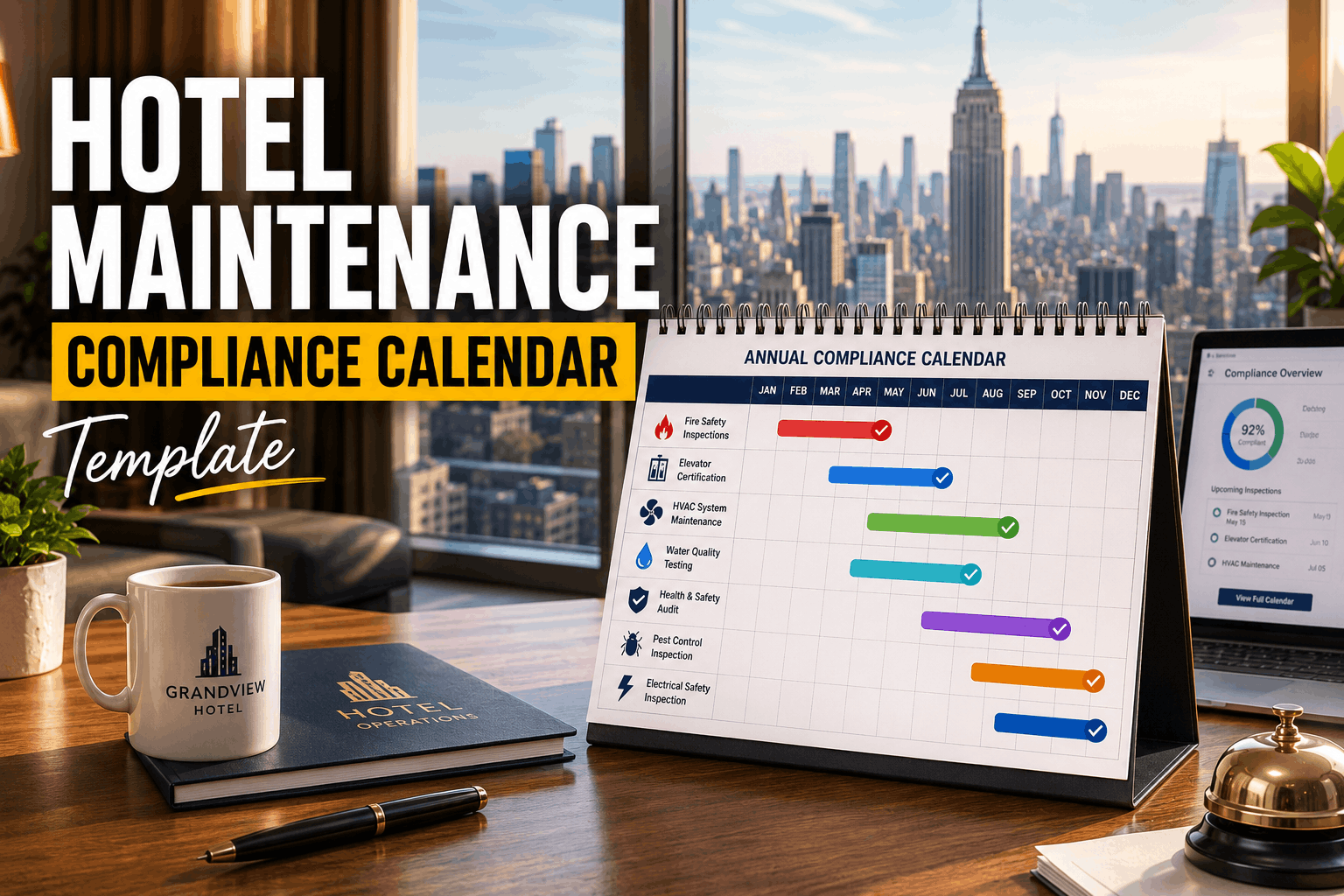
A hotel runs hundreds of assets simultaneously — HVAC systems, elevators, boilers, pool pumps, commercial kitchens, fire suppression, and hundreds of guest rooms — each with a different inspection interval, compliance requirement, and consequence of failure. Without a structured preventive maintenance schedule, teams drift into reactive mode, spending 3 to 5 times more per repair than they would have on a scheduled task. This guide gives you the complete PM framework: what to inspect, how often, in what priority order, and how to move from a paper checklist to a program that actually gets done.
Get Your Hotel PM Schedule Running This Week
OxMaint's hospitality PM template library covers every asset class — HVAC, elevators, life safety, pool, kitchen, and guest rooms. Start free and have your first scheduled work orders auto-generating within days, not weeks.
Why Most Hotel PM Programs Fail Before They Start
The failure is almost never a lack of intention. Most hotel engineering teams know what needs to be maintained. The problem is structure. Without a system that triggers tasks automatically, routes them to the right person, and records completion with evidence, PM schedules collapse under the weight of daily reactive work. Studies show hotels without structured PM programs spend 48% more on corrective maintenance than preventive maintenance — a gap that compounds every quarter. The solution starts with knowing your schedule, then building the system to execute it. Sign up free to move your PM program from paper to automated in days.
More spent on corrective maintenance by hotels without a structured PM program
Average cost of a single water damage claim — prevented by weekly plumbing inspections
Fewer HVAC-related guest complaints at properties running structured PM programs
More expensive per repair event when maintenance is reactive rather than scheduled
The Priority Pyramid: What to Protect First
Not every asset deserves the same urgency. Prioritizing by failure consequence — not by task frequency — is what separates an effective PM program from a busy one. Build your schedule from the top down.
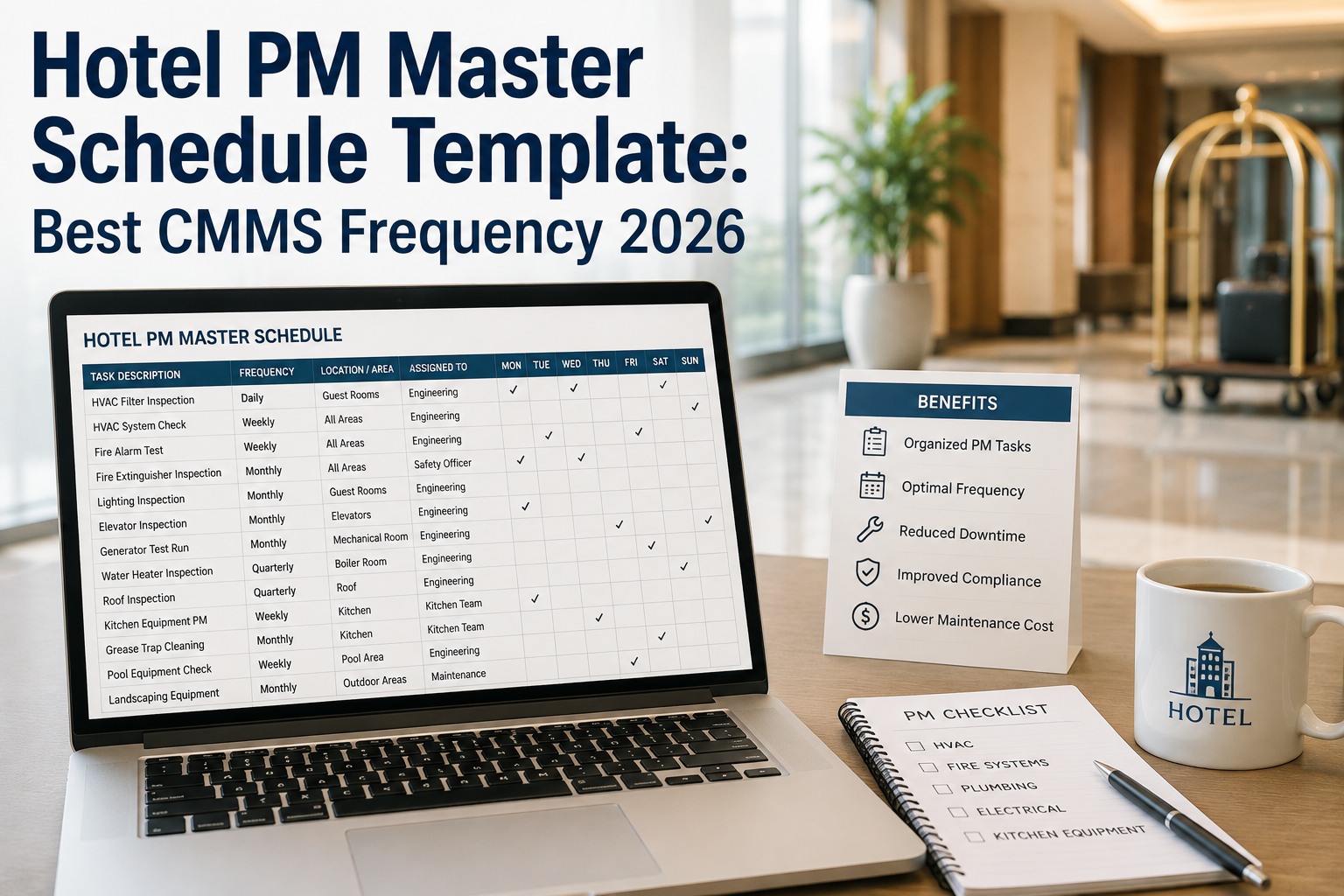
Complete PM Schedule Template by Frequency
Use this schedule as your baseline. Adjust intervals based on your property's age, climate, and occupancy patterns — a beachfront hotel may need monthly HVAC coil cleaning, while a mountain resort prioritizes winterizing plumbing each autumn. Book a demo to see how OxMaint's template library adapts these intervals to your specific asset register.
Legally Required vs. Best Practice: Know the Difference
Some PM tasks are discretionary best practice. Others are legally mandated — and missing them exposes your property to shutdown orders, insurance voidance, and regulatory fines. Every hotel engineering team should know which category each task falls into.
- Annual elevator state or provincial inspection certificate
- Certified backflow preventer testing — most jurisdictions, annually
- Fire alarm annual test (NFPA 72)
- Kitchen suppression system inspection (NFPA 17A)
- Weekly emergency generator testing under load (NFPA 110)
- Daily pool water chemistry logging per health authority standards
- Boiler annual recertification by qualified inspector
- Monthly HVAC filter changes — guest rooms and plant rooms
- Weekly plumbing outlet flushing for Legionella prevention
- Quarterly chiller and cooling tower servicing
- Rolling 90-day guest room deep inspection cycle
- Quarterly electrical panel thermographic scanning
- Monthly smoke detector rotation covering all zones
- Usage-based elevator servicing by car cycle count
Moving From Template to Running Program
Build Your Asset Register First
Every PM schedule needs addresses. Without a complete asset register — equipment location, model, age, and service history — your schedule is a list of tasks with nowhere to go. OxMaint's hospitality templates allow most hotel teams to complete their asset register within the first week of deployment.
Assign Intervals by Priority Tier, Not Convenience
Start with Tier 1 and Tier 2 assets — life safety and compliance — and configure their mandatory intervals first. Add Tier 3 and Tier 4 assets next. Do not try to configure everything perfectly before going live. A running program with 80% coverage is vastly more effective than a perfect program that never launches.
Measure Completion Rate, Not Just Completion
A PM program that generates 100 tasks and completes 55 is not a 55% success. It is a structural failure that needs diagnosing. Track PM compliance rate weekly. Most hotels discover their actual completion rate is below 70% when they first start measuring it — and that visibility alone drives improvement.
Refine Intervals Using Real Data
After 90 days of digital PM execution, review your MTBF data. Where failures are occurring before PM intervals, shorten them. Where PM is completing with zero findings across multiple cycles, extend the interval to recover labor hours. OxMaint's interval optimization module surfaces these gaps automatically from your work order history.
Frequently Asked Questions
How often should hotel HVAC systems be serviced?
Guest room PTAC filters should be inspected weekly and replaced monthly. Plant room AHU belts, bearings, and drain pans require monthly inspection. Chiller servicing is a quarterly task. Full coil cleaning and refrigerant charge verification is an annual service. Properties in humid or coastal environments should shorten these intervals by 20 to 30%. Sign up free to configure these intervals in OxMaint today.
What hotel maintenance tasks are legally required?
Legally mandated tasks include annual elevator inspection certification, certified backflow preventer testing, fire alarm annual test per NFPA 72, kitchen suppression inspection per NFPA 17A, weekly emergency generator testing per NFPA 110, and daily pool water chemistry logging. Missing these creates regulatory exposure, insurance risk, and potential shutdown orders — not just operational risk.
What is the right PM-to-reactive maintenance ratio for a hotel?
Industry best practice is an 80/20 split — 80% planned preventive maintenance and 20% reactive or corrective work. Most hotels starting a structured PM program begin at 30% planned or lower. Properties using OxMaint typically reach the 75% planned threshold within 12 to 18 months of deployment.
How do I build a guest room preventive maintenance schedule?
The standard approach is a rolling deep inspection cycle targeting 100% guest room coverage every 90 days. Each inspection covers the PTAC unit, plumbing fixtures, door hardware, TV and in-room systems, and caulking condition. Daily spot checks cover lighting, HVAC response, and plumbing function. Book a demo to see OxMaint's room-based checklist templates in action.
Can OxMaint automatically generate PM work orders from a schedule template?
Yes. Once PM intervals are configured in OxMaint per asset, the system auto-generates work orders on schedule, assigns them to the right technician, and sends mobile notifications. Completion is tracked in real time with photo evidence and technician sign-off. PM compliance rate is visible on the dashboard and exportable for ownership and regulatory reporting.
Turn This Template Into a Running PM Program
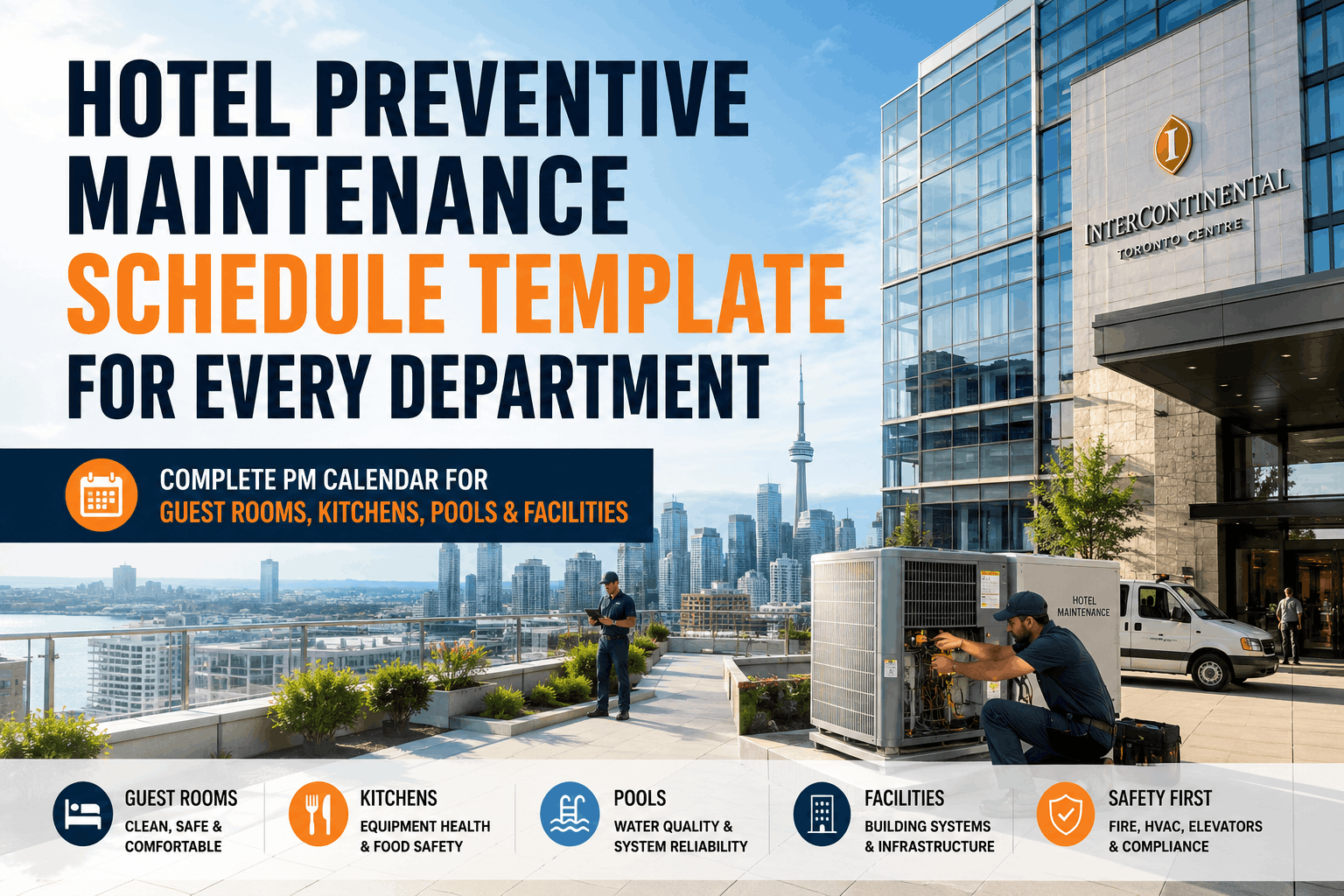
OxMaint configures your hotel's PM schedule — HVAC, elevators, life safety, kitchen, guest rooms — and starts auto-generating work orders within days. No IT resource. No setup fees. Start free and build the program your property has always needed.
.png)