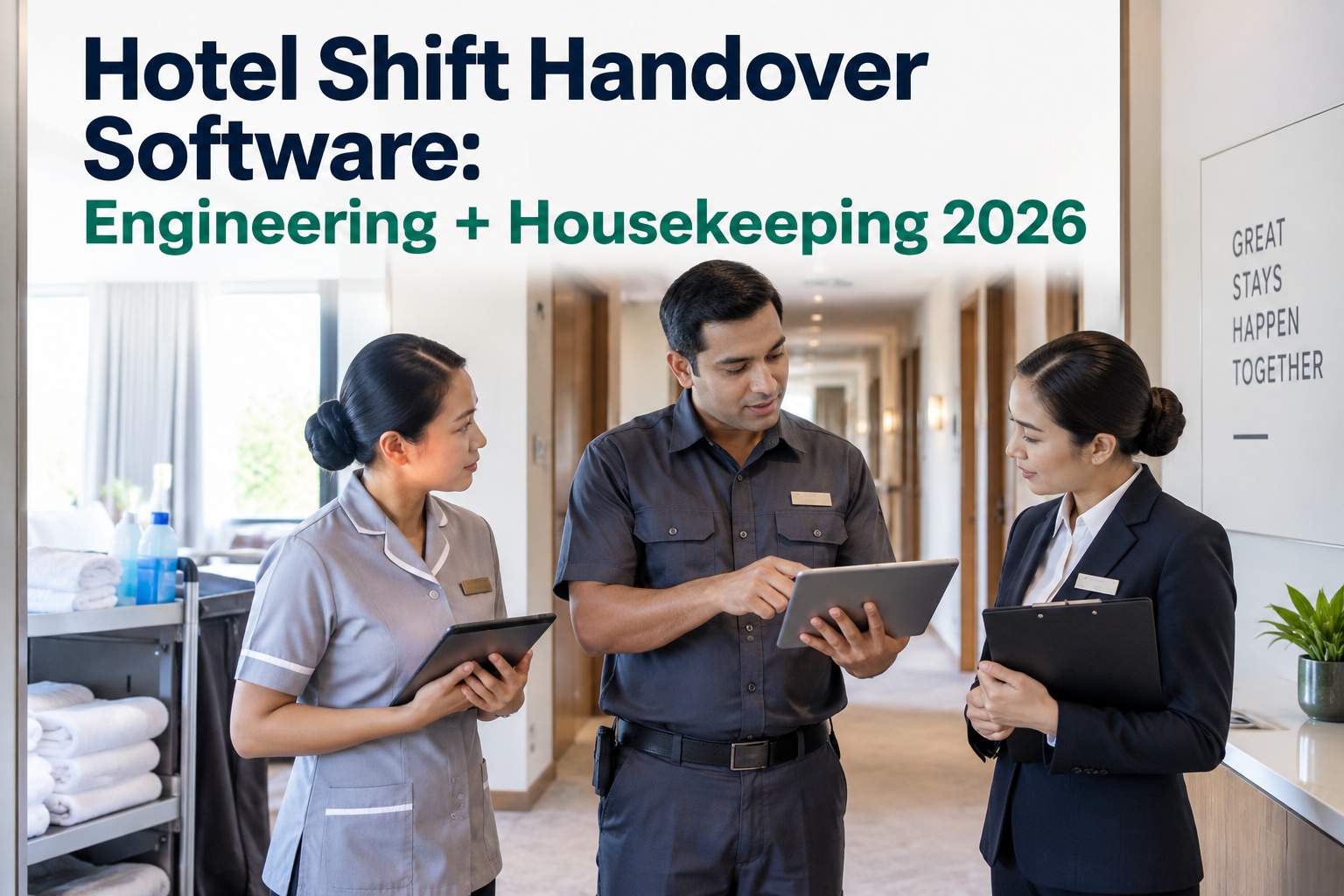
A missed wake-up call becomes a guest refund. A lost maintenance request becomes a one-star review. An unlogged VIP preference becomes a loyalty program cancellation. None of these failures require a staffing crisis, a budget problem, or a guest doing anything unreasonable. They require only one thing: a shift handover that passed incomplete information from one team to the next. Hotels run three shift transitions every 24 hours — morning to afternoon, afternoon to evening, and night to morning — and each one is a moment where operational continuity either holds or breaks. Research consistently shows that structured shift handover systems reduce operational errors by 37 percent, improve cross-department communication efficiency by 90 percent, and directly lift guest satisfaction scores. Yet most hotel properties still hand over between shifts on paper logs, verbal briefings, or WhatsApp threads that create no audit trail, no task continuity, and no escalation path when something is missed. OxMaint's digital shift logbook gives every incoming team — front desk, housekeeping, engineering, F&B, and security — the complete picture before they take their first guest interaction.
Paper and Verbal Handover
Information Transfer Accuracy
Incomplete, Unverifiable
Cross-Shift Task Continuity
Lost at Every Transition
Maintenance Escalation Speed
4+ Hours Average Response
Management Visibility
Reactive — After the Fact
Digital Shift Logbook
Information Transfer Accuracy
Structured, Timestamped, Searchable
Cross-Shift Task Continuity
Automatic Carry-Forward Until Closed
Maintenance Escalation Speed
Under 30 Minutes with Auto Work Orders
Management Visibility
Live Dashboard Across All Departments
Hotels with structured handover protocols achieve 23% higher guest satisfactionand 37% fewer operational errors during shift transitions
The Complete Hotel Shift Handover Checklist — All Five Departments
Every department in a hotel carries different handover priorities. What front desk must transfer to the incoming team differs structurally from what engineering must transfer — and what security must document is different again from what F&B needs to log. This checklist covers all five core departments. OxMaint's digital shift logbook structures each category in real time throughout the shift so that handover documentation writes itself rather than being assembled under pressure in the final 15 minutes before the outgoing team leaves.
Occupancy and Reservations
Current occupancy count and available rooms at exact handover time
Expected arrivals for the remainder of the day with estimated arrival windows
Outstanding late checkouts — room numbers, agreed extension times, billing status
Early arrivals waiting for rooms — name, room type, current wait time elapsed
Rooms held out of order for maintenance — room number, reason, return-to-service ETA
Overbooking status and walk-guest arrangements confirmed or pending
Guest Issues and VIP Notes
All VIP arrivals expected this shift — room assignment, amenity status, escort requirement
In-house VIPs — room, loyalty tier, active requests, outstanding service commitments
All unresolved guest complaints — nature of issue, commitment made, current escalation status
Service recovery actions in progress — comped items, upgrades, manager follow-up pending
Billing disputes in progress — folio status and authorized adjustments already processed
Cash drawer count reconciled and float balance confirmed by both outgoing and incoming
Room Status and Assignments
Rooms in progress at handover — attendant assigned, estimated completion time
Priority rooms for early arrivals or VIP guests — flagged with required completion time
DND rooms over 12 hours — room number, last contact attempt, supervisor decision
Stayover rooms not yet serviced — flagged for incoming team with priority order
Rooms completed and inspected — status updated to front desk for assignment
Special requests for rooms — allergy setup, baby cot, extra linen, VIP amenities
Supplies and Inspection Notes
Linen and amenity stock status — floors with low supplies flagged for restocking
Inspection failures from the shift — room number, failed item, photo attached, re-inspection needed
Lost and found items discovered — room of origin, item description, storage location logged
Maintenance issues discovered in rooms — type of issue, room number, escalated to engineering
Rooms with damage observed — documented with photo before cleaning for liability protection
Staff attendance and coverage gaps — any open assignments that need supervisor reallocation
Open Work Orders and Asset Status
All open work orders not completed this shift — priority level, asset, status, parts needed
In-progress repairs that cross shift boundaries — room blocked, ETA for completion
Elevator, HVAC, pool, or boiler status — any system running on backup or restricted mode
Emergency callouts handled during shift — what happened, what was done, what is pending
Rooms blocked for maintenance — confirmed in PMS, estimated return to service time
Parts or equipment on order — item, expected delivery, which work order it is for
Compliance and Safety
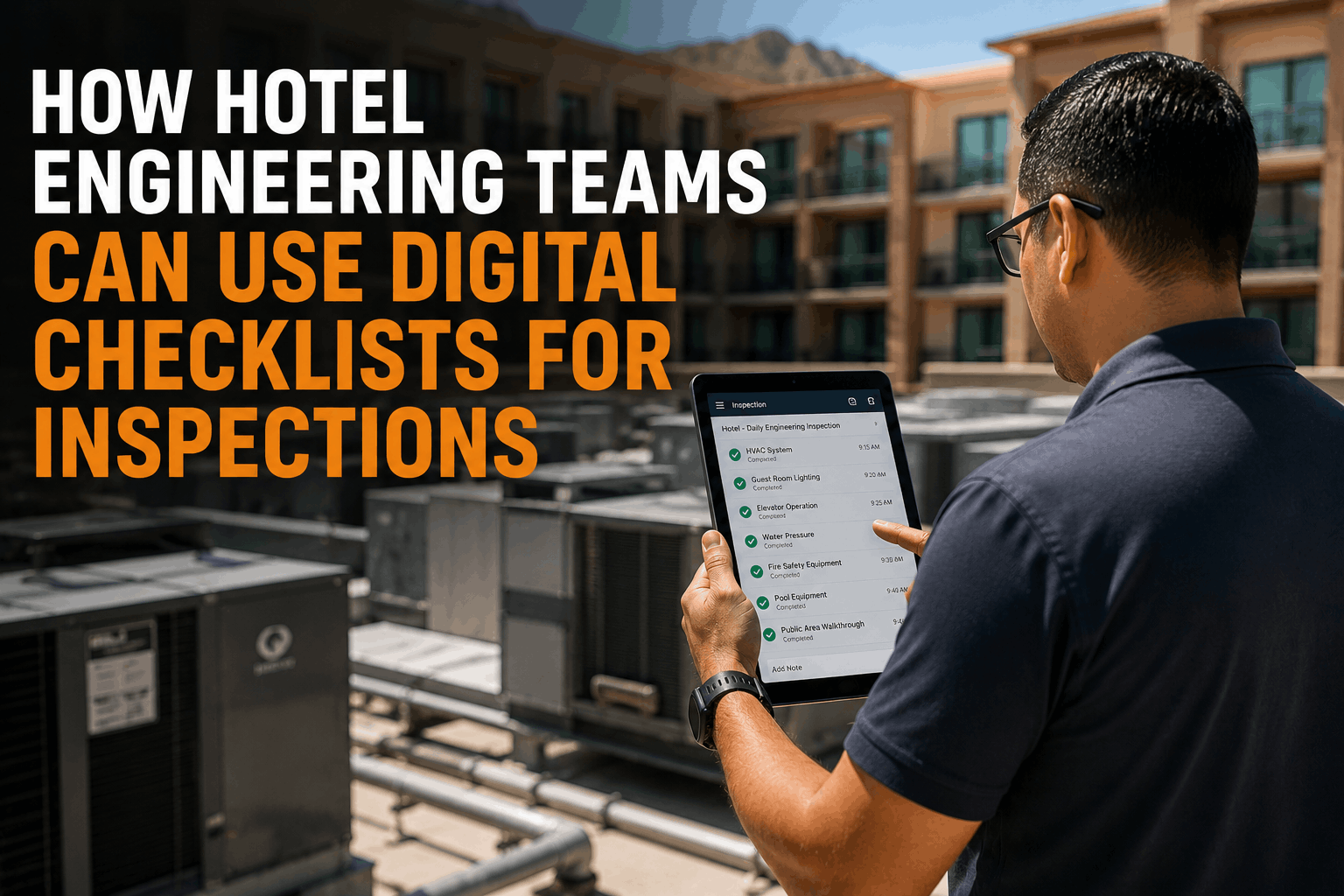
Preventive maintenance completed during shift — asset, task performed, next interval set
Safety system checks completed — fire panel status, sprinkler zones, emergency lighting
Regulatory compliance tasks completed or outstanding — inspection logs, certificates due
Energy consumption anomalies observed — system or zone drawing unexpectedly high load
Contractor or vendor access during shift — who was on-site, what they worked on, sign-out confirmed
Any near-miss or safety incident — full description, corrective action taken, reporting completed
Service and Reservations
Restaurant reservation count for incoming shift — covers, peak arrival windows, group bookings
In-house event or function meals — group name, menu confirmed, special setup required
VIP or allergy-flagged guests dining this shift — requirements confirmed, kitchen notified
Outstanding room service orders — room number, order status, estimated delivery time
Guest complaints from current shift — nature of issue, resolution offered, follow-up required
Staffing gaps on incoming shift — positions not covered, recommended coverage adjustment
Kitchen and Stock Status
86'd items — dishes unavailable for service on incoming shift, front of house informed
Kitchen equipment issues reported during shift — what failed, status, impact on menu
Refrigeration temperature log completed — any unit outside safe range flagged immediately
Beverage stock for bar service — low items flagged before opening service begins
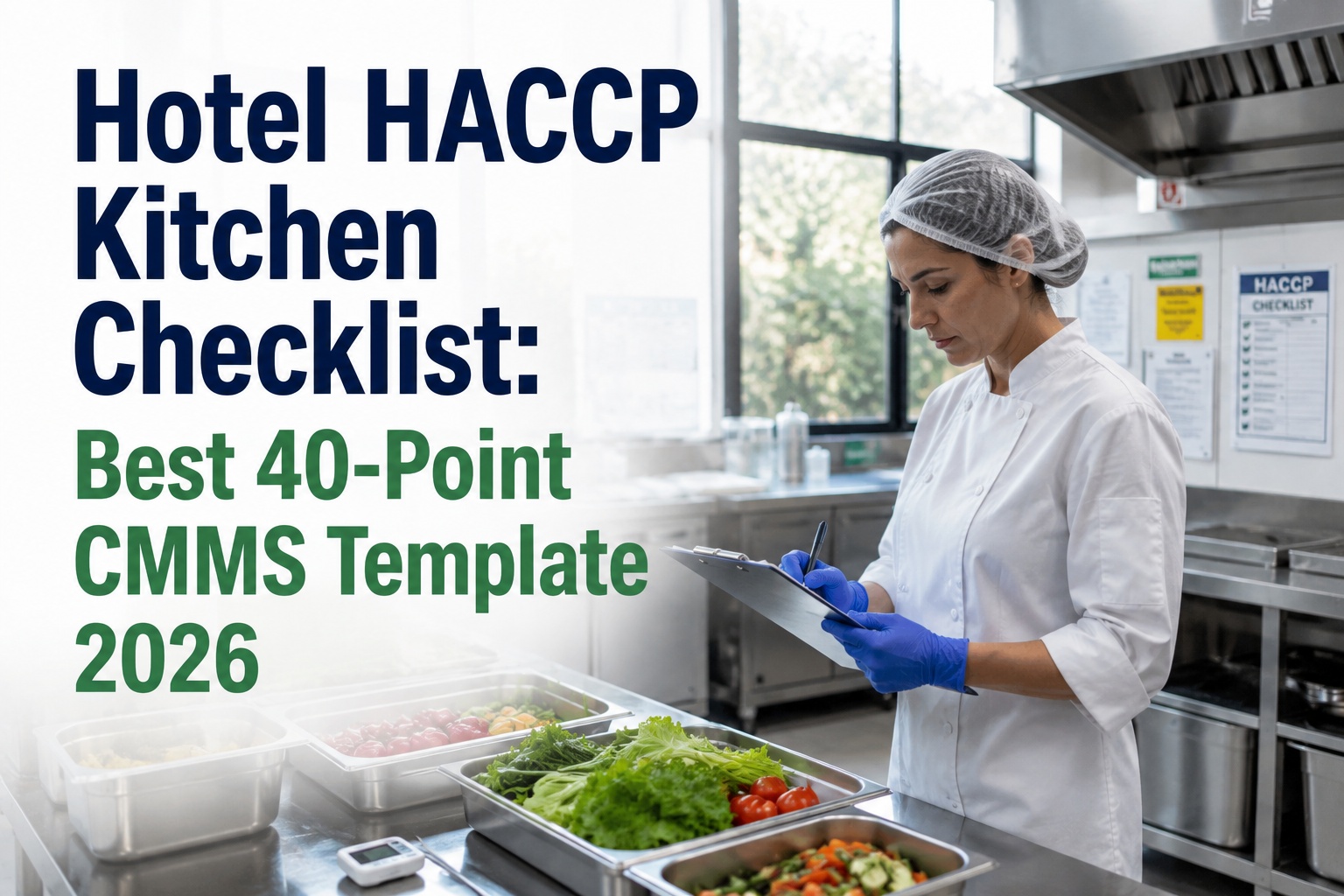
HACCP compliance records — temperature checks logged, cleaning schedules completed, signed
Cash or POS reconciliation at shift end — discrepancies flagged with explanation attached
Security and Incident Log
Security incidents logged during shift — nature of event, rooms involved, resolution status
CCTV or access system anomalies — any zone or door flagged during the shift
Guest disturbance events — room number, nature, response taken, outcome documented
External visitor or contractor overnight — identity confirmed, access record, departure time
Perimeter and car park checks completed — time, technician name, findings noted
Master key log reconciled — all keys signed out returned or outstanding keys explained
Night Audit and Operations
Night audit reconciliation status — completed successfully or exceptions documented with detail
No-shows processed — charges applied or held, reservation reference documented
Late arrivals and after-hours check-ins — room assigned, access given, billing initiated
Early departure checkouts — room vacated and confirmed, folio settled, housekeeping notified
Morning wake-up calls or early breakfasts confirmed — names, times, rooms, confirmed or flagged
Building systems overnight — HVAC, lifts, pool, fire systems — status and any anomalies noted
Stop Losing Critical Shift Information at Every Handover
OxMaint's digital shift logbook structures every checklist category in real time throughout the shift — so the incoming team reads a complete, timestamped, searchable record before they take their first guest interaction. Not a paper sheet someone filled in during the last five minutes of their shift.
The Three Shift Transitions That Carry the Highest Failure Risk
Not all three daily shift transitions in a hotel carry identical risk. The morning-to-afternoon transition handles the collision of peak checkout and peak arrival. The afternoon-to-evening transition transfers complex in-progress guest situations to a smaller team. The night-to-morning transition delivers the audit trail for everything that happened while management was off-site. Each transition has its own most dangerous information gap — and its own most common failure mode.
AM
Morning to Afternoon (2 – 3 PM)
Late checkout list with agreed extension times
Early arrivals waiting and arrival queue
VIP arrivals expected in next 4 hours
Housekeeping floors behind schedule
Unresolved guest complaints this shift
Highest Risk: Room Assignment Failure
PM
Afternoon to Evening (10 – 11 PM)
All open service recovery cases from afternoon
Late arrivals expected — flight delays, groups
In-house events concluding — noise, F&B notes
In-house VIPs and corporate accounts overnight
Maintenance issues flagged this afternoon
Highest Risk: Service Recovery Lost at Transition
AM
Night to Morning (6 – 7 AM)
Night audit reconciliation and exceptions
No-shows processed and charges status
Unusual incidents or security events overnight
Early departures — rooms vacated and logged
Morning arrivals requiring pre-shift action
Highest Risk: Billing Error Without Context
Digital vs. Paper: What Changes in Each Checklist Category
The gap between a paper handover checklist and a digital shift logbook is not about convenience — it is structural. Paper captures a snapshot. Digital captures continuity. The operational difference shows up within hours of each shift transition in properties that have made the switch — and the ROI becomes visible in OTA review data within the first quarter.
Guest complaints
Paper: Written note, lost at handover. Digital: Structured entry carried forward until closed with full context
73% faster resolution
VIP arrival flags
Paper: Verbal or written, no alert if not reviewed. Digital: Auto-alerts incoming team on login with all context
Zero missed VIPs
Maintenance escalations
Paper: Written in log, manually relayed by radio. Digital: Auto work order generated — 4 hr gap closes to 28 min
4 hrs → 28 min
Room status accuracy
Paper: Static snapshot, outdated within 30 minutes. Digital: Live feed from housekeeping updated in real time
Zero assignment errors
Financial reconciliation
Paper: Handwritten count, no audit trail. Digital: Timestamped entries with dual-confirmation before release
Full audit trail
Inspection records
Paper: Pass or fail notation only. Digital: Digital checklist, photo capture, trend analysis per room type
Brand compliance ready
Hotels on digital shift logbooks achieve
400%+ ROI
Based on documented PMS-integrated digital shift logbook deployments across 200-room full-service hotel properties. Net annual value typically $109,000–$275,000 per property. Payback period: 3–5 weeks.
How OxMaint Transforms This Checklist Into Automated Operations
A printed checklist is better than no checklist. A digital checklist is better than a printed one. A shift logbook platform that acts on checklist entries — auto-generating work orders, flagging unresolved items, alerting the incoming team, and creating management dashboards — is in a different operational category from both. OxMaint is that platform. Every category in this checklist maps to a structured entry type in the OxMaint shift logbook, and every high-priority entry triggers an automated action rather than waiting for a human to notice it and relay it manually.
Guest Issue Logged
Structured entry with room, nature, commitment, and status. Auto-carried forward to next shift if unresolved. Management alert if escalated tier reached.
Maintenance Flag Raised
Auto-generates engineering work order with room number, asset category, and priority score. Room blocked in PMS until repair confirmed complete.
VIP Arrival Logged
Triggers preparation task cascade across housekeeping, F&B, and concierge. Auto-alerts incoming front desk team on login before first guest contact.
Room Status Updated
Housekeeping mark triggers live PMS room status update. Front desk sees real-time readiness across all floors without radio call or office walk.
Inspection Completed
Digital checklist result stored against room record. Failed items trigger supervisor notification. Trend analysis builds automatically across weeks.
Shift Handover Signed
Full structured record timestamped and accessible to incoming team before shift overlap begins. Management dashboard updated in real time across all departments.
Six Signs Your Current Shift Handover Process Is Costing You Revenue
Most hotel properties do not know they have a handover problem — they know they have a guest complaint problem, a maintenance response problem, or a room readiness problem. The handover is the upstream root cause. These six operational signals indicate your current handover process is leaking revenue and guest satisfaction at every shift transition.
Warning Signs 01 – 03
Signal 01
Guests repeating complaints to multiple staff members on the same issue
Signal 02
Maintenance issues resolved in one shift but unknown to the next team
Signal 03
Front desk assigning rooms that are still under maintenance without knowing
Warning Signs 04 – 06
Signal 04
VIP or special-request guests discovering their requirements were not communicated
Signal 05
Night audit exceptions that the morning team cannot explain because context was not logged
Signal 06
Engineering team discovering same issues repeatedly because patterns were never tracked
A single miscommunication during shift handover can ripple through an entire dayA missed wake-up call becomes a refund. A lost maintenance request becomes a review. A digital logbook closes every loop.
Your Property Runs Three Shift Transitions Every 24 Hours — Make Every One Count
OxMaint gives every department a structured digital shift logbook with real-time room status, automated maintenance escalation, VIP alert forwarding, inspection checklists, financial reconciliation tracking, and live management dashboards — all in a mobile-first platform that deploying properties have live within one week. Join 1,000-plus hospitality operations already running on OxMaint.
Frequently Asked Questions
What should every hotel shift handover checklist include regardless of department?
Across all five hotel departments — front desk, housekeeping, engineering, F&B, and security — every shift handover must document three universal categories. First, outstanding tasks: everything that was started but not completed during the shift, with current status and what the incoming team needs to know to continue or close it. Second, incidents and escalations: every issue that arose during the shift, what action was taken, what outcome was achieved, and what still requires follow-up. Third, priority information for the incoming period: VIP arrivals, event schedules, equipment running in degraded mode, staffing gaps, or any non-standard situation the incoming team needs to be aware of before their first guest interaction. Digital shift logbooks structure all three categories with specific fields rather than free-text notes, ensuring completeness and making every entry searchable across shifts, dates, and departments.
How long should a hotel shift handover actually take?
An effective hotel shift handover should take 10 to 15 minutes of overlap time when the incoming team has reviewed the digital logbook before the transition. Properties using structured digital logbooks report that the face-to-face briefing focuses on nuance, questions, and situational context rather than information transfer — because the incoming team already knows the operational picture. Properties using verbal briefings or paper logs typically take 20 to 40 minutes and still miss critical information because the briefer is assembling context from memory under time pressure. The industry best practice is to treat the written logbook record as the primary handover mechanism and the verbal overlap as supplemental. Most digital logbook users report that their teams request to shorten the verbal overlap within two weeks of going live because the written record is more complete and faster to process than listening to a verbal summary.
Which hotel department has the highest-risk shift handover?
Engineering carries the highest-consequence handover risk because incomplete information about in-progress repairs directly leads to rooms being assigned to guests before repairs are confirmed complete — a failure visible to the guest the moment they enter the room. Front desk carries the highest-frequency handover risk because it manages the most dynamic information category: room status, guest issues, billing disputes, and VIP requirements all change continuously throughout each shift and must transfer perfectly to the incoming team. Housekeeping carries the highest-volume risk: a 200-room hotel may process 120-plus room state changes per day, and any status inaccuracy creates a chain reaction across front desk and guest experience. Digital shift logbooks that integrate with the PMS address all three simultaneously — engineering room blocks auto-update PMS, housekeeping marks auto-update room status, and front desk complaint entries carry forward automatically.
Can small hotels benefit from a digital shift logbook or is it only for large properties?
Digital shift logbooks deliver proportionally higher value at smaller properties because smaller teams have fewer people to catch the errors that paper systems let through. A 60-room boutique hotel with two front desk agents per shift has no margin for a VIP arrival failure or a maintenance issue that compounds across two shifts without resolution — every single impacted guest represents a meaningful fraction of total room count. Cloud-based shift logbook platforms like OxMaint scale from single independent properties to multi-brand portfolios on one subscription, with no minimum room count or per-seat pricing that makes adoption cost-prohibitive. The mobile-first interface requires minimal training — most small hotel front desk teams are fully operational within one to two hours, and most request to stop using paper within the first week of parallel running.
How does OxMaint's shift logbook connect to the maintenance and engineering team?
OxMaint is built as a maintenance-first CMMS with a full shift logbook module, which means the engineering workflow and the department shift log are natively integrated. When a front desk agent or housekeeping attendant flags an in-room maintenance issue in the shift log, the entry automatically generates a structured CMMS work order — assigned to the appropriate engineering team, with room number, asset category, priority level, and any attached photos from the inspection. The work order carries the full asset history from OxMaint's CMMS, so the technician arrives with context rather than starting diagnosis from zero. When the repair is confirmed complete in the CMMS, the room status automatically updates in the shift log and the PMS — the front desk sees the room as available without a radio call, and the next shift sees the issue as resolved in the handover record.
Book a demo to see the live integration walkthrough for your specific property setup.