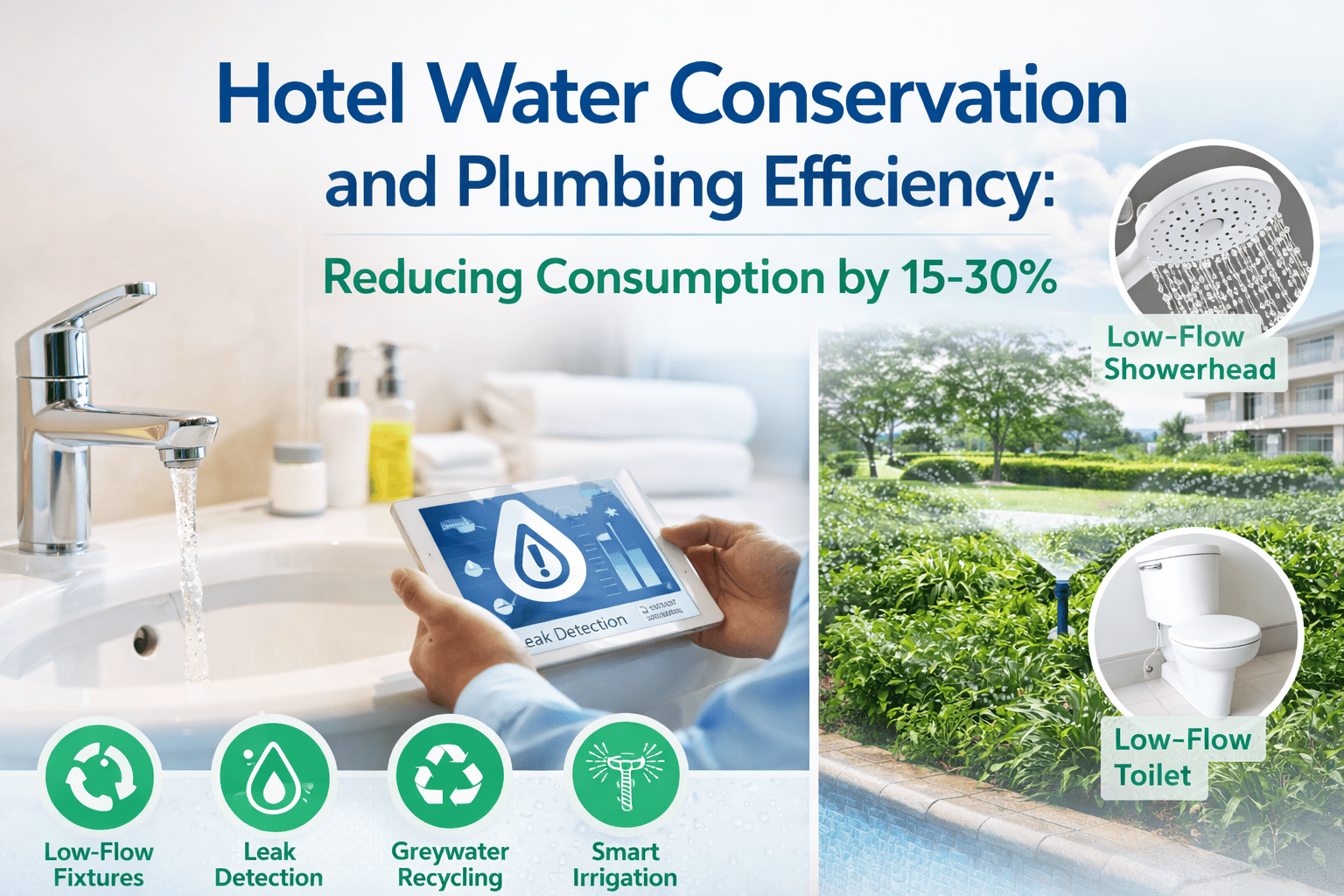
Hotel water bills don't lie — and for most properties, the numbers are quietly devastating. A single leaking toilet can waste over 175,000 gallons per year. Multiply that across hundreds of rooms, and you're looking at a water cost crisis hiding in plain sight. The good news: IoT leak detection and smart water monitoring are changing this, giving hotels the real-time visibility to stop waste before it becomes a financial disaster. If you're ready to cut water costs by 30–40%, explore OxMaint's water monitoring platform or book a live demo with your team.
Hotel Water Conservation System: IoT Leak Detection & Smart Water Monitoring Guide
Hotels lose thousands of dollars monthly to undetected leaks and water waste. Here's how smart IoT systems are helping properties cut costs by 30–40% — without disrupting a single guest.
The Hidden Water Crisis in Every Hotel
Most hotel teams focus on occupancy, RevPAR, and guest reviews — all rightfully so. But water waste is the silent expense quietly eroding margins every single day. Industry data shows that a single hotel room can consume between 60,000 and 220,000 liters of water per year. At any given time, 5–20% of toilets across a property are leaking — often undetected for months.
Industry average, with luxury properties at the high end
For a property with 1,000 units — toilets alone
Top performers achieve under 140L with smart monitoring
Leaks are the primary driver of rising insurance claims
Traditional visual inspections miss subtle leaks. A slow toilet leak can silently consume over 175,000 gallons before anyone notices — and by then, the damage to both your water bill and potentially your property structure is already done.
What Is a Hotel Water Conservation System?
A modern hotel water conservation system combines three core technologies: IoT sensors that detect leaks and measure flow in real time, smart meters that track consumption per zone or floor, and analytics dashboards that turn raw data into actionable insights for your engineering and maintenance teams.
IoT Leak Sensors
Wireless sensors placed in guest rooms, mechanical spaces, kitchens, and utility zones detect moisture and water presence the moment a leak begins — not hours or days later.
Smart Flow Meters
Sub-meters track water usage by floor, zone, or system. Unusual spikes trigger instant alerts, helping teams isolate the source without searching the entire building.
Conservation Analytics
Cloud dashboards aggregate usage patterns, benchmark against targets, and surface which areas are performing well — and which need immediate attention.
IoT Leak Detection: How It Actually Works
Sensor Placement
Wireless sensors are installed in guest bathrooms, under sinks, near HVAC condensate lines, kitchen prep areas, and utility rooms — deployable during normal housekeeping without taking rooms offline.
Real-Time Detection
The moment a sensor detects moisture or abnormal flow, it sends an alert to the maintenance dashboard — with the exact room number and sensor location, not just a vague building-wide alarm.
Smart Prioritization
Not every leak is an emergency. The system differentiates — a slow toilet leak can wait for housekeeping, while a wall breach behind a pipe gets immediate escalation to protect guests and structure.
Work Order & PMS Integration
Leak alerts automatically generate maintenance work orders and can update room availability in your PMS — closing the loop between detection and resolution without manual coordination.
Where Hotels Lose the Most Water — and Where Sensors Matter Most
Proven Results: What Hotels Are Achieving With Smart Water Systems
| Outcome | Before IoT Monitoring | After IoT Monitoring | Impact |
|---|---|---|---|
| Leak detection speed | Days to weeks | Minutes to hours | 70% faster response |
| Water cost per room | Uncontrolled baseline | 30–40% reduction | Direct cost savings |
| Water damage incidents | Reactive, after damage done | Prevented before escalation | Zero room closures |
| Insurance claims | Frequent water-related claims | Reduced claim frequency | Lower premiums |
| ESG / sustainability reporting | Manual estimates | Automated, auditable data | Compliance ready |
| Staff response efficiency | Search entire floor manually | Room-level alert, direct fix | Faster resolution |
A luxury resort deploying IoT leak detection across 500+ rooms and utility zones prevented 12 water overflow incidents in the first 3 months, avoiding over $175,000 in potential damage costs — and earned a commendation from their insurance carrier in the process.
Smart Water Monitoring vs. Manual Inspections
The Guest Experience Angle Hotels Often Miss
Water damage doesn't just cost money — it costs reputation. A flooded guest room means compensation, negative reviews, lost future bookings, and rooms pulled from inventory at the worst possible time. IoT systems protect the guest experience proactively, not reactively.
- Guest discovers leak in occupied room
- Immediate room move, refund, and complaint
- Upper-floor leaks cascade to floors below
- Negative online reviews drive down bookings
- Remediation costs multiply with delay
- Leak detected before guest checks in
- Maintenance resolves during housekeeping turnover
- Room stays in inventory, revenue protected
- Guests experience a hotel that just works
- Sustainability story strengthens brand trust
5 Features to Look for in a Hotel Water Monitoring System
Room-Level Alert Precision
Property-wide alarms are nearly useless. The system must tell you exactly which room, which fixture, and the severity — so your team acts, not hunts.
Wireless, Non-Invasive Deployment
Sensors should install in minutes per room during normal housekeeping turnover — no wiring, no construction, no rooms pulled from inventory.
PMS & CMMS Integration
Leak alerts should automatically generate maintenance work orders and trigger room status updates in your Property Management System without manual steps.
Consumption Benchmarking
Establish usage targets per room, per floor, and per system. The platform should flag deviations and track progress toward conservation KPIs over time.
ESG & Compliance Reporting
Automated, tamper-proof water usage records that simplify sustainability reporting, regulatory compliance, and ESG disclosures for ownership and investors.
OxMaint Brings All of This Into One Platform
Water usage monitoring, IoT leak alerts, conservation analytics, and automated work orders — built for hotel engineering and maintenance teams.
Barriers Hotels Face — and How to Clear Them
Frequently Asked Questions
Stop Losing Money to Leaks You Can't See
OxMaint's water monitoring and IoT leak detection platform gives hotel engineering teams real-time visibility, automated alerts, and the conservation analytics needed to cut water costs by 30–40% — starting from day one.