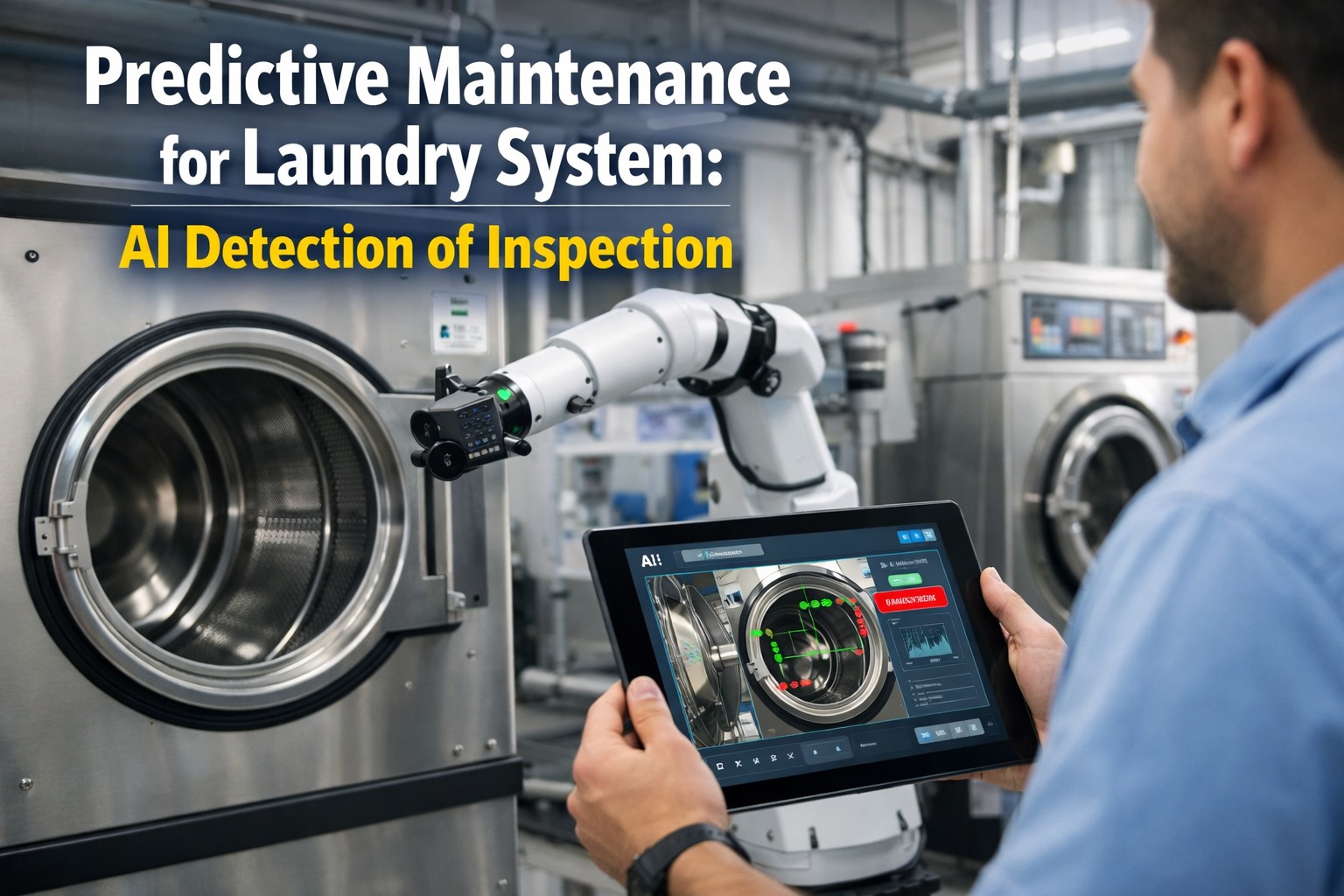
Predictive Maintenance for Kitchen Equipment: AI Detection of Inspection
By Mathew James on January 29, 2026
The lunch rush was in full swing when the walk-in cooler compressor failed. No warning. No gradual temperature drift. Just 200 pounds of prep work and $8,000 in perishable inventory suddenly at risk. The kitchen manager scrambled to redistribute product across reach-in units while calling every refrigeration service in the county. Three hours later, a technician arrived with a $2,400 emergency repair bill. The post-mortem revealed the truth: the compressor had been drawing 15% more amperage for six weeks—a classic failure signature that any monitoring system would have flagged. Instead, a $400 scheduled repair became a $12,000 crisis because nobody was watching the data that equipment generates every hour of every day.
The Real Cost of Reactive Kitchen Maintenance
What restaurants lose when equipment fails without warning
3-5x
Higher Cost
Reactive repairs cost 3-5 times more than preventive maintenance—emergency calls, expedited parts, overtime labor
75%
Preventable
Three-quarters of commercial kitchen equipment failures could have been predicted and prevented with proper monitoring
$5,600
Per Hour
Average revenue loss during kitchen equipment downtime—not counting spoilage, emergency repairs, or reputation damage
What AI Detection Changes
Equipment doesn't fail without signals. Compressors draw more power. Motors vibrate differently. Temperatures drift before they spike. AI-powered predictive maintenance catches these patterns weeks before human observation—turning emergency closures into scheduled service calls that happen during off-hours.
Predictive maintenance isn't science fiction—it's the operational standard separating profitable food service operations from those constantly firefighting equipment emergencies. The technology exists today: sensors that monitor equipment health in real-time, AI algorithms that recognize failure patterns before breakdowns occur, and digital platforms that transform raw data into actionable maintenance decisions. When commercial kitchens implement AI-powered equipment monitoring, they're not just preventing failures—they're building the operational intelligence that drives consistent food safety, regulatory compliance, and cost control across every piece of critical equipment.
How AI Transforms Kitchen Equipment Inspection
Traditional kitchen inspections rely on human observation—technicians looking, listening, and checking temperatures at scheduled intervals. The problem? Equipment degradation happens between inspections. A compressor that tested fine on Tuesday can be three days into a failure cascade by Friday. AI detection fundamentally changes this equation by monitoring equipment continuously, recognizing anomaly patterns that humans can't perceive, and alerting maintenance teams before problems become emergencies.
The AI Detection Advantage
How predictive algorithms outperform scheduled inspections
91%
accuracy rate
AI Predicts Equipment Failures Before They Happen
Machine learning algorithms analyzing sensor data achieve 91% accuracy in predicting equipment failures 2-4 weeks in advance—giving maintenance teams time to schedule repairs during off-hours without service disruption.
40-60%
Reduction in unexpected equipment breakdowns with predictive monitoring
25-30%
Lower total maintenance costs compared to reactive approaches
20-40%
Extended equipment lifespan through optimized maintenance timing
24/7
continuous equipment monitoring
2-4 wks
advance failure prediction window
86%
reduction in unplanned downtime
The Inspection Parameters AI Monitors Continuously
AI-powered predictive maintenance goes far beyond temperature logging. Modern systems monitor dozens of parameters across each piece of equipment, building baseline performance profiles and flagging deviations that indicate developing problems. The 2024 FDA Food Code emphasizes continuous monitoring capabilities—health departments increasingly expect documentation showing systematic equipment oversight rather than periodic spot checks. When your operation can demonstrate AI-powered inspection protocols, compliance conversations shift from defensive documentation to proactive partnership.
AI Monitoring Parameters by Equipment Type
What predictive algorithms track continuously
Equipment
AI-Monitored Parameters
Failure Indicators Detected
Prediction Window
Refrigeration
Compressor amperage, condenser temp, evaporator pressure, defrost cycles, door seal integrity
Motor degradation, refrigerant loss, coil fouling, seal failure
2-6 weeks advance
Cooking Equipment
Ignition timing, burner efficiency, thermostat accuracy, gas pressure, heat distribution
Igniter wear, thermocouple drift, gas valve issues, element degradation
1-3 weeks advance
Ventilation
Fan motor current, airflow velocity, filter pressure differential, belt tension, bearing temp
Motor bearing wear, belt slippage, filter loading, fan imbalance
2-4 weeks advance
Dishwashers
Wash/rinse temps, pump pressure, chemical dispensing rates, heating element resistance, cycle timing
Heating element failure, pump wear, chemical system clogs, sensor drift
1-2 weeks advance
Ice Machines
Harvest cycle time, water inlet temp, condenser performance, bin level sensors, compressor data
Scale buildup, refrigerant issues, water system problems, compressor stress
2-4 weeks advance
Swipe to see full table
AI systems learn equipment-specific baselines over 2-4 weeks, then continuously improve prediction accuracy as more operational data accumulates
See What Your Equipment Is Telling You
Every piece of kitchen equipment generates data that predicts its own failure. Learn how AI transforms that data into maintenance intelligence that prevents emergencies.
Traditional Inspection vs. AI-Powered Predictive Maintenance
The difference between traditional inspection and AI-powered predictive maintenance isn't just technological—it's philosophical. Traditional approaches ask "Is this equipment working right now?" AI detection asks "When will this equipment fail, and what should we do about it?" That shift from reactive verification to predictive intelligence transforms maintenance from a cost center into a strategic advantage. Properties ready to see the difference can start with a free equipment assessment and experience AI detection immediately.
Inspection Approach Comparison
Traditional Inspection
Reactive
finds problems after they develop
Detection timing:At failure or near-failure
Monitoring coverage:Periodic snapshots
Repair scheduling:Emergency response
Upgrade to AI
AI Predictive Detection
Proactive
predicts problems weeks ahead
Detection timing:2-6 weeks before failure
Monitoring coverage:24/7 continuous
Repair scheduling:Planned off-hours
91%
failure prediction accuracy
86%
reduction in unplanned downtime
30%
lower total maintenance costs
AI Detection for Food Safety Compliance
Health inspectors don't just want to know current temperatures—they want evidence of systematic monitoring that proves food safety compliance over time. AI-powered inspection systems create exactly this documentation automatically. Every sensor reading, every anomaly detection, every maintenance action gets logged with timestamps and audit trails. When inspectors ask for 90 days of refrigeration data, compliant operations produce it in seconds—not because someone remembered to fill out logs, but because AI systems capture everything automatically.
AI-Powered Compliance Documentation
What inspectors see when you implement predictive maintenance
Continuous Temperature Logs
24/7 automated temperature recording across all refrigeration with instant access to historical data—no gaps, no manual entry errors, no missing logs
Timestamped Maintenance Records
Every inspection, every repair, every calibration logged automatically with technician ID, completion verification, and photo documentation
Anomaly Detection Alerts
AI-flagged deviations with documented corrective actions—proving your team responds immediately when equipment drifts outside safe parameters
One-Click Audit Reports
Generate comprehensive compliance reports instantly—HACCP documentation, equipment history, maintenance schedules, all formatted for inspector review
Expert Perspective: The Future of Kitchen Equipment Management
Industry Insight
"We've moved past the question of whether AI-powered maintenance works—the data is overwhelming. The real question now is how quickly operations can implement it. Every month of delay means more emergency repairs, more food safety risks, more compliance anxiety. The kitchens winning right now aren't necessarily bigger or better funded—they're the ones treating equipment data as a strategic asset instead of an afterthought."
— Commercial Kitchen Operations Consultant
Start with Refrigeration
Refrigeration failures create the biggest food safety and financial exposure. AI monitoring for walk-ins and reach-ins delivers the fastest ROI and builds organizational confidence for broader deployment.
Integrate with CMMS
AI detection only delivers value when it triggers action. Predictive alerts must flow directly into work order systems that assign technicians, track completion, and document results.
Trust the Algorithms
The hardest part isn't technology—it's culture. Teams must act on AI recommendations even when equipment "seems fine." The compressor that fails tomorrow looks normal today.
The transition from reactive inspection to AI-powered predictive maintenance isn't optional for commercial kitchens serious about operational excellence. Equipment failures during service, food safety incidents from unmonitored temperature drift, compliance gaps that surprise operations during health inspections—these aren't inevitable costs of doing business. They're symptoms of inspection systems that can't see problems developing. Operations that explore AI-powered equipment monitoring discover that predictive capability isn't futuristic—it's available today, affordable to implement, and transformative for operations.
Implementation Roadmap: From Traditional Inspection to AI Detection
Implementing AI-powered predictive maintenance doesn't require replacing all equipment or massive capital investment. Modern retrofit sensors connect to existing equipment, cloud platforms eliminate infrastructure requirements, and phased deployment lets operations prove value before expanding. The typical implementation takes 4-8 weeks from initial assessment to full predictive capability.
AI Predictive Maintenance Implementation
From traditional inspection to intelligent equipment management
1
Equipment Assessment
Week 1-2
Inventory critical equipment with failure historyIdentify sensor placement requirementsEstablish connectivity infrastructureDefine priority equipment for initial deployment
2
Sensor Deployment
Week 2-3
Install IoT sensors on priority equipmentConfigure data transmission protocolsVerify sensor accuracy and connectivityBegin baseline data collection
3
AI Model Training
Week 3-5
AI learns equipment-specific performance baselinesAlgorithm calibration for your operational patternsInitial anomaly detection tuningIntegration with CMMS work order system
4
Predictive Operations
Week 5-8
Full predictive alerting activatedStaff training on AI recommendationsResponse protocol establishmentCompliance reporting configuration
5
Continuous Optimization
Ongoing
AI accuracy improves with accumulated dataExpand to additional equipment categoriesMulti-site deployment and benchmarkingROI tracking and optimization
Your Equipment Is Already Generating the Data
Every compressor cycle, every temperature fluctuation, every power draw variation tells a story about equipment health. Right now, that story goes unread—data generated and lost, failure signals ignored until they become emergencies. AI-powered predictive maintenance simply captures what's already happening and translates it into maintenance intelligence. The equipment you have today is ready for predictive monitoring. The question is whether you're ready to listen.
Transform Equipment Data Into Maintenance Intelligence
Oxmaint's AI-powered platform monitors your kitchen equipment 24/7, predicts failures before they happen, and creates the audit-ready documentation that passes every inspection.
How accurate is AI in predicting kitchen equipment failures?
Modern AI-powered predictive maintenance systems achieve 91% accuracy in predicting equipment failures, typically providing 2-6 weeks advance warning depending on the failure type. This accuracy improves over time as algorithms learn equipment-specific patterns. The key factors affecting accuracy include sensor quality, data collection frequency, and the length of baseline learning period (typically 2-4 weeks). For critical equipment like refrigeration compressors, AI can detect subtle changes in amperage draw, vibration patterns, and operating temperatures that indicate impending failure weeks before any human-observable symptoms appear.
What equipment should be prioritized for AI monitoring?
Start with equipment that creates the biggest exposure when it fails. Refrigeration systems top the list—walk-in coolers and freezers contain the most inventory value and create immediate food safety compliance issues when temperatures drift. Commercial ice machines rank second due to their complex failure modes and high repair costs. Cooking equipment with gas systems comes third because of safety implications. Dishwashers matter for sanitation compliance. Most operations achieve 80% of predictive maintenance value by monitoring these four equipment categories before expanding to ventilation systems, prep equipment, and other assets.
How much does AI-powered predictive maintenance cost to implement?
Implementation costs vary based on operation size and equipment count, but typical commercial kitchen deployments range from $200-500 per monitored asset for sensors and setup, plus monthly software fees of $50-200 depending on features. ROI typically appears within 3-6 months through avoided emergency repairs, reduced food spoilage, and extended equipment life. The U.S. Department of Energy confirms preventive maintenance costs 40% less than reactive approaches—meaning a properly implemented predictive system pays for itself through avoided emergency service calls alone, before counting spoilage prevention and extended equipment lifespan.
Does AI predictive maintenance help with health inspections?
Significantly. Health inspectors increasingly expect continuous monitoring documentation rather than periodic manual logs. AI systems provide exactly this—24/7 temperature logging with timestamps, anomaly detection records showing immediate response to out-of-range conditions, and complete maintenance histories proving systematic equipment care. When inspectors request 90 days of refrigeration data, AI-equipped operations produce comprehensive reports in seconds. This documentation transforms compliance conversations from defensive record searches to confident demonstrations of food safety commitment.
Can AI monitoring work with older kitchen equipment?
Yes. AI predictive maintenance doesn't require new equipment—it uses retrofit sensors that attach to existing assets. Temperature sensors, current monitors, vibration detectors, and other IoT devices can be added to virtually any commercial kitchen equipment regardless of age. In fact, older equipment often benefits most from predictive monitoring because wear patterns are less predictable and failure consequences are more severe. The only requirements are power supply for sensors and network connectivity (WiFi or cellular) for data transmission to cloud-based AI platforms.
Ready to Predict Equipment Failures Before They Happen?
Join the commercial kitchens already using AI-powered predictive maintenance to eliminate unexpected breakdowns, reduce maintenance costs by 30%, and pass every health inspection with confidence.





.png)