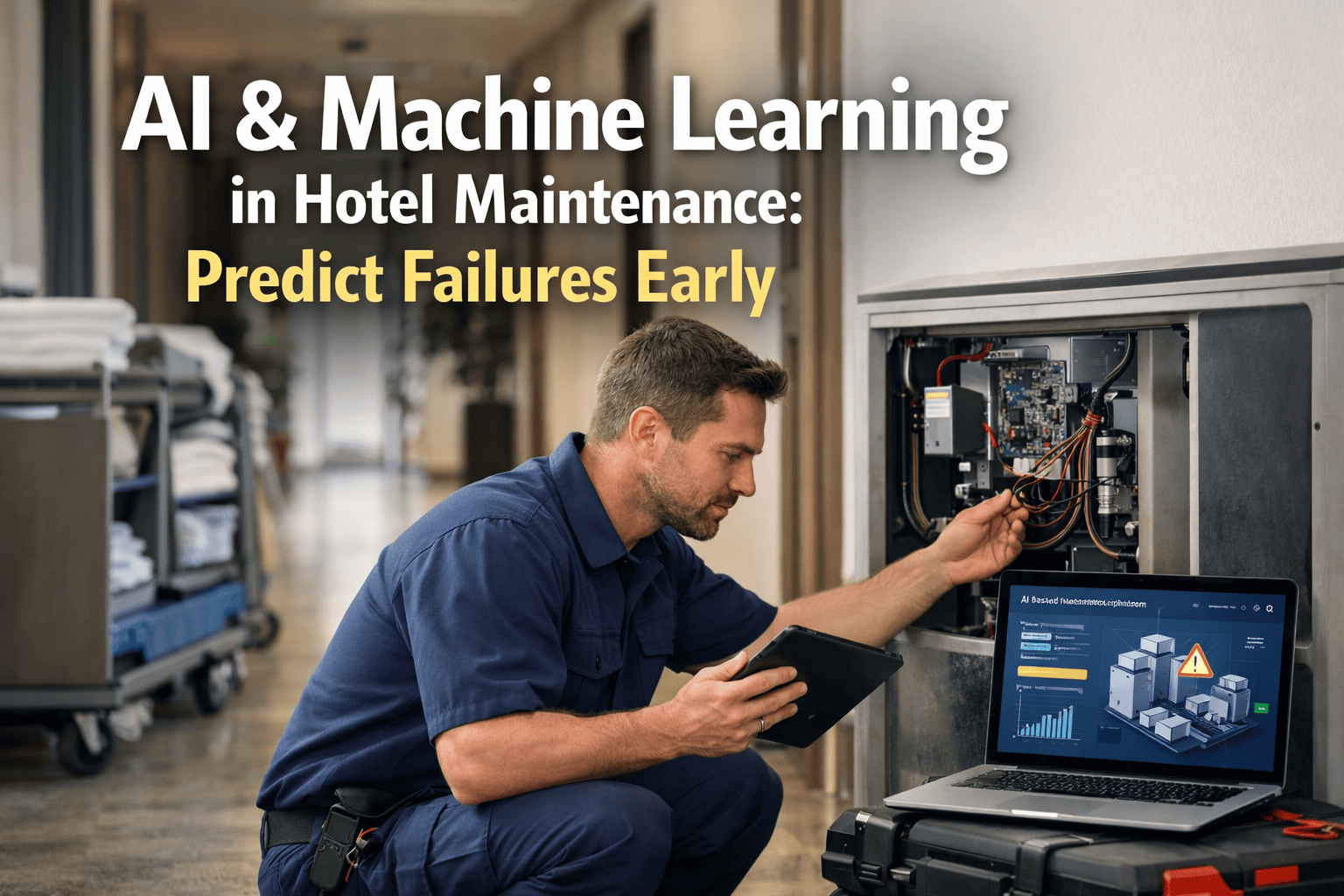
The dinner rush was 30 minutes away when the walk-in cooler alarm finally triggered. By then, 400 pounds of proteins had been sitting at 52°F for six hours. The compressor had been struggling for three weeks—running longer cycles, pulling higher amps, making a subtle grinding noise that nobody documented. Total loss: $8,200 in spoiled inventory, plus $3,400 for emergency compressor replacement, plus a health inspection citation two days later when the inspector found no maintenance records. The restaurant's insurance claim was denied: "preventable loss due to lack of documented maintenance." An AI monitoring system would have flagged the compressor anomaly 18 days earlier—when the repair would have cost $340.
Of commercial kitchen equipment failures show detectable warning signs 2-6 weeks before breakdown occurs
Average revenue loss during peak service when critical kitchen equipment fails unexpectedly
Emergency repairs cost 3-5 times more than planned maintenance—plus inventory loss and service disruption
What AI Detection Changes
Traditional maintenance waits for failure. AI-powered predictive maintenance identifies the subtle patterns—temperature drift, vibration changes, power consumption anomalies—that signal problems weeks before they cause shutdowns. The difference isn't just cost savings; it's the difference between a scheduled Tuesday morning repair and a Saturday night emergency during a sold-out Valentine's dinner service.
Predictive maintenance powered by artificial intelligence transforms how commercial kitchens protect their most critical assets. Instead of calendar-based inspections that miss developing problems, AI continuously monitors equipment behavior, learning normal patterns and flagging deviations that human observation would never catch. When kitchen operators implement AI-powered equipment monitoring, they're not just preventing breakdowns—they're building the operational intelligence that turns maintenance from a cost center into a competitive advantage.
How AI Detects Kitchen Equipment Issues Before They Become Failures
AI-powered predictive maintenance works by analyzing streams of equipment data—temperature, vibration, power consumption, cycle times—and comparing current behavior against established baselines. Machine learning algorithms identify patterns that precede failures, often detecting problems 2-6 weeks before breakdown. This isn't science fiction; it's the same technology that's been protecting industrial manufacturing for a decade, now accessible for commercial kitchen operations.
AI Catches Issues Human Inspection Misses
Machine learning models achieve 91% accuracy in predicting equipment failures 2+ weeks in advance, compared to just 23% detection rate from traditional calendar-based maintenance inspections.
2-6 wks
Average advance warning time before equipment failure occurs
60%
Reduction in unplanned equipment downtime after AI implementation
40%
Lower overall maintenance costs vs. reactive repair approach
24/7
continuous equipment monitoring
500+
data points analyzed per device daily
30 sec
alert delivery after anomaly detection
Equipment Categories: What AI Monitors and How It Detects Problems
Different kitchen equipment fails in different ways—and AI learns the specific failure signatures for each asset type. Refrigeration systems show temperature drift and compressor strain patterns. Cooking equipment exhibits heating element degradation and thermostat drift. Ventilation systems reveal motor bearing wear through vibration analysis. When your team can see how AI monitoring works on your equipment, the potential for preventing failures becomes immediately clear.
Compressor amps
Temperature variance
Cycle times
Defrost patterns
AI Detects: Refrigerant leaks, compressor wear, fan motor degradation, thermostat drift, door seal failures
3-4 weeks typical advance warning
Heating element draw
Preheat times
Temperature accuracy
Ignition cycles
AI Detects: Element degradation, gas valve issues, thermostat calibration drift, igniter wear, burner blockages
2-3 weeks typical advance warning
Water temperature
Pump pressure
Cycle duration
Chemical dosing
AI Detects: Heating element failure, pump wear, spray arm clogs, rinse aid issues, drain problems
2-4 weeks typical advance warning
Motor vibration
Airflow velocity
Belt tension
Filter pressure
AI Detects: Bearing wear, belt degradation, grease buildup, motor overload, ductwork restrictions
4-6 weeks typical advance warning
See What Your Equipment Is Trying to Tell You
AI-powered monitoring turns silent equipment struggles into actionable maintenance alerts. Find out what predictive analytics would detect in your kitchen.
The AI Detection Process: From Sensor Data to Work Order
Understanding how AI transforms raw equipment data into maintenance intelligence helps kitchen operators evaluate and implement predictive systems. The process is automated end-to-end, requiring minimal staff intervention while maximizing detection accuracy and response speed.
1
Continuous Data Collection
IoT sensors capture temperature, vibration, power draw, and cycle data every 30 seconds
2
Pattern Analysis
Machine learning compares current behavior against baseline and historical failure patterns
3
Anomaly Detection
AI identifies deviations that match known failure signatures with confidence scoring
4
Alert Generation
System sends prioritized notifications with failure probability and recommended action
5
Auto Work Order
CMMS automatically creates maintenance ticket with diagnostic data and parts prediction
Traditional vs. AI-Powered Maintenance: The Operational Difference
The shift from reactive or calendar-based maintenance to AI-powered prediction changes everything about how kitchens protect their equipment investments. Traditional approaches catch problems after they cause symptoms; AI catches them while they're still invisible to human observation. The U.S. Department of Energy confirms that predictive maintenance delivers 40% cost savings over reactive approaches. Properties ready to see the difference can create a free account and start monitoring immediately.
Traditional Maintenance
Problem detection:
After failure
Service disruption:
High
Repair scheduling:
Emergency calls
AI Predictive Maintenance
Problem detection:
Weeks early
Service disruption:
Near zero
Repair scheduling:
Planned windows
91%
failure prediction accuracy
60%
reduction in unplanned downtime
40%
lower total maintenance costs
Expert Perspective: What AI Detection Really Means for Kitchen Operations
"The kitchens that implement AI monitoring aren't just reducing repair costs—they're fundamentally changing how they operate. When a chef knows their reach-in freezer has three weeks before the compressor needs attention, they plan around it. They order inventory differently. They schedule the repair for Tuesday morning instead of losing Saturday night service. That predictability transforms kitchen operations from crisis management to actual management."
— Commercial Kitchen Consultant, 200+ installations
Failure Pattern Libraries
AI systems learn from thousands of equipment failures across the industry, recognizing patterns specific to each make and model.
Continuous Learning
The system improves over time, learning your kitchen's specific usage patterns and environmental factors that affect equipment.
Actionable Intelligence
Alerts include specific diagnostic information and recommended actions—not just "check freezer" but "compressor showing early-stage bearing wear."
The real value of AI-powered predictive maintenance isn't the technology itself—it's the operational confidence it creates. Properties that schedule a walkthrough of AI monitoring capabilities discover that preventing one major equipment failure during peak season pays for years of monitoring. It's not about replacing human expertise; it's about giving your team the early warning system that makes their expertise more effective.
Implementation Requirements: What AI Monitoring Needs to Work
AI predictive maintenance isn't magic—it requires specific technical foundations to deliver accurate predictions. Understanding these requirements helps kitchen operators evaluate whether their equipment and infrastructure can support AI monitoring, and what investments might be needed.
| Requirement |
Purpose |
Options |
Typical Investment |
| IoT Sensors |
Capture equipment operating data (temp, vibration, power) |
Wireless sensors, smart plugs, integrated equipment sensors |
$50-200 per monitored asset |
| Connectivity |
Transmit data from sensors to AI platform |
WiFi, cellular, LoRaWAN for large facilities |
Existing infrastructure or $100-500 gateway |
| Cloud Platform |
Process data and run AI algorithms |
SaaS subscription, no on-site hardware needed |
$50-200/month depending on asset count |
| CMMS Integration |
Convert AI alerts into work orders automatically |
API integration or native platform features |
Often included in platform subscription |
| Baseline Period |
AI learns normal equipment behavior patterns |
2-4 weeks of operation data collection |
Time investment, no additional cost |
Swipe to see full table
Most commercial kitchens can implement AI monitoring on critical equipment for $500-2,000 initial investment plus monthly subscription—typically recovered within 3 months through prevented failures.
Stop Waiting for Equipment to Fail
Oxmaint's AI-powered predictive maintenance gives commercial kitchens weeks of advance warning before equipment failures. Protect your service, protect your inventory, protect your reputation.
Frequently Asked Questions
How accurate is AI at predicting kitchen equipment failures?
Modern AI predictive maintenance systems achieve 85-95% accuracy in detecting equipment problems 2-6 weeks before failure occurs. This compares to approximately 23% detection rate from traditional calendar-based maintenance inspections. The accuracy improves over time as the AI learns your specific equipment behavior patterns and operating environment. However, accuracy depends on data quality—proper sensor placement and continuous monitoring are essential for reliable predictions.
What kitchen equipment benefits most from AI predictive maintenance?
Refrigeration systems (walk-ins, reach-ins, freezers) deliver the highest ROI for AI monitoring because failures cause immediate inventory loss on top of repair costs. HVAC and ventilation systems are next due to their critical role in kitchen safety and compliance. Cooking equipment (ovens, fryers, ranges) benefits from monitoring but has more visible failure symptoms that staff may catch. Dishwashing systems round out the priority list. Most kitchens start with refrigeration and expand monitoring based on results.
How much does AI predictive maintenance cost for a commercial kitchen?
Initial implementation typically costs $500-2,000 for sensors and gateway equipment, with ongoing cloud platform subscriptions of $50-200/month depending on the number of monitored assets. Many kitchens recover this investment within 2-3 months through a single prevented failure. A walk-in cooler failure that costs $8,000+ (repair plus spoiled inventory) versus a $340 scheduled repair demonstrates the value proposition. Most providers offer ROI calculators based on your specific equipment inventory.
How long does it take for AI to start making accurate predictions?
AI systems require a baseline learning period of 2-4 weeks to understand normal equipment behavior before making reliable predictions. During this period, the system collects operating data and establishes performance baselines. Predictions become more accurate over time as the AI accumulates more data about your specific equipment, usage patterns, and environmental conditions. Industry-wide failure pattern libraries allow some predictions even during the baseline period.
Does AI predictive maintenance replace the need for regular equipment inspections?
AI monitoring complements rather than replaces human inspection. AI excels at detecting subtle performance changes invisible to human observation—temperature drift of 0.5°F, compressor cycle time increasing by 12%, vibration frequency shifts. Human inspection catches physical issues AI can't see: loose door gaskets, visible wear, unusual smells, grease buildup. The most effective maintenance programs combine AI's continuous monitoring with periodic human inspections, creating overlapping layers of protection.
Ready to See AI Predictive Maintenance in Action?
Join thousands of commercial kitchens using Oxmaint to predict equipment failures before they disrupt service. Start protecting your operation today.
.png)