Managing kitchen safety compliance at a single property is challenging enough. Scale that across 15, 50, or 200 locations, and you're facing a compliance landscape where a single missed hood cleaning or expired fire suppression certification at one property can trigger a chain-wide audit nightmare. The 2025 NFPA 96 updates have raised the stakes even higher: monthly hood cleanings are now mandatory for high-volume operations, all fire suppression systems must be UL-300 compliant with no grandfathering, and digital documentation is required for every inspection. For multi-property hospitality chains, the question isn't whether to digitize kitchen compliance—it's how quickly you can implement systems that provide visibility across your entire portfolio before the next health inspector arrives.
The numbers tell a sobering story: restaurant kitchens fail health inspections at a rate of 23% annually, and between 2011-2013, cooking equipment accounted for 63.5% of all restaurant fires nationwide. For chain operators, these aren't isolated incidents—they're brand-threatening events that can cascade across properties through negative publicity, insurance premium spikes, and regulatory scrutiny. Yet the same research shows that properties using IoT-connected monitoring systems resolve compliance issues 72% faster than those relying on manual checks, while digital maintenance logs satisfy 94% of FDA inspection criteria. The gap between compliant chains and struggling ones increasingly comes down to one factor: systematic digital infrastructure.
Transform hospitality audit readiness through predictive maintenance
Traditional kitchen maintenance operates in reactive mode: equipment breaks, service gets disrupted, emergency repairs cost three times the preventive alternative, and documentation—if it exists—lives in binders that no one can find during inspections. For multi-property chains, this reactive approach creates a compliance lottery where each location operates as an independent risk center with no visibility into whether critical maintenance is actually happening across the portfolio.
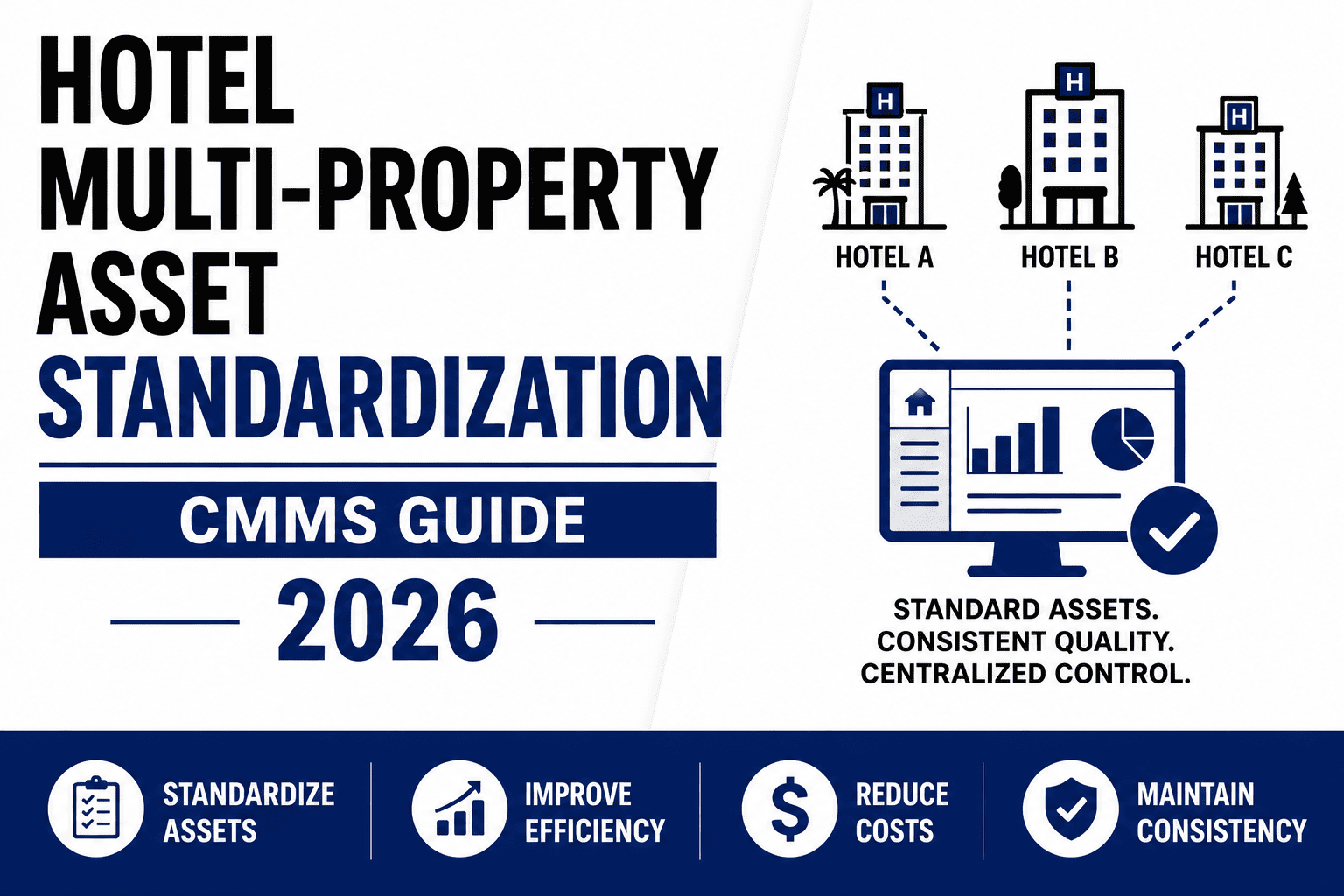
Predictive maintenance powered by CMMS technology inverts this model entirely. Instead of responding to failures, chain operators gain real-time visibility into equipment health across every property. When a walk-in cooler at Property 12 shows temperature fluctuations indicating compressor wear, the system generates a work order before food safety is compromised. When hood cleaning is due at Properties 3, 7, and 19, regional managers see it on a single dashboard rather than relying on individual property managers to remember and report. The shift from reactive to predictive isn't just about preventing breakdowns—it's about transforming compliance from a property-level gamble into a chain-wide certainty.
The operational benefits extend beyond compliance. Properties implementing comprehensive CMMS solutions typically achieve 65-75% reduction in guest-impacting failures while cutting total maintenance spending by 35-50% through preventive care. For kitchen operations specifically, usage-based maintenance schedules supported by predictive alerts reduce labor costs by 19% while extending equipment lifespan by up to 40% compared to reactive repair models. Chain operators exploring this transformation can begin building digital maintenance infrastructure designed specifically for multi-location hospitality portfolios.
Closing the loop on maintenance — a hospitality framework with checklists
Effective kitchen compliance for multi-property chains requires more than good intentions—it demands a systematic framework that standardizes processes across locations while providing the flexibility to address property-specific requirements. The closed-loop maintenance framework ensures that every compliance requirement generates a task, every task generates documentation, and every documentation gap triggers an alert before it becomes a violation.
The framework's power lies in its ability to create accountability without micromanagement. Property managers retain responsibility for their kitchens, but regional and corporate leadership gain visibility into whether that responsibility is being fulfilled. When a hood cleaning is overdue at any property, the system doesn't wait for the next audit to discover it—it alerts progressively from property manager to regional director to VP of operations until the issue is resolved and documented.
Building Your 60-Day Multi-Property Rollout Plan
Implementing digital kitchen compliance across multiple properties requires a phased approach that builds momentum through early wins while establishing the infrastructure for chain-wide standardization. The 60-day rollout plan prioritizes high-risk equipment and high-visibility properties first, creating proof points that accelerate adoption across the portfolio.
The phased approach ensures that lessons learned at pilot properties improve the experience for subsequent rollouts. By week eight, corporate leadership has visibility into compliance status across the entire portfolio, regional managers can identify underperforming properties before inspectors do, and property managers have the tools to maintain audit-ready kitchens without heroic effort. Operations leaders ready to begin this transformation can schedule a consultation with hospitality implementation specialists to customize the rollout for their specific portfolio configuration.
Expert Review: What Chain Operators Say About Digital Compliance
The moment we could see hood cleaning compliance across all 47 properties on a single screen, everything changed. We went from hoping our property managers were staying on top of things to knowing exactly which kitchens needed attention. Our insurance carrier actually reduced our premium after seeing our digital compliance documentation—that alone covered half the system cost in year one.
The consensus among multi-property operators is clear: the complexity of modern kitchen compliance—spanning NFPA fire codes, FDA food safety requirements, local health department standards, and brand-specific protocols—has exceeded what manual systems can reliably manage at scale. Properties that attempt to maintain compliance through spreadsheets and paper logs inevitably develop blind spots that only surface during failed inspections. Digital infrastructure doesn't just improve efficiency; it creates the visibility that transforms kitchen compliance from an ongoing anxiety into a solved problem. Those assessing their current compliance gaps can explore digital compliance assessment tools designed for hospitality portfolio evaluation.
Conclusion: From Compliance Liability to Competitive Advantage
Kitchen equipment safety and compliance in multi-property hospitality chains has evolved beyond what paper-based systems can reliably manage. The 2025 NFPA 96 updates mandating digital documentation, the increasing complexity of health department requirements, and the brand-threatening consequences of compliance failures at any single property have created an environment where systematic digital infrastructure is no longer optional—it's the baseline for responsible chain operation.
The path forward is clear: chains that invest in CMMS platforms gain the visibility to identify and resolve compliance gaps before they become violations, the documentation to pass any audit with confidence, and the operational efficiency that comes from preventing problems rather than reacting to them. The question isn't whether your competitors are making this shift—they are. The question is whether you'll lead the transformation or play catch-up after the next failed inspection forces the issue.
For operations leaders managing hospitality portfolios, the 60-day implementation timeline demonstrates that chain-wide digital compliance is achievable without disrupting ongoing operations. Start with pilot properties, refine the approach based on real-world feedback, and scale systematically to full portfolio coverage. The chains that act now will establish compliance excellence as a competitive advantage, while those that wait will continue managing the anxiety of not knowing what's happening in kitchens across their properties. Those ready to take the first step can access implementation resources and portfolio assessment tools to begin their transformation.