North America Compliance for Lighting Maintenance & Inspections
By Pablo Romero on January 29, 2026
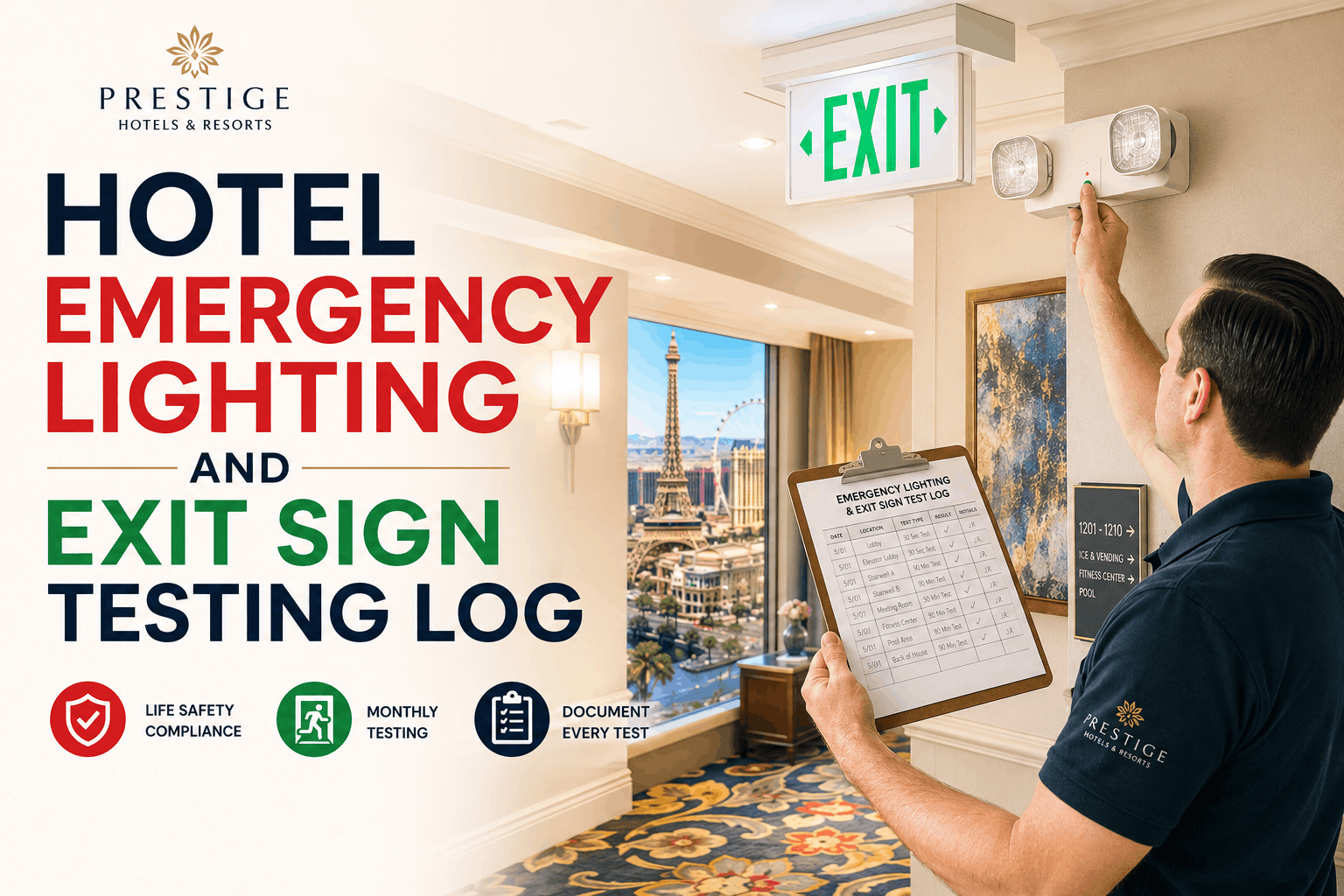
Managing lighting compliance across North American facilities means navigating a complex regulatory landscape where federal, state, provincial land local requirements intersect and where a single missed inspection can cascade into citations, fines, and liability exposure that far exceeds the cost of proper maintenance. The complexity multiplies when you consider that a typical commercial facility manages hundreds of fixtures: emergency egress lighting requiring monthly 30-second tests and annual 90-minute duration tests per NFPA 101, general workspace illumination that must meet OSHA 29 CFR 1926.56 foot-candle minimums, and exterior security lighting governed by local ordinances and insurance requirements. Without a structured compliance framework and documented inspection records, facility teams operate blindly—always one fire marshal visit away from violations that could shut down operations.
The stakes are substantial: OSHA lighting violations can result in penalties up to $15,625 per serious violation, while NFPA emergency lighting failures during fire inspections often trigger immediate occupancy restrictions until corrected. For healthcare facilities where Joint Commission accreditation depends on documented maintenance programs, and for manufacturing plants where inadequate illumination contributes to 30% of workplace slip-and-fall incidents, the difference between compliant and non-compliant lighting isn't just regulatory—it's existential. This guide provides the jurisdictional frameworks and compliance playbooks that transform lighting maintenance from a liability into a documented competitive advantage.
North American Lighting Compliance Framework
Regulatory authorities that govern facility lighting requirements
U.S. Federal
OSHA & Life Safety
OSHA 29 CFR 1910.37 - Exit route illumination
OSHA 29 CFR 1926.56 - Workplace foot-candles
NFPA 101 Life Safety Code adoption
NFPA 70 National Electrical Code
ADA accessibility lighting requirements
State/Provincial
Building & Fire Codes
State fire marshal inspection authority
Building code amendments (IBC adoption)
Energy codes (Title 24, ASHRAE 90.1)
Healthcare facility licensing (state DOH)
Educational facility requirements
Local/Municipal
Permits & Inspections
Fire department inspection schedules
Certificate of occupancy requirements
Exterior lighting ordinances
Dark sky compliance (where applicable)
Business license renewal inspections
Canadian
CSA & Provincial Codes
CSA C22.1 Canadian Electrical Code
National Building Code of Canada
Provincial OH&S regulations
Fire code (provincial adoption)
CSA Z1000 Occupational H&S standards
Hierarchy Rule: Local codes can be more stringent than state/provincial codes, which can exceed federal minimums—always comply with the strictest applicable requirement
NFPA 101 Life Safety Code forms the backbone of emergency lighting compliance across North America. Adopted in some form by all 50 U.S. states and referenced in Canadian provincial codes, NFPA 101 establishes the testing frequencies, documentation requirements, and performance standards that fire marshals enforce during inspections. For facility managers, understanding these requirements isn't optional—it's the difference between passing inspections and receiving citations that can restrict occupancy until corrected.
NFPA 101 Emergency Lighting Testing Requirements
Mandatory inspection frequencies and documentation standards
Monthly Functional Test
30 secMinimum test duration
Verify lamp operationCheck transfer switchConfirm battery charge indicator
Continuous operation testMeasure actual runtimeVerify illumination maintained
Document: Start/end times, individual unit results, corrective actions
Exit Sign Illumination
5 fcMinimum face illumination
Visible from 100 ft distanceLetters min 6" highContrast ratio maintained
Document: Location mapping, visibility verification, lamp status
Egress Path Illumination
1 fcMinimum floor level
Measured at walking surface40:1 max uniformity ratioStairways: 10 fc minimum
Document: Light level readings, uniformity checks, zone coverage
The financial case for NFPA compliance documentation compounds over time. A facility tracking 200 emergency fixtures with automated monthly test scheduling eliminates the citation risk that comes from missed inspections—and more importantly, creates the audit trail that defeats liability claims when incidents occur. When integrated with a CMMS platform, test schedules automatically generate work orders, capture technician signatures and photo evidence, and produce the compliance reports fire marshals expect. Properties ready to implement automated emergency lighting compliance can explore NFPA 101 compliance tracking designed for facility environments.
OSHA Workplace Illumination Standards: The Federal Baseline
OSHA establishes minimum illumination levels that apply to virtually every workplace in the United States. While NFPA governs emergency egress lighting, OSHA 29 CFR 1926.56 and 29 CFR 1910.37 set the floor for general workspace and exit route illumination that must be maintained during normal operations. Understanding these requirements is critical because OSHA inspectors can cite facilities for inadequate lighting contributing to workplace hazards—and those citations carry penalties that escalate rapidly for repeat violations.
OSHA Minimum Illumination Requirements
Federal workplace lighting standards by area type (29 CFR 1926.56)
General Construction Areas
5 fc minimumIES: 10-20 fcBest: 30+ fc
OSHA Minimum: 5 foot-candles
Applies to general work areas, warehouses, corridors, and storage
General Plants & Shops
3 fc
OSHA Minimum
Basic manufacturing and industrial areas
Office Workspaces
30 fc
IES Recommendation
Computer work, reading, detailed tasks
Exit Routes
1 fc
29 CFR 1910.37(b)
Adequate lighting during emergency evacuation
First Aid Stations
30 fc
IES Healthcare Standard
Medical treatment visibility requirements
Detailed Assembly
50-100 fc
IES Manufacturing
Precision work requiring high visual acuity
Build Your Lighting Compliance Dashboard
Oxmaint CMMS delivers automated NFPA test scheduling, OSHA inspection tracking, and digital compliance records that satisfy fire marshals and defeat liability claims—purpose-built for North American regulatory requirements.
State and Provincial Variations: Where Requirements Diverge
While federal OSHA and NFPA standards establish baselines, state and provincial authorities frequently adopt more stringent requirements that supersede federal minimums. California's Title 24 energy code imposes lighting power density limits and control requirements that exceed federal standards. Texas fire marshals may enforce inspection frequencies beyond NFPA minimums for certain occupancy types. Canadian provinces adopt the National Building Code with local amendments that create jurisdiction-specific compliance obligations. For multi-site facility operators, this patchwork of requirements demands systematic tracking to ensure each location meets its specific regulatory obligations.
Key State/Provincial Compliance Variations
Notable jurisdictions with requirements exceeding federal minimums
Emergency Lighting
Energy Compliance
Special Requirements
California
Title 24 ControlsOccupancy sensors mandatory
LPD LimitsStrictest in nation
Daylight HarvestingRequired in many spaces
New York
NYC Building CodeEnhanced egress requirements
Local Law 88Lighting upgrades mandated
StandardNFPA adoption
Texas
NFPA 101 AdoptedStandard requirements
IECC BasedStandard energy code
State Fire MarshalActive enforcement
Ontario (CAN)
OBC Part 3Enhanced fire safety
SB-10Energy efficiency
ESA InspectionsElectrical safety authority
Strict: Exceeds federal requirements significantly—dedicated compliance tracking required
Enhanced: Additional requirements beyond federal baseline—verify local amendments
Standard: Federal/national code adoption with minimal local variation
Designing a Compliance-First Maintenance Program: Implementation Roadmap
Transforming from reactive lighting maintenance to proactive compliance management requires more than installing sensors and scheduling tests—it demands standardized operating procedures (SOPs) that ensure consistency across shifts, facilities, and personnel changes. The 80/20 rule applies here: 80% of compliance excellence comes from disciplined execution of well-designed SOPs covering the 20% of systems that fire marshals actually inspect. For most facilities, this means emergency lighting, exit signs, egress pathway illumination, and high-risk work area lighting.
90-Day Lighting Compliance Implementation
From citation risk to audit-ready documentation
1
Foundation (Days 1-30)
Fixture InventoryCatalog all emergency lights, exit signs, and critical fixtures with QR tags and locations
Jurisdiction MappingIdentify applicable federal, state/provincial, and local requirements for each facility
Compliance Gap AnalysisAudit current documentation against NFPA 101 and OSHA requirements to identify deficiencies
Output: Complete lighting asset register with compliance requirement mapping
2
Standardization (Days 31-60)
SOP DevelopmentCreate standardized inspection checklists matching NFPA 101 monthly and annual test requirements
Schedule ConfigurationProgram automated work orders for monthly 30-second tests and annual 90-minute duration tests
Team TrainingTrain all shifts on mobile inspections, QR scanning, and compliant documentation procedures
Output: Automated compliance calendar with trained inspection teams
3
Optimization (Days 61-90)
Digital DocumentationLaunch timestamped inspection records with photo evidence and technician signatures
Deficiency TrackingImplement automated workflows for issue identification, correction, and verification
Compliance DashboardsConfigure real-time compliance status reporting with fire marshal audit export capability
Output: Fully operational compliance management system with audit-ready documentation
The SOP framework must account for the unique documentation requirements that fire marshals expect. Emergency lighting tests require not just pass/fail recording but technician identification, specific times, individual unit results, and documented corrective actions for failures. Properties implementing this roadmap can schedule compliance consultations to customize the approach for their specific jurisdictional requirements and facility portfolios.
Compliance Risk Scoring: Prioritizing What Fire Marshals Inspect
Not all lighting compliance failures create equal risk. A burned-out lamp in a storage closet creates a maintenance need; a failed exit sign in an assembly occupancy creates an immediate fire marshal citation and potential occupancy restriction. Risk scoring systematically prioritizes compliance attention based on actual inspection consequences—enabling teams to focus limited resources on the lighting systems that most affect regulatory standing and liability exposure.
Lighting Compliance Risk Scoring Matrix
Prioritize inspection attention based on violation consequences
High: Fire marshal focus area, documented correction within 24-48 hours
Medium: Scheduled maintenance priority, correction within standard PM cycles
Low: Opportunistic correction, batch with routine maintenance activities
Risk scoring also guides inspection frequency decisions. Critical-priority fixtures justify more frequent inspections than NFPA minimums—weekly visual checks on main egress exit signs, for example, even when monthly functional tests satisfy code requirements. For facilities managing complex lighting portfolios across multiple jurisdictions, this systematic approach ensures that compliance resources deliver maximum risk reduction per dollar spent. Those seeking to implement risk-based compliance prioritization can access compliance scoring frameworks built into modern CMMS platforms.
Expert Review: The Economics of Compliance-First Maintenance
Industry Perspective
What Facility Managers Discover About Lighting Compliance
We used to treat fire marshal inspections as pop quizzes—hoping we'd pass and scrambling when we didn't. Then we realized that every citation we received cost more to correct under pressure than proper ongoing compliance would have cost. Moving to documented monthly testing didn't just eliminate citations; it gave us the liability protection that our insurance carrier had been demanding. When a slip-and-fall lawsuit alleged inadequate lighting, we had 18 months of timestamped inspection records showing exactly what illumination levels we maintained.
Reactive Approach
Citations average $2,500-$15,000 per violation
No defense against liability claims
Occupancy restrictions during corrections
Emergency contractor premiums
Insurance rate increases
Compliance-First Approach
Zero citations with documented testing
Timestamped records defeat lawsuits
Pass every fire marshal inspection
Planned maintenance at standard rates
Insurance premium reductions available
The transition economics favor decisive action. Properties implementing CMMS with automated NFPA test scheduling and QR-based fixture tracking typically see measurable improvement within 60-90 days: compliance gaps close, documentation becomes audit-ready, and the fire marshal relationship shifts from adversarial inspection to collaborative review of a well-maintained compliance program.
Transform Your Lighting Compliance Operations
Join facilities across North America already using Oxmaint CMMS to automate NFPA testing schedules, track OSHA compliance, and achieve audit-ready documentation that satisfies fire marshals and protects against liability.
Conclusion: From Compliance Risk to Competitive Advantage
North American facilities face lighting compliance complexity that spans multiple regulatory frameworks—federal OSHA standards, NFPA life safety codes, state and provincial building codes, and local fire marshal enforcement priorities. The facilities that thrive transform this complexity into competitive advantage through systematic approaches—compliance frameworks that anticipate rather than react, documentation programs that satisfy inspectors before they ask, and digital systems that enforce consistency across every fixture and inspection cycle.
The path forward requires commitment but delivers measurable returns: elimination of citation costs averaging $2,500-$15,000 per violation, liability protection through timestamped inspection records, and the operational confidence that comes from knowing every fire marshal visit will result in a passing grade. For facility operators ready to elevate their lighting compliance operations, the combination of NFPA-aligned testing schedules, OSHA-compliant illumination programs, jurisdiction-specific requirement tracking, and standardized SOPs provides the framework. The technology to execute exists today in modern CMMS platforms designed for North American regulatory complexity. The only remaining question is timing—and every day without documented compliance represents citation risk and liability exposure that proper systems eliminate. Those ready to begin can access lighting compliance resources to evaluate the opportunity for their specific facility portfolio.
Frequently Asked Questions
What are the NFPA 101 emergency lighting testing requirements?
NFPA 101 Life Safety Code requires monthly 30-second functional tests and annual 90-minute duration tests for all emergency lighting systems. The monthly test verifies that the system activates properly when normal power is interrupted—lamps illuminate, transfer switches operate, and battery charge indicators show adequate capacity. The annual 90-minute test proves that emergency batteries can actually power the lights for the full required duration during an actual emergency. Both tests must be documented with dates, technician identification, pass/fail results for each unit, and corrective actions taken for any failures. Missing these tests is the most common fire marshal citation for lighting compliance.
What are the OSHA minimum lighting requirements for workplaces?
OSHA 29 CFR 1926.56 establishes minimum illumination levels: 5 foot-candles for general construction areas, 3 foot-candles for general plants and shops, and 30 foot-candles for office work. OSHA 29 CFR 1910.37(b) requires adequate lighting along exit routes to permit safe evacuation—generally interpreted as at least 1 foot-candle at floor level. While OSHA sets legal minimums, IES (Illuminating Engineering Society) recommendations typically exceed these levels for optimal safety and productivity. Facilities should also consider that inadequate lighting contributing to workplace injuries creates significant liability exposure beyond just OSHA citation penalties, which can reach $15,625 per serious violation.
How do Canadian lighting compliance requirements differ from U.S. standards?
Canadian lighting compliance is governed by the National Building Code of Canada (NBC), provincial building codes, the Canadian Electrical Code (CSA C22.1), and provincial Occupational Health and Safety regulations. While conceptually similar to U.S. requirements, Canadian standards use metric measurements (lux instead of foot-candles—10.76 lux equals 1 foot-candle). The National Building Code requires emergency lighting capable of 1 lux average at floor level for at least 30 minutes (some provinces extend to 2 hours for high-rise buildings). Provincial variations can be significant—Ontario's Electrical Safety Authority (ESA) conducts active inspections, while other provinces rely more on self-certification. Facilities operating in both countries must track jurisdiction-specific requirements separately.
What documentation do fire marshals expect during lighting compliance inspections?
Fire marshals expect to see: 12 consecutive months of monthly 30-second test records for every emergency light and exit sign (no gaps, no backdating allowed), the most recent annual 90-minute duration test results with start time, end time, and individual unit pass/fail status, documented corrective actions showing when deficiencies were identified and when they were corrected (typically expected within 30 days), and a fixture location map showing all emergency lighting coverage. Properties with gaps in documentation, incomplete records, or missing annual tests face citations regardless of whether the actual equipment functions properly. Digital CMMS platforms that automatically generate timestamped inspection records eliminate the documentation failures that cause most fire marshal citations.
What ROI can facilities expect from implementing lighting compliance management systems?
ROI from lighting compliance management comes from multiple sources: citation avoidance (OSHA penalties up to $15,625 per serious violation, fire marshal citations averaging $2,500-$5,000), liability protection (timestamped inspection records have defeated slip-and-fall lawsuits that could otherwise cost $50,000-$500,000), insurance premium reductions (many carriers offer 5-15% discounts for documented compliance programs), and operational efficiency (automated scheduling eliminates the labor hours spent manually tracking test dates). Most facilities achieve payback on CMMS compliance investment within 6-12 months, with the first avoided citation often covering several years of system cost. Properties with multiple locations or complex jurisdictional requirements see even faster returns due to the elimination of compliance tracking overhead.