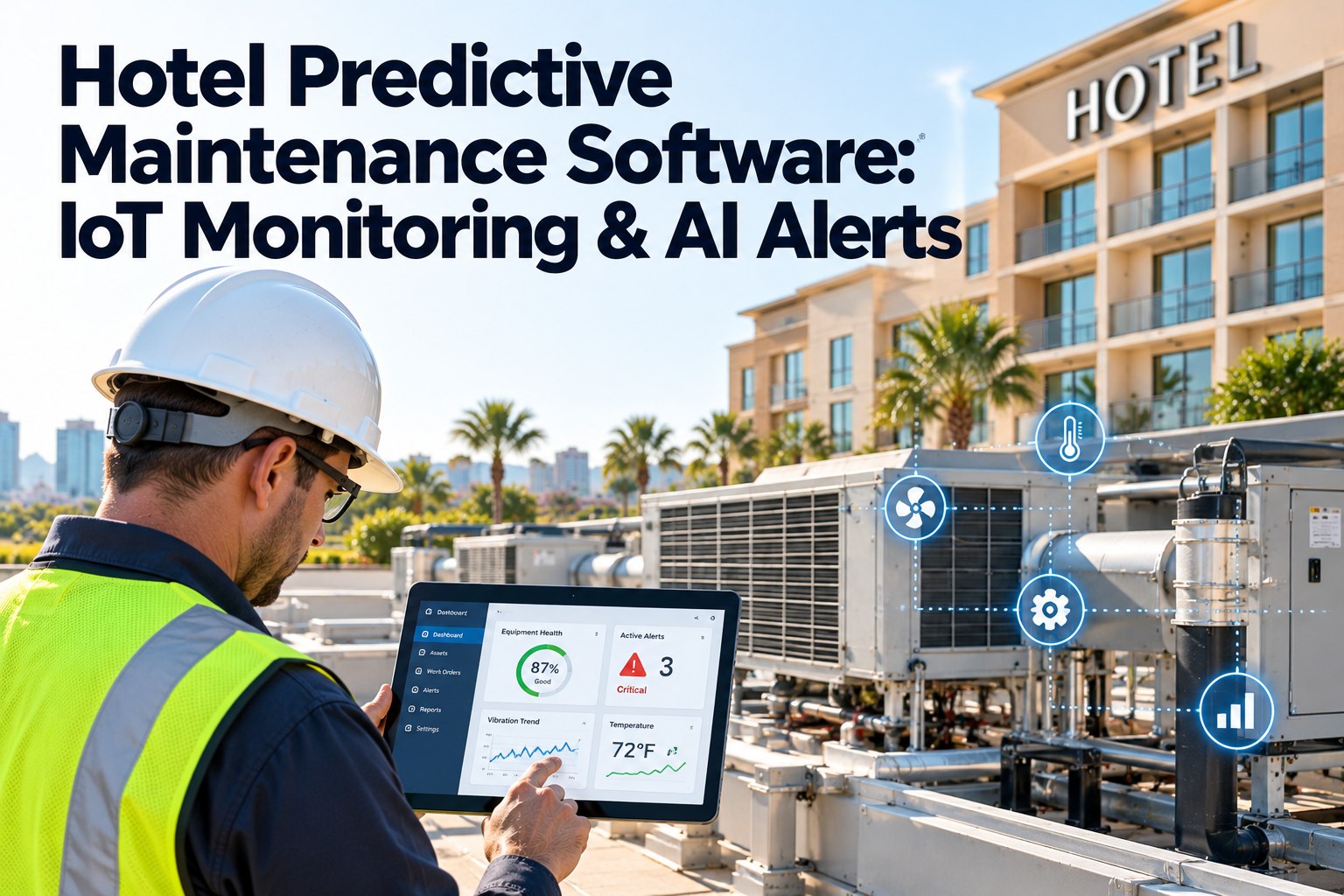
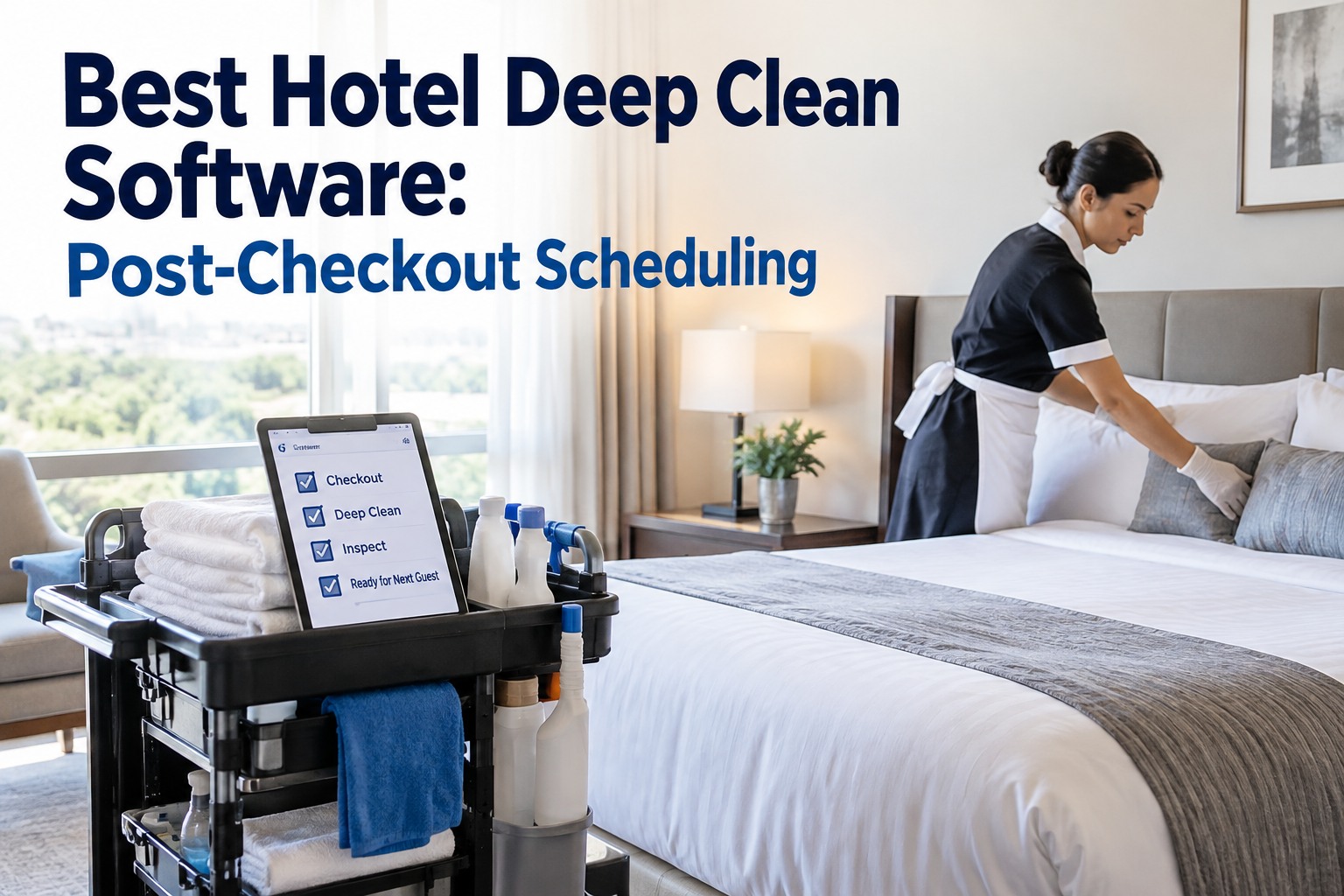
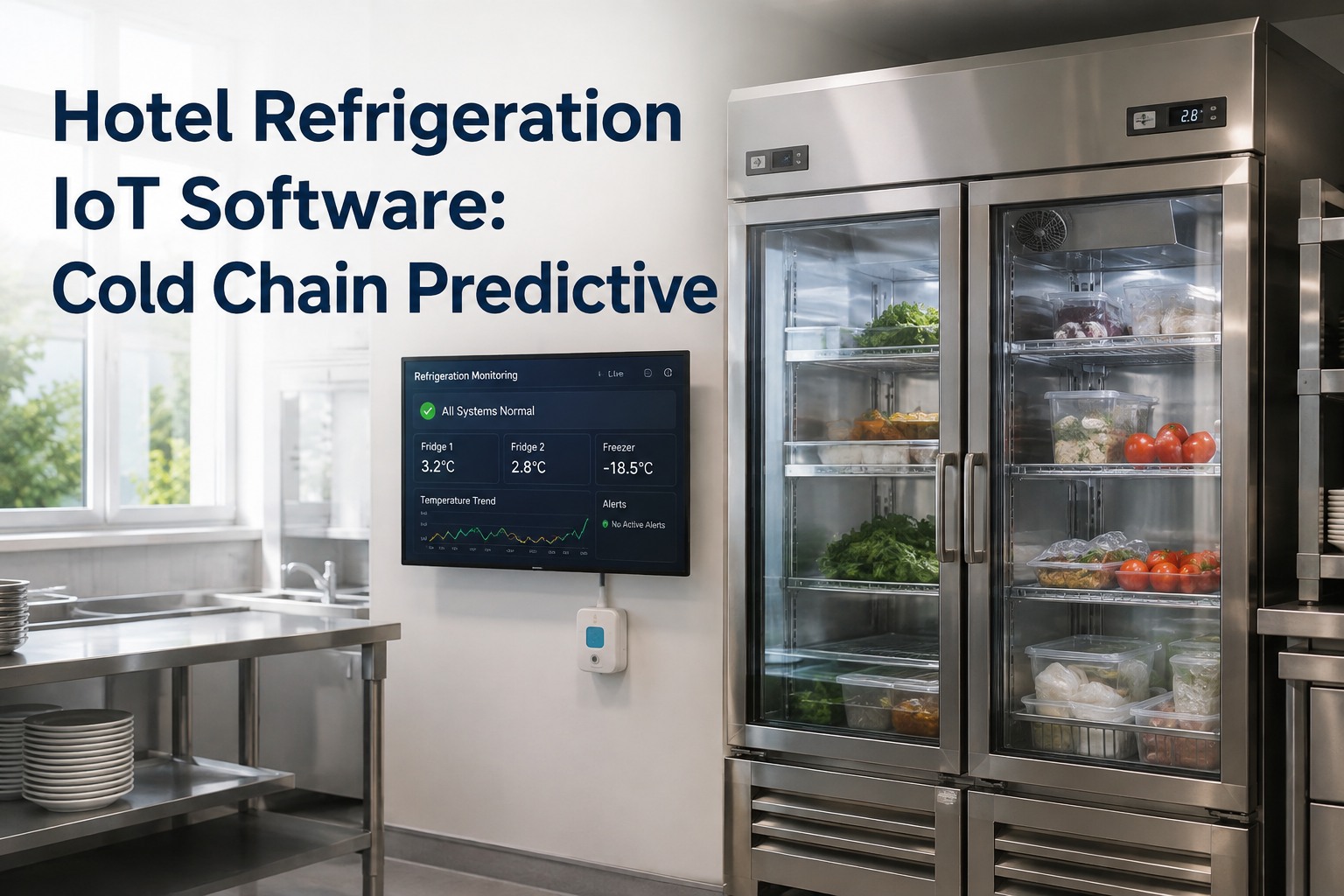
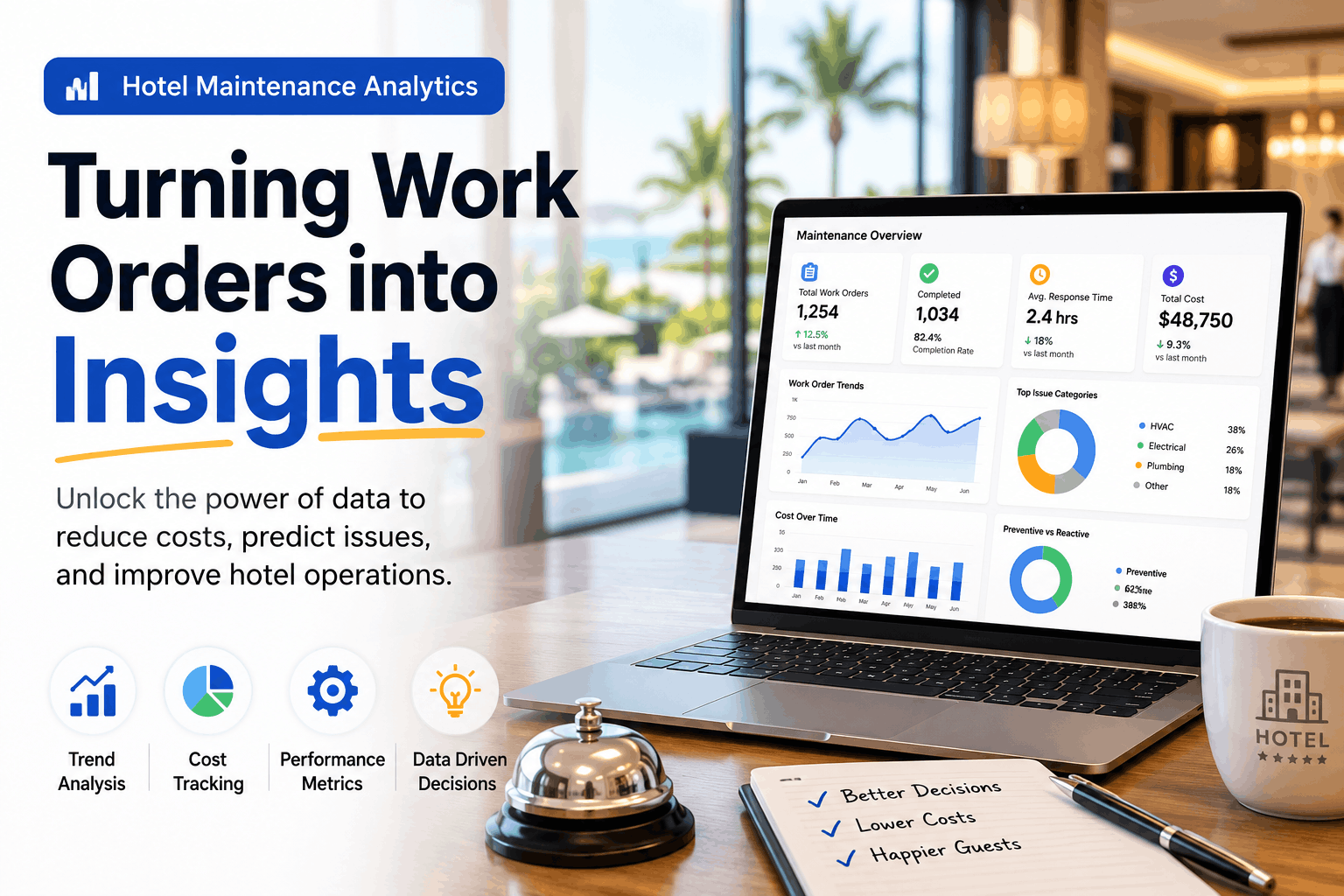
Hotel maintenance has always generated more data than engineering teams can act on. A 300-room full-service property produces tens of thousands of sensor readings per hour across HVAC, elevators, electrical panels, plumbing, and fire systems — far more than any manual review process can analyse in time to prevent a failure. NVIDIA GPU-accelerated AI changes that equation. By processing all sensor streams simultaneously — in real time — Oxmaint's AI engine surfaces failure patterns, anomaly clusters, and energy waste signals that would take a human analyst days to find. The result is not better reports. It is fewer failures, lower energy costs, and a maintenance team that acts on intelligence instead of reacting to breakdowns. Book a demo to see GPU-powered predictive analytics for your hotel's asset fleet.
NVIDIA GPU acceleration in hotel maintenance AI is not a hardware specification — it is the capability that makes real-time multi-sensor anomaly detection possible at full-property scale. Oxmaint's AI engine leverages GPU-parallel processing to analyse every sensor stream simultaneously, correlate anomaly patterns across asset classes, and deliver prioritised fault predictions before failure — all embedded in the work order workflow your engineering team already uses. No separate analytics dashboard. No data export. No waiting for a weekly report.
NVIDIA GPU acceleration means Oxmaint analyses your entire hotel asset fleet simultaneously — surfacing the fault that is developing right now, not the one that failed last week.
What GPU Acceleration Actually Means for Hotel Maintenance
CPU-based analytics process sensor streams sequentially — one asset at a time. A hotel with 80 monitored assets analysed every 15 minutes means each asset gets roughly 11 seconds of processing time per cycle. GPU-parallel processing analyses all 80 assets simultaneously — in under a second. That difference is not academic. It is the gap between catching a compressor fault 6 weeks before failure and catching it 6 minutes before shutdown.
GPU processing cross-correlates vibration, temperature, current draw, and pressure readings across an asset simultaneously — detecting fault patterns that only appear when multiple parameters deviate together. Single-sensor thresholds miss these compound signatures entirely.
Every sensor reading is scored against the asset's learned baseline in real time — not in a nightly batch process. When a chiller's approach temperature begins drifting at 2 AM, Oxmaint scores the anomaly and creates a prioritised work order before the morning shift arrives.
When an AI RCA identifies a root cause on one asset, GPU processing scans the entire fleet for assets exhibiting similar early-stage signatures — preventing the same failure from propagating to sister equipment before the first work order is even closed.
GPU-accelerated analytics identify energy inefficiency signatures — equipment running at degraded efficiency, economiser cycles not activating, setpoint drift — that are invisible in scheduled PM programmes but account for 15–25% of wasted hotel energy spend.
NVIDIA Jetson Edge AI — On-Property Processing for Low-Latency Detection
For hotel properties requiring on-premise data processing — either for data sovereignty, low-latency requirements, or network reliability — Oxmaint integrates with NVIDIA Jetson edge AI devices deployed at the plant room level.
NVIDIA Jetson modules installed in the plant room process local sensor data at the edge — performing anomaly scoring without relying on cloud connectivity. Critical fault alerts are generated locally and synchronised to Oxmaint's central platform when connectivity is available. For resort properties with unreliable network infrastructure, edge processing ensures fault detection continues regardless of connectivity status.
On-property NVIDIA Jetson for data sovereignty and low latency, or cloud GPU processing for full-fleet analytics — Oxmaint integrates both without requiring you to choose one architecture over the other.
Oxmaint vs Industry Platforms — AI Analytics Capability
Most hotel CMMS platforms offer threshold alerts — a single sensor value crossing a fixed limit. Oxmaint's GPU-accelerated AI correlates multi-sensor patterns, learns asset-specific baselines, and delivers compound anomaly detection that threshold systems cannot replicate.
| Capability | Oxmaint | MaintainX | UpKeep | Fiix | Limble | IBM Maximo | Hippo CMMS |
|---|---|---|---|---|---|---|---|
| GPU-accelerated multi-sensor anomaly detection | Yes | No | No | No | No | APM add-on | No |
| NVIDIA Jetson edge AI integration | Yes | No | No | No | No | No | No |
| Real-time anomaly scoring (not nightly batch) | Yes | No | No | Limited | No | Add-on | No |
| Asset-specific learned baselines (not fixed thresholds) | Yes | No | No | No | No | Custom build | No |
| Fleet-wide pattern alert from single RCA finding | Yes | No | No | No | No | APM licence | No |
| Energy waste detection from sensor analytics | Yes | No | No | No | No | Custom config | No |
| Automated predictive work order from AI finding | Yes | No | No | CAPA only | No | Custom build | No |
Data Security and AI Governance
All sensor data and AI analysis records encrypted at every storage and transmission layer. No hotel operational data accessible in plaintext.
GPU AI analysis runs within your dedicated Oxmaint instance. No hotel sensor or operational data is transmitted to shared AI training datasets without explicit written consent.
Technicians, engineers, property managers, and corporate FM directors each access only the data their role requires. AI recommendation approval and PM changes require elevated authorisation.
Every AI recommendation, work order approval, and corrective action closure is timestamped and logged — meeting ISO 45001, OSHA, and OSHAD-SF evidence requirements for regulatory submissions.
Frequently Asked Questions
Continue Reading
Connected resources in the hotel predictive maintenance and hospitality AI cluster
GPU-Powered Intelligence. Hotel-Scale Fault Detection. Live in 5 Weeks.
Oxmaint's NVIDIA GPU-accelerated AI analyses every sensor stream across your asset fleet in real time — surfacing fault patterns, energy waste signals, and fleet-wide risk alerts before they become emergency work orders.