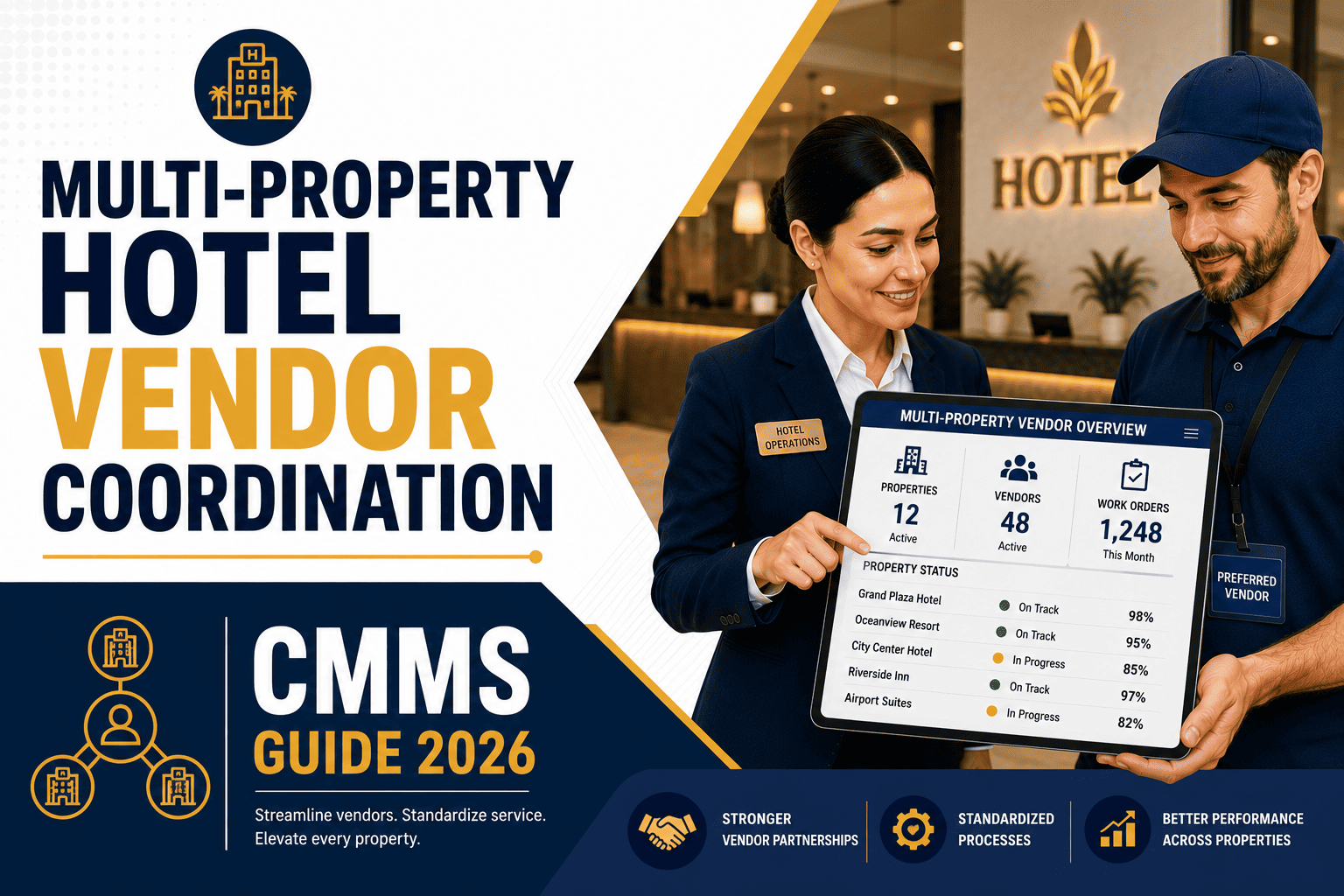
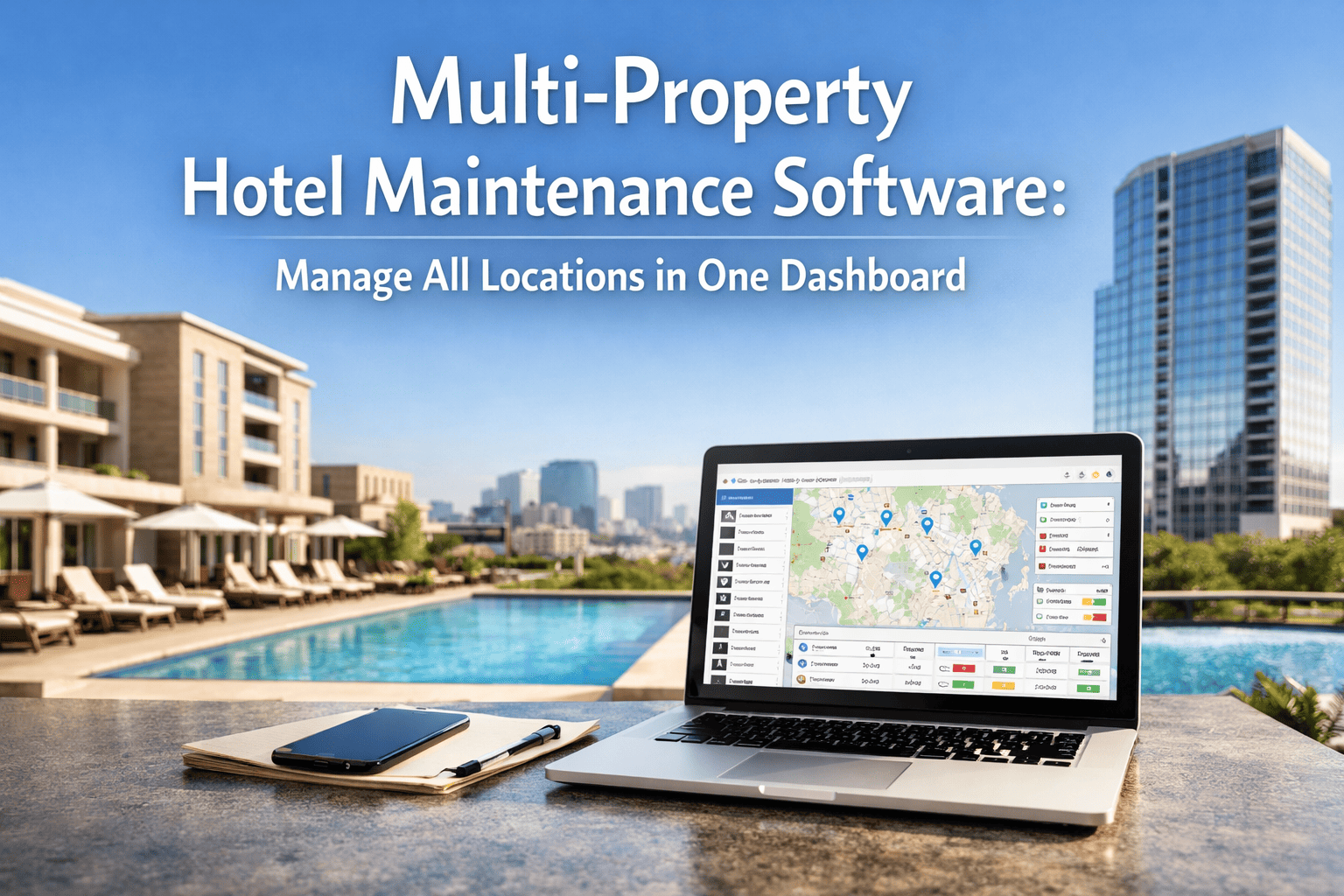
Managing vendors across a portfolio of hotels is like conducting an orchestra where every musician is in a different city—and nobody shares the same sheet music. For regional directors overseeing 15, 50, or 200 properties, the reality is painfully familiar: HVAC contractors who excel at your Miami resort deliver inconsistent service at your Nashville property. Elevator maintenance vendors who respond in hours at flagship locations take days at budget-tier sites. And when audit season arrives, you discover that compliance documentation exists in seventeen different formats across nine property management systems. The hospitality industry generates billions in maintenance spend annually, yet most multi-property operators lack visibility into whether that spending delivers consistent value across their portfolio. The integration of centralized vendor management with robust data governance transforms this chaos into competitive advantage—properties that standardize contractor oversight and maintenance documentation report guest complaint reductions exceeding 50% while cutting vendor costs by 15-25%. This guide delivers the actionable framework for building that standardization into your multi-property operations.
The Data Silo Problem: Why Multi-Property Chains Struggle with Vendor Visibility
Hotel groups face a unique challenge that single-property operators never encounter: operational data fragmented across dozens of systems, locations, and management structures. When each property operates independently—with different PMS platforms, different vendor relationships, and different documentation standards—corporate leadership makes decisions based on incomplete information. Industry research indicates that hotel chains without centralized data management experience 30-50% higher maintenance costs than properties with unified oversight.
The financial impact of fragmented vendor management compounds across property count. A 50-property portfolio paying even 5% more than necessary due to inconsistent contract terms loses hundreds of thousands annually—money that could fund capital improvements or staff development. More critically, inconsistent service delivery creates brand reputation risk when guests experience dramatically different maintenance responsiveness depending on which property they visit.
Strengthen Hospitality Response Time Using Mobile Inspections
The difference between a satisfied guest and a scathing TripAdvisor review often comes down to minutes. Industry benchmarks suggest that maintenance response times directly correlate with guest satisfaction scores—properties responding to guest-reported issues within 15 minutes see satisfaction ratings 20-30% higher than those with hour-plus response windows. Mobile inspection technology eliminates the communication delays that traditionally plagued hospitality maintenance operations. Create your free Oxmaint account to deploy mobile inspections across your properties.
QR code and barcode asset tagging transforms how multi-property chains document equipment conditions across locations. When every HVAC unit, elevator, and kitchen appliance carries a unique identifier linked to its complete maintenance history, technicians access relevant information instantly—regardless of which property they normally serve. This standardization proves especially valuable for regional maintenance teams that float between properties or vendor technicians servicing multiple locations within your portfolio.
Building the Vendor Scorecard: Risk Scoring for Hospitality Contractors
Not every vendor deserves the same level of oversight. A plumber handling routine drain cleanings presents different risk than an electrical contractor working on life-safety systems or an elevator company responsible for equipment carrying hundreds of guests daily. Risk scoring provides the framework for allocating management attention where it generates the greatest return—and for making data-driven decisions about vendor renewals, terminations, and contract negotiations.
| Category | Weight | Key Metrics | Target Threshold |
|---|---|---|---|
| Response Time | 25% | Time from dispatch to on-site arrival | Emergency: 2hr / Standard: 24hr |
| First-Time Fix Rate | 20% | Issues resolved without return visit | 85% minimum |
| Compliance Documentation | 20% | Certifications current, insurance valid, reports submitted | 100% compliance |
| Cost Performance | 15% | Actual vs. quoted, change order frequency | Within 10% of estimate |
| Guest Impact | 10% | Complaints attributed to vendor work | 0 per quarter |
| Safety Record | 10% | Incidents, near-misses, OSHA violations | Zero incidents |
Implementing consistent vendor scoring across a multi-property portfolio requires centralized data collection—which is precisely where most hotel groups fail. When Property A tracks vendor performance in spreadsheets, Property B uses email folders, and Property C relies on the engineering manager's memory, aggregating performance data becomes impossible. A centralized CMMS with vendor management capabilities captures every work order, response time, completion verification, and cost automatically, building the dataset that makes objective vendor evaluation possible. Schedule a demo to see how portfolio-wide vendor tracking works.
Cutting Downtime with Foresight: A Hospitality Lifecycle with KPIs
Reactive maintenance is the silent profit killer in hospitality operations. Every unexpected equipment failure triggers a cascade of costs beyond the repair itself: overtime labor, expedited parts shipping, guest compensation, and the revenue lost from out-of-service rooms or amenities. Industry data suggests that reactive maintenance costs 3-5 times more than equivalent preventive work—and that properties implementing systematic preventive maintenance programs reduce guest-impacting failures by 65-75%. The key to transitioning from reactive chaos to preventive control lies in establishing measurable KPIs that connect maintenance activities to business outcomes.
IoT sensors extend visibility beyond scheduled inspections, providing continuous monitoring that catches problems before they become failures. Vibration sensors on compressors detect bearing wear 2-4 weeks before failure. Temperature sensors on supply air identify efficiency degradation. Differential pressure monitors flag filter conditions that impact indoor air quality. When sensor data feeds directly into CMMS platforms, preventive maintenance scheduling becomes dynamic rather than calendar-based—replacing components based on actual condition rather than arbitrary time intervals.
Multi-Site Rollout Strategy: Phased Implementation for Data Governance
Deploying standardized vendor management and data governance across a multi-property portfolio demands careful sequencing. Properties with the most engaged leadership and best existing practices serve as pilot sites where workflows can be refined before broader deployment. Attempting simultaneous implementation across dozens of properties overwhelms training resources, generates inconsistent adoption, and risks creating new data quality problems while solving old ones.
Change management represents the critical success factor that technology-focused implementations often underestimate. Properties invest in CMMS platforms expecting transformation, then achieve only 40-50% utilization because staff default to familiar processes. Organizations allocating 25-35% of implementation effort to training, communication, and adoption support achieve 80-90% sustained system utilization. The technology is the easy part—shifting daily behaviors across hundreds of employees at dozens of properties requires sustained attention. Sign up to access implementation resources and change management templates.
Compliance Logs and Audit Trail Architecture
Regulatory compliance in hospitality extends far beyond health inspections. Brand standards audits evaluate everything from lobby presentation to equipment maintenance records. Insurance underwriters require documentation of preventive maintenance on fire suppression systems, elevators, and commercial kitchen equipment. Data protection regulations like GDPR and CCPA mandate specific handling of guest information that vendors may access during service delivery. A comprehensive audit trail architecture ensures that when inspectors, auditors, or legal counsel request documentation, your team produces complete records within hours rather than days of frantic searching.
Digital compliance logs eliminate the document hunting that traditionally consumed management time during audit preparation. When every maintenance activity captures timestamp, technician identification, photos, and digital signatures automatically, the documentation exists as a byproduct of operations rather than a separate administrative burden. Automated expiration alerts ensure that vendor insurance certificates and technician licenses never lapse unnoticed—a common compliance gap that creates significant liability exposure. Book a compliance walkthrough to see automated audit trail documentation.
Expert Perspective: Industry Data on Centralized Vendor Management
The business case for centralized vendor management across multi-property portfolios rests on documented outcomes rather than theoretical benefits. According to industry research, hotel chains implementing cluster management models—where resources and vendor relationships are shared across properties—achieve operating cost reductions of approximately 6% in major markets. The hospitality technology landscape has evolved to support this centralization: 86% of hoteliers report that their PMS is their biggest operational aid, and the integration of maintenance management within unified platforms eliminates the data silos that previously made cross-property analysis impossible.
The hospitality industry's challenge with data governance stems from its inherently decentralized structure. Hotel chains face unique complexity with multiple property management systems, varying local vendor relationships, and different documentation standards—what industry analysts describe as "data silos" that isolate critical information. Organizations establishing cross-functional data governance teams with clear ownership achieve the consistency that enables meaningful vendor comparison across properties. The investment in standardization delivers returns through both cost reduction and risk mitigation, with industry data indicating that mature analytics programs outperform market averages by 15-30%.
Conclusion
Vendor management and data governance represent the operational infrastructure that separates sophisticated multi-property operators from those perpetually fighting fires. The fragmentation that characterizes most hotel portfolios—inconsistent contracts, scattered documentation, no visibility into comparative vendor performance—creates costs that compound with every property added. Centralized systems that capture work orders, track vendor metrics, and maintain audit-ready compliance records transform that fragmentation into standardization that scales. The 12-week implementation framework outlined here provides the sequencing that maximizes adoption while minimizing disruption: foundation building, pilot refinement, and portfolio expansion. Properties following this structured approach achieve the 80-90% sustained utilization that delivers measurable ROI, while those rushing to deploy technology without adequate change management settle for 40-50% adoption that fails to justify the investment. The integration of mobile inspections, QR-based asset tracking, risk-scored vendor evaluation, and automated compliance documentation creates an operational ecosystem where data flows automatically from field activities to corporate dashboards—enabling the analysis and decision-making that drives continuous improvement. Multi-property hospitality operators ready to escape vendor management chaos and build the data governance infrastructure their portfolios require will find that the technology exists today to achieve tomorrow's operational excellence.