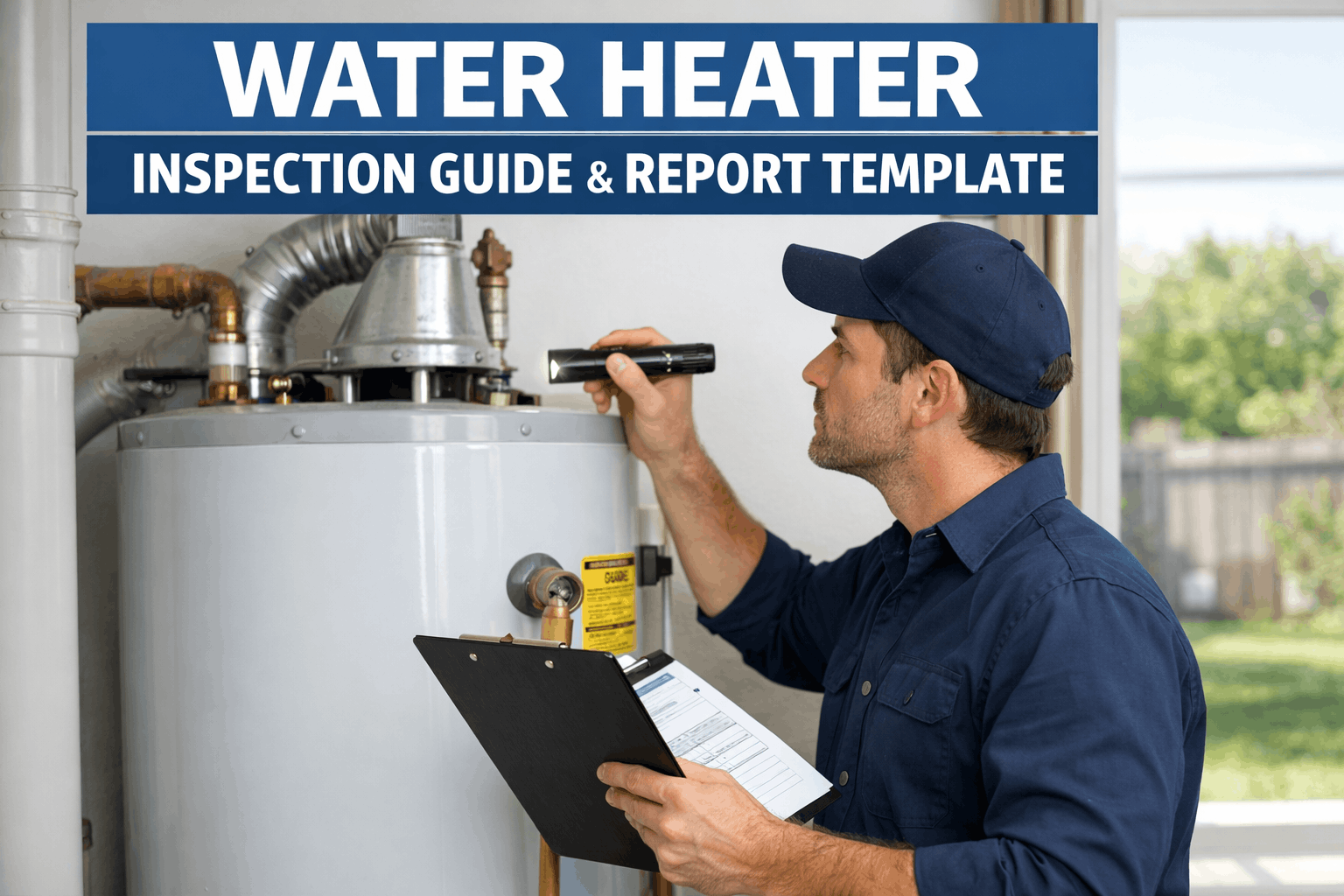
The maintenance crew thought the rumbling was just the pipes settling. Three weeks later, the 80-gallon commercial water heater in the basement mechanical room catastrophically failed—sending scalding water across the equipment room and rupturing the supply line. The resulting flood damaged $180,000 in electrical equipment on the lower level. Investigation revealed the temperature-pressure relief valve had been manually wired shut with coat hanger wire, sediment buildup had reduced tank capacity by 40%, and the anode rod hadn't been replaced in 11 years. The property owner faced $340,000 in damages, a $28,000 OSHA citation for unsafe equipment maintenance, and a workers' compensation claim from the technician who suffered second-degree burns. A quarterly inspection taking 30 minutes per unit—checking the TPR valve, flushing sediment, and verifying thermostat calibration—would have caught every one of these failures months before disaster struck.
A comprehensive water heater inspection checklist transforms reactive emergency repairs into proactive maintenance confidence. When facility teams systematically test pressure relief valves, verify thermostat accuracy, flush sediment buildup, and document maintenance activities, equipment lasts longer, energy costs drop, and catastrophic failures become preventable events. Properties that implement digital water heater inspection tracking report 60% fewer emergency service calls and extend equipment lifespan by 3-5 years on average.
Understanding Water Heater Compliance: The Standards That Matter
Water heater compliance involves multiple overlapping codes and safety standards. OSHA establishes workplace hot water safety requirements. ASME (American Society of Mechanical Engineers) sets pressure vessel standards. Local plumbing codes mandate installation and maintenance requirements. NFPA covers gas-fired unit safety. The International Plumbing Code (IPC) provides comprehensive maintenance guidelines. Understanding these standards ensures your inspection program covers every critical safety requirement.
OSHA and most building codes recommend 120°F maximum for anti-scald protection—water at 140°F causes third-degree burns in 5 seconds
Temperature-Pressure Relief valves must activate at or below 150 psi and 210°F per ASME and UL standards—annual testing is mandatory
Gas water heaters require minimum 6-inch clearance above floor level in garages per IRC/IPC to prevent ignition of flammable vapors
Insurance and Liability Reality
Insurance adjusters scrutinize water heater maintenance records after every claim. A failed TPR valve, corroded anode rod, or excessive sediment buildup with no documented inspection history signals negligence. Claims are routinely reduced or denied when maintenance logs are absent. Digital tracking creates the audit trail that proves due diligence and protects your organization from liability exposure.
Complete Water Heater Inspection Checklist
Effective water heater inspection requires systematic coverage of every critical component—from safety devices to heating elements to structural integrity. This checklist covers safety systems, heating performance, tank condition, plumbing connections, and energy efficiency. Work through each section methodically during inspections. When your team can see how digital checklists streamline water heater compliance, inspection documentation becomes automatic instead of burdensome.
TPR Valve & Discharge
TPR valve manual lift test—verify discharge
Discharge pipe routed to safe location
No caps, plugs, or restrictions on discharge
Discharge pipe terminates within 6" of floor
TPR valve age and rating verification
Gas & Combustion Safety
Gas leak detection at connections
Flue/vent pipe integrity and draft
Combustion air supply adequate
Carbon monoxide levels at vent
Emergency gas shut-off accessible
Why Priority 1:
A failed TPR valve on a water heater can generate explosive force equivalent to 3 lbs of dynamite—proper safety device testing prevents catastrophic tank rupture
Temperature & Controls
Thermostat calibration verified
Output temperature at fixtures (120°F max)
Recovery rate meets demand
Mixing valve operation (if equipped)
High-limit safety switch functional
Heating Elements & Burners
Burner flame pattern (gas units)
Element continuity test (electric units)
Pilot light/igniter operation
Thermocouple/flame sensor condition
Combustion chamber inspection
Why Priority 2:
Sediment-covered heating elements consume 25-40% more energy—regular performance checks cut utility costs and prevent premature equipment failure
Tank & Anode Rod
Anode rod condition—replace if <50%
Sediment flush from drain valve
Tank exterior corrosion check
Drain valve operation and condition
Insulation jacket condition
Plumbing & Connections
Supply and outlet pipe condition
Dielectric union integrity
Expansion tank pressure check
Leak detection at all fittings
Seismic strapping secure (if required)
Why Priority 3:
A depleted anode rod allows tank corrosion to accelerate exponentially—$30 anode replacement prevents $3,000-$8,000 premature tank failure
Document Every Inspection, Prevent Every Failure
See how facility managers are using digital checklists to schedule automated water heater inspections, document TPR valve tests, and eliminate catastrophic equipment failures.
Water Heater Temperature & Pressure Standards by Application
Different facilities and applications require different temperature settings and pressure configurations for safety, efficiency, and regulatory compliance. Understanding the correct standards for your application prevents scalding injuries, Legionella growth, and equipment damage. Properties that track temperature and pressure readings digitally can identify dangerous trends before they become emergencies.
RESIDENTIAL
120°F Maximum
Bathroom fixtures
Kitchen sinks
Laundry connections
General domestic use
Anti-scald compliance
Child safety requirement
CPSC recommends 120°F to prevent scald injuries in children and elderly
COMMERCIAL KITCHEN
140°F–180°F
Dishwashing: 180°F rinse
Food prep: 140°F min
Handwashing: 100-110°F
Sanitizing requirements
Health code compliance
Booster heaters required
FDA Food Code requires 171°F final rinse for commercial dishwashers
HEALTHCARE FACILITIES
110°F–124°F
Patient care areas
Bathing facilities
Hydrotherapy pools
Surgical scrub sinks
Central sterilization
Laundry processing
ASHRAE 188 mandates Legionella management at storage temps above 120°F
INDUSTRIAL/PROCESS
140°F–200°F
Process heating: varies
Boiler feed: 180°F+
CIP cleaning: 160-180°F
Sterilization: 200°F+
HVAC reheat: 140-180°F
Safety showers: 85°F tepid
OSHA requires tepid water (60-100°F) for emergency eyewash and showers
Inspection Frequency Requirements
Different water heater components require different inspection frequencies based on manufacturer recommendations, code requirements, and operational criticality. Safety devices demand the most frequent attention, while structural components follow longer cycles. A disciplined schedule prevents the cascading failures that turn minor issues into major emergencies.
| Component/System |
Monthly |
Quarterly |
Semi-Annual |
Annual |
| TPR Valve |
Visual check for leaks/corrosion |
Manual lift test—verify discharge |
Discharge pipe inspection |
Full replacement evaluation (every 3-5 yrs) |
| Anode Rod |
— |
— |
Visual inspection (pull and check) |
Full condition assessment + replace if needed |
| Sediment/Flush |
Listen for rumbling/popping |
Partial drain valve flush |
Full tank flush (hard water areas) |
Complete flush + heating element inspection |
| Thermostat/Controls |
Output temperature spot-check |
Calibration verification |
High-limit switch test |
Full control system audit |
| Venting/Combustion |
Visual flue check (gas units) |
Draft test + CO reading |
Combustion air supply verification |
Complete vent system inspection + cleaning |
Swipe to see full schedule
TPR valve testing and sediment flushing are the two most critical preventive tasks—skipping these creates immediate safety and equipment exposure
Testing Methods and Tools
Effective water heater inspection requires the right tools and techniques. Temperature gauges verify thermostat accuracy. Pressure gauges confirm safe operating conditions. Combustion analyzers detect dangerous gas conditions. Understanding which tools to use—and how to use them—ensures inspections produce actionable, defensible results.
Paper Logs vs. Digital Inspection Tracking
When a water heater fails and causes property damage or injury, insurance adjusters and attorneys demand maintenance records. They want dates, test results, technician names, and documented follow-up actions—instantly accessible. Paper systems bury this critical evidence in filing cabinets. Digital tracking makes compliance verification and liability protection instantaneous.
Paper-Based Logs
to compile maintenance records
Test scheduling:
Calendar reminders
Missed inspection tracking:
Manual review
Insurance claim readiness:
Days of searching
Digital CMMS
complete maintenance package
Test scheduling:
Auto-generated
Missed inspection tracking:
Auto-escalation
Insurance claim readiness:
Always ready
60%
fewer emergency water heater failures
3-5 yr
extended equipment lifespan
$0
denied claims with proper documentation
Expert Perspective: What Plumbing Inspectors Actually Look For
"In 20 years of inspecting commercial water heaters, the pattern is always the same. The properties that have failures are the ones that treat water heaters as set-it-and-forget-it appliances. I see TPR valves that haven't been tested in years—corroded shut. Anode rods completely dissolved. Sediment so thick the bottom element is buried. Then when the tank fails at 2 AM on a Sunday, everyone acts surprised. The facilities that never have emergencies They have a system. Digital records, quarterly flushes, annual anode checks. It takes 30 minutes per unit per quarter to avoid a $10,000 emergency."
— Master Plumber & Commercial Inspector, 20 years experience
TPR Valve Testing
Inspectors manually lift every TPR valve. A valve that doesn't discharge or reseats improperly is an immediate safety violation requiring same-day correction.
Sediment Evidence
Rumbling tanks, discolored water from drain valves, and reduced hot water output all signal neglected flushing. Inspectors document these as maintenance deficiencies.
Venting Integrity
Disconnected flue pipes, improper slope, and backdrafting are life-safety violations. CO poisoning kills—inspectors take venting deficiencies extremely seriously.
Common Deficiencies: What Inspections Find
Knowing what typically fails helps you focus your inspection program on the highest-impact items. These deficiencies appear repeatedly in plumbing inspection reports, insurance claims, and equipment failure analyses. Train your team to look specifically for these issues, and address them proactively before they escalate into emergencies.
Valve seized/corroded shut (most dangerous)
Continuous weeping or dripping
Discharge pipe capped or plugged
Wrong pressure rating installed
Discharge pipe routed upward
Anode rod completely depleted
Excessive sediment accumulation
Rust-colored hot water output
Tank exterior corrosion/staining
Expansion tank waterlogged
Flue pipe disconnected or corroded
Backdrafting at draft hood
Soot or scorching around burner
Inadequate combustion air supply
Gas smell at connections
No TPR valve test records
Missing sediment flush documentation
No anode rod replacement history
Unrecorded temperature readings
Lost manufacturer warranty records
Team Roles for Water Heater Inspection Program
Effective water heater inspection distributes responsibility across the facilities team, with clear accountability for testing, documentation, and follow-up. This structure ensures critical safety checks never get skipped and maintenance stays proactive year-round.
Program Manager
Facilities Director or Property Manager
Sets inspection schedules and standards
Reviews compliance reports monthly
Manages vendor and contractor relationships
Lead Technician
Licensed Plumber or Senior Maintenance
Performs quarterly TPR valve tests
Conducts sediment flushes and anode checks
Documents findings in CMMS system
Building Staff
Maintenance & Custodial Personnel
Reports leaks, unusual noises, odors
Monthly visual inspections during rounds
Temperature spot-checks at fixtures
Safety Officer
EHS Manager or Risk Manager
Audits inspection documentation quarterly
Coordinates insurance compliance reviews
Tracks regulatory and code changes
Never Experience a Preventable Water Heater Failure Again
Oxmaint gives facility teams automated inspection scheduling, digital checklists with photo documentation, and instant compliance reports. Protect your equipment, protect your occupants, protect your bottom line.
Frequently Asked Questions
How often should water heaters be inspected
Water heaters should receive a comprehensive visual inspection monthly, with TPR valve testing quarterly, sediment flushing quarterly to semi-annually (depending on water hardness), and a full annual inspection including anode rod assessment. Commercial water heaters in high-demand environments may require more frequent inspections. The TPR valve is the single most critical safety device—quarterly manual lift tests ensure it will function during an overpressure event. Most manufacturer warranties require documented regular maintenance to remain valid.
What are the signs a water heater is about to fail
Warning signs include: rumbling, popping, or banging noises (sediment buildup on heating elements), rust-colored hot water (tank corrosion or depleted anode rod), visible rust or corrosion on the tank exterior, water pooling around the base, reduced hot water output or slow recovery time, fluctuating water temperatures, and a rotten egg smell (bacterial growth in the tank). Age is also a major factor—standard tank water heaters typically last 8-12 years. Any combination of these symptoms warrants immediate professional inspection.
What is a TPR valve and why is testing critical
The Temperature-Pressure Relief (TPR) valve is the primary safety device on every water heater. It automatically opens to release water if tank pressure exceeds 150 psi or temperature exceeds 210°F, preventing catastrophic tank rupture. Without a functioning TPR valve, a water heater can build enough pressure to explode with devastating force. Testing involves manually lifting the lever to verify water discharges freely, then confirming the valve reseats properly. Valves that don't discharge, leak continuously, or are corroded must be replaced immediately. Never cap, plug, or restrict a TPR valve discharge pipe under any circumstances.
How often should anode rods be replaced
Anode rods should be inspected annually and replaced when more than 50% depleted—typically every 3-5 years, though this varies significantly based on water chemistry. Hard water, high mineral content, and water softener use can accelerate anode consumption. Magnesium anode rods are standard but corrode faster in hard water; aluminum/zinc rods last longer but may affect water taste. Powered anode rods (titanium with impressed current) never deplete but cost more upfront. A depleted anode rod allows the tank's glass lining to corrode directly, leading to premature tank failure—the $25-50 anode rod protects a $1,000-5,000 water heater.
What documentation is required for water heater compliance
Complete water heater compliance documentation includes: quarterly TPR valve test logs with dates, results, and technician identification; sediment flush records showing frequency and observations; anode rod inspection and replacement history; temperature and pressure readings at scheduled intervals; combustion analysis reports for gas units; manufacturer warranty documentation; and repair or replacement work orders with parts used. Records should be retained for the life of the equipment plus 3-5 years. Digital CMMS systems automatically generate compliant documentation from routine inspection entries, creating the audit trail that insurance adjusters and inspectors require.
Ready to Implement a Complete Water Heater Inspection Program
Join thousands of facility managers using Oxmaint to schedule inspections, document maintenance, and prevent catastrophic water heater failures automatically. Start protecting your buildings today.