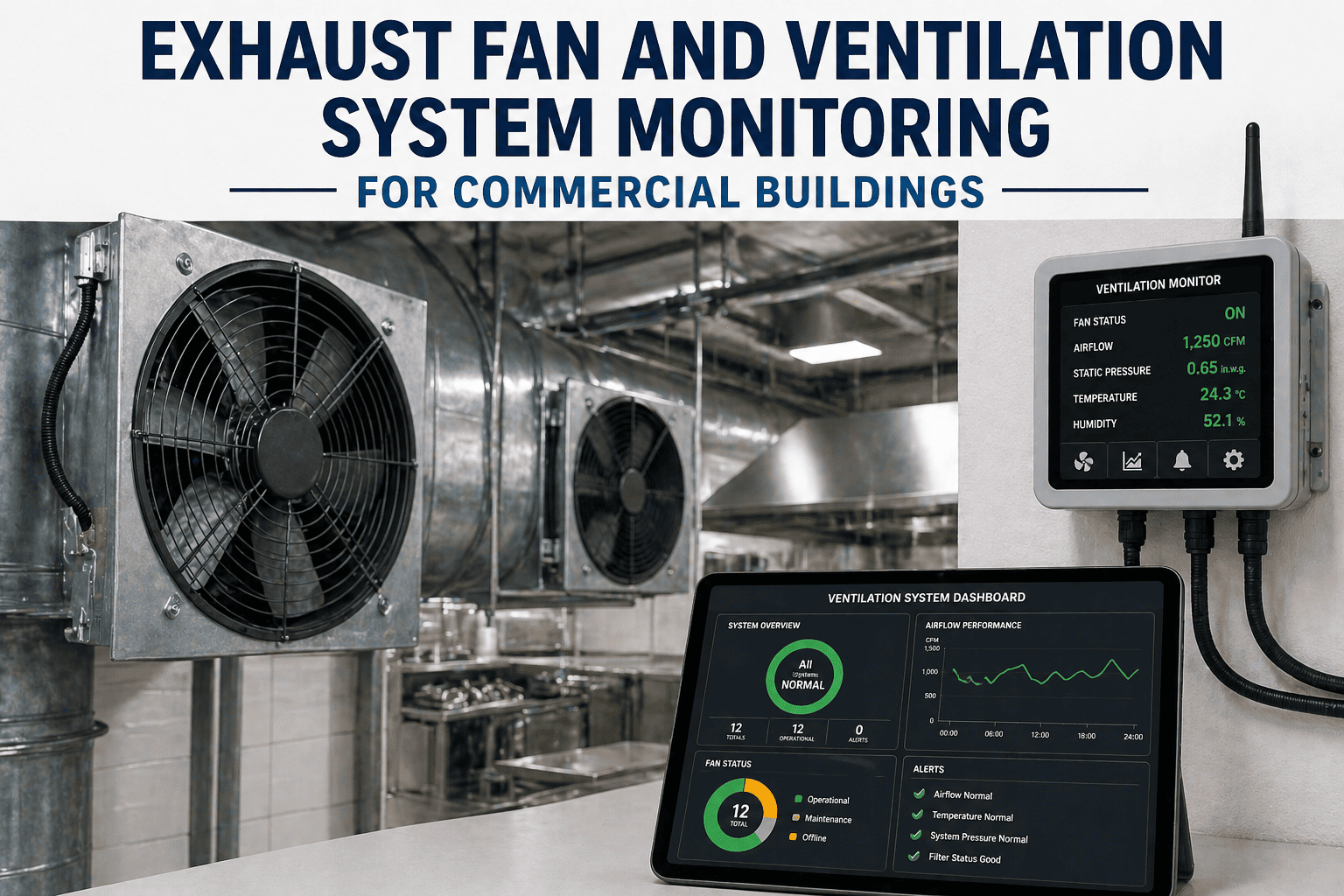
Building exhaust makeup air balance in commercial kitchens is one of the most critical — and most overlooked — factors in facility safety, staff comfort, and kitchen ventilation system performance. When exhaust airflow removes heat, smoke, and odor loads without a properly matched makeup air supply, kitchens develop negative pressure zones that degrade hood capture efficiency, strain HVAC equipment, and create uncomfortable working conditions. Facility teams using Sign Up Free on OxMaint can log ventilation inspection readings, track airflow imbalance observations, and schedule makeup air unit maintenance against kitchen asset records — building the structured condition history that keeps exhaust balance programs on track. Without that structured data foundation, airflow management decisions remain reactive, and Book a Demo to see how OxMaint helps facility teams turn kitchen ventilation data into planned maintenance action.
Why Exhaust and Makeup Air Imbalance Continues to Affect Commercial Kitchens
Most food service facilities track hood and exhaust fan failures as events — they respond when smoke backs up or temperatures spike, but do not capture the airflow drift signals that precede comfort and safety problems. Without structured condition monitoring that connects exhaust fan performance, makeup air unit output, and differential pressure readings from the same asset history, imbalance indicators remain invisible in maintenance logs. Book a Demo to see how OxMaint structures kitchen ventilation data by asset to surface imbalance patterns before they become operational disruptions.
Six Key Factors in Commercial Kitchen Exhaust Makeup Air Balance
Effective exhaust makeup air balance management requires tracking multiple ventilation parameters from the same asset history — not a single periodic check. Teams using Sign Up Free on OxMaint can capture all six inputs in structured inspection checklists tied to kitchen ventilation asset records, creating the trend data needed to detect imbalance before it impacts kitchen operations or food service compliance.
Exhaust Fan Airflow Volume and Static Pressure Tracking
Declining exhaust fan output — from belt wear, grease accumulation, or motor degradation — shifts the exhaust-to-supply ratio before visible symptoms appear. Logging fan performance readings in OxMaint against per-unit baselines detects drift early.
Makeup Air Unit Supply Volume and Tempered Output Verification
Makeup air units that deliver insufficient volume or improperly conditioned air create kitchen pressure deficits and thermal discomfort. Structured inspection records in OxMaint track supply volume and discharge temperature at each service visit.
Building Differential Pressure Monitoring at Kitchen Entry Points
Persistent negative pressure at kitchen doors and service openings signals a makeup air deficit. Recording differential pressure readings in OxMaint at each inspection provides the trend context that a single reading cannot.
Hood Capture Efficiency and Smoke Containment Observation
Incomplete smoke and odor capture at cooking equipment is a direct symptom of exhaust-supply imbalance. Structured observation records in OxMaint convert pass/fail hood checks into a progression log that shows whether capture efficiency is improving or deteriorating.
Grease Filter Loading Rate and Cleaning Interval Correlation
Accelerated grease loading on hood filters indicates that exhaust velocity or capture volume is below design. Tracking filter cleaning frequency in OxMaint alongside airflow readings identifies whether filter loading is driven by imbalance or cooking volume changes.
Seasonal Makeup Air Conditioning Performance Verification
Makeup air units that cannot maintain adequate discharge temperature in winter or summer push kitchen HVAC systems out of balance. Logging seasonal performance checks in OxMaint ensures conditioning capacity issues are caught before they affect kitchen comfort and energy loads.
Kitchen Ventilation Balance Reference by System Type and Application
Different kitchen ventilation configurations and food service applications carry distinct imbalance risks and monitoring priorities. Book a Demo to explore how OxMaint structures inspection records and maintenance scheduling by kitchen system type and facility criticality in a single CMMS platform.
| System Type / Application | Primary Imbalance Signal | Monitoring Frequency | Risk if Unmonitored | OxMaint Lever |
|---|---|---|---|---|
| Type I Hood — Grease-Producing Equipment | Hood capture failure, grease filter loading | Monthly airflow check | High — fire risk and code violation | Inspection checklist + filter log tracking |
| Type II Hood — Heat and Moisture Equipment | Condensation, comfort complaints | Quarterly inspection | Medium — comfort and air quality issues | Observation logs with seasonal trend data |
| Direct-Fired Makeup Air Units | Discharge temperature deviation, BTU output | Monthly performance check | High — energy waste and comfort failure | Temperature readings + PM scheduling in OxMaint |
| Indirect-Fired and Recirculating Units | Heat exchanger fouling, supply volume drop | Bi-monthly inspection | Medium — gradual capacity loss | Condition history with degradation alerts |
| Variable Volume Exhaust Systems | Controls drift, fan speed misalignment | Quarterly controls check | High — balance lost without visible symptoms | Controls inspection records + OxMaint work orders |
How Reactive Kitchen Ventilation Management Compounds Facility Risk
Facilities that address kitchen exhaust and makeup air issues only after visible symptoms appear — smoke spillage, door pressure problems, or staff complaints — miss the window where planned adjustments prevent safety and compliance consequences. Sign Up Free to build structured kitchen ventilation inspection records in OxMaint and replace reactive ventilation management with a condition-based maintenance program.
Building a Kitchen Exhaust Makeup Air Balance Program with OxMaint
Register All Kitchen Ventilation Assets with Design Parameters
Create asset records in OxMaint for each exhaust hood, makeup air unit, and associated fan in the kitchen ventilation system, including design airflow volumes, equipment type, and service zone. This context layer gives each inspection reading meaning against that asset's design specification.
Configure Structured Inspection Checklists for Ventilation Balance Parameters
Build OxMaint inspection checklists that capture exhaust fan output, makeup air supply volume, differential pressure, hood capture observations, and filter condition at each kitchen visit — ensuring structured data collection rather than informal notes.
Set Airflow Baselines and Imbalance Alert Thresholds
Use commissioning data or initial inspection readings in OxMaint to establish per-unit airflow baselines. Configure alert thresholds that trigger a maintenance review when exhaust or supply volumes deviate beyond acceptable balance margins.
Link Imbalance Alerts to Maintenance Work Order Creation
Configure OxMaint to automatically generate a work order when a kitchen ventilation alert fires — routing the issue to the right technician without manual escalation from the inspection team to the maintenance planner.
Review Ventilation Performance Trends Across Seasonal Cycles
Use OxMaint reporting to compare kitchen ventilation performance across seasons and after equipment service events. Seasonal pattern analysis identifies whether makeup air conditioning capacity holds through peak heating and cooling demand periods.
Frequently Asked Questions: Commercial Kitchen Exhaust Makeup Air Balance
What is building exhaust makeup air balance in commercial kitchens?
It is the condition where the volume of air exhausted from a commercial kitchen through hoods and fans is matched by an equal or slightly lower volume of conditioned makeup air supplied into the space — preventing negative pressure, smoke spillage, and comfort problems.
What are the signs that a commercial kitchen has an exhaust and makeup air imbalance?
Common signs include doors that are difficult to open against negative pressure, smoke or odor spillage from hoods, accelerated grease filter loading, staff comfort complaints, and elevated kitchen temperatures during cooking periods.
How does OxMaint support kitchen ventilation balance programs?
OxMaint provides structured inspection checklists, per-asset airflow history, configurable alert thresholds, and automatic work order creation — giving facility teams the CMMS infrastructure to manage kitchen ventilation balance on a condition-based schedule.
How often should commercial kitchen exhaust and makeup air systems be inspected?
High-volume food service kitchens benefit from monthly airflow checks on exhaust hoods and makeup air units. Seasonal conditioning performance should be verified at each major weather transition. OxMaint PM scheduling ties inspection frequency to equipment type and criticality.
What is the difference between exhaust balance monitoring and general HVAC inspection?
General HVAC inspection checks overall system operability. Exhaust balance monitoring captures kitchen-specific parameters — hood capture efficiency, makeup air volume, and building differential pressure — against per-asset baselines to detect ventilation imbalance that a general inspection pass may not identify.