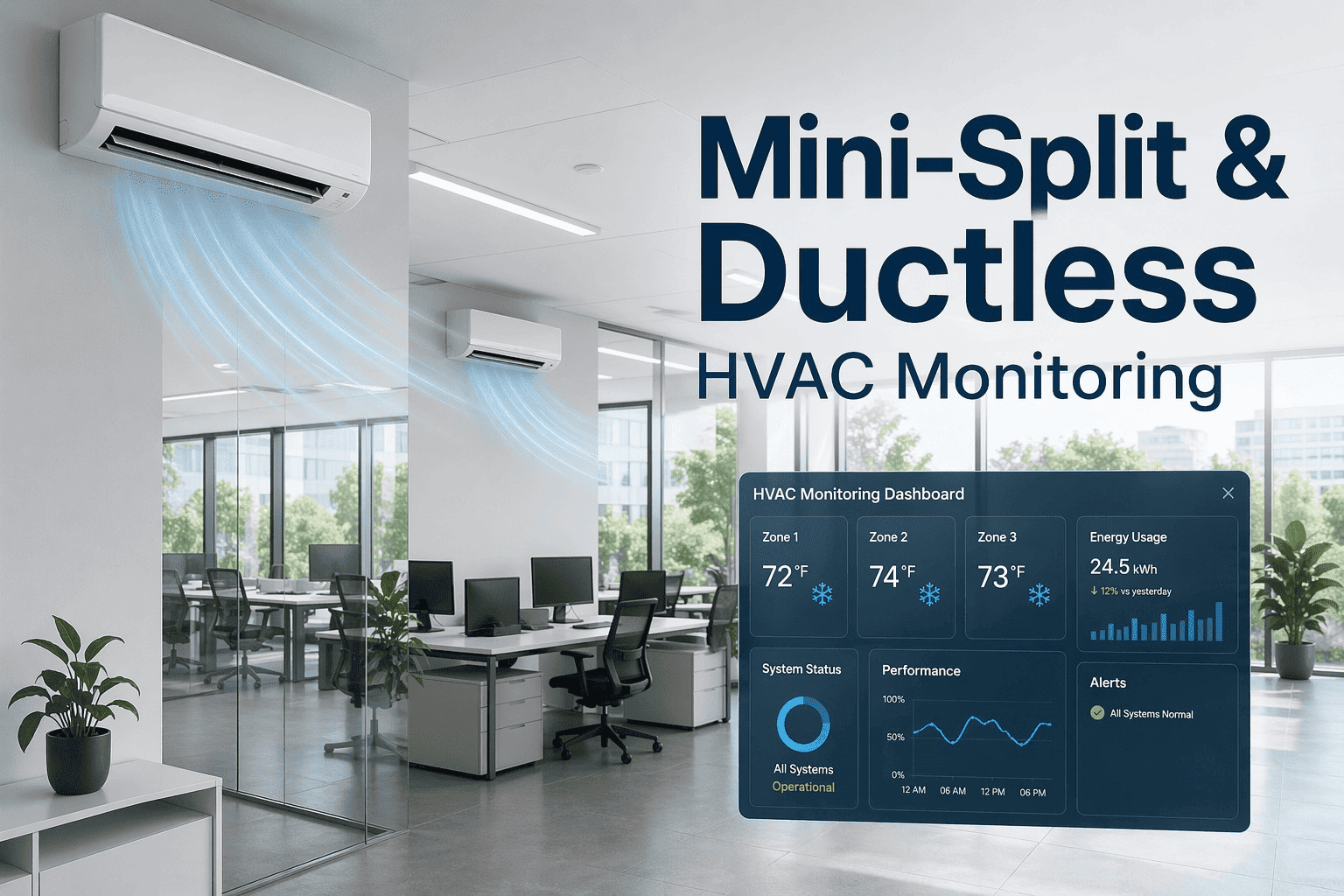
According to , the global ductless HVAC system market is projected to reach $148 billion by 2028, growing at a CAGR of 9.4% as commercial buildings shift away from inefficient centralized systems. However, the same research indicates that 63% of commercial mini-split systems operate with undetected refrigerant leaks or fouled coils—costing building owners an average of $320 per unit annually in excess energy consumption alone. Unlike centralized HVAC with dedicated building management system (BMS) integration, ductless mini-splits are typically installed as standalone units with no centralized monitoring, creating a blind spot where performance degrades silently for months before an indoor comfort complaint reveals the failure. OxMaint's ductless HVAC monitoring module bridges this gap by aggregating data from every mini-split in your portfolio—refrigerant pressures, coil temperatures, filter status, and compressor runtime—into a single dashboard that generates predictive work orders before energy use spikes or cooling capacity drops. Book a demo to see how commercial facility managers are reducing ductless HVAC energy waste by 22–35% within 90 days of deployment.
01
Mini-Split and Ductless HVAC System Monitoring for Commercial Buildings
Predictive analytics · Refrigerant monitoring · Filter tracking · CMMS integration
63%Of commercial ductless units operate with undetected faults
$320Average annual excess energy cost per unit from neglected maintenance
22–35%Energy waste reduction within 90 days of OxMaint deployment
The Ductless HVAC Blind Spot
$148B
Global ductless HVAC market value by 2028
CAGR 9.4% — fastest growing HVAC segment
87%
Of commercial mini-splits lack any form of remote monitoring
Industry survey — building owners 2024
$2,800
Average cost of emergency mini-split compressor replacement vs planned
Unplanned replacement 2.8x higher than planned
Three Ways Ductless HVAC Systems Fail Without Warning
01
Refrigerant Leak — Silent Capacity Loss
A mini-split that is 15% low on refrigerant loses approximately 30% of its cooling capacity while drawing 18% higher amperage. Without pressure monitoring, this condition continues for months, overworking the compressor until failure. A leaking unit typically operates for 4–7 months between initial charge loss and complete compressor failure — during which energy costs accumulate and cooling complaints multiply.
02
Fouled Coils — Invisible Efficiency Drain
Commercial mini-split condenser coils in restaurant kitchens, retail storefronts, and light industrial settings foul 2–3x faster than residential units due to grease, dust, and particulate load. A coil with 50% airflow obstruction causes a 35–40% increase in compressor runtime to maintain setpoint — visible only as a utility bill line item, not as a service alert in any OEM dashboard.
03
Filter Neglect — Airflow Degradation
Mini-split filters in commercial applications require cleaning every 30–60 days depending on occupancy and air quality. Industry data shows 72% of commercial ductless filters are changed or cleaned less than once per 90 days. The result: 12–18% higher fan energy consumption, frozen evaporator coils in humid climates, and shortened equipment life of 2–4 years.
Commercial Mini-Split Monitoring Checklist — What to Track Every Month
01
Refrigerant Pressures — Suction & Discharge
Log both low-side and high-side pressures at standard operating conditions. A suction pressure drop of more than 12% from baseline indicates refrigerant loss requiring immediate leak detection.
Prevents compressor failure
02
Compressor Amp Draw
Measure compressor running amps against nameplate rating. Amps consistently above nameplate by 10–15% indicate electrical or mechanical degradation — often detectable 3–6 months before catastrophic failure.
Extends compressor life
03
Supply and Return Air Temperatures
Calculate delta-T (temperature difference). A properly charged mini-split should show 18–22°F delta under normal load. Delta below 14°F indicates performance degradation — either refrigerant issue or airflow obstruction.
Verifies cooling capacity
04
Filter Pressure Drop & Coil Cleanliness
Measure static pressure across filter media. Replace or clean when pressure drop exceeds 0.2 inches of water. Visually inspect condenser and evaporator coils quarterly — log findings with photos in CMMS.
Restores airflow efficiency
05
Condensate Drain Function
Verify drain line flow during cooling operation. Blocked drains cause water damage claims — a single mini-split condensate overflow in an office or retail space averages $4,200 in interior remediation costs.
Prevents water damage
06
Remote Control & Thermostat Calibration
Test setpoint vs actual room temperature at three locations. Calibration drift of more than 2°F causes unnecessary runtime and occupant comfort complaints — the most common trigger for duress service calls.
Eliminates false complaints
Monitoring Technology Comparison for Ductless HVAC
| Monitoring Method | Data Collected | Installation Cost | Detection Lead Time | Steel Plant Application |
|---|
| OEM Cloud Gateway | Limited to fault codes — no pressure or amp data | $150–300 per unit | Fault code appears at failure | Minimal value for predictive maintenance |
| Thermal Imaging (Periodic) | Coil & compressor surface temperature | $50–100 per scan | Days to weeks | Detects fouled coils and electrical hotspots |
| Wireless Refrigerant Monitor | Suction/discharge pressures, superheat, subcooling | $220–400 per unit | 3–14 days pre-failure | Identifies leaks before compressor damage |
| Power Meter / CT Clamp | Compressor amp draw, runtime patterns | $80–150 per unit | Weeks to months | Detects electrical degradation early |
| OxMaint Integrated Suite | Pressure + amps + delta-T + filter + CMMS work orders | $180–350 per unit + software | 3–21 days pre-failure | Full predictive + corrective workflow |
Source: OxMaint commercial deployment data 2024–2025. Lead times vary by equipment type and operating load.
ROI Impact at a Glance — Ductless HVAC Monitoring
22–35%
Reduction in mini-split energy consumption
OxMaint customer data
$1,240
Average annual savings per monitored unit
Energy + avoided repairs
8–14 mo.
Payback period for monitoring hardware + software
Typical commercial deployment
“The single biggest mistake I see commercial facility managers make with ductless HVAC is treating mini-splits like appliances instead of like mechanical systems. A VRF system with a BMS gets monthly trend reports; a mini-split in the server room or the break room gets nothing until the space is 85 degrees and someone calls a contractor after hours. I’ve reviewed energy data from 40+ commercial buildings with ductless portfolios. The ones that implement monthly pressure and amp logging — even manually — catch 80% of failure modes before they cause an outage. The ones that integrate that logging into their CMMS and automate work orders from alerts cut their ductless HVAC operating cost by 30% or more. OxMaint does exactly that — turning a maintenance blind spot into a managed, measurable asset class.”
— Mark Verzosa, PE, CEM, CMVP · Principal Mechanical Engineer · 18 Years Commercial HVAC Performance Optimization · ASHRAE Certified Building Energy Assessment Professional
Stop letting ductless HVAC systems degrade silently across your portfolio. Start monitoring refrigerant, amps, and airflow today.
Frequently Asked Questions
What is the most common failure mode for commercial mini-split systems?
Refrigerant leak is the most common and most damaging failure mode for ductless HVAC systems in commercial applications. Unlike centralized systems with refrigerant monitoring, mini-splits have no factory pressure sensors. A leak of just 10–15% of total charge causes 25–30% capacity loss and 15–20% higher energy consumption — but the unit will continue running, masking the failure until compressor damage occurs. OxMaint’s wireless pressure monitors detect refrigerant loss at 5–8% deviation from baseline, generating a work order before capacity loss affects occupied spaces.
Sign in to configure refrigerant alerts for your portfolio.How often should commercial mini-split filters be cleaned or replaced?
Filter maintenance frequency depends on occupancy and indoor air quality. For standard office environments: monthly visual inspection, cleaning every 60 days. For retail, restaurant, or light industrial: inspection every 2–3 weeks, cleaning every 30–45 days. For healthcare or high-dust environments: weekly inspection, cleaning every 2–3 weeks. OxMaint tracks filter service intervals by site type and usage-adjusted schedules — not calendar defaults. A filter that loads 30% faster than baseline triggers an inspection work order automatically.
Book a demo to see filter tracking rules.Can OxMaint monitor mini-splits from different manufacturers in one dashboard?
Yes. OxMaint is manufacturer-agnostic by design. The platform aggregates data from Mitsubishi Electric, Fujitsu, Daikin, LG, Carrier, Lennox, and all major ductless brands through a combination of wireless sensors (refrigerant pressure, amp draw, temperature) and direct API integration where OEM cloud gateways exist. All data appears in a single portfolio dashboard — not 14 different OEM apps. The monitoring layer is identical regardless of brand: pressure trends, amp draw patterns, delta-T, and filter status.
Start a free trial to see multi-brand monitoring in action.What is the typical payback period for adding monitoring to existing ductless units?
For a portfolio of 20+ mini-splits, payback typically ranges from 8–14 months based on energy savings alone — excluding avoided emergency repairs. A single avoided compressor failure ($2,000–$4,000 parts and labor) can pay for monitoring hardware across 8–12 units. The calculation improves with unit count: a retail chain with 200 ductless units deployed OxMaint monitoring and achieved $247,000 in documented Year 1 savings (energy + avoided repairs) against a $68,000 hardware+software investment — 3.6x ROI in 12 months.
Book a demo to calculate ROI for your portfolio size.
Ready to eliminate the ductless HVAC blind spot across your commercial portfolio?