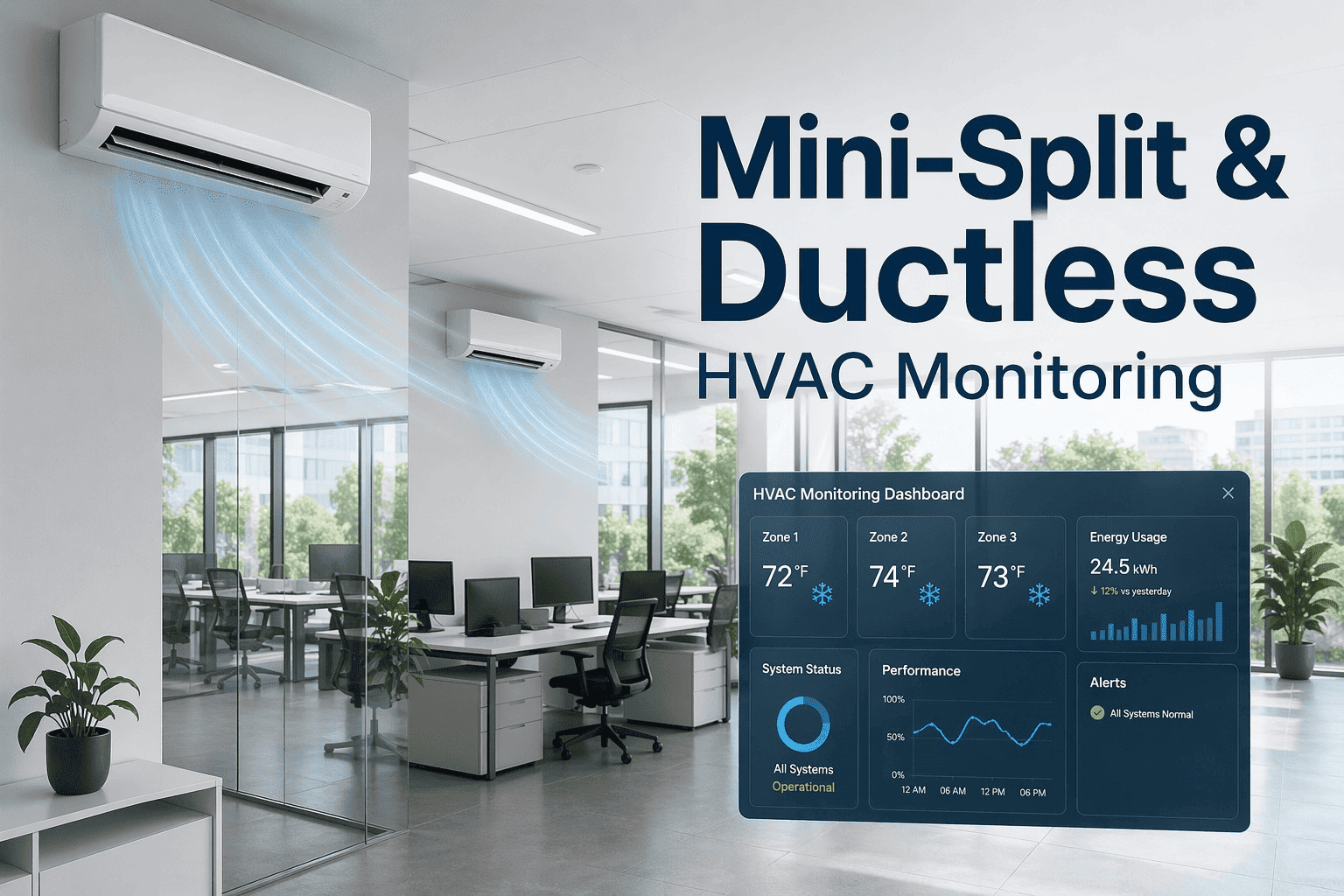
Every commercial building starts losing HVAC performance the moment it's commissioned. Sensors drift. Control sequences get overridden. Setpoints get tweaked by well-meaning technicians. Occupancy patterns shift. Five years in, what was once a finely tuned system is often operating 15 to 30 percent below its designed efficiency — silently inflating your utility bills every single month. Retro-commissioning, powered by real CMMS maintenance data, is how you take it back.
Building Retro-Commissioning: Using CMMS Data to Restore HVAC Performance
When your HVAC system has been running for years, performance drift is inevitable. RCx doesn't replace your equipment — it restores what you already paid for.
Retro-Commissioning Is Not a Renovation
Retro-commissioning (RCx) is a systematic, investigation-driven process that evaluates how an existing building's HVAC and mechanical systems are actually performing — then corrects the gap between current performance and original design intent. It does not require replacing equipment. It requires data, methodology, and discipline.
The term "commissioning" borrows from naval tradition: before a ship sails, it undergoes rigorous trials to verify every system works as designed. RCx applies the same logic to buildings that have already been in service for years, identifying drift, degradation, and control failures that have compounded over time.
Buildings that have never been formally commissioned benefit most. But even well-commissioned buildings drift — occupancy changes, firmware updates, seasonal overrides, and deferred maintenance all leave marks on system performance. Sign up on OxMaint to begin building the maintenance baseline your next RCx project will depend on.
Why Your CMMS Data Is the Foundation of Every RCx Project
Most facility teams treat their CMMS as a work order tracker. In reality, it is the most valuable diagnostic asset you own. Every service record, every PM completion, every fault note logged over years of operation tells a story about how your HVAC systems have performed — and where they have drifted. Book a demo to see how OxMaint structures CMMS data for RCx-ready analysis.
Performance Baseline
Historical PM records establish when equipment last ran at rated efficiency. CMMS data shows the last time filters were changed, coils cleaned, or refrigerant verified — the benchmark your RCx team will measure against.
Failure Pattern Analysis
Recurring work orders on the same asset reveal systemic issues — not just one-off failures. A chiller that generates three service calls per month isn't just aging; it's a candidate for control recalibration or sequence-of-operations review.
Deferred Maintenance Map
Overdue PMs aren't just safety risks — they are documented evidence of where performance has degraded. CMMS deferred maintenance lists become the RCx team's investigation roadmap on day one.
Post-RCx Verification
After corrections are made, CMMS data validates whether performance actually improved. Comparing work order frequency, energy anomaly flags, and PM outcomes before and after RCx provides measurable proof of ROI.
Your CMMS Should Be Working for Your RCx Program
OxMaint centralizes HVAC maintenance history, failure trends, and PM compliance data — giving your commissioning team exactly what they need before they walk in the door.
Three Phases of a Successful Retro-Commissioning Project
A structured RCx engagement follows three distinct phases. Each one depends heavily on data — and the quality of your CMMS records determines how fast and accurately each phase can be completed.
The RCx team reviews all available building documentation — as-built drawings, equipment schedules, BAS logs, and CMMS maintenance records. They conduct a site walkthrough to visually assess HVAC equipment, dampers, sensors, and control panels. Data loggers may be deployed to capture real-time performance against design intent. The output of this phase is a complete picture of how the building is actually operating versus how it was designed to operate.
Using data gathered in Phase 1, engineers identify Energy Conservation Measures (ECMs) — specific corrective actions ranked by cost, impact, and implementation complexity. Common findings include miscalibrated sensors, simultaneous heating and cooling zones, incorrect minimum airflow setpoints, failed economizers, and overridden control sequences. A cost-benefit analysis is performed for each ECM to build the implementation priority list.
Selected ECMs are implemented by in-house technicians or contractors — reprogramming control logic, tuning VAV boxes, recalibrating sensors, fixing stuck valves, and restoring economizer operation. Post-implementation measurement compares energy consumption against pre-RCx baselines. This is where CMMS data becomes the verification tool: reduced work order frequency, improved PM compliance rates, and lower reactive maintenance costs all signal that the building has been successfully restored. Sign up for OxMaint to track every step of this process automatically.
What CMMS Data Typically Uncovers in Aging HVAC Systems
These are not hypothetical findings — they are the patterns that emerge repeatedly across commercial buildings when CMMS records and BAS data are analyzed together. Book a demo with OxMaint to see how these patterns surface in our analytics dashboard.
Opposing HVAC zones running at the same time, often due to overridden control sequences. This single issue can waste 10–20% of annual HVAC energy.
Temperature sensors that read 3–5°F off cause systems to over-condition spaces constantly. CMMS calibration records reveal when sensors were last verified.
Economizers should provide free cooling when outdoor conditions allow. Failed linkages, stuck dampers, or misconfigured controls eliminate this benefit entirely.
Occupancy schedule drift is invisible without data. CMMS logs of complaint-driven work orders reveal where comfort issues signal schedule mismatches.
Continuous Commissioning: Keeping Performance From Drifting Again
A one-time RCx project restores performance — but without ongoing monitoring, buildings begin drifting again within 18–24 months. Continuous commissioning (CCx) closes this loop by using real-time BAS data and CMMS maintenance records to flag performance anomalies as they develop, not years later.
OxMaint's AI-powered CMMS enables this continuous commissioning loop natively — connecting maintenance records, asset health data, and energy performance in one platform. Sign up today to see how it works for your facilities.
OxMaint gives your facility team the CMMS backbone that powers smarter RCx projects — and keeps your HVAC systems performing at their peak long after commissioning is complete.