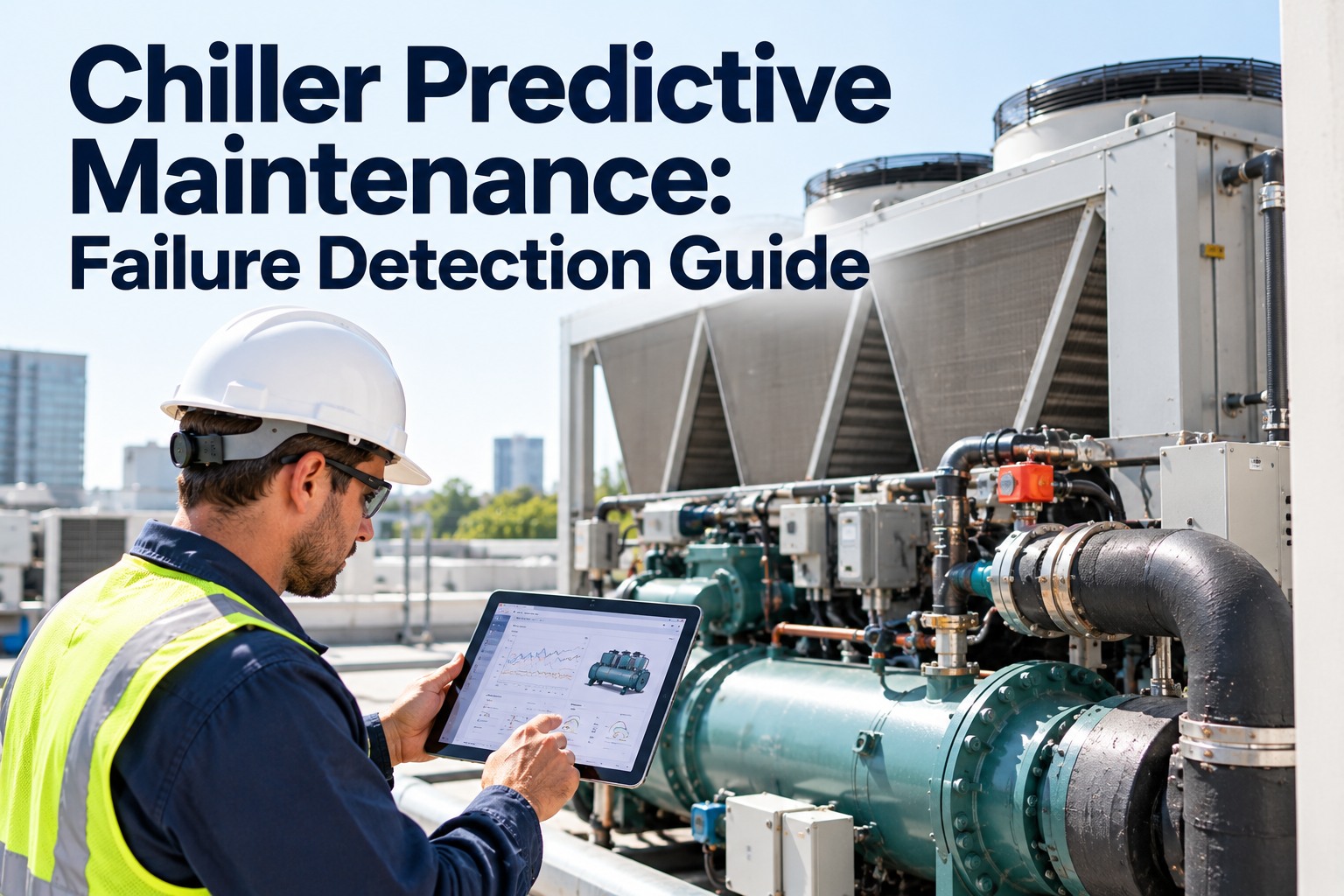
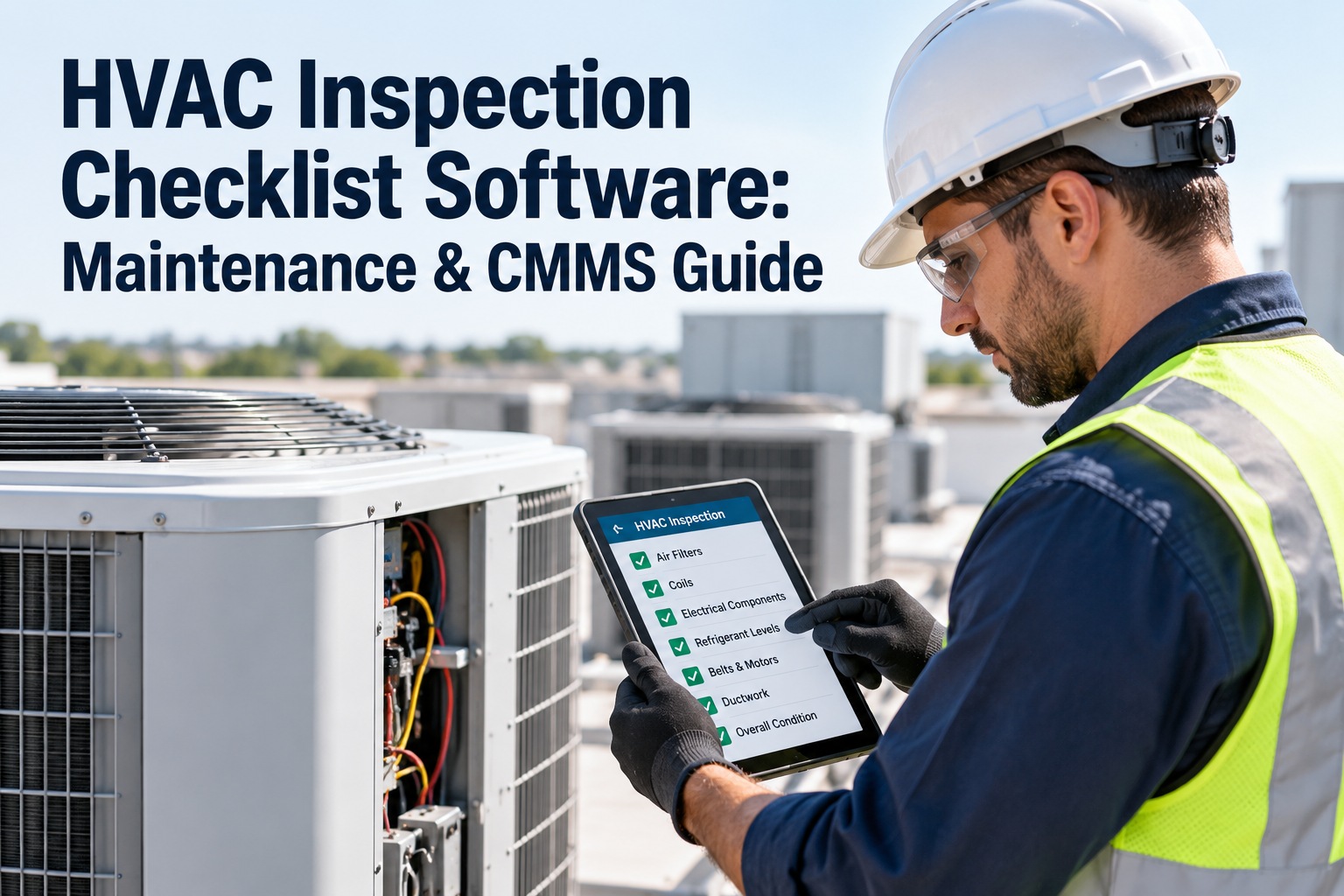
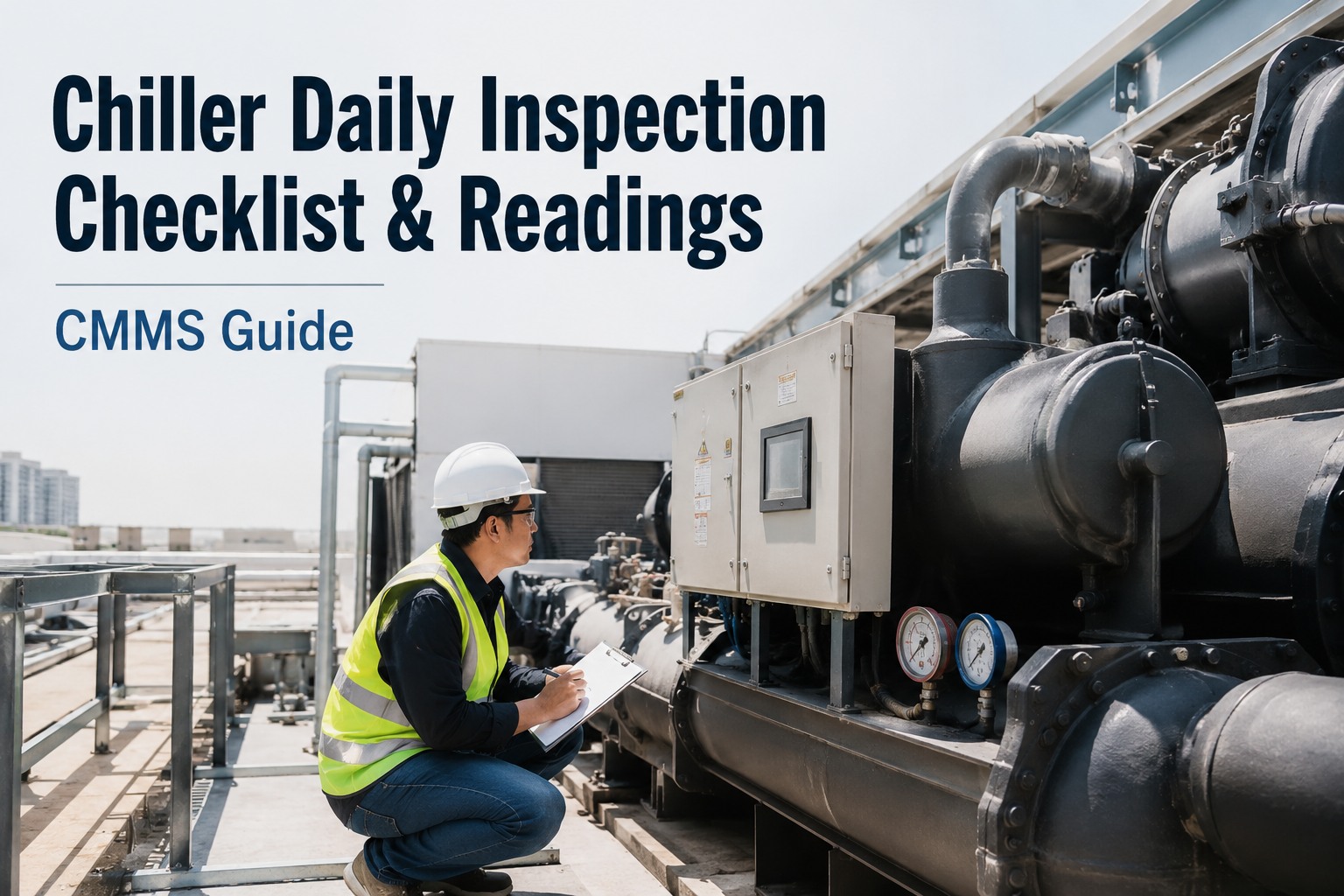
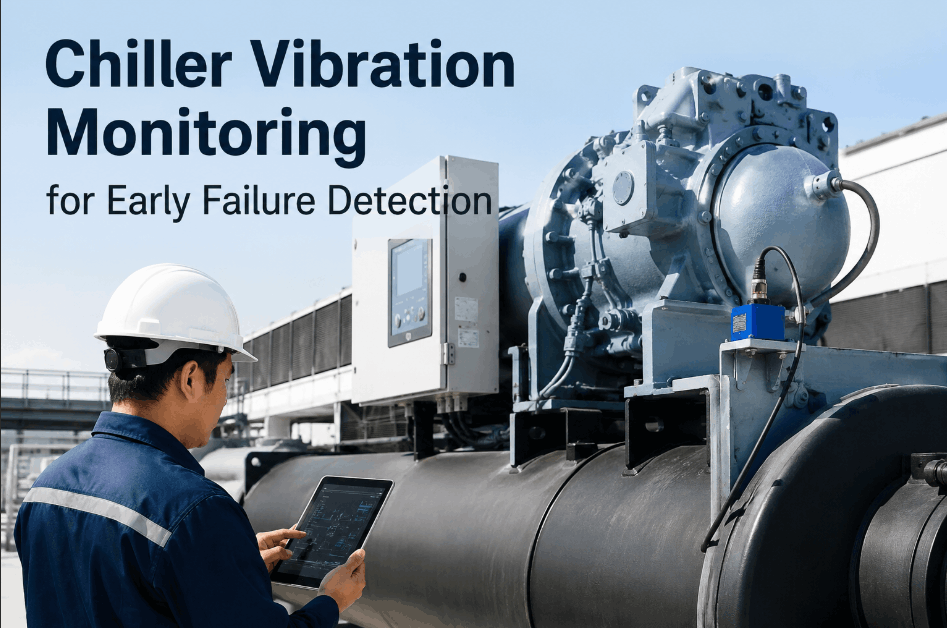
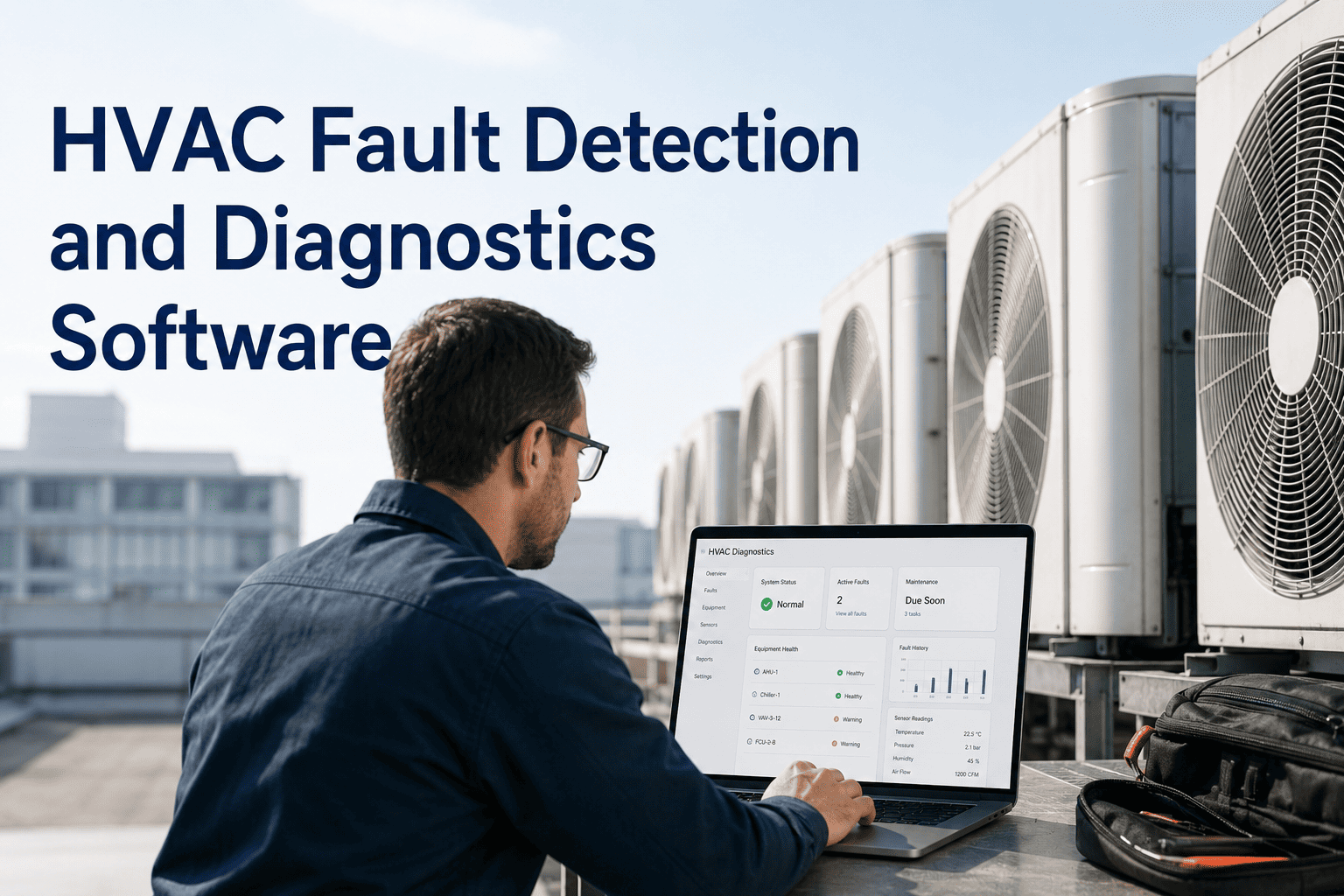
A chiller rarely fails without warning. The approach temperature creeps up, the oil darkens, a bearing hums a little louder — weeks before the trip. The problem is that nobody is watching the trend. OXMAINT AI is the AI-powered HVAC maintenance software that turns chiller readings into early warnings and planned repairs.
A chiller failure on a hot afternoon is the most expensive way to find a fault. OXMAINT AI logs your chiller readings, compares each one with the machine's own baseline, flags the slow drift that signals trouble, and turns it into a planned work order while there's still time to schedule the fix.
2 signals off baseline → tube cleaning and leak check planned
$11.5Bglobal chiller market in 2025
~50%of operators log chillers at least daily — mostly on paper
3–11 ft/scondenser water velocity range to avoid fouling and tube erosion
1 / yearminimum for compressor oil lab analysis
The Warning Window: How Early Can You See a Chiller Failure?
Every developing fault passes through stages. The earlier the stage, the cheaper the fix and the more time you have to plan it. Predictive maintenance is simply watching the signals that show up first. OXMAINT AI watches them for you and raises the alert at the earliest stage your data can see. Start free and catch faults earlier in OXMAINT AI.
Predictive window — plan the fixLate signs — repair urgentlyFailure
Six Signals That Predict Chiller Trouble
You don't need every sensor on the market. These six signals cover most chiller failure modes, and most can be collected with tools your team already has. OXMAINT AI stores each one against the chiller and trends it over time. Book a demo to see signal trends in OXMAINT AI.
Signal 01
Condenser ApproachGap between refrigerant and leaving condenser water temperature. A rising gap points to fouled tubes or air in the system.
Daily log
Signal 02
Evaporator ApproachGap on the chilled water side. Drift suggests fouling, low refrigerant or poor water flow.
Daily log
Signal 03
Efficiency (kW/ton)Power used per ton of cooling at similar load. A steady rise means the machine is working harder for the same job.
Weekly trend
Signal 04
VibrationReadings on compressor and motor bearings reveal wear, imbalance and misalignment early.
Monthly–quarterly
Signal 05
Oil AnalysisLab tests for wear metals, moisture and acid show bearing wear and leaks inside the circuit.
At least yearly
Signal 06
Tube ConditionEddy current testing finds tube thinning and pitting before a tube leaks water into the refrigerant.
Per risk plan
Fault Fingerprints: Which Signals Move for Which Problem
Each fault leaves a different pattern across the signals. Read across a row to see what to look for. OXMAINT AI uses these patterns to suggest the likely cause when a signal drifts. Start free and match patterns to faults in OXMAINT AI.
Fault
Cond. Approach
Evap. Approach
kW/ton
Vibration
Oil
Fouled condenser tubes
Low refrigerant charge
Air or moisture in system
Bearing wear
Motor or alignment issue
Strong signPossible signUsually unaffected
A Reading on Paper Can't Warn You. A Trend Can.
OXMAINT AI turns daily chiller logs into trends against each machine's own baseline, and raises a planned work order the moment a signal starts to drift.
Set the BaselineRecord approaches, kW/ton, vibration and oil results right after a cleaning or overhaul, at known loads.
→
2
Trend Every ReadingLog the same readings on a fixed schedule and compare them at similar load and weather.
→
3
Act on the DriftWhen a signal moves off baseline, plan the fix — before it becomes an alarm.
Chiller Condition Monitoring Checklist
Use this as your monitoring routine. Tick each line as it becomes a habit. In OXMAINT AI, every line runs as a scheduled task with a reading field. Start free and run this routine in OXMAINT AI.
Every Day
Every Month
Every Year
Eddy current tube testing is usually scheduled by tube age, water quality and past results. Follow the manufacturer's guidance.
From Drifting Signal to Planned Repair in OXMAINT AI
CaptureDaily logs and test results on mobile or from your building system
CompareEach reading checked against the chiller's own baseline
FlagDrift raised as an early-warning alert with the likely cause
PlanWork order scheduled for a low-load window, parts reserved
VerifyReadings after the fix confirm the signal is back to normal
Frequently Asked Questions
What is chiller predictive maintenance?
It means trending chiller condition signals — approach temperatures, efficiency, vibration and oil — to spot a developing fault early and fix it on a planned schedule instead of after a breakdown. Start free and trend your chillers in OXMAINT AI.
What does a rising condenser approach temperature mean?
The condenser is transferring heat less well. The usual causes are fouled tubes, air or non-condensable gases in the system, or poor condenser water flow.
How often should chiller oil be analyzed?
At least once a year, and more often for critical or older machines. Oil-free magnetic bearing chillers don't need oil analysis.
Do I need sensors to start predictive maintenance?
No. Consistent daily logs and annual tests are enough to build baselines and trends. Sensors and building system data make it faster and more detailed.
How does OXMAINT AI help predict chiller failures?
The software stores every reading against each chiller, compares it with that chiller's baseline, flags drift early and turns it into a planned work order.
See the Failure Coming. Fix It on Your Schedule.
Bring your chiller logs, test results and repairs into OXMAINT AI — baselines, trends, early warnings and planned work orders for every machine in your plant.