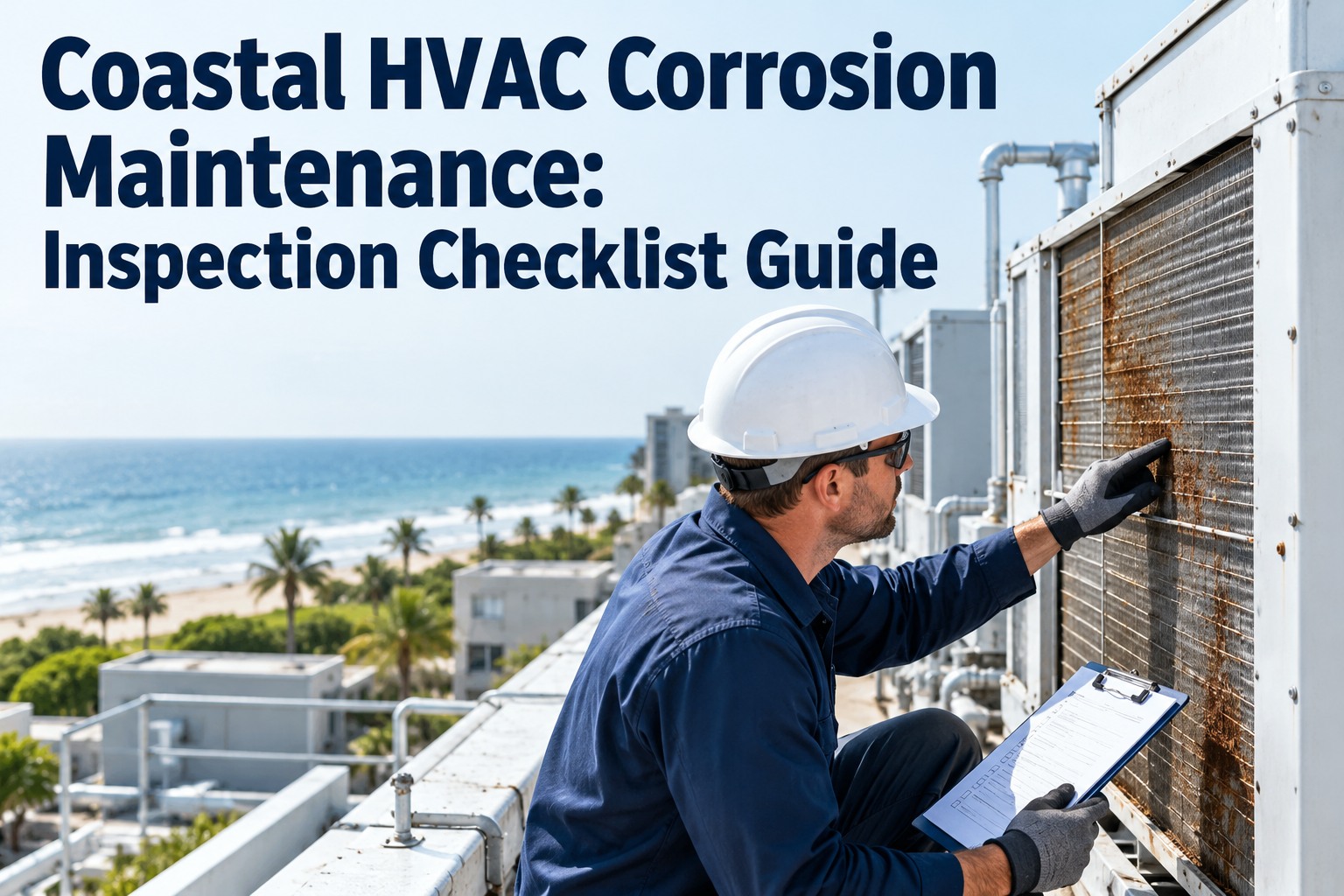
Condenser coils on coastal properties face a corrosion risk that inland buildings rarely deal with, since airborne salt accelerates fin and tube breakdown long before a unit shows any obvious performance loss. Sign Up Free on Oxmaint to start tracking coil condition against salt exposure for every outdoor unit on your property, or Book a Demo to see how visual inspection and predictive scheduling catch coastal corrosion before it shortens equipment life.
Why Condenser Coil Corrosion Is Hard to Catch Early in Coastal Properties
Corrosion on a condenser coil often starts on the fins facing prevailing onshore wind, well before it shows up in a capacity or efficiency reading. Book a Demo to see how Oxmaint helps coastal property teams catch coil corrosion at the visual stage instead of waiting for a performance drop.
Core Factors That Accelerate Coil Corrosion
Salt exposure is the headline risk, but a handful of related factors determine how fast a coastal coil actually degrades. Sign Up Free on Oxmaint to begin tracking these factors against your outdoor unit inventory.
Salt Aerosol Exposure & Proximity to Shoreline
Distance from the coast and prevailing wind direction set the baseline corrosion rate for any given unit.
Coating Wear & Fin Protection Breakdown
Protective coatings degrade over time, and once they're compromised, bare aluminum or copper corrodes much faster.
Rinse Cycle Frequency
Regular fresh-water rinsing slows salt buildup, while skipped or inconsistent rinse schedules let deposits accumulate.
Airflow Restriction From Debris Buildup
Salt residue mixed with dust and debris can restrict airflow across the coil, raising operating temperatures and accelerating wear.
Dissimilar Metal Contact Points
Galvanic corrosion can develop faster wherever dissimilar metals meet, especially in salt-heavy air.
Corrosion Inspection Priority by Property Proximity
Not every unit on a coastal property faces the same exposure, so inspection frequency should scale with how close and how exposed each location actually is. Book a Demo to see how Oxmaint applies proximity-based inspection priority across a property portfolio.
| Proximity Zone | Salt Exposure Level | Primary Risk | Inspection Frequency | Oxmaint Management Lever |
|---|---|---|---|---|
| Within 0.5 Mile of Shoreline | Very High | Rapid fin & coating breakdown | Monthly | AI Vision corrosion detection on outdoor units |
| 0.5–2 Miles, Direct Onshore Wind | High | Accelerated coating wear | Quarterly | Scheduled rinse PM linked to asset |
| 2–5 Miles Inland | Moderate | Gradual fin degradation | Semi-annual | Routine visual inspection checklist |
| 5+ Miles, Sheltered Exposure | Low-Moderate | Slow, long-term wear | Annual | Standard PM cadence |
| Rooftop Units, Exposed Sides | High (regardless of distance) | Wind-driven salt concentration | Quarterly | Side-specific inspection notes on asset record |
What Undetected Coil Corrosion Costs Facility Teams
Coil corrosion that goes unnoticed doesn't just shorten equipment life, it quietly raises energy costs along the way. Sign Up Free to connect coil inspection history to your asset records before corrosion turns into an unplanned replacement.
Running a Coastal Corrosion Prevention Program with Oxmaint
Staying ahead of coastal coil corrosion takes a consistent inspection and rinse cadence built around each unit's actual exposure. Book a Demo to walk through how Oxmaint structures this across a coastal property portfolio.
Classify Units by Shoreline Proximity & Exposure
Tag each outdoor unit in Oxmaint by distance from the coast and prevailing wind exposure.
Schedule Inspection & Rinse Cycles by Exposure Level
Set preventive maintenance frequency to match each unit's actual salt exposure rather than a single building-wide schedule.
Use AI Vision to Catch Early Visual Corrosion
Run AI Vision Camera checks on accessible outdoor units to flag fin and coating wear before performance drops.
Convert Flagged Corrosion Into Tracked Work Orders
Turn any flagged inspection finding directly into a scheduled repair or coating work order.
Maintain Coil History for Warranty & Replacement Planning
Keep inspection, rinse, and repair records attached to each asset to support warranty claims and plan replacements ahead of failure.
Frequently Asked Questions: Condenser Coil Corrosion in Coastal Properties
Why do condenser coils corrode faster on coastal properties?
Airborne salt accelerates fin and coating breakdown, especially on units within a mile or two of the shoreline with direct onshore wind exposure.
Can rinsing alone prevent coastal coil corrosion?
Regular rinsing slows salt buildup, but coating condition, airflow restriction, and proximity to the shoreline all affect how fast corrosion actually progresses.
How often should coastal HVAC units be inspected for corrosion?
Units closest to the shoreline with direct exposure typically need monthly to quarterly checks, while sheltered or inland units can run less frequently.
How does Oxmaint help track coil corrosion risk?
Oxmaint lets teams tag units by exposure level, schedule inspections accordingly, and use AI Vision to flag early visual signs of corrosion.
Does coil corrosion always show up in performance readings first?
Not always — visible fin and coating wear often appears before there's a measurable drop in capacity or efficiency.