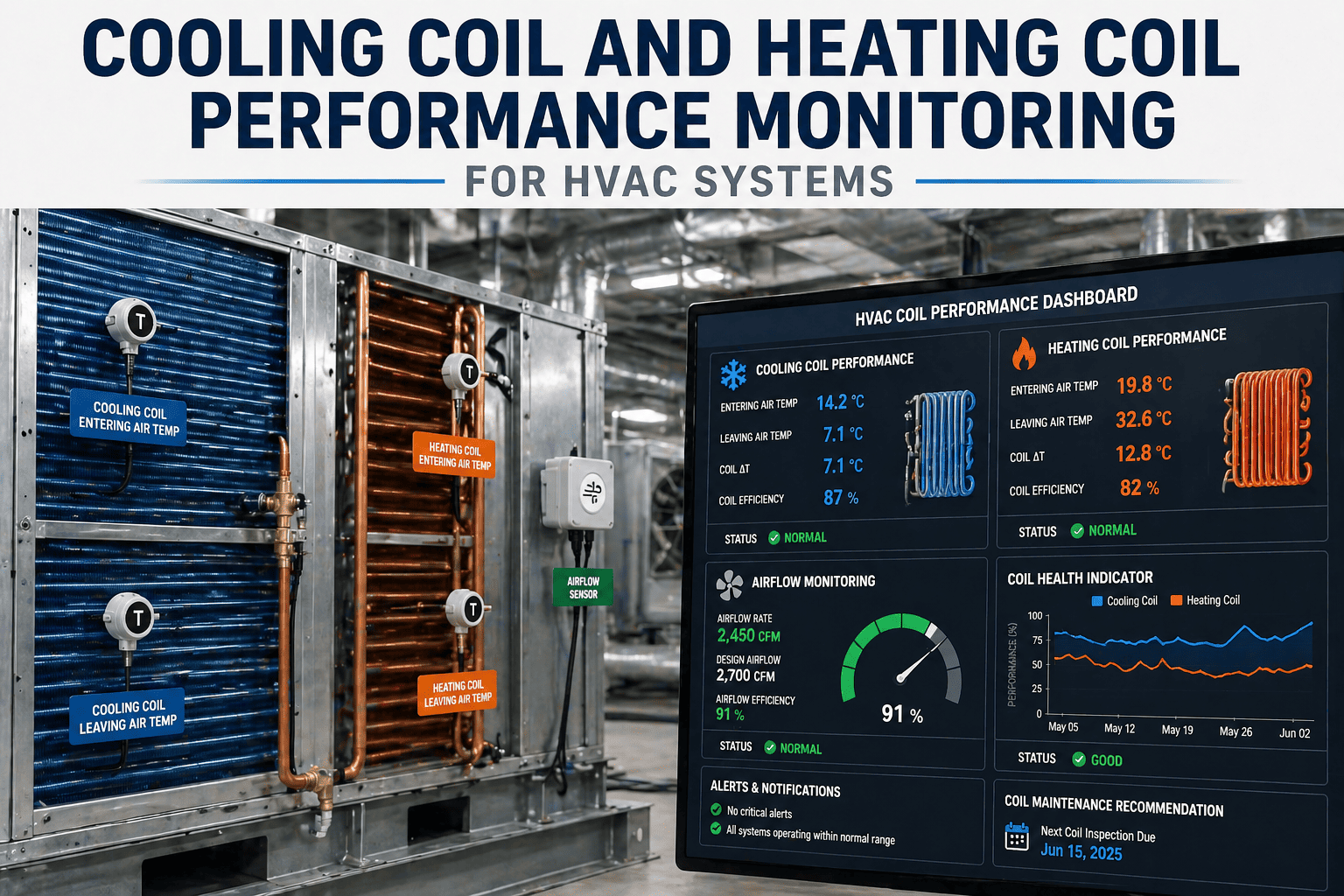
Cooling coil face velocity is one of the most consequential and least frequently verified parameters in office air handler performance — yet deviations above or below design range cause moisture carryover, uneven coil loading, avoidable pressure loss, and indoor air quality failures that facilities teams typically attribute to other system faults. When face velocity checks are absent from preventive maintenance schedules, coil loading imbalances go undetected for months, condensate carryover saturates downstream components, and office HVAC systems consume significantly more energy per ton of cooling than their design efficiency specifies. Maintenance teams using Sign Up Free on OxMaint can log coil face velocity inspection work orders, track airflow measurement results by air handler, and build a structured performance verification database that makes cooling coil efficiency a consistently maintained asset outcome rather than a commissioning-only checkpoint. Structured face velocity benchmarking turns airflow data into air handler performance governance.
Why Cooling Coil Face Velocity Checks Matter for Office Air Handlers
Cooling coil face velocity determines whether an air handler extracts moisture effectively, transfers heat uniformly across the coil surface, and maintains acceptable static pressure without unnecessary fan energy consumption. Above design velocity, moisture carryover into downstream ductwork creates mold risk and indoor air quality failures. Below design velocity, coil loading becomes uneven, leaving sections of the coil thermally underutilized while others become frost-risk zones at low entering air temperatures. Book a Demo to see how OxMaint captures face velocity measurement data by air handler, tracks carryover risk indicators, and builds the airflow performance baseline office building HVAC programs need to maintain cooling efficiency and indoor comfort reliably.
Six Dimensions of Cooling Coil Face Velocity Verification
A complete cooling coil face velocity program covers more than single-point airflow measurement. It connects traverse measurement methodology, coil fouling assessment, bypass leakage detection, carryover risk evaluation, pressure loss trending, and seasonal load variation into a unified air handler performance picture. Sign Up Free on OxMaint to begin capturing face velocity inspection data by air handler and build the coil performance benchmark database your office HVAC maintenance program requires.
Traverse Measurement and Face Velocity Profile Mapping
A single center-point velocity reading does not represent coil face velocity accurately — traverse measurements across a minimum grid of measurement points are required to identify velocity profile non-uniformity caused by fan inlet effects, filter bypass, or ductwork geometry. Logging traverse measurement grids in OxMaint by air handler builds a repeatable inspection protocol that reveals velocity distribution trends across maintenance cycles.
Coil Fouling Assessment and Cleaning Trigger Correlation
Coil fouling increases static pressure and reduces effective coil face area — which raises face velocity in open sections while reducing total airflow through the air handler. Correlating face velocity readings with coil differential pressure measurements in OxMaint identifies fouling accumulation rates by air handler and optimizes cleaning intervals to prevent velocity exceedance before carryover risk develops.
Bypass Air Leakage Detection and Seal Integrity Verification
Air bypassing the cooling coil through casing gaps, damaged coil bypass dampers, or filter rack leakage reduces effective face velocity and coil heat transfer effectiveness without appearing in supply air temperature deviations until the bypass fraction becomes large. Logging bypass leakage assessment findings alongside face velocity data in OxMaint links coil performance degradation to specific seal or damper failures.
Moisture Carryover Risk Evaluation and Drain Pan Inspection Linkage
Face velocities above carryover threshold generate moisture downstream that accumulates in drain pans, on duct lining, and on downstream components — creating mold growth conditions invisible without structured inspection. Linking carryover risk assessment results from face velocity inspections to drain pan condition records in OxMaint creates a complete moisture management audit trail for office air handlers.
Coil Pressure Loss Trending and Fan Energy Correlation
Coil pressure loss increases with fouling, velocity exceedance, and coil damage — each of which forces supply fans to increase speed and energy consumption to maintain design airflow. Trending coil differential pressure against face velocity readings in OxMaint quantifies fan energy penalties from coil performance degradation and establishes cost-justified cleaning and maintenance thresholds.
Seasonal Load Variation and Coil Performance Benchmark Adjustment
Face velocity and coil loading vary with seasonal outdoor air temperature, building occupancy, and VAV system airflow modulation — requiring benchmark verification at multiple operating conditions to represent full-year coil performance accurately. OxMaint supports seasonal face velocity inspection scheduling and stores measurement data by condition for comparative trend analysis across inspection cycles.
Cooling Coil Face Velocity Benchmarks by Air Handler Configuration
Face velocity performance and carryover risk vary significantly by coil type, fin geometry, chilled water temperature, and office air handler configuration. Comparing your measured face velocity profile against configuration-specific benchmarks identifies where fouling remediation, bypass sealing, and fan speed adjustment deliver the highest efficiency and indoor air quality improvement. Book a Demo to explore how OxMaint tracks coil inspection work orders alongside air handler maintenance scheduling in one platform.
| Air Handler Configuration | Primary Velocity Challenge | Design Velocity Range | Carryover Risk Level | OxMaint Maintenance Lever |
|---|---|---|---|---|
| Central Station AHUs (Large Office) | Non-uniform velocity profile from fan inlet effects | 350–500 fpm | Medium–High above 500 fpm | Traverse measurement logging + pressure loss trending |
| Floor-by-Floor Fan Coil Units | Coil fouling from unfiltered return air | 300–450 fpm | High when fouled | Fouling assessment + cleaning trigger correlation |
| Dedicated Outdoor Air Systems (DOAS) | High latent load at low entering air temperatures | 300–400 fpm | High at peak humidity | Carryover risk evaluation + drain pan inspection linkage |
| VAV Air Handling Units | Velocity variation with supply airflow modulation | Variable, 250–500 fpm | Medium — load dependent | Seasonal benchmark adjustment + bypass leakage detection |
| Energy Recovery Ventilators (ERV) | Cross-contamination risk at face velocity extremes | 350–450 fpm | Medium | Coil performance benchmarks + fan energy correlation |
How Unverified Face Velocity Compounds Office Air Handler Risk
Cooling coil face velocity deviations that go unmeasured do not self-correct. They compound through progressive coil fouling, moisture carryover, downstream component degradation, fan energy waste, and indoor air quality complaints — each of which increases operating cost and maintenance burden while reducing the air handler's ability to maintain design performance across changing seasonal loads. Book a Demo to see how OxMaint connects face velocity inspection data with air handler maintenance scheduling to surface compounding coil performance risk before it affects office occupant comfort or facility operating cost.
Building a Cooling Coil Face Velocity Program with OxMaint
Register All Air Handlers with Coil Specifications and Design Velocity Targets
Create a complete air handler asset register in OxMaint with coil type, face area, fin geometry, chilled water design temperature, design face velocity, and carryover threshold for each unit. This foundation enables face velocity work orders to capture measurement data in context and supports accurate comparison against design performance specifications across inspection cycles.
Log Face Velocity Inspections with Traverse Data and Condition Findings
Capture every face velocity inspection in OxMaint as a structured work order with traverse measurement grid results, coil differential pressure reading, bypass leakage assessment, carryover risk rating, and drain pan condition. Structured inspection records replace inspection forms and spreadsheets with searchable, trend-ready coil performance data tied to each air handler asset.
Establish Face Velocity and Pressure Loss Benchmarks by Unit Type
Use OxMaint reporting tools to analyze inspection history and set face velocity benchmark ranges, pressure loss thresholds, and fouling rate targets by air handler type and building floor. Data-driven benchmarks replace visual inspection judgments with documented performance standards that support coil cleaning scheduling and capital replacement planning.
Configure Carryover Risk Alerts and Cleaning Trigger Notifications
Set face velocity and differential pressure thresholds in OxMaint that trigger escalation alerts when air handler coil performance approaches carryover risk or cleaning threshold targets. Automated alerts give facilities managers advance notice of coil performance degradation before it generates occupant complaints, mold risk, or fan energy anomalies in monthly utility reporting.
Report Coil Performance Trends Across Air Handlers and Seasons
Use OxMaint dashboards to track face velocity trends, coil pressure loss progression, fouling accumulation rates, and carryover risk frequency across air handlers, floors, and seasons. Turn coil inspection data into facilities governance reporting and energy performance benchmarks without manual data aggregation or spreadsheet compilation.
Frequently Asked Questions: Cooling Coil Face Velocity Checks
What is cooling coil face velocity and why does it matter for office air handlers?
Face velocity is the average air speed measured perpendicular to the cooling coil surface. When face velocity exceeds design range, moisture carryover into downstream ductwork creates mold risk; when it falls below design, coil loading becomes uneven and heat transfer effectiveness drops — both conditions degrade office HVAC performance and indoor air quality.
How does coil fouling affect face velocity and air handler efficiency?
Coil fouling increases static pressure drop and reduces effective coil face area — forcing fans to increase speed to maintain airflow while simultaneously concentrating velocity in unobstructed coil sections. The combination raises energy consumption and creates localized carryover risk even when average face velocity appears within specification.
How does OxMaint support cooling coil face velocity inspection programs?
OxMaint captures face velocity inspection work orders with traverse measurement data, coil differential pressure readings, carryover risk assessments, and drain pan condition findings — building a coil performance database that makes systematic face velocity verification achievable for every air handler in an office building portfolio.
What causes uneven coil loading in office HVAC air handlers?
Uneven coil loading typically traces to non-uniform face velocity distribution from fan inlet effects, partial coil fouling, bypass air leakage through casing gaps, or damaged coil fin sections — all of which reduce effective heat transfer area and create hot spots across the coil face that degrade total cooling capacity.
How often should cooling coil face velocity checks be performed?
Bi-annual verification covers most office air handlers — with additional checks following major filter loading events, coil cleaning cycles, or fan replacement. OxMaint automates face velocity inspection scheduling so verification intervals are maintained without manual planning overhead or inspection records falling through shift transitions.