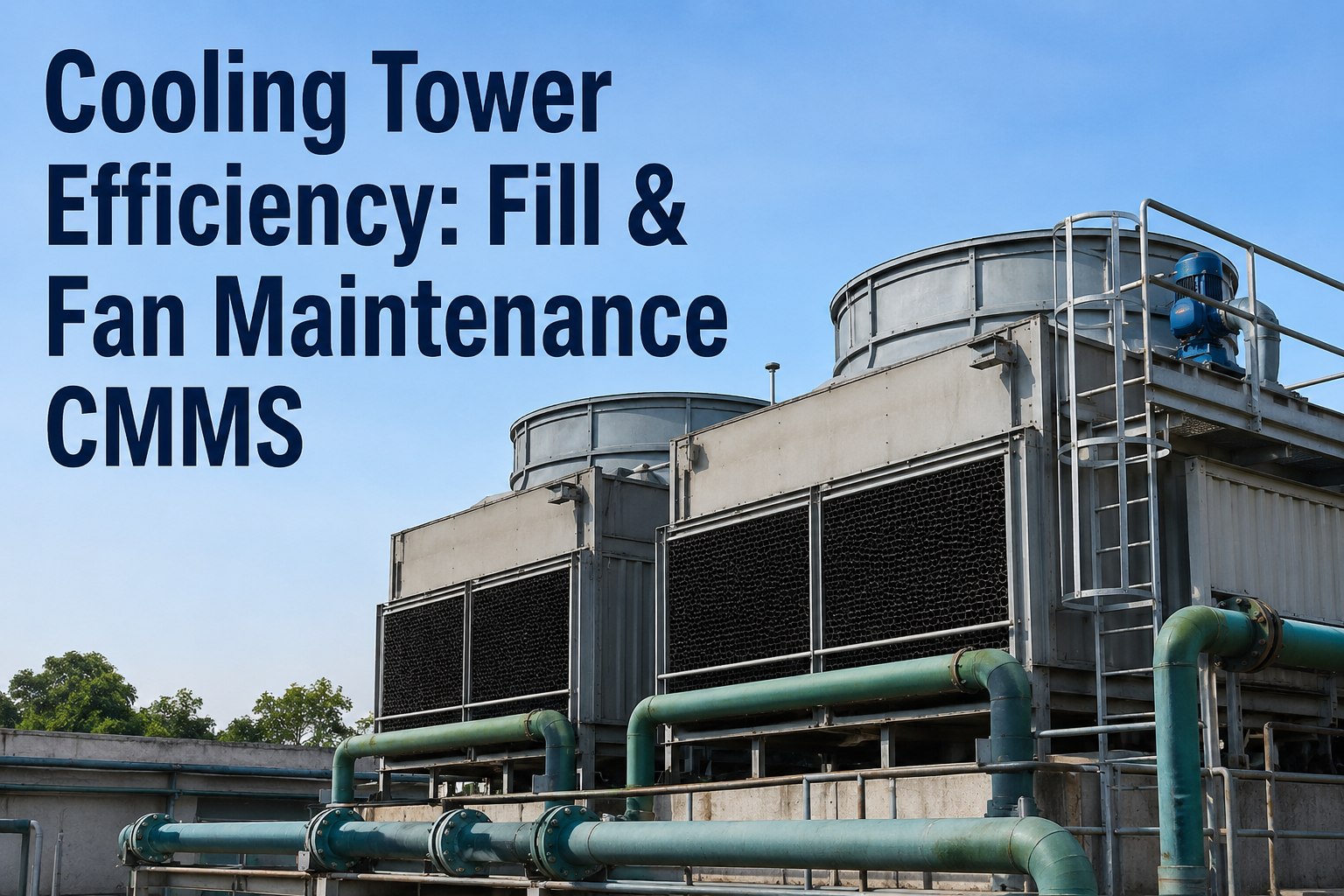
Cooling tower drift loss — water carried out of the tower as fine droplets entrained in the exhaust air — represents one of the most preventable sources of water waste in commercial and industrial HVAC systems. While evaporation is a fundamental part of cooling tower operation, drift loss is entirely a maintenance and design management problem. Facilities using Sign Up Free with Oxmaint schedule drift eliminator inspections, fan control calibrations, and airflow balance checks as structured preventive maintenance tasks — reducing drift loss without compromising cooling capacity. Modern drift eliminators achieve drift rates below 0.0005% of circulating water flow, but only when they are properly maintained and the airflow distribution across the tower fill is balanced. A single degraded eliminator section can allow drift rates 10–20× higher. Book a Demo to see how Oxmaint structures cooling tower maintenance programs for water conservation and system reliability.
COOLING TOWER · DRIFT LOSS · WATER SAVINGS · MAINTENANCE · 2026
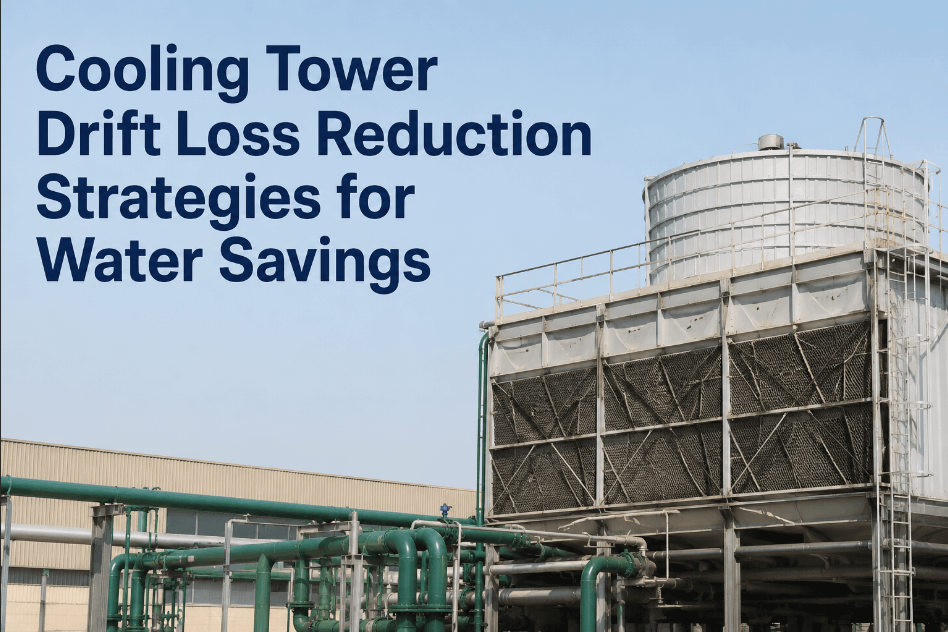
Cooling Tower Drift Loss Reduction Strategies for Water Savings
Reduce cooling tower drift loss through structured separator maintenance, fan control optimization, airflow balance verification, and scheduled inspection programs — protecting water, efficiency, and compliance.
0.0005%Modern drift eliminator target rate as percentage of circulating water flow when properly maintained
10–20×Higher drift rate from a single degraded eliminator section versus design specification
15–30%Water savings achievable through combined drift, fan control, and blowdown optimization
$40K+Annual water and chemical cost avoided at a 1,000-ton cooling plant with optimized drift program
The 4 Root Causes of Excessive Cooling Tower Drift Loss
Drift loss above design specifications is always caused by one or more of four maintainable conditions — eliminator degradation, airflow imbalance, over-speed fan operation, and structural gaps in the tower casing. Oxmaint's cooling tower maintenance module structures inspection tasks around all four root causes, ensuring they are detected at routine intervals rather than discovered through unexpected water loss or regulatory drift monitoring. Sign Up Free to configure cooling tower inspection schedules in Oxmaint.
Drift Eliminator Degradation
Primary Driver
PVC drift eliminators warp, crack, and separate over time — especially under UV exposure in open cooling towers and thermal cycling in variable-load systems. Sections that have lost structural integrity cannot turn droplet-laden air through the required velocity changes, allowing large droplets to pass directly to atmosphere. Annual inspection with replacement of degraded sections is minimum standard; quarterly visual checks identify obvious failures between scheduled inspections.
Fan Over-Speed Operation
Operational Driver
Fan speed directly controls air velocity through the fill and eliminators. Fans running above design speed push air through eliminators faster than their droplet separation design allows — the velocity window for effective drift elimination is narrow. VFD-controlled fans that have drifted above setpoint, or two-speed fans operating on high speed during conditions that don't require it, are common sources of drift rate increases that are invisible to operators watching only temperatures.
Airflow Distribution Imbalance
Structural Driver
Uneven water distribution across the fill creates zones of dry airflow and zones of heavy loading. High-velocity bypass zones allow droplets to reach eliminators at excessive velocity while low-velocity zones reduce overall cooling capacity. Annual airflow mapping and water distribution inspection identifies imbalance that isn't visible from discharge air temperature alone.
Casing Gaps and Bypass Paths
Structural Driver
Gaps in tower casing panels, degraded seals around penetrations, and access door misalignment create paths where drift-laden air bypasses the eliminators entirely. These bypass paths are particularly common at older towers where panel fasteners have corroded or casing panels have warped. Sealant inspection at all panel joints and penetrations should be included in annual tower inspection protocol.
Drift Reduction Maintenance Program — Structured Schedule
Daily
Fan speed setpoint verification, discharge air observation, basin level check, unusual noise or vibration reporting
Weekly
Water distribution pattern check, VFD setpoint audit, drift plume observation during high-load periods, blowdown rate verification
Monthly
Fan blade angle check (fixed-pitch towers), motor current vs. design comparison, nozzle clogging inspection, water chemistry review for scale that affects fill performance
Quarterly
Visual drift eliminator inspection for warp, crack, and section displacement; casing gap audit; fan hub and blade condition; drift rate estimate from water balance calculation
Annual
Full eliminator section inspection and replacement of degraded sections, airflow distribution mapping, casing sealant inspection and repair, fill fouling assessment, basin cleaning and inspection
3-Year
Eliminator replacement program review (full replacement typically required at 8–12 years), fill replacement assessment, structural and casing integrity audit, fan system overhaul
Fan Control Optimization — The Fastest Drift Reduction Lever
Fan speed control is the most immediately actionable drift reduction lever because it doesn't require physical access to the tower internals. Facilities using VFD-controlled cooling tower fans can implement approach temperature control strategies that minimize fan speed — and therefore air velocity through eliminators — while maintaining required leaving water temperature. Book a Demo to see how Oxmaint work order workflows support fan control calibration and verification tasks.
Approach-Based Fan Speed Control
8–15% Water Reduction
Controlling fan speed to maintain a target approach temperature (leaving water minus wet bulb) rather than a fixed leaving temperature reduces fan speed — and drift — during favorable ambient conditions without impacting chiller efficiency.
Fan Speed Upper Limit Setpoint
Eliminator Protection
Setting a maximum fan speed limit in the VFD at 90–95% of nominal ensures air velocity through eliminators stays within design separation efficiency even if approach control temporarily calls for maximum cooling. A simple setpoint change with significant drift impact.
Tower Sequencing (Multi-Cell)
Lower Per-Cell Loading
Running more tower cells at lower fan speed rather than fewer cells at high speed distributes load, reduces velocity through each cell's eliminators, and improves overall drift rate — while also improving thermal efficiency at part load.
Night Setback During Low Load
Overnight Water Savings
Reducing fan speed or cycling fans off during low overnight loads eliminates drift loss during periods when cooling demand is minimal — particularly valuable for buildings with predictable occupancy schedules and non-process loads.
Structure Your Cooling Tower Maintenance. Save Water Every Month.
Oxmaint's preventive maintenance scheduling automates cooling tower inspection intervals, drift eliminator replacement tracking, and fan control verification — so water conservation doesn't depend on individual operator awareness.
Frequently Asked Questions — Cooling Tower Drift Loss
What is the difference between cooling tower evaporation and drift loss?
Evaporation is intentional — it's the mechanism that removes heat. Drift is unintentional water loss as droplets entrained in exhaust air. Evaporation is design-determined; drift is maintenance-determined and preventable.
How do I calculate my cooling tower's current drift rate?
Drift rate is estimated through water balance: total makeup water minus evaporation (estimated from thermal load) minus blowdown = drift. Compare to manufacturer's design drift specification. Persistent excess indicates eliminator or airflow problems.
How often should drift eliminators be replaced?
PVC drift eliminators typically last 8–12 years under normal operating conditions. Inspect annually and replace degraded sections immediately. Plan full replacement at 10-year intervals or when inspection reveals widespread warping or cracking.
Does Oxmaint track cooling tower water consumption and maintenance history?
Yes. Oxmaint stores all cooling tower assets, maintenance records, and inspection findings. Work orders for eliminator inspection, fan calibration, and basin cleaning are scheduled automatically and linked to the tower asset record for trend review.
Can reducing drift loss help with Legionella risk management?
Yes. Drift reduction directly reduces the aerosol release pathway for Legionella. Properly maintained drift eliminators and controlled fan speeds are standard elements of cooling tower water management plans under ASHRAE 188 and local health codes.
Reduce Drift Loss. Conserve Water. Improve Compliance.
Oxmaint's cooling tower maintenance module schedules eliminator inspections, fan control verifications, and water balance checks automatically — turning drift reduction from a manual effort into a structured, documented program.