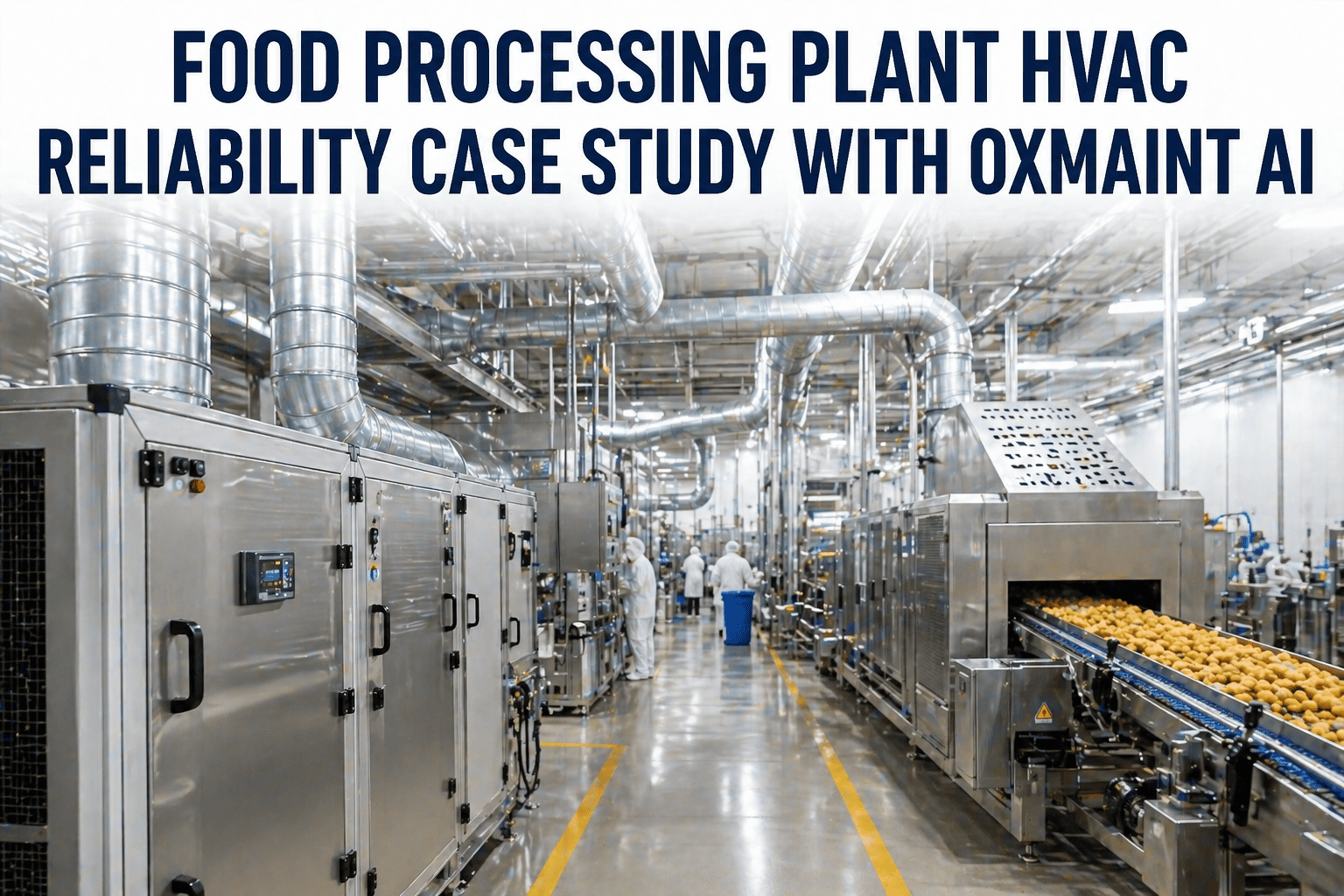
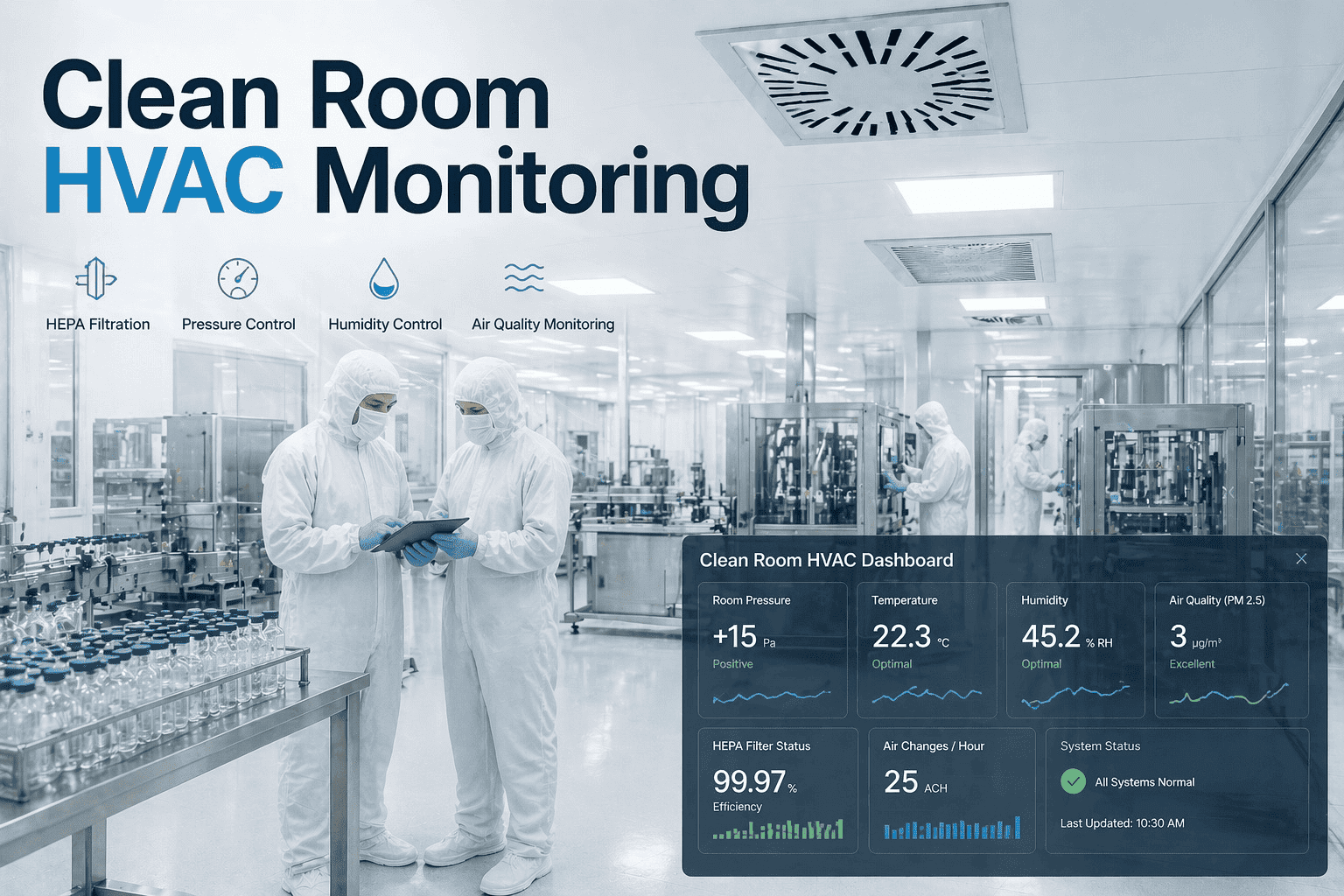
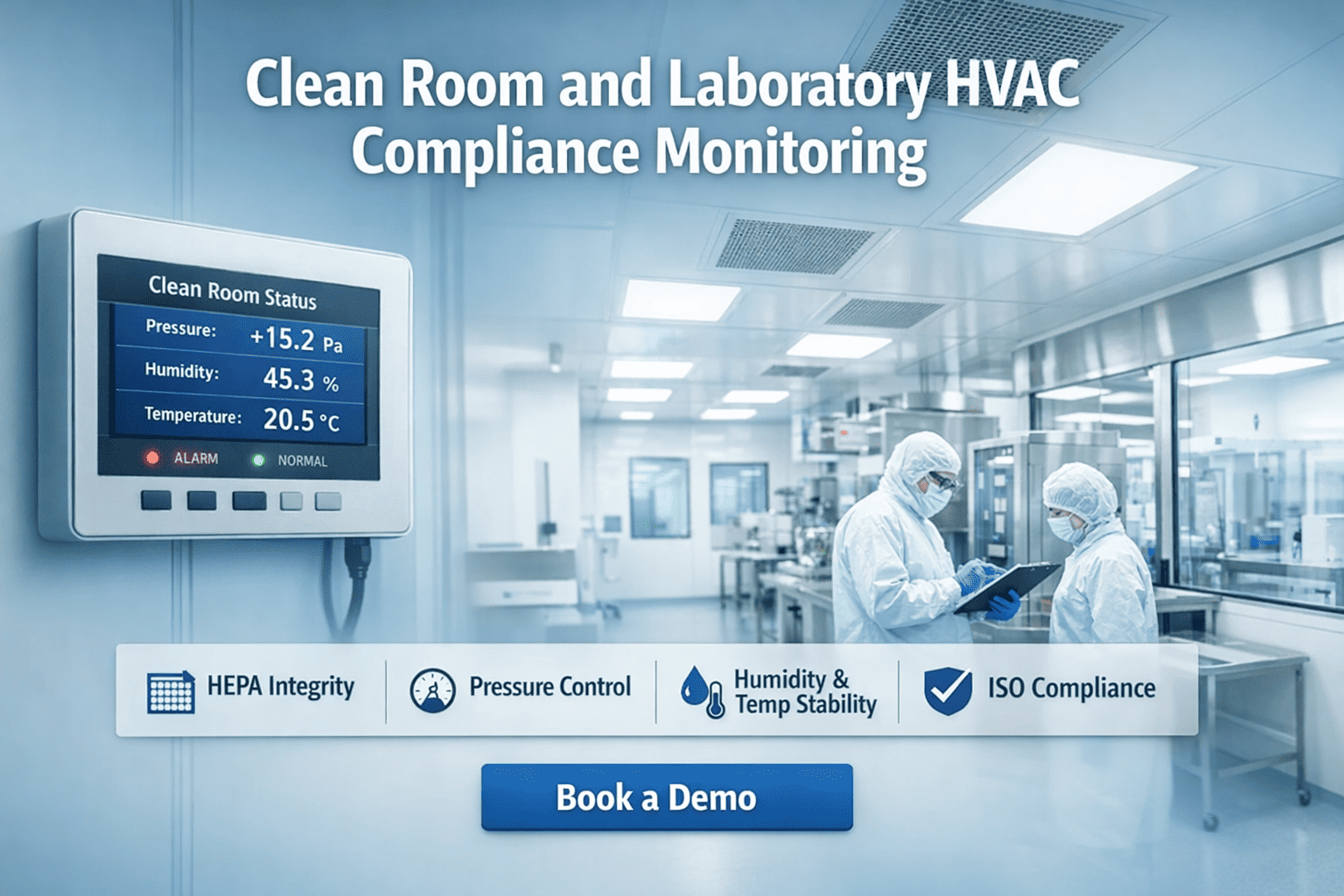
A mid-size ready-to-eat protein processing facility running two production shifts was losing an average of 4.2 hours of productive time per week — not to line equipment failures, but to HVAC events their maintenance team could not predict. A coil fouling cycle that crept past tolerance between scheduled filter checks, a pressure differential drift in the post-cook clean room that triggered a quality hold, a humidity spike during the sanitation shift that left moisture on overhead surfaces and delayed the next production start by 90 minutes. Each event on its own looked like a one-off. Mapped together across six months of work order data, they revealed a repeating pattern that was costing the plant an estimated $18,000 per month in lost throughput, product holds, and emergency HVAC contractor call-outs. The facility deployed OxMaint AI CMMS to connect their HVAC sensor data, scheduled PM records, and production impact logs into a single analytical layer — and the pattern disappeared within 60 days. This case study documents exactly what they changed, what OxMaint detected, and what the plant's numbers looked like before and after. If your food processing facility is managing HVAC reactively, start your free OxMaint trial and run your HVAC asset history through the same analysis.
Why HVAC Is the Highest-Risk System in a Food Processing Plant
In most manufacturing environments, an HVAC failure means discomfort. In a food processing plant, it means something far more serious: a product safety event. Temperature excursions outside validated ranges trigger immediate quality holds. Positive pressure loss in a post-cook or ready-to-eat zone allows unfiltered air — carrying potential pathogens, mould spores, and allergens — to enter the most sensitive part of the production environment. Humidity drift above 60% on overhead surfaces during or after sanitation creates conditions for microbial growth that can shut down a federally inspected line for days.
HVAC FAILURE RISK BY PRODUCTION ZONE — CONSEQUENCE SEVERITY
Critical Risk Zone
Post-Cook / RTE Packaging Area
Highest positive pressure requirement. Any pressure loss allows unfiltered air ingress. HVAC failure here triggers immediate line shutdown and potential product recall under HACCP protocols.
Required pressure differential
+10 Pa minimum above adjacent zones
Air changes per hour
20–25 ACH HACCP standard
Temperature tolerance
±1°C of validated set point
High Risk Zone
Raw Processing / Prep Area
Negative pressure required to contain raw-side contaminants. HVAC failure here causes cross-zone contamination risk and allergen migration toward clean zones.
Required pressure differential
Negative relative to clean zones
Air changes per hour
15+ ACH minimum
Humidity control
50–60% RH — critical post-sanitation
Medium Risk Zone
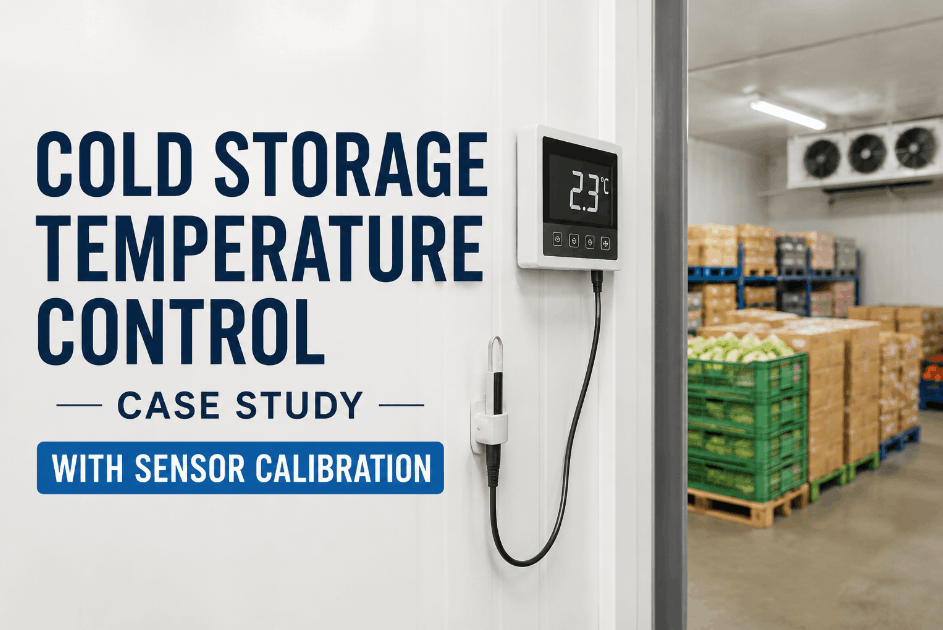
Cold Storage / Blast Chill
Temperature excursion beyond validated cold chain parameters triggers immediate product quality hold. HVAC refrigerant loss or coil failure here generates direct product loss cost.
Temperature band
0–4°C continuous maintenance
Alarm threshold
Any excursion above +6°C
Documentation
Continuous log required for USDA/FDA audit
OXMAINT AI FOR FOOD PROCESSING HVAC
Monitor Every Zone. Predict Every Failure. Protect Every Product Run.
Connect your HVAC sensors to OxMaint AI and get predictive alerts before pressure, temperature, or humidity drifts become production events.
The Before State: What Reactive HVAC Management Looked Like
Before deploying OxMaint, the facility's HVAC maintenance was managed through a combination of quarterly contractor service visits, manual monthly filter checks, and reactive call-outs triggered by production floor complaints or quality department alerts. Each of these three mechanisms had a fundamental flaw: they all detected problems after the production environment had already been compromised.
BEFORE OXMAINT — 6-MONTH HVAC EVENT LOG (RECONSTRUCTED FROM PAPER RECORDS)
Month 1
Coil fouling — AHU-07 (RTE zone)
Filter change overdue by 3 weeks. Coil efficiency drop reduced zone cooling capacity. Temperature crept 2.3°C above set point over 4 days before production flagged complaint.
Cost: 6-hr quality hold + emergency contractor. £2,800.
Month 2
Pressure differential loss — Clean room boundary
Damper actuator fault caused positive pressure in RTE area to drop below threshold for approx. 90 minutes during overnight sanitation shift. Discovered at start of production via routine check.
Cost: 4-hr production hold pending environmental verification. £3,400.
Month 3
Humidity excursion — Post-sanitation
Dehumidification capacity insufficient after sanitation washdown. RH spiked to 74% for 2.5 hours. Overhead moisture present at production start — required dry-down delay.
Cost: 90-min production start delay + labour. £1,600.
Month 4–5
Refrigerant charge degradation — Blast chill unit
Slow refrigerant loss went undetected across two contractor visit cycles. Pull-down time extended progressively — flagged by production team when a batch failed cold-chain timing target.
Cost: Product hold + re-testing + emergency recharge. £4,200.
Month 6
Belt failure — AHU supply fan (raw processing area)
Drive belt deterioration undetected between PM cycles. Mid-shift failure caused raw processing area to lose negative pressure. Line stopped for emergency repair and environmental reset.
Cost: 5-hr full line shutdown. £5,100.
6-month reactive HVAC management total
£17,100 in direct costs + uncalculated throughput loss
What OxMaint AI Detected and When
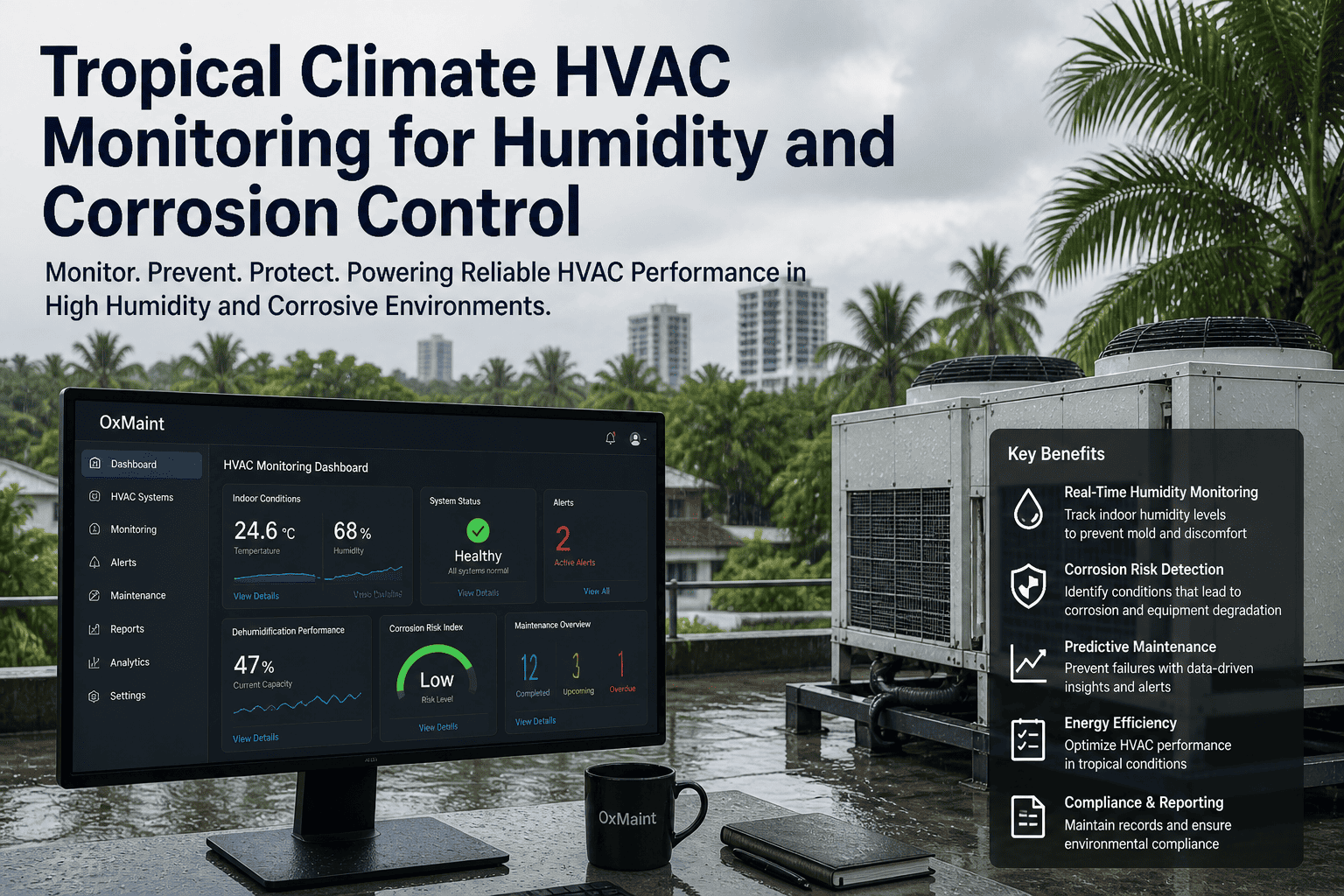
OxMaint connected to the facility's existing BMS sensor outputs and work order history within 8 days of deployment. The AI layer began identifying failure patterns within the first 30 days — not by inventing new sensors, but by doing what the maintenance team never had time to do manually: correlating sensor trend data against maintenance records and flagging the drift before it became a production event.
OXMAINT AI DETECTION LOG — FIRST 60 DAYS POST-DEPLOYMENT
60-DAY RESULTS: BEFORE vs AFTER OXMAINT DEPLOYMENT
6 Months Before OxMaint
5
Unplanned HVAC failures
21.6 hrs
Total production time lost
3
Quality holds triggered by HVAC events
£17,100
Direct HVAC event cost (6 months)
Reactive
Maintenance posture — detect after failure
60 Days After OxMaint
1
Unplanned HVAC failures (73% reduction)
0 hrs
Production time lost to HVAC
0
Quality holds triggered by HVAC events
£2,900
Total HVAC maintenance cost (60 days)
Predictive
AI detects drift 9–23 days before failure
"The thing that changed was not the HVAC equipment — it was the information. Before OxMaint, we had sensors generating data that nobody was reading because we didn't have the bandwidth to analyse 34 AHUs daily. OxMaint read it for us and told us exactly which three units to look at each week. That's what eliminated the surprises."
Maintenance Manager
Ready-to-eat protein processing facility — 148,000 sq ft
The 4 OxMaint AI Capabilities That Drove the Result
The outcome did not come from a single feature. It came from four OxMaint AI capabilities operating together, each one addressing a different failure mode that reactive maintenance had left exposed.
01
Sensor Trend Analysis
OxMaint AI reads BMS sensor outputs continuously — pressure differentials, temperature, humidity, vibration — and builds a baseline for each asset. Drift away from that baseline triggers an alert before the excursion becomes a production event.
Detects failure signals 9–23 days before threshold breach in this deployment
02
PM Completion Tracking
Every scheduled HVAC PM task — filter changes, coil inspections, belt checks, refrigerant readings — is tracked against its due date with escalating alerts at 14, 7, and 2 days before deadline. No PM falls through the gap between contractor visits.
PM compliance rate increased from 61% to 94% within 45 days of deployment
03
Zone Pressure Monitoring
Pressure differential readings for each controlled zone are monitored in real time. Any drift toward the critical threshold — positive or negative — generates an immediate work order with zone classification, current reading, and required action.
Zero clean room pressure violations in 90 days following deployment
04
Production Impact Correlation
OxMaint links every HVAC event — planned or reactive — to production records and quality holds. This makes the business case for preventive maintenance undeniable: you see exactly what each HVAC failure cost in production time and product risk, not just repair spend.
Enabled the facility to justify full HVAC PM budget increase in first quarterly review
Frequently Asked Questions
Does OxMaint integrate with existing BMS or building automation systems already in place at our facility?
Yes. OxMaint connects to standard BMS output protocols including Modbus, BACnet, and MQTT, as well as direct sensor feeds. Most food processing facilities with a BMS already in place can complete sensor integration within 5–10 days without replacing any existing hardware.
How does OxMaint support HACCP and FDA audit documentation for HVAC records?
OxMaint maintains a continuous, timestamped log of all HVAC readings, PM completions, work orders, and corrective actions. FDA and USDA inspection documentation — temperature logs, pressure records, filter change history — exports in structured PDF format in under 5 minutes. Audit readiness is continuous, not a pre-inspection scramble.
Can OxMaint manage HVAC maintenance across multiple facilities or production sites?
Yes. OxMaint provides a multi-site dashboard where each facility's HVAC asset register, PM schedule, and alert queue is visible at both site level and portfolio level. A facilities director managing three plants sees all 34+ AHUs across all sites in one view — with cross-site benchmarking for PM compliance and failure frequency.
What happens if an HVAC alert fires outside of normal working hours?
OxMaint sends alerts via SMS, email, and in-app notification with configurable escalation — so if a first responder does not acknowledge within a set window, the alert escalates to the next contact. Night shift or on-call coverage is built into the notification workflow rather than relying on manual monitoring.
How long does it take to see measurable HVAC reliability improvement after deploying OxMaint?
The facility in this case study saw the first AI-generated predictive alerts within 22 days of sensor connection. Measurable reduction in unplanned HVAC events was visible within 45 days, and the full 73% reduction in unplanned downtime was recorded at the 60-day mark. Results depend on the volume of existing sensor data available for baseline modelling.
OXMAINT AI CMMS · FOOD PROCESSING FACILITIES
Your HVAC Sensors Are Already Generating the Data. OxMaint Reads It For You.
Connect your HVAC assets to OxMaint AI and get the predictive alerts, PM tracking, and audit-ready documentation that keep your production environment compliant and your lines running.