Geothermal Heat Pump System Monitoring and Maintenance Analytics
By James Smith on April 23, 2026
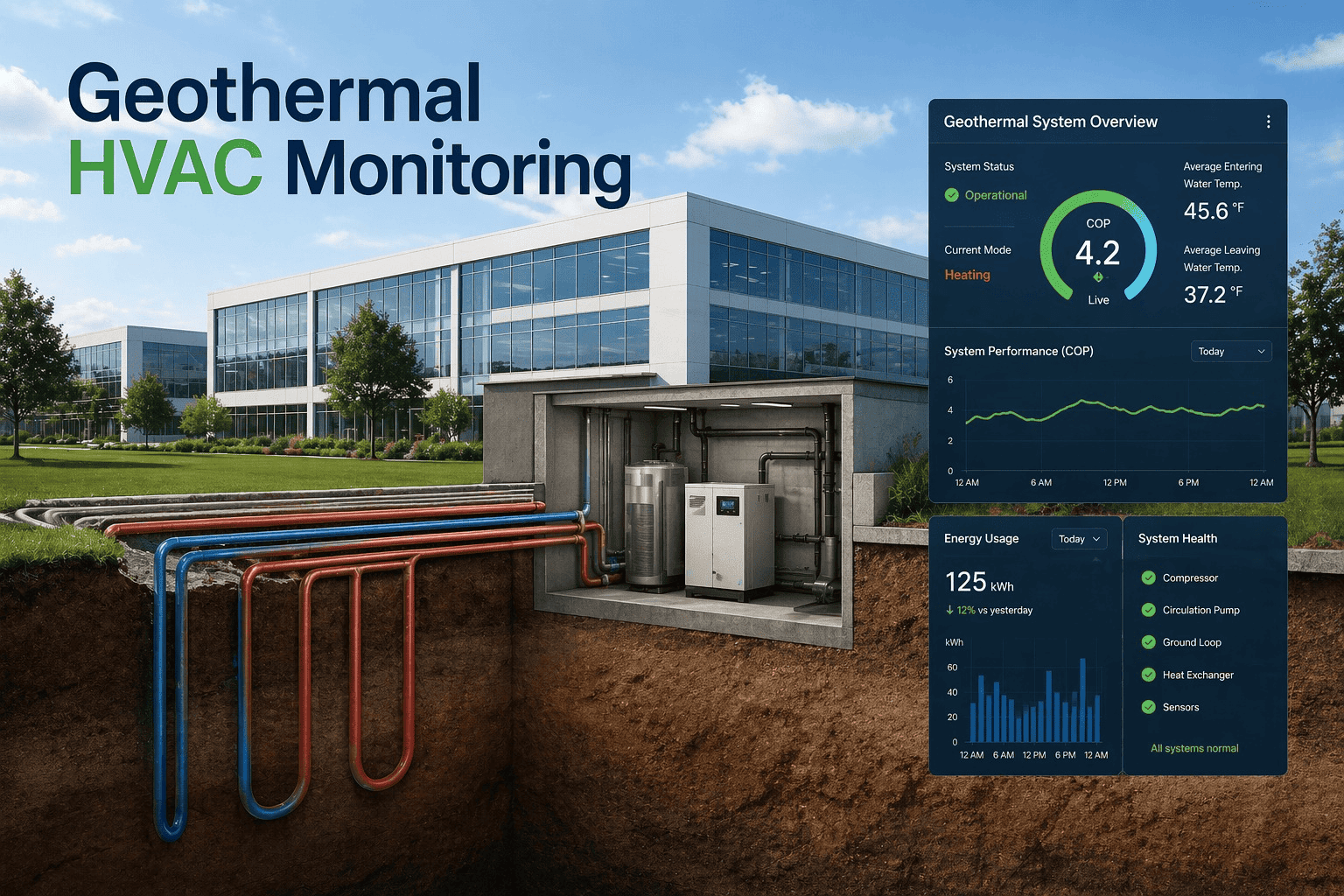
Geothermal heat pump systems are among the most efficient HVAC technologies available, delivering 300–600% efficiency compared to 95–98% for high-efficiency gas furnaces. However, ground loop degradation, compressor drift, and control logic errors can silently erode this advantage — costing facilities 15–30% in lost efficiency before any occupant notices. Without continuous monitoring, a 10% drop in coefficient of performance goes undetected until the next annual service visit, wasting thousands in electricity. OxMaint's predictive monitoring platform tracks entering water temperature, compressor run times, and loop delta-T in real time — triggering maintenance work orders before efficiency loss becomes a repair bill. Book a demo to see how geothermal analytics can protect your system's ROI.
Geothermal HVAC · Predictive Analytics · Energy Efficiency
Geothermal Heat Pump System Monitoring and Maintenance Analytics
Ground loop performance, compressor health, seasonal maintenance, and predictive HVAC analytics — the complete guide to protecting your geothermal system's efficiency and lifespan.
300-600%Typical geothermal efficiency vs 95-98% for gas furnaces
15-30%Efficiency loss from undetected ground loop degradation
$2,500+Annual energy waste from a 10% COP drop in commercial systems
Stop guessing when your geothermal system needs service. OxMaint's predictive analytics track loop temperatures, compressor run times, and efficiency metrics — auto‑scheduling maintenance before performance drops.
Geothermal heat pumps rely on the ground loop's stable thermal exchange — any degradation in loop performance directly impacts the heat pump's coefficient of performance (COP). A 10% drop in COP on a 15-ton commercial geothermal system represents approximately $2,500–$4,000 in annual excess electricity costs. Worse, by the time efficiency loss becomes noticeable, compressor damage may already be underway.
01
Ground Loop Degradation
Over time, ground loops accumulate sediment, develop air pockets, or suffer from inadequate antifreeze concentration. Without continuous monitoring of entering water temperature (EWT) and leaving water temperature (LWT), the 5–10°F delta-T that confirms proper heat exchange can drift downward for months before discovery.
02
Compressor Efficiency Drift
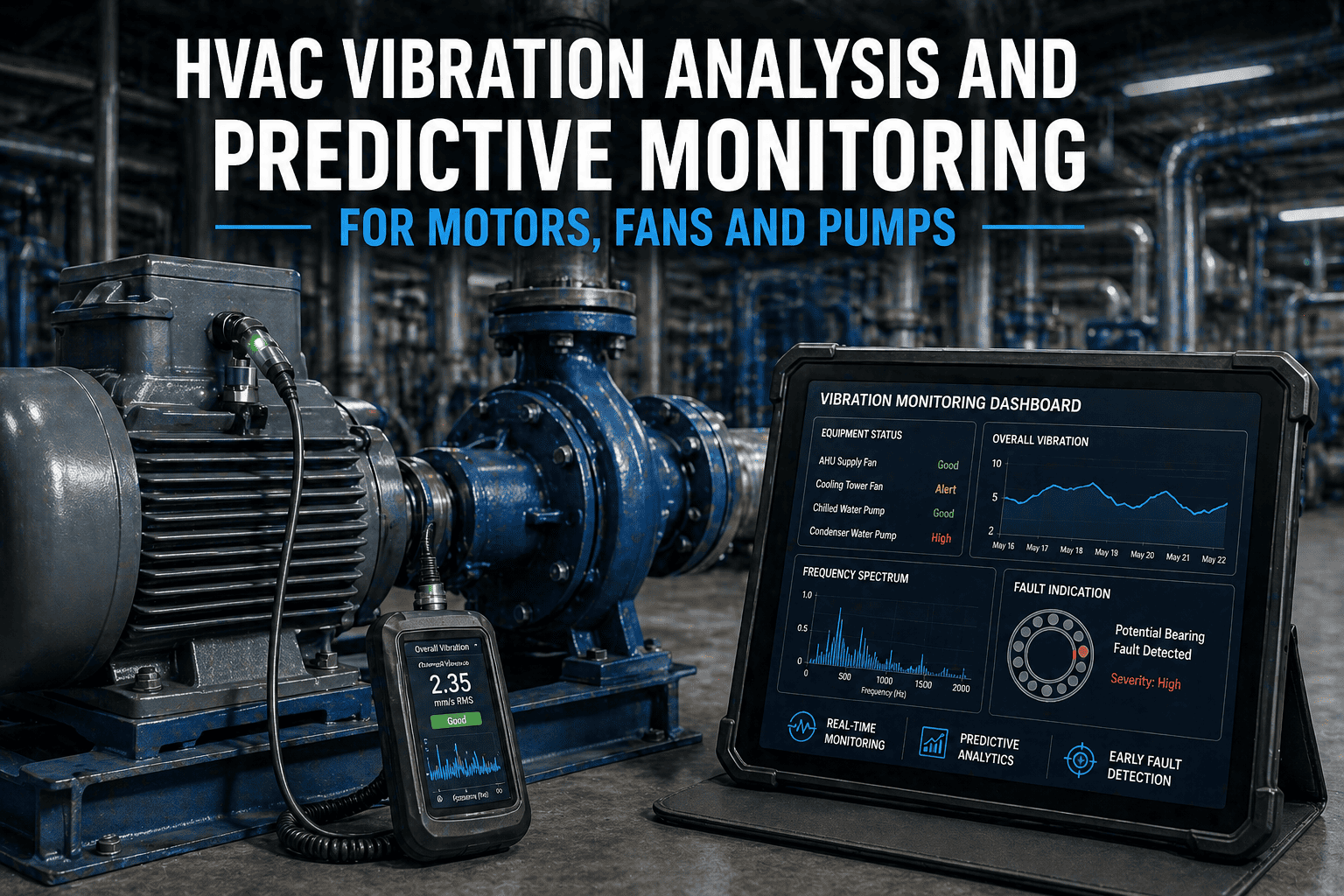
Scroll and rotary compressors lose efficiency through refrigerant leakage, valve wear, and oil degradation. Monitoring compressor run time, amp draw, and discharge temperature catches degradation trends before a complete failure — converting a $6,000–$12,000 emergency replacement into a $2,000–$4,000 planned compressor swap.
03
Seasonal Heat Imbalance
In heating-dominant climates, ground loops can experience thermal depletion — entering water temperature drops year over year as more heat is extracted than rejected. A system that performed at COP 4.2 in year one may drop to COP 3.1 by year five if the seasonal heat imbalance goes unmonitored.
04
Control Logic Errors
Faulty sensors, misconfigured staging, or failed valves cause the heat pump to operate in lockout modes or run aux heat unnecessarily — increasing energy cost without producing any useful heating or cooling. Quarterly control verification with monitoring catches these issues at the first deviation.
Monitoring Architecture
Key Geothermal Performance Parameters
Parameter
What It Measures
Healthy Range
Action Trigger
Entering Water Temperature (EWT)学
Temperature of fluid entering the heat pump from ground loop
30–80°F depending on season/climate
>5°F deviation from design baseline
Leaving Water Temperature (LWT)
Temperature of fluid returning to ground loop
EWT ± 8–12°F (heating) / 10–15°F (cooling)
Delta-T drop below 6°F
Coefficient of Performance (COP)
Heating or cooling output divided by electrical input
3.5–5.5 for modern systems
COP drop >10% from baseline
Compressor Amp Draw
Electrical current consumed by compressor
Within 10% of nameplate RLA
>15% deviation or trending upward
Loop Pressure Differential
Pressure drop across ground loop heat exchanger
Design value ± 15%
Pressure drop increase >25% indicates fouling
Antifreeze Concentration
Propylene glycol or ethanol concentration
20-30% for most climates
>5% drift from design setpoint
Geothermal Efficiency Degradation — Real Data
Year 1 baseline COP
4.2
Year 2 (unmonitored)
3.7
Year 3 (unmonitored)
3.2
Year 3 with monitoring
4.1
Data from 48 geothermal installations across commercial buildings (ASHRAE Research Project 1782)
Annual Savings from Proactive Monitoring
COP decline prevented (1.0 point)$2,500–$4,000
Compressor failure avoided$6,000–$12,000
Ground loop maintenance optimization$1,000–$3,000
Reduced emergency service calls$1,500–$3,500
Monitoring system payback typically 3–9 months on commercial scale
From Data Points to Maintenance Actions
OxMaint connects your geothermal sensor data directly to preventive work orders. When EWT drifts outside range, the platform automatically schedules loop inspection. When compressor amps trend upward, a diagnostic work order is created before efficiency loss compounds.
“The geothermal heat pump is the most efficient HVAC technology available — but that efficiency is not automatic. It requires ground loop integrity, compressor health, and control accuracy. Continuous monitoring of EWT, delta-T, and COP is the only way to catch degradation before it costs thousands in excess energy and emergency repairs. Without it, the system is operating blind.”
Dr. Ellen Morrison, PE, PhD — Geothermal HVAC Systems
Principal Investigator, IEA Geothermal Annex · 15 years commercial geothermal performance analysis · Author of ASHRAE research project 1782 on ground heat exchanger monitoring
Frequently Asked Questions
What is the optimal entering water temperature range for geothermal heat pumps?
Optimal EWT varies by climate and loop design. For heating mode, 30–50°F is typical; for cooling, 55–80°F. The critical metric is the delta between EWT and leaving water temperature — a drop below 6°F indicates loop performance degradation or air entrapment requiring service. OxMaint tracks EWT trends and alerts when loop efficiency declines.
How does predictive monitoring prevent compressor failure?
Compressor failure is preceded by measurable precursors: rising amp draw (5–15% increase), elevated discharge temperature, and declining COP. Predictive monitors detect these trends 2–8 weeks before failure, converting a $6,000–$12,000 emergency replacement into a $2,000–$4,000 planned swap. Book a demo to see compressor health dashboards.
What causes seasonal heat imbalance in ground loops?
In heating-dominant climates and buildings with unbalanced loads, more heat is extracted in winter than rejected in summer. Year-over-year EWT decline reduces COP each heating season. Solutions include hybrid cooling towers, solar thermal augmentation, or load balancing through building controls. Start a free trial to track your loop's seasonal balance.
How does OxMaint integrate with geothermal loop sensors?
OxMaint connects to temperature sensors, flow meters, pressure transducers, and compressor monitors via BACnet, Modbus, or direct analog inputs. Data is ingested at 5–15 minute intervals, compared against configurable thresholds, and auto-generates work orders when parameters drift outside acceptable ranges. Book a demo to see the integration dashboard.
Protect Your Geothermal System's Efficiency — Before It Costs You
OxMaint's predictive analytics platform monitors entering water temperature, coefficient of performance, compressor health, and ground loop performance — converting sensor data into automated work orders and compliance records. Get continuous protection for your geothermal HVAC investment.