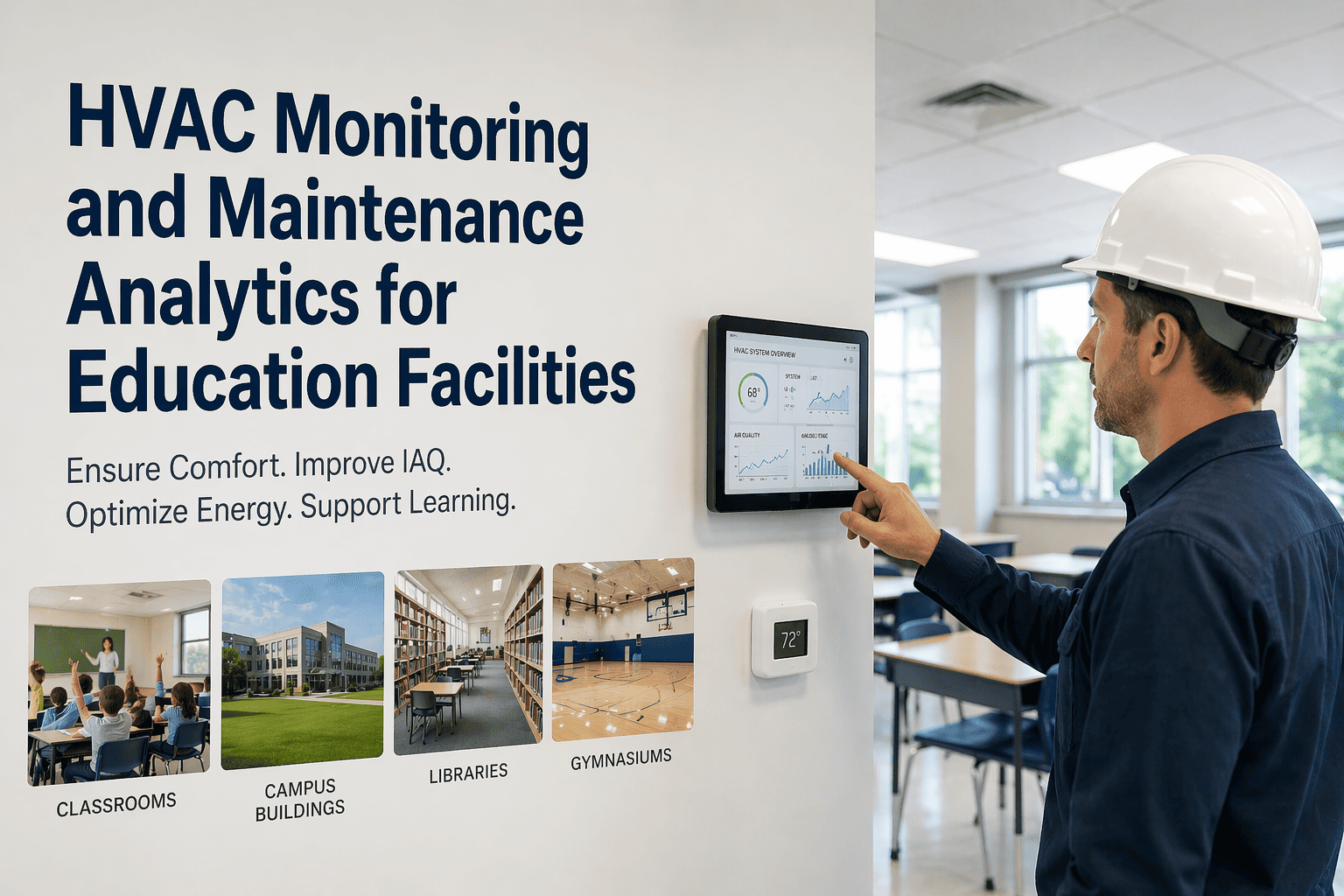
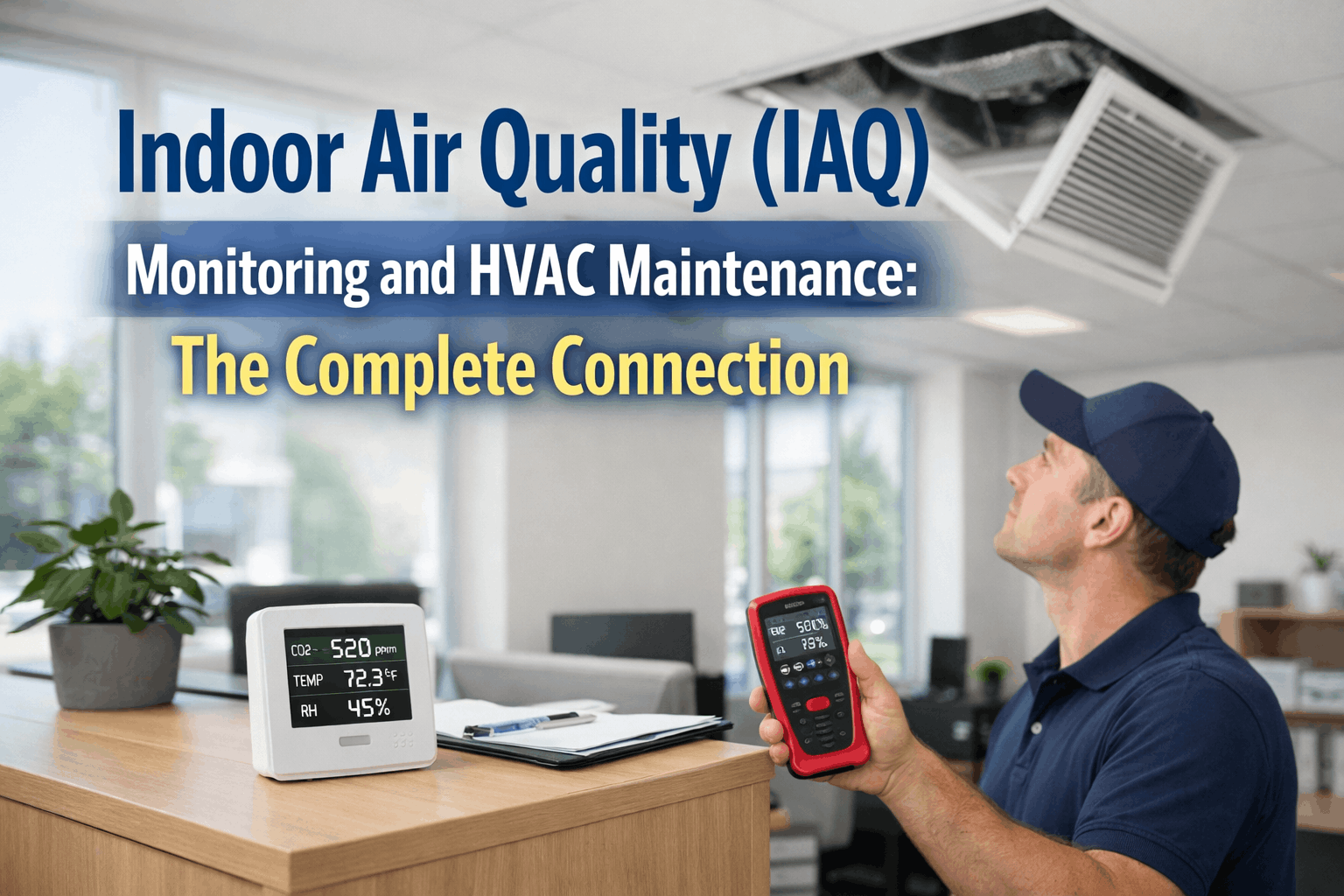
According to one in five schools in the United States has inadequate HVAC systems that fail to maintain proper ventilation rates, and studies from Harvard T.H. Chan School of Public Health show that students in well-ventilated classrooms score 14–18% higher on standardized tests compared to those in under-ventilated spaces. For education facility managers, the challenge extends beyond student performance: aging rooftop units serving school gymnasiums and cafeterias, split systems in portable classrooms, and centralized air handlers in university lecture halls all require monitoring that most districts lack. The result is a maintenance cycle where filters are changed on calendar schedules regardless of actual loading, compressors fail during peak cooling months when schools are occupied, and indoor air quality complaints trigger reactive service calls rather than predictive maintenance. OxMaint's Education Facilities Module provides continuous HVAC monitoring across campus buildings — tracking filter pressure drop, supply air temperature, CO2 levels, compressor runtime, and system efficiency — generating work orders when any parameter deviates from baseline. Book a demo to see how school districts are reducing HVAC-related IAQ complaints by 62% while cutting energy spend by 18–25% within the first academic year.
01
HVAC Monitoring and Maintenance Analytics for Education Facilities
Classroom ventilation · IAQ tracking · Filter monitoring · Energy optimization · Campus CMMS integration
1 in 5Schools have inadequate HVAC systems per EPA
14–18%Higher test scores in well-ventilated classrooms
62%Reduction in HVAC-related IAQ complaints with active monitoring
Education HVAC by the Numbers
98,000+
Public K-12 schools in the US — each with multiple HVAC systems
Source: National Center for Education Statistics
50%
Of school HVAC energy spent on systems outside occupied hours
Scheduling optimization provides immediate savings
36%
Of schools report insufficient HVAC maintenance budgets
Predictive monitoring maximizes limited resources
Five Ways HVAC Affects Learning Environments
01
Classroom Ventilation — CO2 as Proxy
ASHRAE Standard 62.1 requires minimum outdoor air ventilation of 15 CFM per person for classrooms. When HVAC systems under-ventilate, CO2 concentrations rise above 1,100 ppm — levels shown in peer-reviewed studies to reduce cognitive function, attention span, and information retention. Continuous CO2 monitoring alerts facility staff when ventilation drops below requirements, enabling correction before the school day begins.
02
Filter Loading — Invisible IAQ Risk
School HVAC filters load 2–3x faster than office filters due to higher particulate loads from art rooms (clay dust), science labs (powders), and physical education (resuspended particles). A filter at 80% of its pressure drop capacity delivers reduced airflow and allows particle bypass. Monthly pressure drop monitoring triggers filter changes based on actual loading — not calendar estimates — maintaining MERV-rated efficiency year-round.
03
Temperature Extremes — Learning Impact
Classroom temperatures above 78°F or below 65°F measurably reduce student attention and performance. A 10-year study of New York City schools found that students scored 10% lower on standardized tests for every 3°F above 72°F. Real-time temperature monitoring across zones enables proactive adjustment before classrooms reach discomfort levels — rather than waiting for teacher complaints.
04
Gymnasium and Cafeteria Peak Loads
School gymnasiums and cafeterias experience highly variable occupancy — from empty to full assembly in 15 minutes. Standard HVAC controls cannot respond quickly enough, leading to temperature swings and humidity spikes. Demand-controlled ventilation with CO2 sensors and occupancy detection optimizes outdoor air in these spaces, reducing conditioning load while maintaining IAQ during peak occupancy events.
05
Portable Classroom Split Systems
Portable classrooms — serving an estimated 3 million US students — typically use residential-grade split systems with no remote monitoring. Filter neglect and refrigerant leaks are common, but without tracking, problems surface only when the unit fails completely. Wireless monitoring sensors on portable classroom units enable centralized tracking without adding BAS infrastructure, reducing failure rates by 50–70%.
School HVAC Monitoring Checklist — Monthly & Seasonal Tasks
01
Filter Pressure Drop — Monthly Log
Record static pressure across each filter bank. Compare to clean baseline. 80% of design pressure drop triggers filter replacement — well before airflow reduction affects classroom ventilation.
Maintains IAQ & airflow
02
CO2 Levels — Continuous Monitoring
Log CO2 in every occupied classroom. Readings above 1,100 ppm trigger ventilation inspection. Readings above 1,500 ppm require immediate investigation and corrective action.
Protects cognitive performance
03
Compressor Runtime & Cycling
Log compressor starts per hour and daily runtime. Short cycling (more than 6 starts/hour) indicates control issues or oversized equipment bearing failure risk. High runtime with indoor RH above setpoint indicates refrigerant or coil issue.
Extends equipment life
04
Supply Air Temperature
Measure supply air temperature at each AHU and RTU. Compare to design delta-T. Low delta indicates refrigerant or airflow issues. High delta indicates filter loading or duct obstruction.
Verifies cooling capacity
05
Outdoor Air Damper Position
Verify economizer and minimum OA damper positions. Dampers stuck closed cause under-ventilation. Dampers stuck open cause energy waste and humidity control issues during summer.
Maintains ventilation rates
06
Condensate Drain & Drain Pan
Inspect drain pans and condensate lines before cooling season. Blocked drains cause water damage, mold growth, and IAQ complaints. Log drain line flush in CMMS.
Prevents water damage
HVAC Monitoring Technology for Education Facilities
| Monitoring Technology | Parameters Tracked | Installation Complexity | Annual Cost per Classroom | Best Application |
|---|
| CO2 + Temp/RH Sensor | CO2 ppm, temperature, relative humidity | Low — wireless, battery-powered | $35–65 | Each classroom — ventilation verification |
| Filter Pressure Monitor | Static pressure drop across filter | Low — differential pressure switch | $10–20 per AHU | Central AHUs and large RTUs |
| CT Clamp / Power Meter | Compressor amps, fan amps, runtime | Medium — panel installation | $40–80 per unit | Refrigeration and heat pump systems |
| Wireless Refrigerant Monitor | Suction/discharge pressure, superheat | Medium — brazed connections | $200–350 per unit | Critical systems — server rooms, labs |
| OxMaint Integrated Suite | CO2 + temp + filter + amp + refrigerant + work orders | Low to medium — wireless sensor network | $45–120 per unit | Complete district-wide monitoring |
Source: OxMaint K-12 and university deployment data. Volume discounts available for district-wide implementations.
ROI Impact at a Glance — Education HVAC Monitoring
18–25%
Reduction in HVAC energy spend with monitoring + scheduling
OxMaint school district data
62%
Reduction in IAQ and temperature-related complaints
Customer survey — 12 school districts
6–14 mo.
Payback period for monitoring hardware + software
Energy savings alone, pre-incentives
"School districts face a perfect storm of aging HVAC equipment, deferred maintenance budgets, and growing expectations for indoor air quality since COVID. I've worked with over 40 districts across six states to modernize their HVAC monitoring approach. The districts that succeed aren't the ones with the largest maintenance budgets — they're the ones that stop using calendar-based filter changes and start using pressure drop-based changes. They're the ones that put CO2 sensors in every classroom and monitor ventilation in real time rather than assuming rooftop units deliver design airflow. The data is clear: schools that implement continuous HVAC monitoring reduce energy spend by 20% on average, cut IAQ complaints by more than half, and extend equipment life by 3–5 years. OxMaint's platform gives districts the visibility they need without requiring a PhD in building science — and that's what makes it work at scale."
— David Restrepo, PE, CEM, LEED AP · Director of Facilities Operations (Ret.) · 24 Years K-12 and University Campus Management · Author, "HVAC Modernization for School Districts"
Stop waiting for IAQ complaints to tell you your classroom HVAC is failing. Start monitoring ventilation, filters, and system performance continuously.
Frequently Asked Questions
What CO2 level indicates inadequate classroom ventilation per ASHRAE Standard 62.1?
ASHRAE Standard 62.1-2022 does not specify a hard CO2 limit — it specifies outdoor air ventilation rates (15 CFM per person for classrooms). However, CO2 is used as an indicator of ventilation effectiveness. The standard provides guidance that CO2 concentrations below 700 ppm above outdoor levels (typically 1,100–1,200 ppm total) indicate acceptable ventilation for typical classroom occupancy. Levels above 1,500 ppm indicate inadequate ventilation requiring immediate investigation. Research consistently shows cognitive function declines starting at 1,100 ppm, making this a practical alert threshold. OxMaint allows districts to set multi-tier thresholds: advisory at 1,100 ppm (schedule investigation), warning at 1,300 ppm (inspect within 24 hours), and critical at 1,500 ppm (correct immediately).
Sign in to configure CO2 thresholds for your district.How often should MERV filters be changed in school HVAC systems with monitoring?
With pressure drop monitoring, filters are changed based on actual loading — not calendar estimates. For school environments with typical loads (classrooms, offices), a MERV 8 or MERV 13 filter may reach end-of-life in 4–9 months depending on art room activity, construction dust, and outdoor air quality. The replacement trigger is pressure drop: install new filters, record clean pressure drop, replace when pressure drop increases by 80–100% of clean value (e.g., 0.2" w.g. clean → 0.36–0.40" w.g. replace). For schools without pressure monitoring, a quarterly filter change is the minimum recommendation for MERV 8, with monthly visual inspection. OxMaint tracks filter pressure drop per AHU and auto-generates replacement work orders at configured thresholds — eliminating guesswork and ensuring MERV efficiency is maintained year-round.
Book a demo to see filter tracking for your district.Can OxMaint monitor portable classroom split systems without adding expensive BAS infrastructure?
Yes. OxMaint's wireless sensor suite is specifically designed for split systems and rooftop units that lack BAS connectivity. For each portable classroom unit, you install: a wireless temperature/RH sensor in the conditioned space, CT clamps on compressor and fan power leads, and — for critical units — a wireless refrigerant pressure monitor. Sensors transmit to a central gateway (one per school or per cluster of portables) over 900 MHz or LoRaWAN, with range up to 2 miles line-of-sight. No wiring, no BAS integration, no expensive controls upgrade. The facility manager views all portable classroom units on the same dashboard as main building HVAC — identifying filter loading, refrigerant loss, and compressor short cycling across the entire district from one screen. Typical installation is 20–30 minutes per portable classroom unit.
Start a free trial to map your portable classroom inventory.What ventilation standards apply to K-12 schools and how does OxMaint support compliance?
Key standards include: ASHRAE Standard 62.1 (ventilation for acceptable indoor air quality), ASHRAE Standard 90.1 (energy efficiency — affects HVAC design), and state-specific codes that often adopt these standards. For existing schools, many states require documentation that ventilation systems maintain minimum outdoor air rates. OxMaint supports compliance by: continuously monitoring CO2 as a ventilation indicator in occupied spaces; logging supply air temperature and airflow parameters; tracking filter change dates and pressure drop trends; maintaining an audit-ready record of HVAC maintenance activities with timestamps and technician notes; and generating compliance reports for state education department submissions. Districts using OxMaint consistently report faster, less burdensome state IAQ audits because all documentation is centralized and searchable.
Book a demo to see compliance reporting for your district. Ready to improve classroom air quality, reduce energy spend, and extend equipment life across your district?