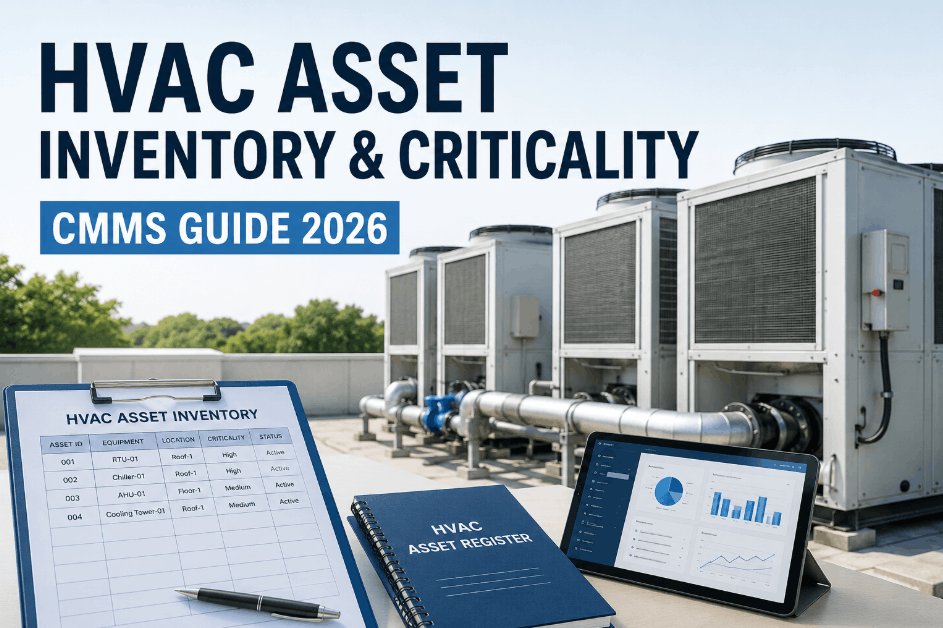
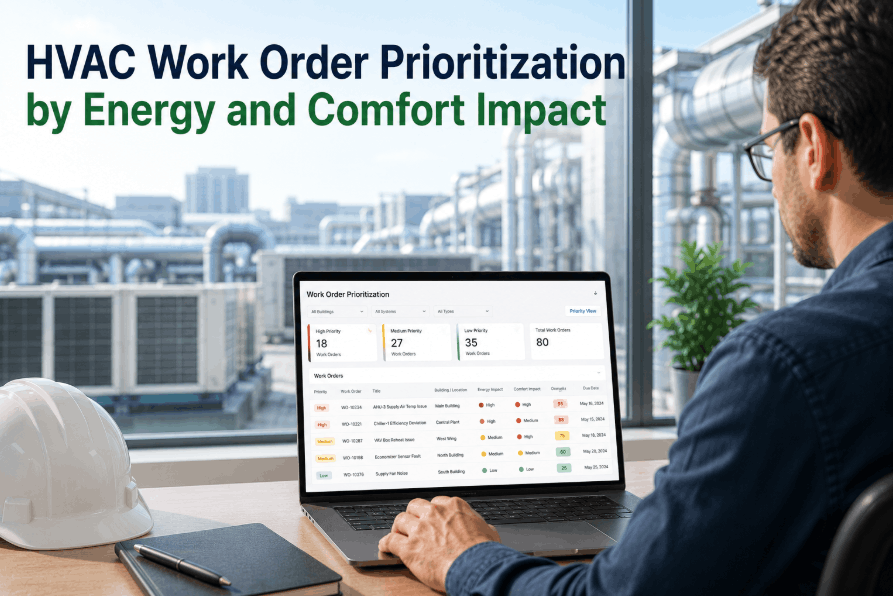
HVAC asset criticality assessment is one of the most consistently overlooked planning steps in facility maintenance — not because teams don't understand their equipment, but because criticality rankings are set informally during commissioning and never revisited as operational conditions change. When every HVAC asset is treated with equal urgency, maintenance labor gets distributed evenly across low-risk and high-risk equipment, leaving the systems that directly affect safety, production continuity, and occupant comfort with the same inspection frequency as non-critical components. The structural gap is familiar: no documented criticality matrix, no link between asset risk ranking and inspection intervals, no review process that connects failure consequence to maintenance resource allocation. This checklist helps facility managers, building engineers, and reliability leads confirm that HVAC assets are ranked by actual operational impact — so time-limited maintenance crews focus effort where failure consequences are highest. Oxmaint's Sign Up Free platform gives facilities teams digital asset criticality tracking, risk-based maintenance scheduling, and inspection priority management by asset class, failure consequence, and facility zone — so criticality drives maintenance decisions rather than gut instinct. From safety impact scoring to replacement planning, unstructured asset ranking is one of the most correctable sources of misallocated maintenance effort in commercial and industrial HVAC operations. Book a Demo to see how Oxmaint connects asset criticality scores to work order priority, PM frequency, and inspection scheduling — so the highest-consequence equipment gets the coverage it requires before failure creates unplanned downtime. Use this checklist before your next facility planning cycle to confirm that HVAC asset criticality is documented, current, and actively driving maintenance resource decisions across your portfolio.
1. Safety Impact Scoring & Life-Safety System Identification
Criticality assessment starts with safety. Before ranking by production or cost impact, confirm that all HVAC assets with life-safety implications are identified, documented, and classified at the highest criticality tier regardless of their operational condition at the time of review.
2. Production & Operational Continuity Impact Assessment
HVAC assets that directly support production continuity, process temperature control, or server room cooling carry operational consequence far beyond comfort. Confirm that production impact is scored independently from comfort impact so process-critical assets receive appropriate maintenance priority even when they serve non-occupied spaces.
3. Comfort Impact & Occupant Experience Classification
Comfort-serving HVAC assets still carry criticality distinctions based on the zones they serve. Confirm that occupant impact is classified by space type and occupancy sensitivity rather than treating all comfort equipment as equally low priority below life-safety and production tiers.
4. Maintenance Cost & Replacement Planning Impact Scoring
Cost impact scoring ensures that assets requiring expensive emergency repairs, long-lead replacement parts, or extended downtime for servicing receive criticality weighting that reflects their total failure cost — not just their operational consequence in isolation.
5. Criticality Review Cadence & Matrix Maintenance
A criticality matrix that is built once and never updated reflects conditions that no longer exist. Confirm that criticality rankings are reviewed on a defined cadence and that the review process has an owner, a trigger list, and a documented outcome — not just an informal annual conversation during budget season.