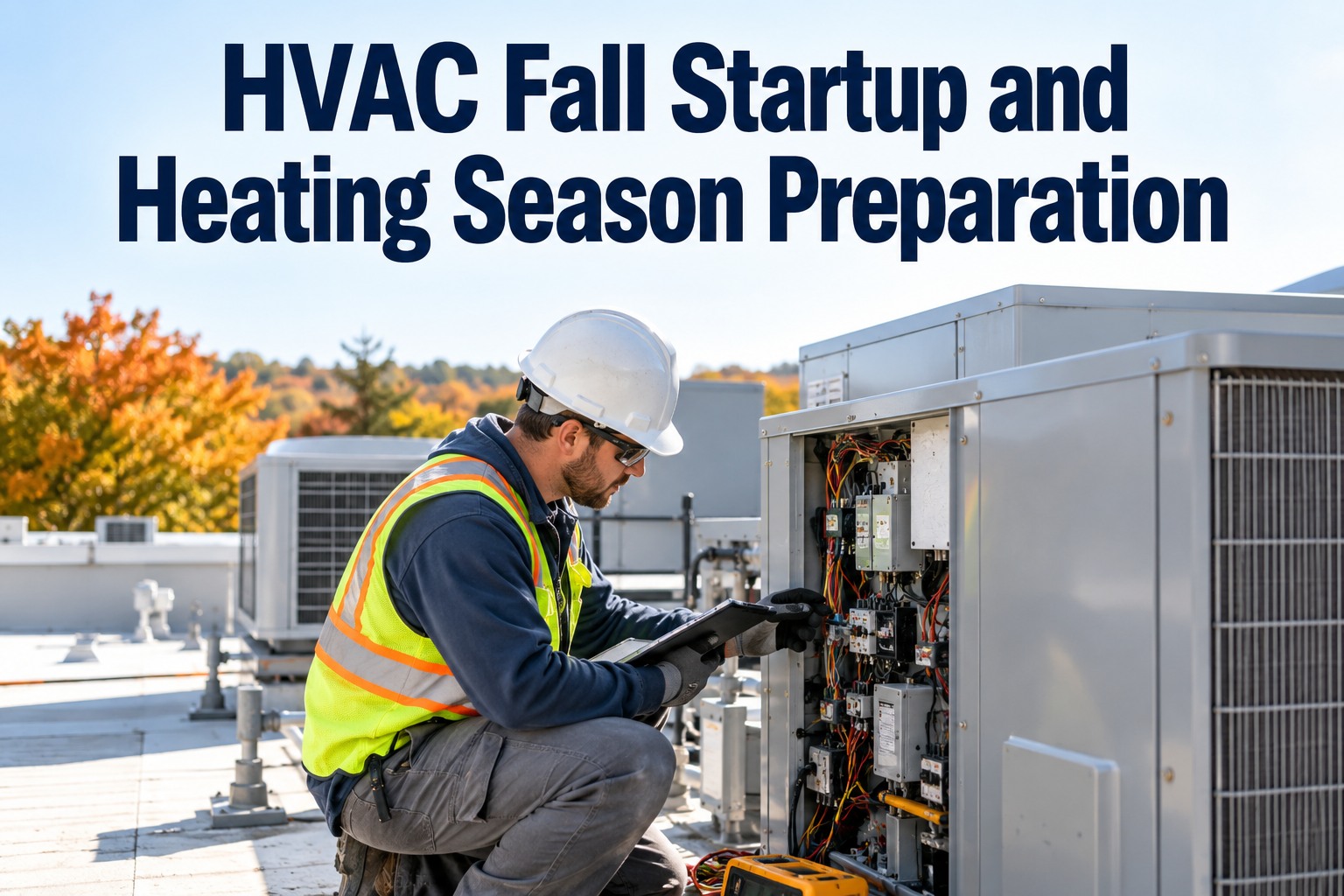
The first cold snap is the worst time to discover a boiler won't fire, a heat exchanger is cracked, or a chiller loop froze because nobody added glycol. By then the building is cold, the complaints are stacking up, and the emergency call costs a premium. Fall startup is where the heating season is won or lost — combustion tuned, safeties tested, freeze protection verified before the temperature drops. OXMAINT AI, the AI-powered HVAC CMMS, turns that startup into a scheduled, checkable, recorded procedure so nothing gets skipped before winter.
Commercial HVAC · Fall Startup · Heating-Season Prep · 2026
HVAC Fall Startup & Heating-Season Preparation
A boiler that won't light on the first cold morning. A frozen coil nobody protected. A combustion setting drifting toward unsafe. OXMAINT AI, the AI-powered CMMS and maintenance management software, runs the whole startup on one platform: seasonal trigger dates open the work orders, techs work a category-by-category checklist on a phone, each failed check becomes a tracked issue, and every reading is recorded — so the building hits heating season ready for comfort and safe on combustion.
1Startup Task
→
2Inspect & Tune
→
3Flag Issue
→
4Work Order + Record
HEATING-SEASON READINESS
Boiler & heat exchanger✓
Burner & combustionO2 3.1% ✓
Safety valve · B-2weeping · WO
Freeze protection−10°F ✓
Changeover & recordsin progress
<200 ppm
target flue-gas CO after a proper burner tune
2–4%
target flue-gas O2 for clean, efficient combustion
>80%
combustion efficiency a tuned boiler should hold
1 week
window to verify freeze protection after final cooling
Fall Startup Decides How Winter Goes
Heating equipment sits idle all summer, and idle equipment hides its faults — a seized valve, a fouled sensor, a cracked exchanger, a glycol loop that was never topped up. Fire it cold in December and those faults surface as failures, at the worst time and the highest cost. A disciplined fall startup finds them in October instead. OXMAINT AI schedules that startup automatically so it happens before the weather forces it. Start free and schedule your fall startup in OXMAINT AI.
Combustion Analysis — Target Readings
< 200 ppm
Carbon monoxide (CO)
> 80%
Combustion efficiency
AHJ
Compliance with local authority
Verified with a flue-gas analyzer (O₂, CO, CO₂, flue temp) at low and high fire. Waterside chemistry target: pH 8.5–10.5, dissolved oxygen below 0.005 ppm.
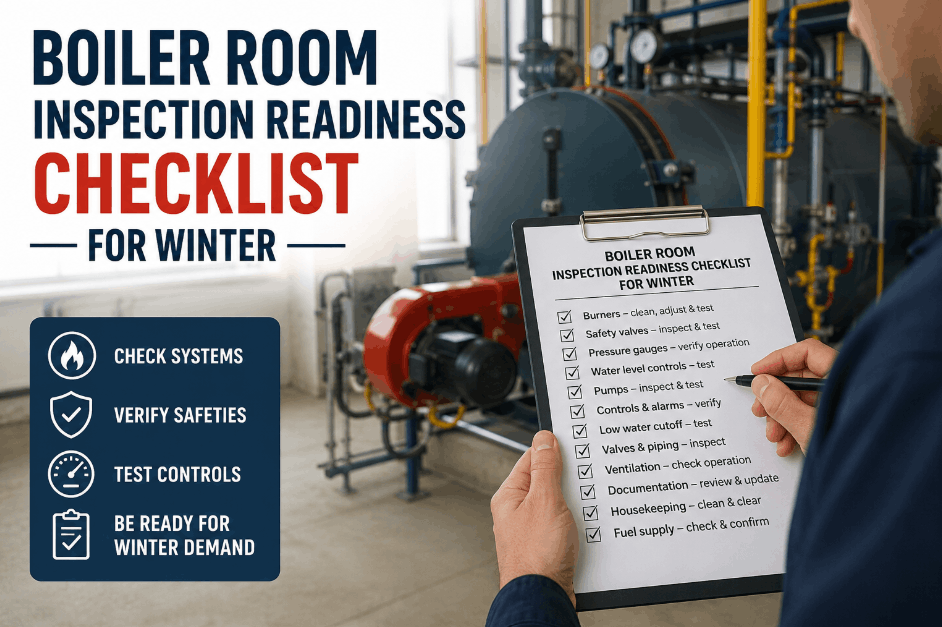
The Fall Startup Checklist — Five Categories
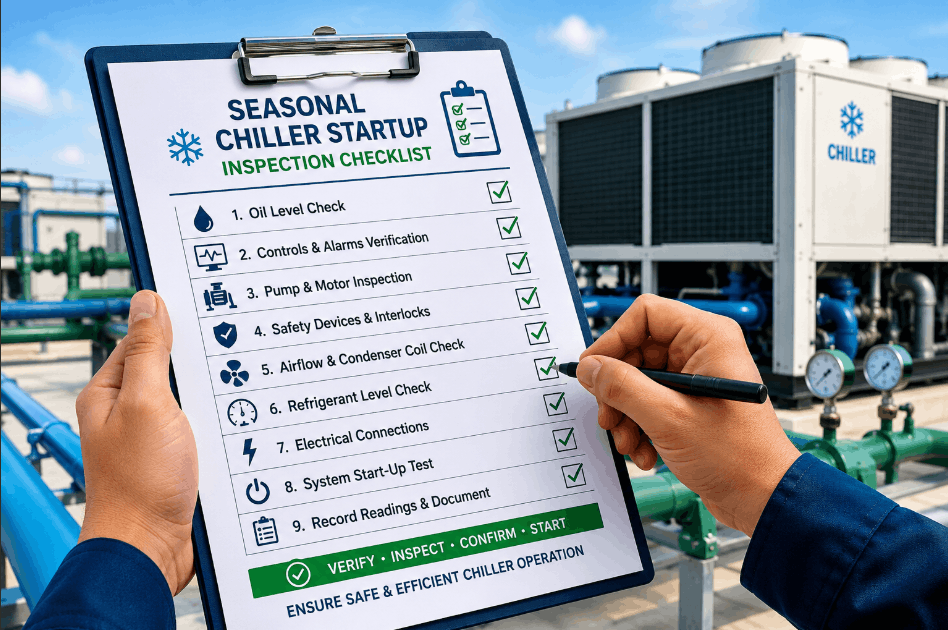
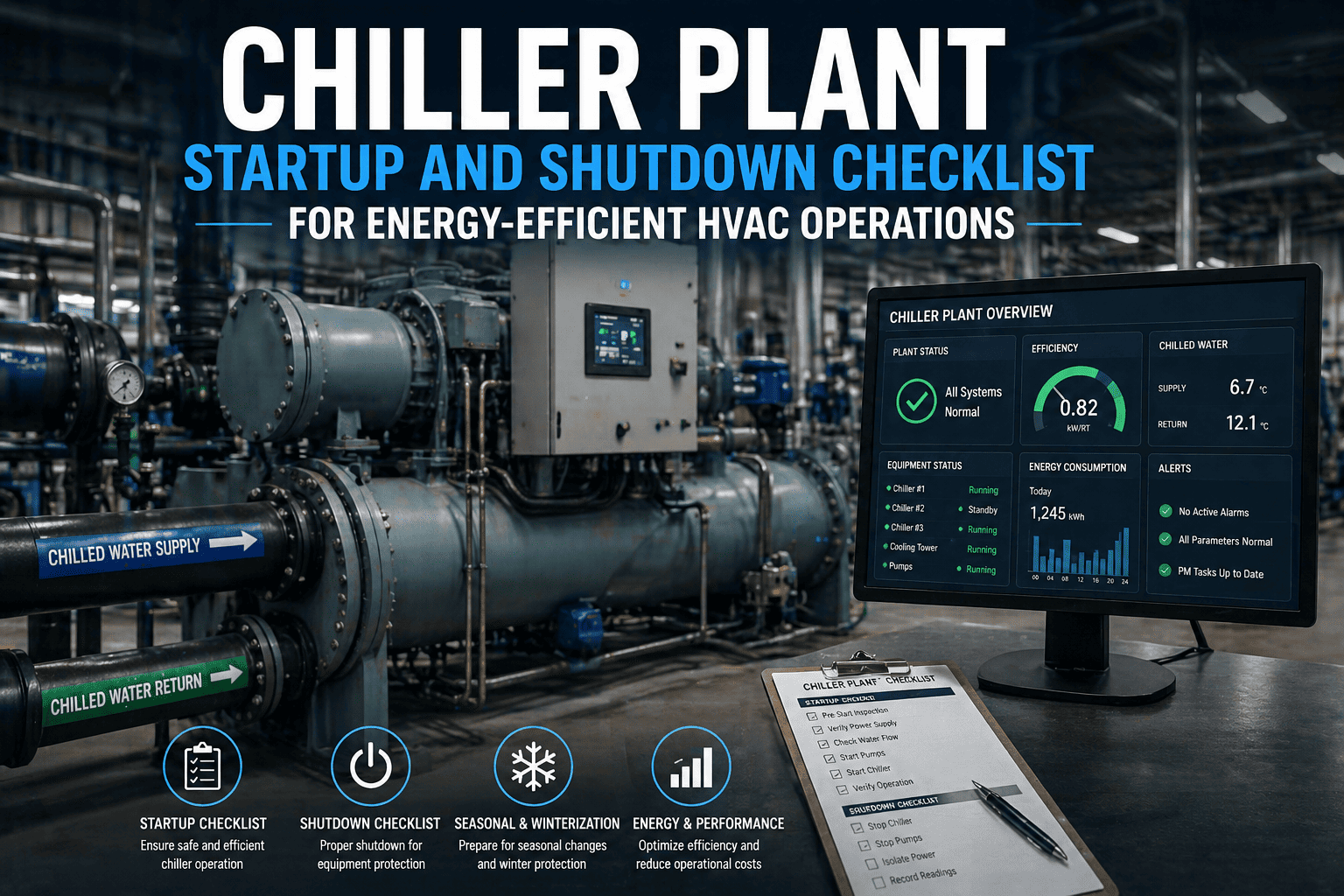
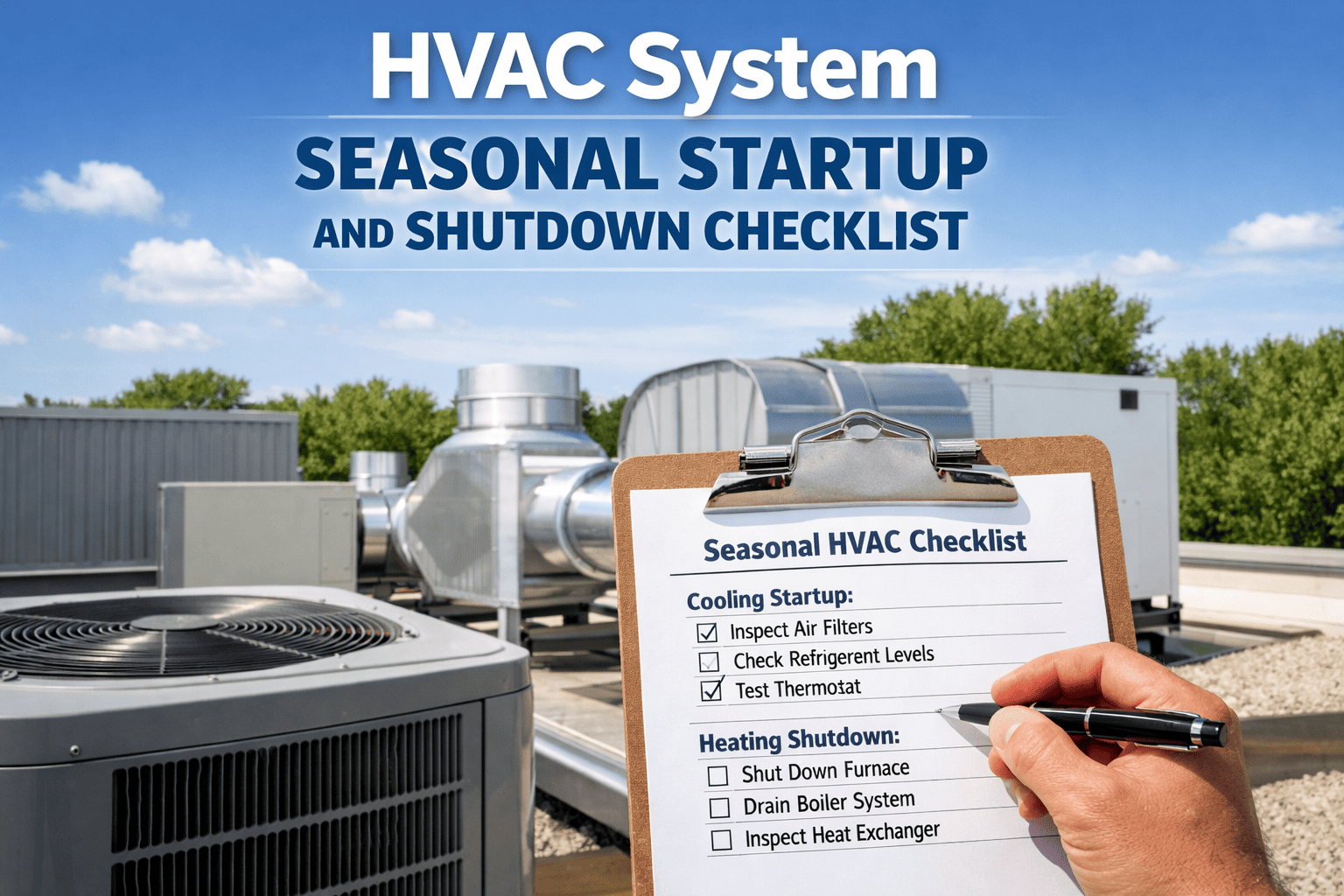
This is the procedure itself: five categories that take heating equipment from summer idle to safely firing, with the specific checks under each. Run it as your fall route, or load it into OXMAINT AI so every failed check becomes a work order before the season starts. Book a demo to load this startup checklist into OXMAINT AI.
1Boiler & Heat Exchanger
Fire-side inspected for soot, hot spots, overheating
Water-side checked for scale, pitting, corrosion (borescope)
Tube-wall thickness measured by UT if fouling suspected
Refractory and burner block checked for cracks, spalling
Casing scanned with IR for hot spots (refractory failure)
2Burner & Combustion
Nozzles, orifices, flame-retention head cleaned
Flame shape, color, stability verified low and high fire
Linkage and modulation actuator move full range
Combustion analyzed: CO <200 ppm, O₂ 2–4%, eff >80%
Combustion-air damper operates across firing range
3Safety Controls
Safety valve manual lift: lifts freely, reseats no weeping
Low-water cutoff slow-drain test (burner cuts off — CSD-1)
Flame safeguard lockout tested by simulating flame failure
UV scanner / flame rod signal checked (microamps)
Gas train, pressure switches and shutoff verified
4Freeze Protection
Evaporator drained or glycol added within 1 week of cooling end
Glycol concentration protects to −10°F below site low (hydrometer)
Refrigerant standing pressure normal for ambient (EPA 608)
Oil / crankcase heater energized, amperage matches rating
Control-panel covers latched, weatherstripping intact
5Changeover & Records
Cooling-to-heating changeover completed on controls/BAS
Heating setpoints and schedules restored for occupancy
Flue and stack inspected clear (blockage, nests, corrosion)
All combustion and safety readings logged with the date
Refrigerant leak log current (>50 lb charge → 3-yr records)
Every failed check carries a work order before first firing
A Boiler That Fails in December Was Skipped in October.
Almost every heating-season emergency traces back to a startup step nobody did or nobody recorded. OXMAINT AI opens the startup work orders on schedule, checks each item, and turns every failure into a tracked fix — so winter is a season you prepared for, not one that surprises you.
From Startup Task to Heating-Ready
A checklist that ends at "checked" doesn't keep a building warm — the value is in what happens to the checks that fail, and in the record that proves the safe ones passed. OXMAINT AI carries each startup item from a scheduled task to a verified, logged result. Here's the loop. Book a demo to run this startup loop in OXMAINT AI.
01
Season Triggers the Work
Fall trigger dates open the startup work orders automatically, so the procedure begins before the first cold morning forces it.
↓
02
Tech Works the Checklist
Category by category on a phone — boiler, burner, safeties, freeze protection, changeover — with target readings shown inline.
↓
03
Capture the Readings
Combustion numbers, valve tests and glycol concentration are recorded with photos — the safe checks are documented, not assumed.
↓
04
Failed Checks Become Work Orders
A weeping valve or an out-of-range reading opens a ranked work order right away — fixed before the equipment is put into service.
↓
05
Heating-Season Ready & Recorded
Startup closes with a full compliance record retained — combustion, safety and freeze-protection evidence ready for the AHJ.
Why Run Fall Startup in a CMMS
A seasonal startup on paper is a stack of forms that may or may not get done and can't be found in an audit. In OXMAINT AI it's a scheduled, enforced, recorded procedure. Start free and put your startup on autopilot in OXMAINT AI.
TRIGGER
Seasonal Auto-Scheduling
Work orders open on fall trigger dates on their own, so startup happens on the calendar, not after the first failure.
GUIDE
Target Readings Inline
CO, O₂, efficiency and glycol targets shown right on the task, so a tech knows a pass from a fail on the spot.
CAPTURE
Readings & Photo Evidence
Combustion numbers and safety tests logged with photos as the work happens — proof the safe checks passed.
ACT
Failed Check to Work Order
Any out-of-range or failed item raises a ranked work order, tracked to closure before the equipment runs.
COMPLY
Audit-Ready Records
Combustion, ASME safety and EPA 608 refrigerant records retained and retrievable for the AHJ in minutes.
REPEAT
Same Procedure, Every Site
One standardized startup runs across every building and boiler, so readiness doesn't depend on who's on shift.
“
We used to 'start the boilers' the week it got cold, and every year something bit us — a failed low-water cutoff, a coil that froze because the glycol was never checked, a combustion setting way out of range. Moving fall startup into a scheduled checklist changed the rhythm entirely. The work orders open in October, the readings get logged, and the things that would have failed in January get caught and fixed while it's still mild. Our first cold snap is boring now, which is exactly what I want.
Facilities Maintenance Manager · Commercial Property Group
Frequently Asked Questions
When should fall HVAC startup happen?
Before the first cold weather forces it — early enough to find and fix faults while it's still mild, and within about a week of ending cooling operation for freeze protection. OXMAINT AI opens the startup work orders on seasonal trigger dates so timing isn't left to chance.
Start free and schedule your startup.
What combustion readings should a fall burner tune hit?
As a general target, CO below 200 ppm, O2 between 2–4%, and combustion efficiency above 80%, verified with a flue-gas analyzer at low and high fire and in line with your local AHJ. OXMAINT AI shows these targets right on the task.
Book a demo to see combustion capture.
What does freeze protection verification involve?
Either drain the evaporator or add glycol to protect below the site's low temperature — a hydrometer confirms the concentration — plus a refrigerant standing-pressure check and energizing the oil/crankcase heater. Do it within about a week of the last cooling run.
Start free and track freeze protection.
Which safety controls must be tested at startup?
The safety valve (manual lift — lifts freely, reseats without weeping), the low-water cutoff (slow-drain test, burner cuts off, per ASME CSD-1), the flame safeguard lockout, and the gas train and pressure switches. Each is a pass/fail check in OXMAINT AI.
Book a demo to see the safety checks.
Why keep the startup records in a CMMS?
Because combustion, ASME safety and EPA 608 refrigerant records must be documented — systems over 50 lb of charge need three years of leak records — and an auditor wants them fast. OXMAINT AI captures each reading at the task and retrieves the record in minutes.
Start free and keep audit-ready records.
Walk Into Winter Ready, Not Reacting.
Run HVAC fall startup on the OXMAINT AI maintenance management software — seasonal auto-scheduled work orders, a category-by-category boiler and combustion checklist, freeze-protection verification, failed checks turned into tracked fixes, and audit-ready records for the AHJ. Catch the December failure in October.