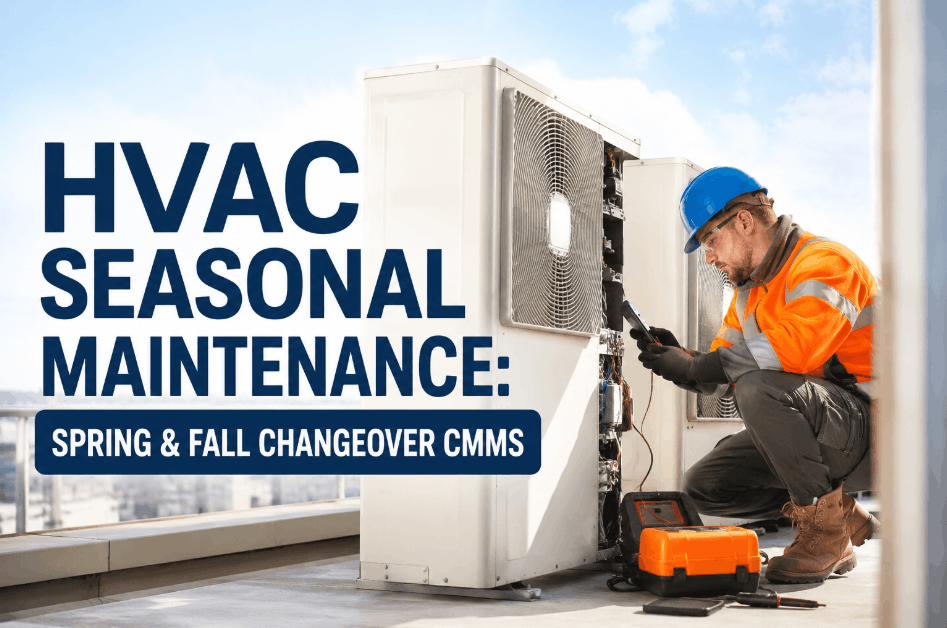
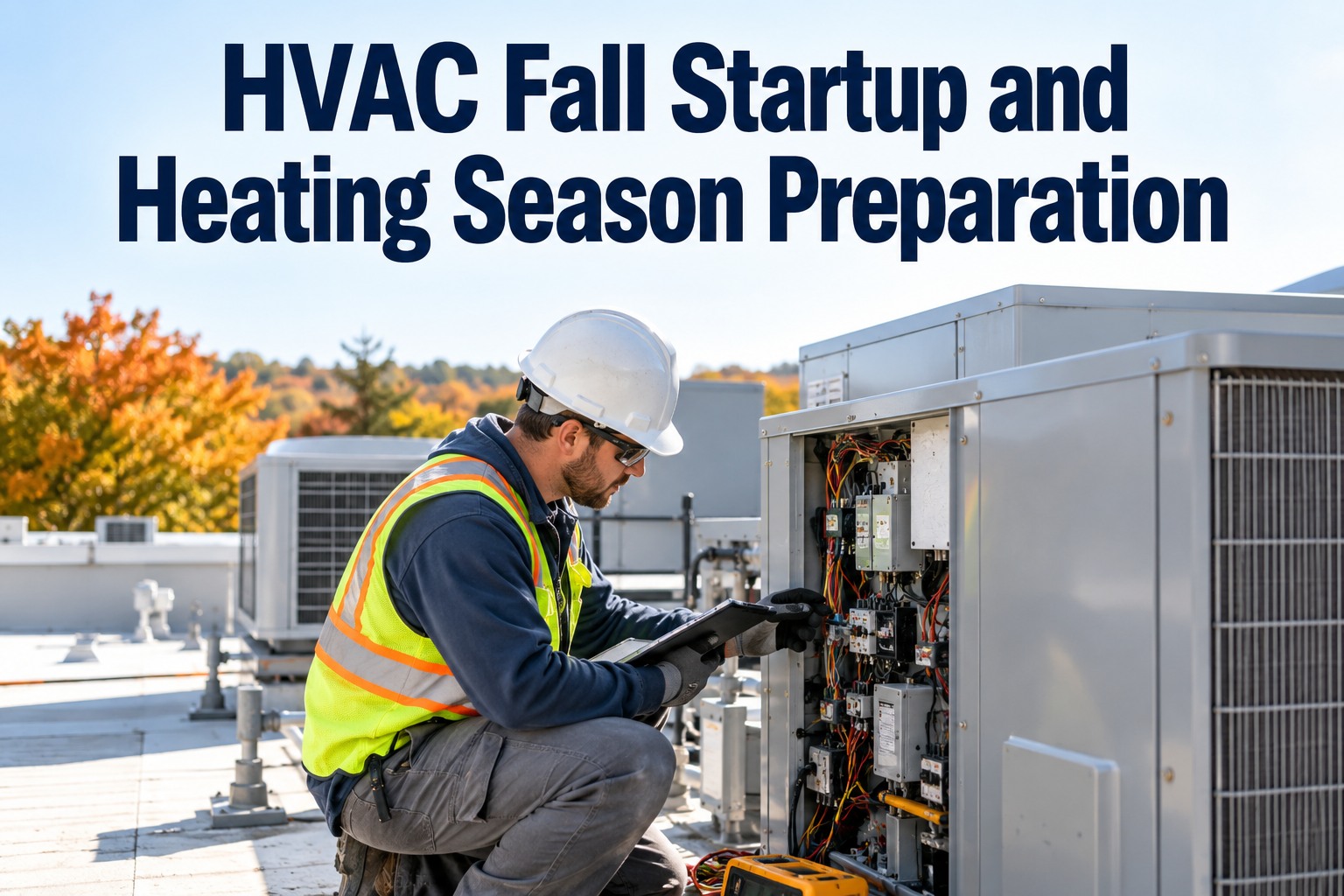
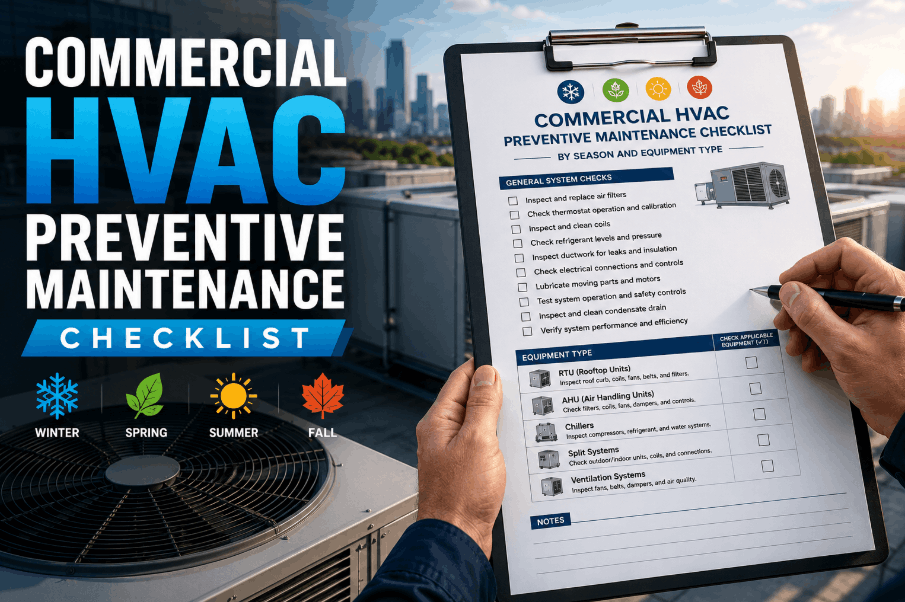
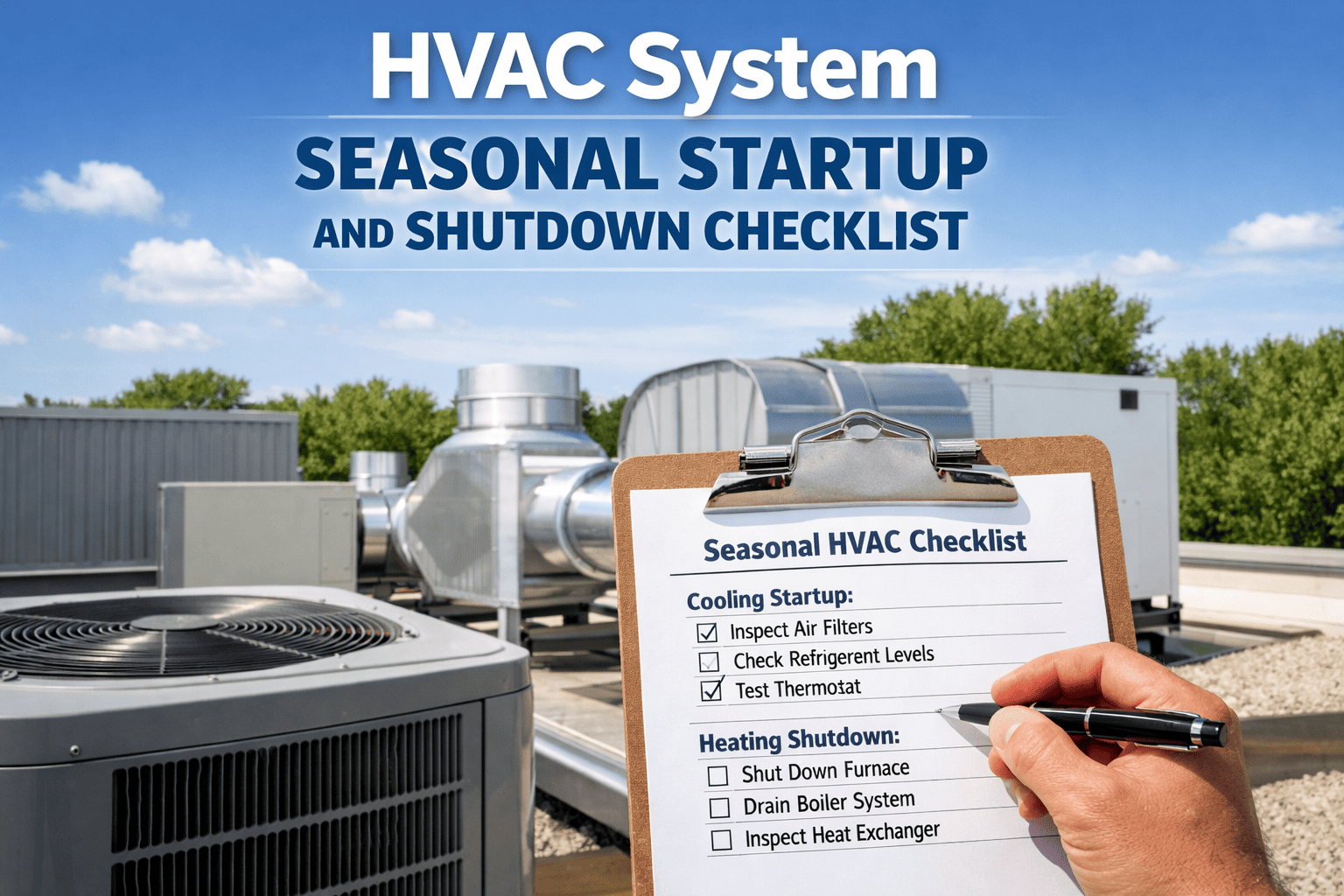
HVAC seasonal maintenance is the discipline of preparing heating and cooling systems for the demand shift before each season arrives — running spring cooling-season prep, fall heating changeover, and winterization tasks two to four weeks ahead of the temperature transition rather than after the system is already under load. Most commercial HVAC systems do not fail overnight; they fail because the right seasonal task was skipped at the wrong time of year. Spring startup activates cooling after winter dormancy and carries the highest Legionella risk in cooling tower systems, while fall is generally the higher-stakes inspection because a cracked heat exchanger becomes a carbon monoxide hazard the moment the furnace fires. Sign Up Free to run seasonal HVAC changeover checklists digitally in OxMaint's CMMS. When seasonal work orders are tracked on paper, facilities teams lose the audit trail that connects each finding to the asset — turning a diagnosable pattern into a seasonal guessing cycle. Book a Demo to see how OxMaint auto-generates spring and fall changeover work orders across a building portfolio.
HVAC Preventive Maintenance · Seasonal · 2026
HVAC Seasonal Maintenance: Spring & Fall Changeover CMMS
Schedule cooling-season prep, heating changeover, and winterization tasks before the demand shift — with CMMS-based seasonal work order automation.
2–4 wkLead time seasonal checklists should run before the season transition, not after temperatures shift
5–15%Energy reduction consistently documented from filter changes alone at seasonal changeover
FallGenerally the higher-stakes seasonal inspection — heat exchanger cracks are a CO risk
50%Total maintenance cost reduction from planned programs vs reactive, per U.S. DOE
4 Seasonal HVAC Changeover Phases Every Facility Runs
A seasonal HVAC program is not one annual event — it is four coordinated transitions, each with distinct acceptance criteria and failure modes. The phases below map the spring cooling prep, summer peak-load monitoring, fall heating changeover, and winterization tasks where OxMaint's inspection workflows give facilities teams a documented record instead of a paper walkthrough. Sign Up Free to load your seasonal checklist templates into OxMaint's preventive maintenance module.
01
Spring Cooling-Season Prep
Timing: Late February to Early March
Legionella Risk
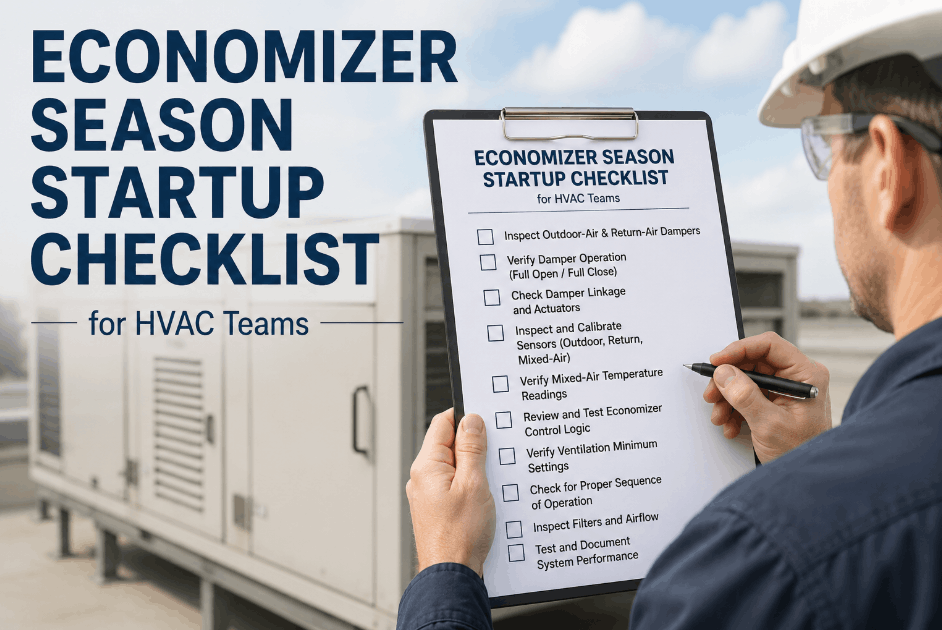
Replace AHU filters per unit, cycle economizer dampers through full open and close, review BAS cooling setpoints, and document cooling tower biocide treatment before startup. Damper drift runs the system as 100% recirculation, eliminating free cooling and ventilation compliance.
02
Summer Peak-Load Monitoring
Timing: June through August
Efficiency Driver
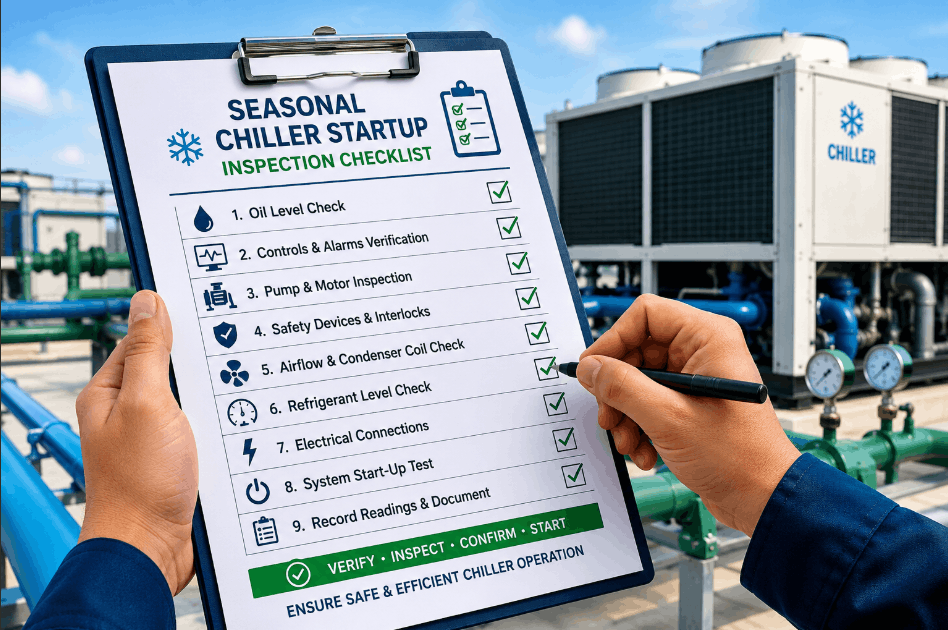
Log chiller kW/ton monthly against design — degradation above 15% signals condenser tube fouling. Track condenser approach temperature and refrigerant pressures. Condenser fouling is detectable weeks before compressor overload through routine water chemistry monitoring.
03
Fall Heating Changeover
Timing: Late August to Early September
Safety Critical
Inspect the heat exchanger for cracks, test safety controls and flue, clean burners and ignition, and check belt tension after summer. Gas furnaces are the primary source of carbon monoxide incidents — this inspection is the highest-stakes item on the seasonal calendar.
04
Winterization & Protection
Timing: November through February
Asset Protection
Shut down and protect cooling equipment, inspect roof drains and RTU curb flashings for ice dam formation, and update night setback schedules. Ice damming around drain sumps allows water infiltration that damages interior structure and HVAC equipment.
Seasonal HVAC Management — Without vs. With OxMaint
The gap between a paper seasonal checklist and a scheduled program is visibility: a paper list tells you what to check, but not when it was done, who did it, what was found, or what happened next. The comparison below shows what changes when OxMaint structures seasonal scheduling, inspection logging, and corrective work orders. Book a Demo to walk through your current changeover process and identify the tracking gaps OxMaint closes.
Seasonal HVAC Program Maturity — Where Does Your Facility Score?
Seasonal HVAC capability ranges from complaint-triggered scrambling to a fully scheduled CMMS program with reading-based acceptance criteria and automatic corrective work orders. The framework below identifies where a facility operates today and the specific seasonal gap driving the most avoidable failures. Book a Demo to assess your seasonal program maturity with an OxMaint solutions engineer.
Seasonal HVAC Program Maturity
Score 5 = scheduled CMMS program · Score 1 = complaint-response only
5
Auto-Scheduled Changeover · Reading-Based Acceptance · Corrective Automation
Spring and fall work orders generate ahead of the transition. Technicians record actual readings against acceptance criteria. Flagged items become corrective work orders automatically with photo documentation.
Profile: Seasonal failures caught before demand peaks. Every changeover builds trend data that sharpens the next interval.
4
Scheduled Inspections · Partial Reading Capture
Seasonal inspections scheduled and logged. Major findings noted but readings not consistently recorded against acceptance values. Corrective tasks tracked on significant items only.
Action: Record readings on every seasonal item. Trend data is what turns a checklist into failure prevention.
3
Calendar Tune-Ups · No Trend Comparison
Spring and fall tune-ups happen on a calendar, but findings are not compared season to season. Filter and coil service driven by date rather than condition.
Gap: Calendar intervals miss load-driven variation. Reading capture and corrective tracking are the highest-impact next step.
2
Informal Rounds · Reactive Changeover
Seasonal prep done informally when someone remembers. No structured checklist. Cooling or heating activated at first demand rather than ahead of it.
Risk: Changeover failures surface during the first heat wave or cold snap — at emergency rates and peak wait times.
1
No Seasonal Structure
Systems run until a complaint arrives. No seasonal prep, no changeover checklist, no CMMS record between events.
Risk: Every season transition is an unplanned emergency. Legionella and CO safety documentation is absent when auditors ask.
Schedule Every Changeover Before the Season — Not After the Complaint.
OxMaint auto-generates seasonal HVAC work orders, captures readings against acceptance criteria, and turns every flagged item into a tracked corrective task — in one CMMS platform.
How OxMaint Structures Seasonal HVAC Maintenance
OxMaint connects seasonal scheduling, mobile inspection forms, photo documentation, and automatic corrective work orders into a single changeover workflow. Every spring and fall inspection becomes a documented record — with readings tracked against design values per unit and deviations converted into follow-up tasks before the season peaks. Sign Up Free to build your seasonal HVAC program in OxMaint. Book a Demo to see how OxMaint adapts to your changeover schedule and asset list.
Seasonal Auto-Scheduling
2–4 Weeks Ahead
Work orders before the transition
OxMaint generates spring and fall changeover work orders on schedule, assigned to technicians and tracked to completion before the demand shift arrives.
Mobile Inspection Forms
Readings, Not Pass/Fail
Acceptance criteria per item
Technicians record actual values against design acceptance criteria on mobile — the trend data that predicts seasonal failures before they happen.
Corrective Work Orders
Every Flagged Item
Findings become tracked tasks
When an inspection flags an item, OxMaint raises a corrective work order automatically — with photo documentation linked to the asset record.
Compliance Documentation
Legionella & CO Records
Safety proof linked to the asset
Cooling tower biocide records and heat exchanger inspection findings archive against the asset — audit-ready without assembling scattered files.
"
We used to activate heating on the first cold morning and then spend two weeks chasing furnace complaints. After moving our spring and fall changeover into OxMaint, the work orders now fire in late August. Last fall the inspection caught a cracked heat exchanger and a slipping belt on two rooftop units before anyone felt a temperature swing. Both were logged with readings and photos, corrected under a scheduled work order, and documented against the asset. The season started quietly for the first time in years.
Facilities Director — Commercial Office Portfolio, 9 buildings, 240,000 sq ft, Ohio, USA
Frequently Asked Questions
How far in advance should seasonal HVAC maintenance be scheduled?
Seasonal inspections should be completed two to four weeks before the season transition — not after temperatures have shifted. That means late February to early March for spring cooling and late August to early September for fall heating.
Which seasonal inspection is more critical, spring or fall?
Fall is generally the higher-stakes inspection for commercial buildings. A cracked heat exchanger becomes a carbon monoxide hazard once the furnace fires, so heat exchanger and flue checks carry safety weight beyond comfort.
How does OxMaint support HVAC changeover scheduling?
OxMaint auto-generates spring and fall changeover work orders ahead of each transition, assigns them to technicians, and tracks completion. Findings are logged with readings and photos against the asset record.
How often should commercial HVAC filters be replaced?
A common baseline is pre-filters every one to three months and final filters every three to six months. The practical trigger is differential pressure exceeding the manufacturer maximum — track it on the inspection record rather than by calendar alone.
Can OxMaint manage seasonal maintenance across multiple buildings?
Yes. OxMaint structures assets, seasonal schedules, and work orders across multiple buildings and campuses, giving facilities directors one consolidated view of changeover status across the portfolio.
Turn Every Season Change Into a Scheduled Program — Not a Scramble.
OxMaint structures seasonal HVAC scheduling, reading-based inspections, and corrective work orders for facilities teams — so changeover happens before demand peaks, not after complaints.