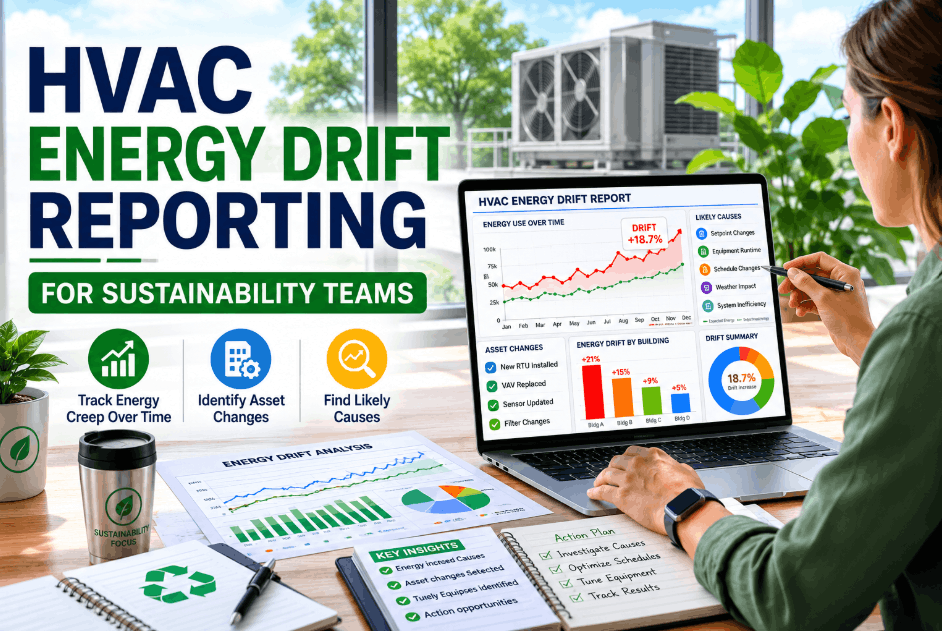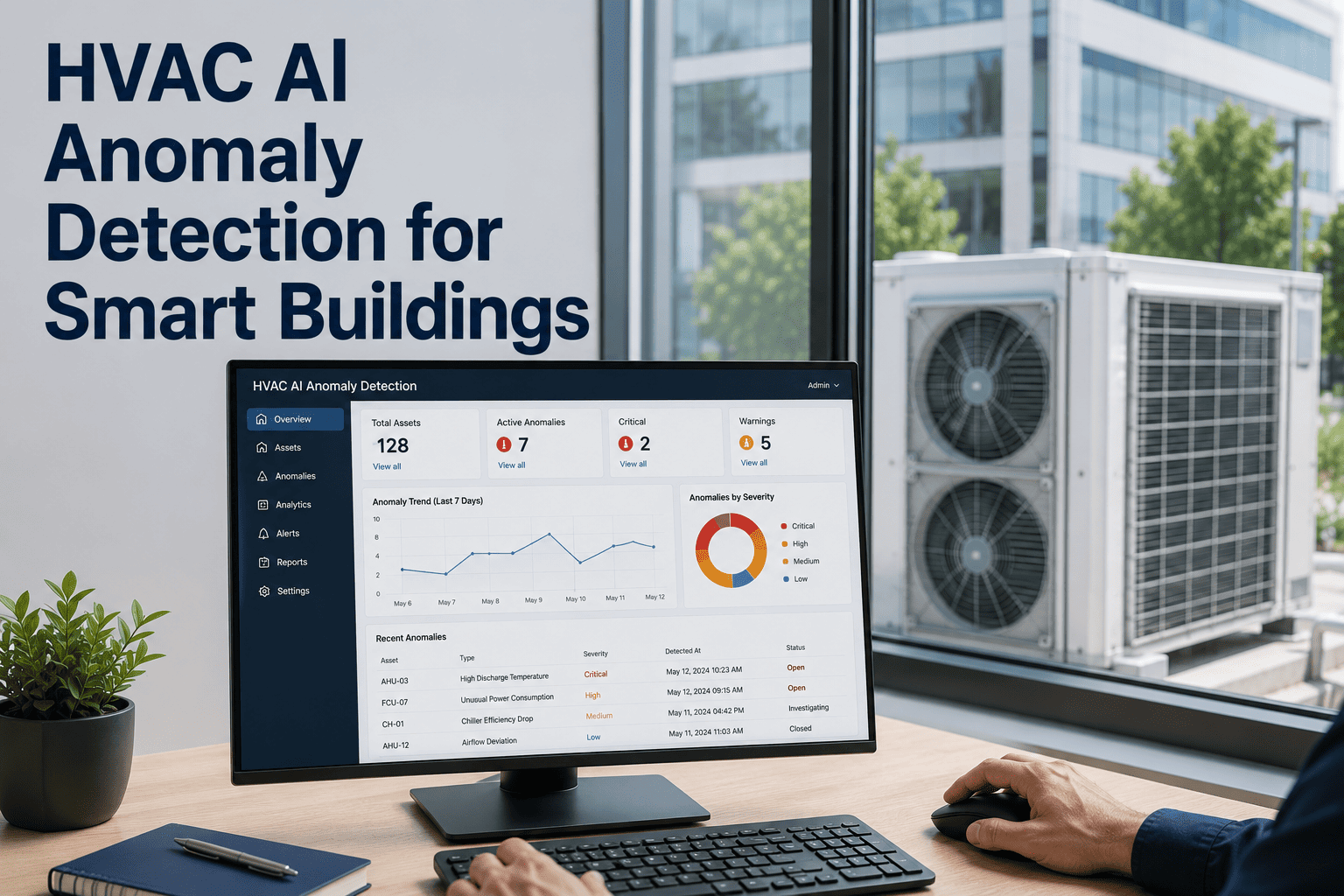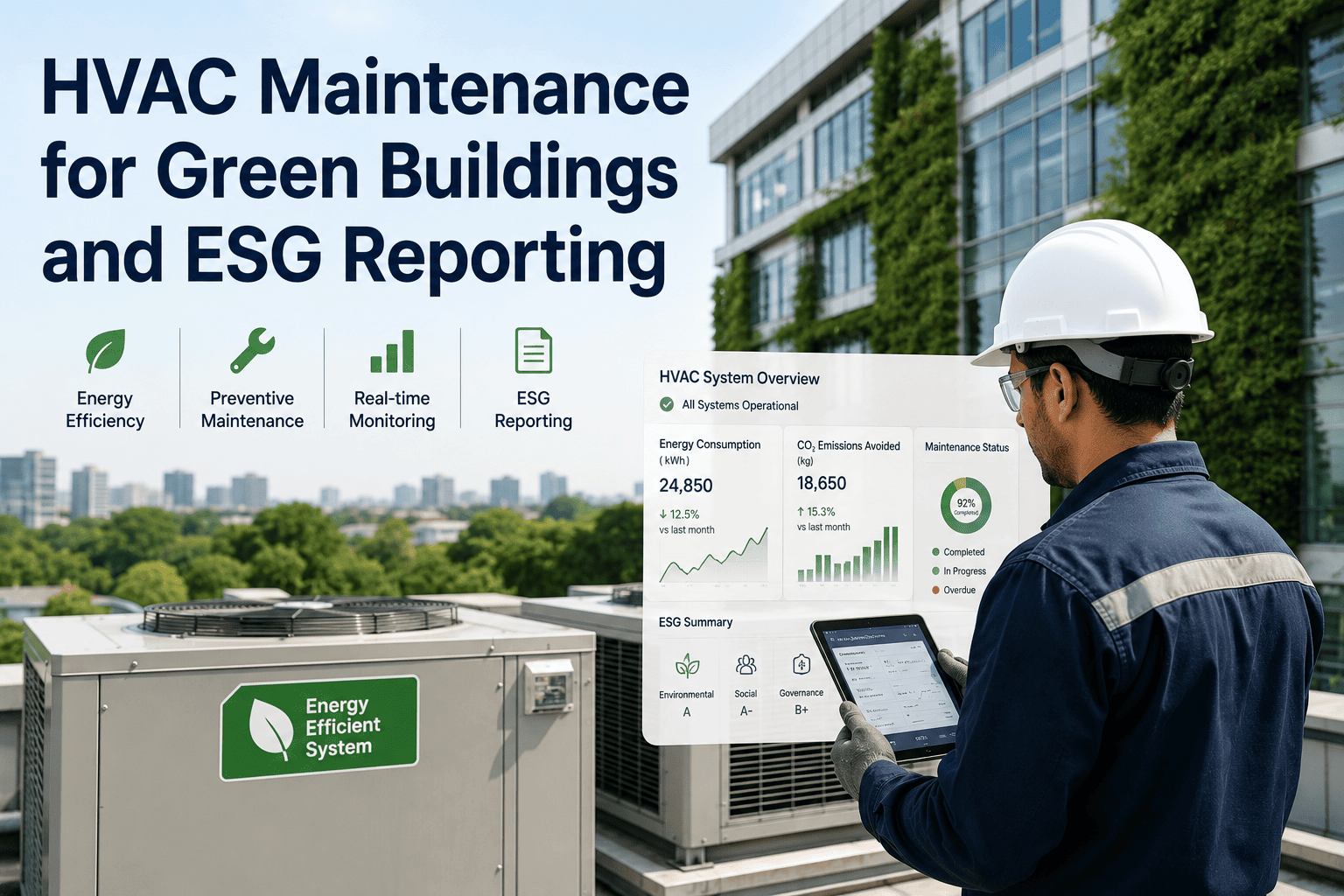
Green building certifications — LEED, BREEAM, WELL — are only as credible as the maintenance data behind them. An HVAC system that leaks refrigerant, runs above energy baseline, and misses quarterly PM tasks is not a green asset regardless of what the design certificate says. OxMaint's Energy and ESG Reporting module links every HVAC maintenance action to the energy, refrigerant, IAQ, and compliance data your ESG reports demand — automatically, without separate data entry. Book a demo to see how OxMaint builds your green building HVAC evidence trail from day one.
HVAC Maintenance for Green Buildings and ESG Reporting
Your LEED score, BREEAM rating, and ESG report are only as strong as your HVAC maintenance records. Here is how to link every PM, refrigerant check, and energy reading to the metrics investors and regulators now require.
Green Buildings Are Certified at Design. Maintained Into Non-Compliance.
A building earns its LEED Platinum at handover. Three years later, the chiller COP has degraded 14%, two AHUs have unfixed refrigerant leak alerts, and filter replacements are two months behind schedule. The certification is still displayed in the lobby. The ESG report still shows the building as performing. The data says otherwise — but no one has connected HVAC maintenance to ESG reporting.
The Five HVAC Metrics Your ESG Report Must Include
kWh per square foot per asset — tracked monthly and compared against design baseline. Maintenance-attributed deviation is flagged when a chiller, AHU, or pump runs above efficiency target due to fouling, wear, or missed PM. OxMaint auto-calculates this from metered data and maintenance records combined.
Every refrigerant top-up event logged against the asset — charge amount, refrigerant type, GWP factor, and technician sign-off. Cumulative annual leak rate calculated automatically against EPA Section 608 thresholds and LEED EQ requirements. Critical for HFC phase-down compliance reporting through 2030.
MERV filter change history, CO₂ sensor calibration records, ventilation rate verification, and coil cleaning logs — all linked to the HVAC asset and timestamped. WELL Building Standard and LEED v4.1 IAQ credits require documented evidence of maintenance-driven IAQ management, not just design intent.
ASHRAE 180, LEED O+M, and BREEAM In-Use all require documented PM completion rates above defined thresholds. OxMaint tracks compliance at the asset, zone, floor, and building level — generating the breakdown report that certification auditors require with a single export, no manual assembly.
Total HVAC-attributed carbon intensity (kgCO₂e/sqft/year) calculated from energy consumption plus refrigerant emissions plus maintenance-related operational waste. Comparable across your portfolio for investor ESG disclosures, GRI 302, GRESB submissions, and CDP climate reporting.
Which Green Certifications Require HVAC Maintenance Documentation
| Certification | PM Documentation Required | Energy Data Required | Refrigerant Tracking | IAQ Records |
|---|---|---|---|---|
| LEED O+M v4.1 | Yes — ASHRAE 180 basis | Yes — 12-month minimum | Yes — leak log required | Yes — filter & coil records |
| BREEAM In-Use | Yes — asset-level records | Yes — metered by system | Recommended | Yes — ventilation PM log |
| WELL v2 | Recommended | Recommended | Recommended | Yes — MERV, CO₂, coil |
| GRESB Rating | Yes — maintenance policy | Yes — whole building | Yes — Scope 1 refrigerant | Optional bonus points |
| EPA ENERGY STAR | Best practice guidance | Yes — Portfolio Manager | Recommended | Recommended |
What Sustainability Leaders Say About HVAC and ESG
The credibility gap in green building performance is almost always a maintenance documentation gap. Design-stage certifications prove what a building was intended to do. ESG investors and disclosure frameworks increasingly want proof of what the building actually does — and that evidence lives in the HVAC maintenance record. A chiller that has not had its tubes cleaned in 18 months is running at degraded COP. A split system with an unreported refrigerant top-up has an invisible Scope 1 emission on your carbon inventory. When I audit buildings for LEED O+M recertification, the most common failure point is not the technology — it is the absence of a documented, timestamped maintenance trail that connects the work your facilities team does every day to the ESG outcomes your investors are reporting every quarter. A CMMS that automatically attributes maintenance actions to energy, refrigerant, and IAQ metrics is not a sustainability tool — it is a business risk management tool. The sustainability reporting is what happens when the maintenance data is clean.
Frequently Asked Questions
How does OxMaint calculate HVAC-attributed carbon intensity for ESG reporting?
OxMaint uses a three-layer model. First, energy consumption per HVAC asset is metered or estimated from runtime and nameplate data, then converted to Scope 2 carbon using the building's grid emission factor. Second, refrigerant top-up events are logged per asset with GWP factors applied to calculate Scope 1 fugitive emissions. Third, maintenance-attributed energy waste — the extra kWh consumed due to fouled coils, degraded COP, or missed PM — is quantified as avoidable emissions. The combined figure generates a building-level kgCO₂e/sqft/year metric comparable across portfolio for GRESB, CDP, and GRI 305 reporting. Book a demo to see the carbon calculation methodology in detail.
Can OxMaint generate the LEED O+M documentation required for recertification?
Yes. OxMaint's ESG export covers the LEED O+M Existing Buildings requirements for Energy and Atmosphere, Indoor Environmental Quality, and Operations and Maintenance credits. The export includes PM completion rates by asset class, energy consumption data by system, refrigerant log with GWP calculations, and IAQ maintenance records — all formatted with timestamps and technician signatures. Most facility teams using OxMaint reduce LEED recertification documentation preparation from 3–5 days to under 4 hours. Start a free trial and connect your first HVAC asset today.
What refrigerant data does OxMaint track for HFC phase-down compliance?
OxMaint logs every refrigerant service event per asset: refrigerant type (R-410A, R-32, R-134a, etc.), charge added, charge recovered, technician certification number, and service date. Annual leak rate is calculated automatically against EPA Section 608 thresholds. GWP-weighted totals are aggregated for Scope 1 reporting. As the AIM Act HFC phase-down schedule takes effect through 2030, OxMaint's refrigerant asset register supports transition planning by flagging high-GWP equipment and projected replacement timelines. Book a demo to review refrigerant tracking for your equipment portfolio.
Does OxMaint integrate with energy management systems for ESG reporting?
Yes. OxMaint integrates with building energy management systems (BEMS), smart meters, and utility bill data via API or manual import. Energy data feeds are mapped to specific HVAC assets and compared against design baselines. When energy consumption deviates above threshold, OxMaint creates a maintenance-linked anomaly record so the ESG report includes not just the energy figure but the maintenance root cause and corrective action. Integrations are available for Siemens Navigator, Schneider EcoStruxure, Johnson Controls OpenBlue, and utility-provided interval data files. Start free and configure your first energy integration.
Every filter change, refrigerant check, and chiller PM your team completes is an ESG data point. OxMaint captures, calculates, and exports it in the format your investors, certifiers, and regulators require — automatically.