The productivity gap in HVAC service companies is staggering: top 10% generate $180,000-$280,000 revenue per technician annually while bottom 25% produce only $80,000-$120,000 from the same work hours. The difference is not harder work but systematic elimination of waste through intelligent dispatch, predictive parts ordering, and mobile-first workflows. Book a demo to see how OxMaint AI Copilot transforms HVAC service operations from reactive firefighting into optimized revenue generation with 40% productivity gains documented in 90 days.
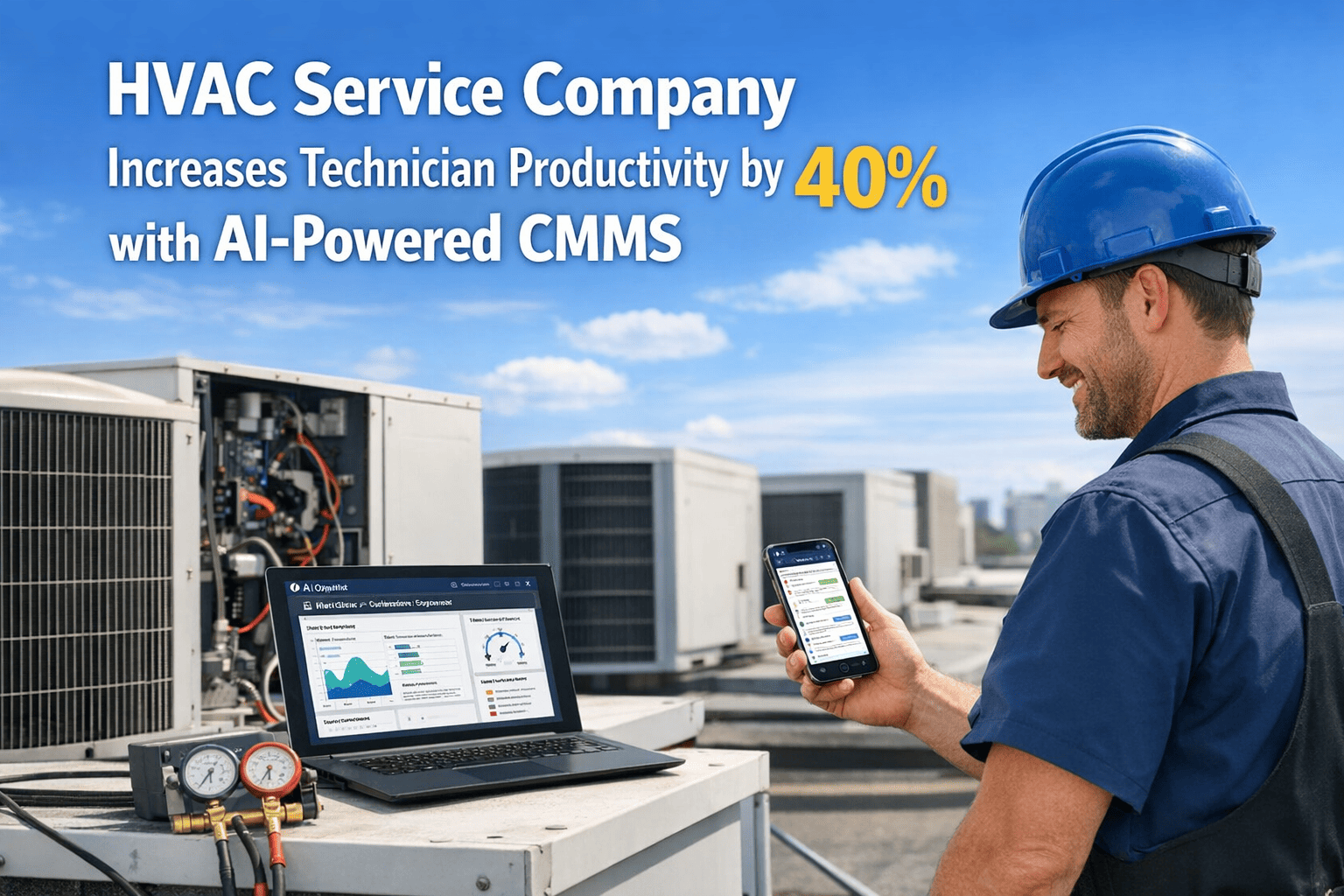
HVAC Service Company Increases Technician Productivity 40% Through AI-Powered Dispatching and Predictive Parts Management
How a 24-technician commercial HVAC contractor eliminated drive waste, reduced parts runs by 68%, and added $1.2M annual revenue without hiring additional staff.
Schedule AI Demo Start Free TrialCompany Profile: Growing Service Volume Without Hiring
The Productivity Blockers: Waste Hidden in Every Technician Day
Before OxMaint AI implementation, the company tracked technicians completing average 3.2 calls per day despite 8-hour shifts. Owner knew output was below industry benchmarks but lacked visibility into where productive hours disappeared. Post-deployment analysis revealed four critical waste sources consuming 35-40% of available capacity.
Inefficient Territory Routing Wasting 90 Minutes Daily Per Tech
Dispatchers assigned calls based on technician availability without geographic optimization. Average drive time between jobs was 42 minutes. Technicians crossed territory multiple times daily. GPS data showed one tech drove 87 miles while servicing jobs within 12-mile zone due to poor sequencing. Lost productivity: 1.5 hours per tech per day equals $18,000 per tech annually.
Parts Runs to Supply House Killing 68% of Service Calls
Technicians arrived on-site without correct parts for 68% of repair jobs. Each parts run consumed 45-90 minutes round trip plus waiting time at counter. Some jobs required two trips when initial diagnosis was incorrect. Company stocked 220 SKUs on trucks but had no predictive system linking equipment types to required parts. Emergency parts runs cost $92,000 annually in lost billable time.
No Pre-Job Intelligence Creating Extended Diagnostic Time
Technicians arrived at jobs without equipment history, previous service notes, or common failure patterns for installed systems. Every call started from zero knowledge. Average diagnostic time was 38 minutes for problems that repeat customers with service history. Senior techs diagnosed faster but knowledge stayed in their heads instead of being systemized for entire team.
Manual Work Order Processing Adding 45 Minutes Administrative Overhead
Technicians returned to office at end of day to submit paper work orders for processing. Back-office staff transcribed handwritten notes into system, matched parts used to invoices, and reconciled time entries. Average 45 minutes per tech daily spent on paperwork that could be digitized. Invoicing delayed 2-3 days after job completion impacting cash flow.
AI-Powered Solution: Intelligence Embedded in Every Workflow
The company deployed OxMaint AI Copilot in January 2025, integrating AI-driven dispatch optimization, predictive parts recommendations, and mobile work orders with pre-job intelligence. System analyzed historical work order data to identify patterns invisible to manual processes.
Geographic Dispatch Optimization
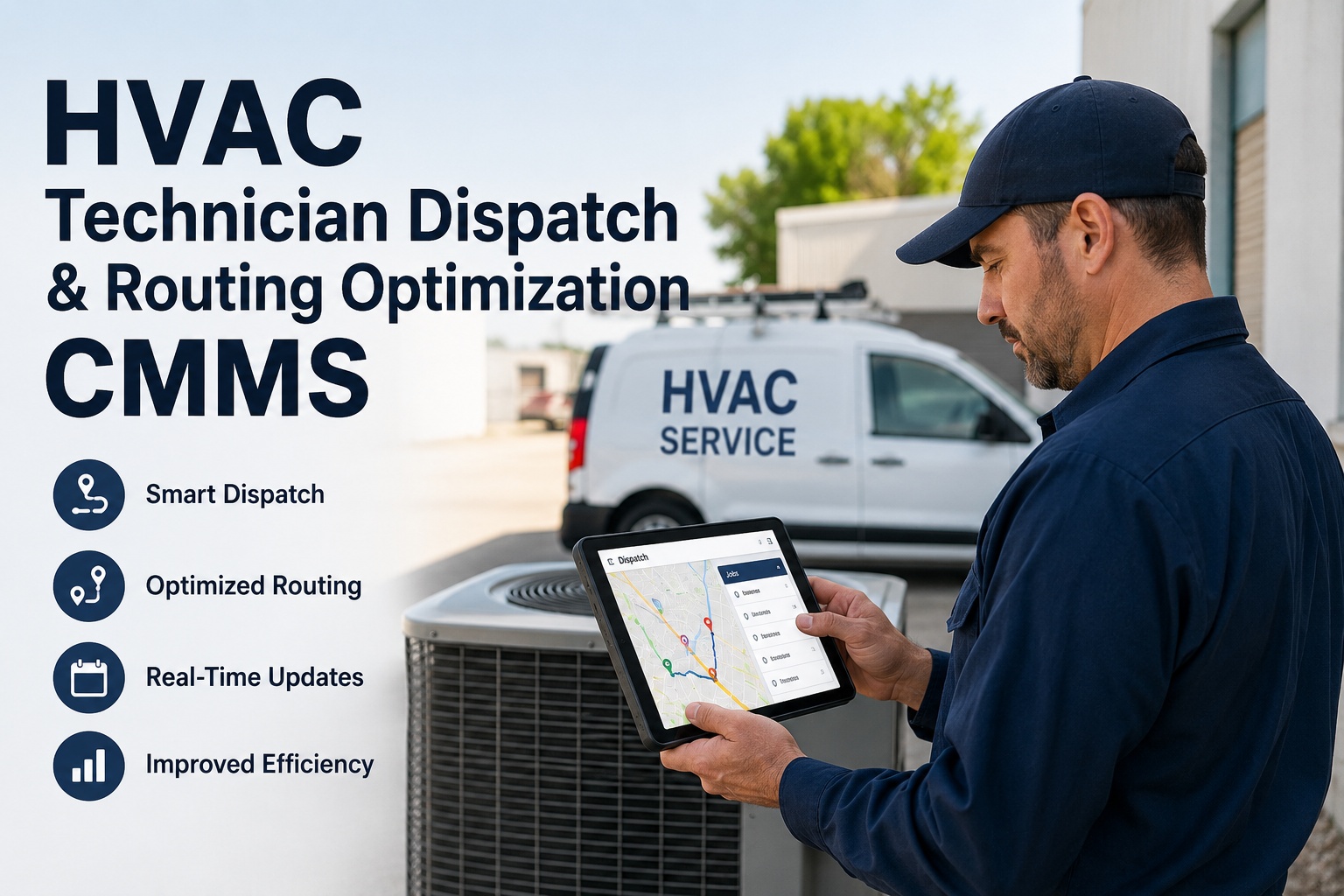
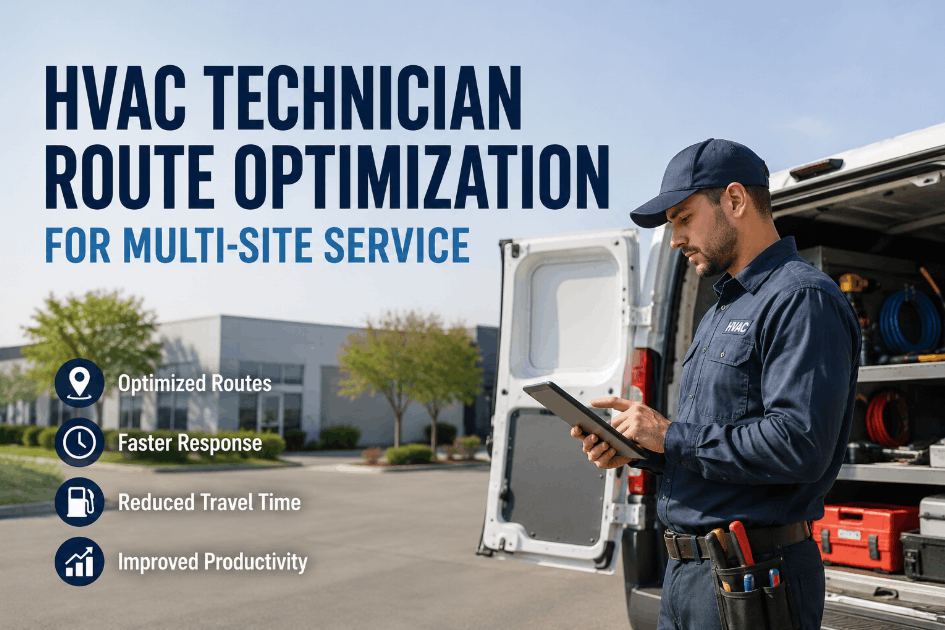
AI algorithm assigns calls to nearest qualified technician within defined service zones. System analyzes current technician GPS location, scheduled appointment times, estimated job duration, and traffic patterns to minimize total drive time across entire fleet. Dispatchers see AI recommendations with projected drive time savings. Average drive time between calls reduced from 42 minutes to 18 minutes. Technicians complete 1.8 additional calls daily without working longer hours.
Predictive Parts Inventory Management
AI analyzes job type, equipment brand and model, failure symptoms reported by customer, and historical parts usage for similar calls. System generates recommended parts list before technician departs. Mobile app shows probability score for each recommended part. Technicians load trucks based on AI predictions. Parts run rate dropped from 68% to 22% of calls. Remaining parts runs typically involve unusual equipment or multiple-failure scenarios AI cannot predict from limited data.
Pre-Job Intelligence Briefs
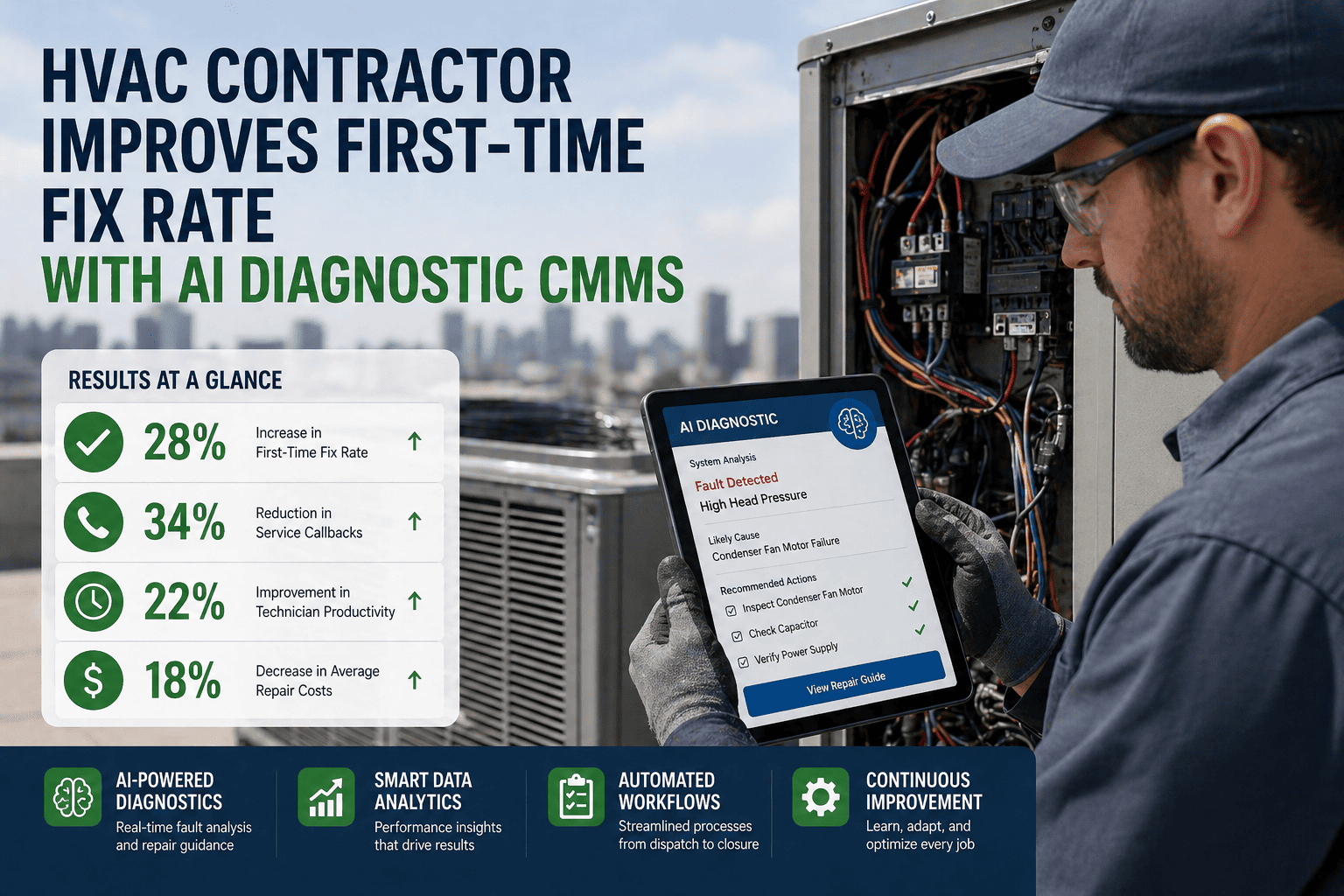
AI generates pre-job brief for every service call containing equipment install date, complete service history, common failure modes for that equipment type, parts typically required, and estimated repair time based on similar historical jobs. Technicians review brief on mobile app before arriving. System highlights if customer has service agreement, overdue PM work, or unresolved issues from previous visit. Diagnostic time reduced from 38 minutes to 16 minutes average. First-time fix rate improved from 74% to 91%.
Mobile Work Order Automation
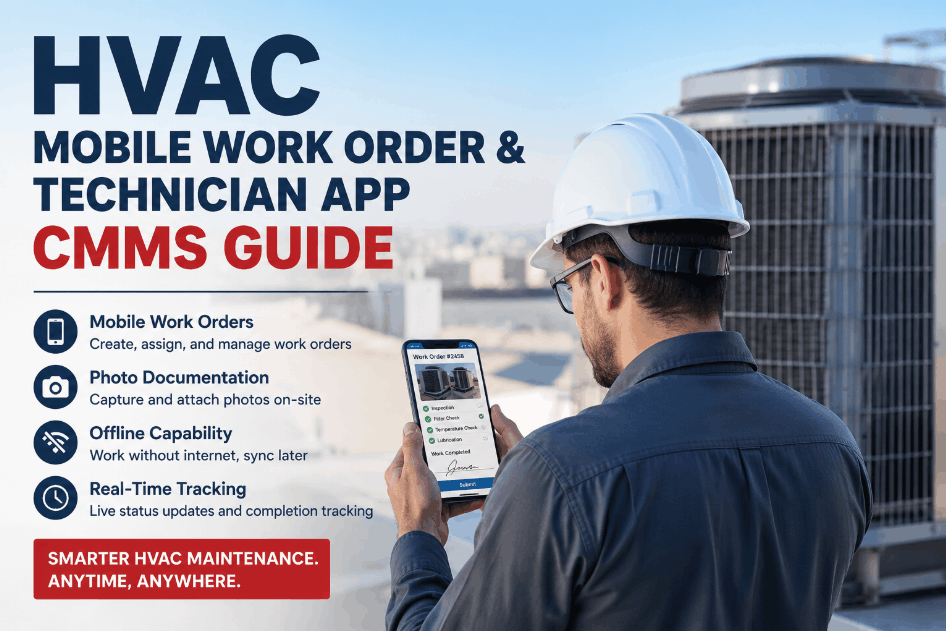
Technicians complete digital work orders on mobile app with photo uploads, parts tracking, and customer signature capture. AI auto-populates equipment data from previous visits. System generates invoices immediately upon job completion and emails to customer within minutes. Back-office processing eliminated entirely. Cash flow improved as invoices sent same day instead of 2-3 days later. Administrative overhead per technician reduced from 45 minutes daily to zero.
Performance Transformation: 90-Day Results Comparison
| Performance Metric | Before AI Implementation | After 90 Days | Change |
|---|---|---|---|
| Average calls per technician daily | 3.2 calls | 5.6 calls | +75% capacity |
| Average drive time between jobs | 42 minutes | 18 minutes | 57% reduction |
| Parts run rate percentage | 68% of calls | 22% of calls | 68% improvement |
| Average diagnostic time | 38 minutes | 16 minutes | 58% faster |
| First-time fix rate | 74% | 91% | +17 points |
| Administrative time per tech daily | 45 minutes | 0 minutes | 100% elimination |
| Revenue per technician annually | $200,000 | $280,000 | 40% increase |
| Total company revenue (24 techs) | $4.8M | $6.0M | +$1.2M annually |
Expert Perspective: Why AI Multiplies HVAC Service Capacity
The HVAC service industry has operated the same way for decades: dispatcher assigns calls, technician drives to job, diagnoses problem, drives to parts supplier, returns to complete repair, then returns to office for paperwork. This workflow contains enormous hidden waste that becomes invisible through repetition. Every technician accepts drive time as unavoidable. Every service manager accepts parts runs as cost of doing business. Every owner accepts 3-4 calls per day as reasonable output.
AI reveals and eliminates this waste by optimizing what humans cannot manually calculate at scale. A dispatcher cannot simultaneously evaluate 24 technician locations, traffic patterns, appointment windows, and job duration estimates to assign the optimal call sequence. A technician cannot predict with 85% accuracy which parts a Trane chiller will need based on symptom codes alone. Back-office staff cannot eliminate invoice processing time while maintaining accuracy. AI handles these tasks instantly and continuously, extracting productivity gains impossible through manual process improvement.
The 40% productivity increase this company achieved is not exceptional among AI-enabled HVAC operations. It represents the baseline performance improvement when systematic waste elimination replaces accepted inefficiency. Companies deploying AI dispatch and predictive parts consistently achieve 1.5-2.5 additional calls per technician daily within 90 days. This compounds across entire workforce into substantial revenue growth without proportional cost increase, creating the margin expansion that differentiates thriving service companies from struggling competitors.
Add 1.5-2.5 Calls Per Technician Daily With AI Dispatch
Stop accepting drive waste and parts runs as unavoidable costs. Deploy OxMaint AI Copilot and watch your technicians complete more calls per day without working longer hours or hiring additional staff.
AI-Powered HVAC Service FAQ
How quickly can an HVAC service company with 15-30 technicians deploy OxMaint AI Copilot and start seeing measurable productivity improvements in call completion rates?
Most service companies complete deployment in 10-14 days from contract to first AI-optimized dispatch. This includes importing historical work order data for AI training, configuring service territory zones, onboarding technicians to mobile app, and establishing parts inventory predictive models. Companies typically achieve 15-25% productivity improvement within first 30 days as AI learns call patterns and technician behavior. Full 40% gains manifest at 90-day mark after system accumulates sufficient data. Schedule an implementation planning session to receive company-specific timeline based on your current dispatch software and work order history availability.
Does OxMaint AI integrate with existing parts inventory systems and supplier catalogs to enable real-time parts availability checking before technicians depart for service calls?
OxMaint supports API integration with major HVAC distributors including Winsupply, Ferguson, Johnstone Supply, and United Refrigeration to check real-time parts availability and pricing. When AI recommends parts for upcoming job, system queries distributor inventory at nearest branch and displays stock levels in mobile app. Technicians can reserve parts directly from app for will-call pickup. This eliminates driving to supplier only to discover parts out of stock. Integration deploys within one week after initial system configuration. Start free trial to explore supplier integration capabilities and test AI parts prediction against your historical job data during trial period.
Can OxMaint AI generate performance scorecards showing individual technician productivity metrics including calls completed, revenue per call, first-time fix rates, and parts run frequency to support coaching and compensation decisions?
OxMaint technician scorecards track 12 key performance indicators including daily call count, average ticket value, billable utilization rate, first-time fix percentage, parts run frequency, customer satisfaction scores, and safety compliance. AI benchmarks each technician against team average and identifies specific coaching opportunities. For example, if technician has low first-time fix rate but high parts run rate, system flags inadequate truck stocking as coaching focus. Scorecards update daily and support variable compensation programs tied to measurable productivity targets. Book a consultation to design technician KPI framework aligned to your compensation structure and business priorities.
Your Technicians Are Capable of 40% More Revenue Today
The capacity already exists in your workforce. AI dispatch and predictive parts unlock it by eliminating the waste hiding in every service call. See the productivity transformation in 90 days.
Book Your AI Productivity Demo Start Free Trial