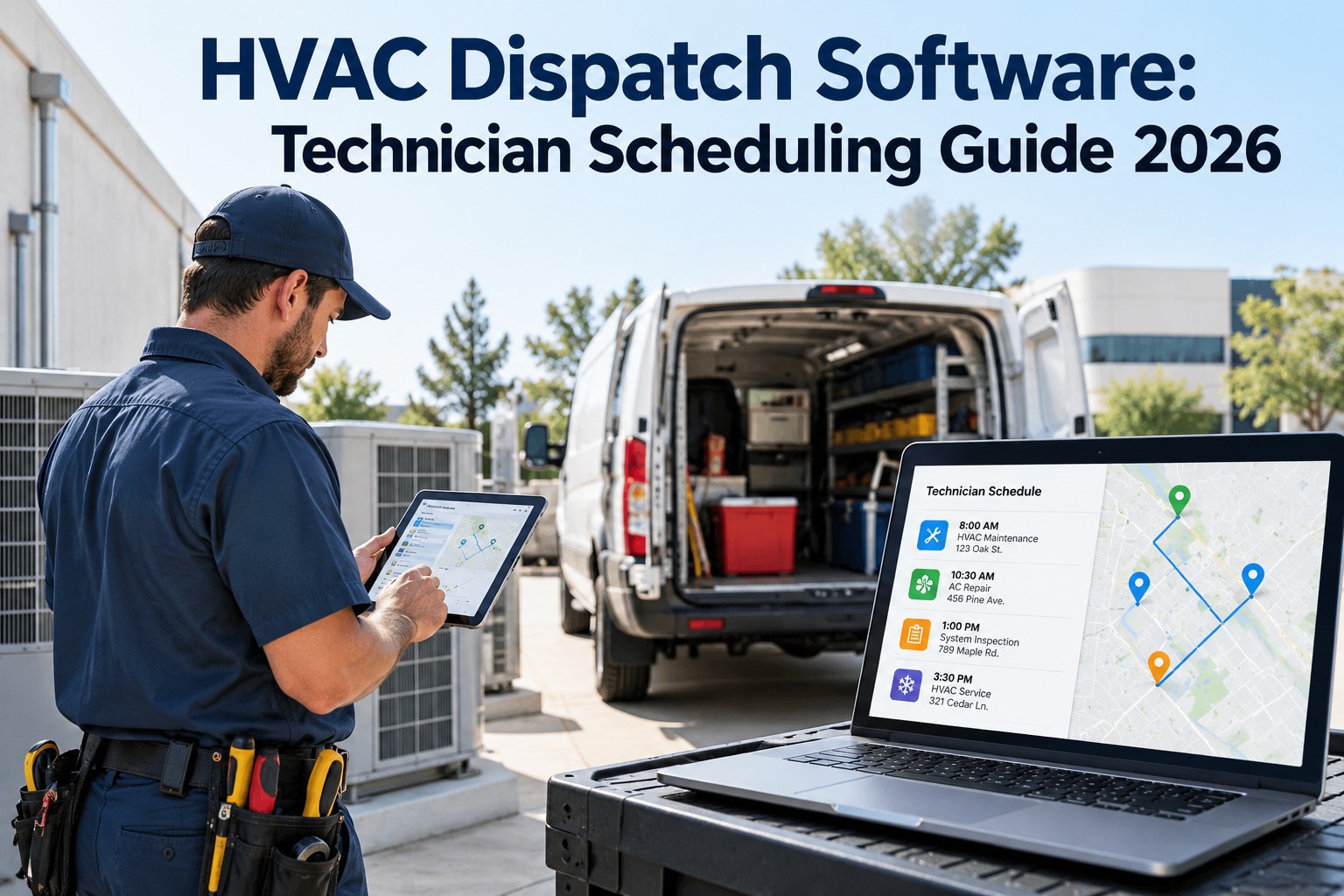
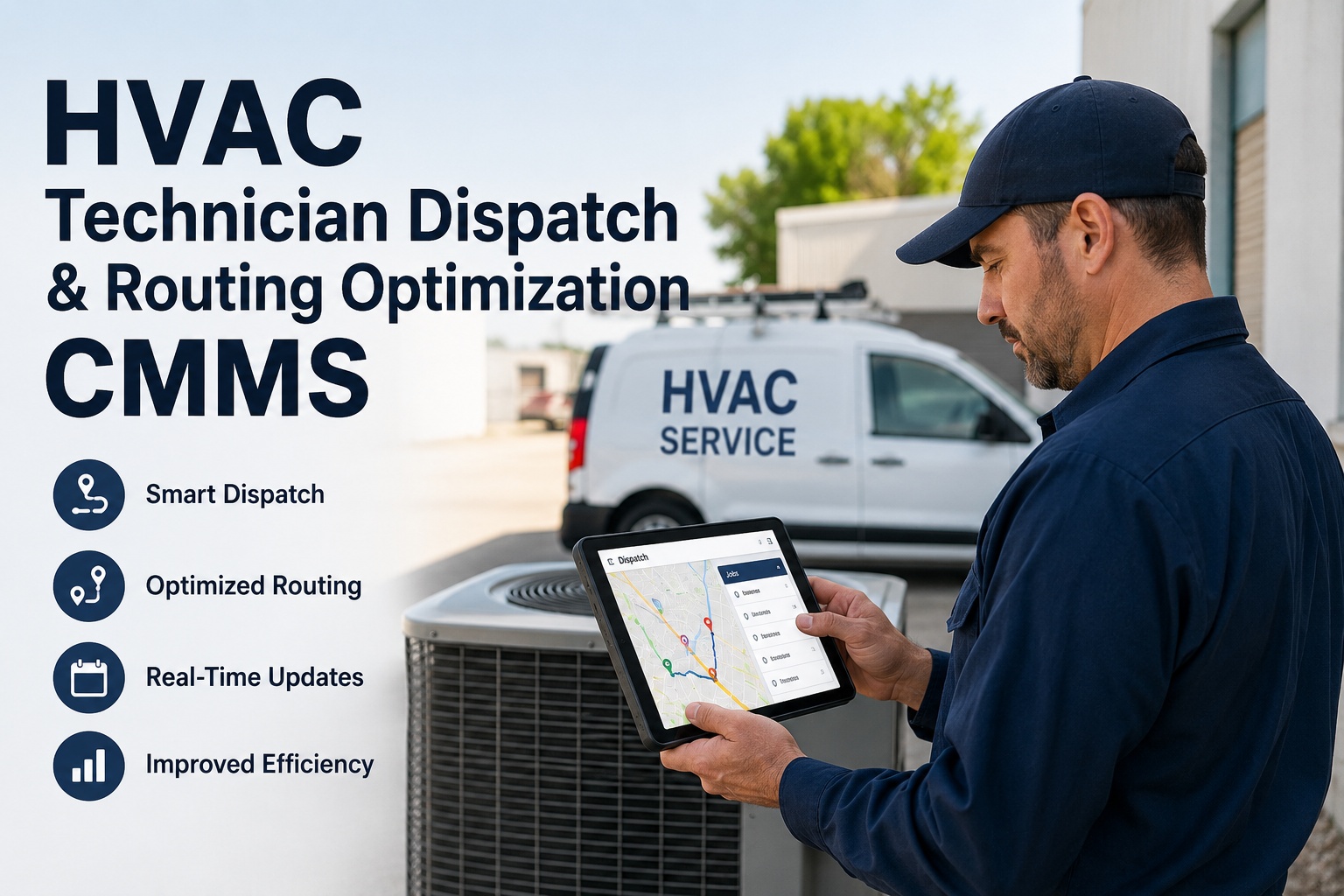
Sending the wrong technician to the wrong job is one of the most expensive mistakes an HVAC company makes — and most companies make it every single day. A residential comfort tech dispatched to a commercial VRF system means a callback. A junior apprentice assigned to a complex chiller teardown means wasted hours, a second truck roll, and a frustrated customer. An EPA Type I-certified tech sent to a high-pressure system requiring Type II means a compliance violation. The industry average first-time fix rate sits at just 70-75%, meaning roughly one in four service calls requires a return visit. Each callback costs $400-650 in lost labor, fuel, admin overhead, and — most importantly — the revenue from a paying job that tech could have completed instead. With 110,000 unfilled HVAC technician positions nationwide and 25,000 leaving the profession annually, you can't afford to waste the technicians you have on jobs that don't match their skills.
Skill-matched dispatching is the practice of automatically matching every incoming work order to the technician best qualified to complete it on the first visit — factoring in certifications, specializations, experience level, equipment familiarity, truck inventory, location, and availability. Companies that implement skill-matched dispatch consistently achieve first-time fix rates above 80% (top 20% hit 88%), reduce callbacks to the acceptable 2-2.5% range, and add 1-2 additional revenue-generating calls per tech per day. Oxmaint tracks every technician's certifications, skills, and equipment authorizations — ensuring the right tech is always assigned to the right job. Schedule a demo.
Right Tech. Right Job.
First Time. Every Time.
Top 20% of companies
Industry acceptable range
avoided callback
The Certification Stack: What Every Dispatcher Must Track
HVAC technicians carry a complex mix of legally required, industry-standard, and manufacturer-specific certifications. Dispatching without visibility into these credentials creates compliance risk, callback risk, and safety risk:
EPA 608 Certification
Federal law under the Clean Air Act Section 608. No expiration. Sending an uncertified tech to handle refrigerants = federal violation.
NATE Certification
Nation's largest HVAC certification body. NATE-certified techs earn $70K-80K+ in high-demand areas vs. $60K average. Voluntary but increasingly expected.
Manufacturer Training
Required for warranty work. Sending a non-certified tech may void the manufacturer's warranty — exposing you to the full cost of replacement.
Safety & Specialty
A2L refrigerants (R-454B replacing R-410A) now require specific safety training. New regulatory requirement emerging in 2025-2026.
Never Lose Track of a Certification Again
Oxmaint stores every technician's certifications, training records, and expiration dates — automatically alerting you before any credential expires and blocking assignment to jobs requiring certs they don't hold.
The Cost of Skill Mismatch: Real Numbers
Every mismatched dispatch triggers a cascade of costs that most HVAC companies never fully calculate:
Five Skill-Match Factors for Intelligent Dispatch
AI-powered dispatch engines like ServiceTitan's Dispatch Pro analyze thousands of scenarios per assignment. Here are the five factors that determine who gets which job:
Certification Match
Hard filter — pass/fail. Does the tech hold the certifications required for this job? EPA 608 Type II for residential AC refrigerant work. NATE Commercial for commercial systems. Manufacturer certification for warranty-covered equipment. State license for jurisdictional requirements. If the tech lacks the required cert, they're eliminated from the candidate pool — period.
Specialization & Experience
Soft ranking — weighted score. How many jobs of this type has the tech completed? What's their first-time fix rate on this equipment category? A tech with 200 successful VRF service calls and a 92% FTFR scores higher than one with 15 calls and a 68% FTFR — even if both are certified. Experience with the specific make/model matters most.
Truck Inventory
Parts availability check. Does the tech's truck carry the parts most likely needed for this job type? A residential AC no-cool call typically needs a capacitor, contactor, or refrigerant — if the assigned tech's truck is stocked with commercial components instead, the FTFR drops immediately. Smart dispatch checks real-time truck inventory against predicted parts needs.
Proximity & Route
Drive time optimization. Live GPS position + real-time traffic data determines which qualified tech can arrive soonest. Geographic clustering groups nearby jobs for the same tech. Delays account for 55% of negative HVAC reviews — arrival speed is a customer satisfaction multiplier even when skill match is equal.
Revenue Potential
Profitability weighting. Advanced dispatch engines match high-performing sales techs to high-value opportunities (replacements, upgrades, new installs) and strong diagnostic techs to complex repair calls. The right match isn't just about fixing the problem — it's about maximizing revenue per truck roll while maintaining service quality.
Building a Skill Matrix: The Foundation
Before any software can match techs to jobs, you need a structured skill matrix that captures every technician's capabilities. Here's the framework:
Stop Guessing. Start Matching.
Oxmaint builds a complete skill profile for every technician — certifications, training, equipment experience, and performance metrics — so every dispatch is a data-driven decision, not a guess.
Frequently Asked Questions
What is skill-matched dispatching in HVAC?
Skill-matched dispatching automatically assigns incoming work orders to the technician best qualified to complete the job on the first visit. It factors in certifications (EPA 608, NATE, manufacturer), equipment experience, first-time fix rate history, truck inventory, GPS location, and availability. The goal is to eliminate callbacks caused by sending underqualified technicians to jobs beyond their skill level — which costs $400-650 per incident in lost labor, fuel, admin time, and missed revenue opportunities.
What certifications do HVAC technicians need?
EPA 608 certification is federally required for any technician handling refrigerants (Type I for small appliances, Type II for high-pressure, Type III for low-pressure, Universal for all). NATE certification is voluntary but increasingly expected — covering specialties like AC, heat pumps, gas furnaces, and commercial refrigeration. Manufacturer certifications (Carrier, Trane, Daikin, Mitsubishi) are required for warranty work. State/local licenses vary by jurisdiction. New A2L refrigerant safety training is emerging for R-454B systems replacing R-410A.
What is a good first-time fix rate for HVAC?
The industry target is 80%+. Top 20% of companies achieve 88%. The industry average is just 70-75%, meaning one in four calls requires a return visit. The acceptable callback rate is 2-2.5% of all service calls. Companies with FTFR below 70% see zero revenue growth, while those above 70% see 4% revenue increases. Skill-matched dispatching is the single biggest lever for improving FTFR — it ensures the tech has the right skills, certs, and parts before they arrive.
How much do HVAC callbacks actually cost?
A typical callback costs $400-650+ when you factor in: first tech's wasted labor ($43), truck roll costs ($35), office overhead for rescheduling ($300), second tech's labor and travel ($93), and the lost revenue from a paying job the second tech could have completed ($250). At a 5% callback rate on 2,200 annual service calls, that's $71,500/year in waste. Reducing callbacks from 5% to 2% saves approximately $42,900 annually. Customers who experience repeat visits are 60% less likely to recommend your company.
How does Oxmaint help with technician skill tracking?
Oxmaint maintains a complete digital skill profile for every technician — including all certifications (with expiration alerts), training records, equipment authorizations, manufacturer certifications, and performance metrics. The system blocks assignment to jobs requiring certifications the tech doesn't hold and alerts managers before any credential expires. Combined with work order history, Oxmaint gives dispatchers real-time visibility into who is qualified for what — turning skill matching from a manual guessing game into an automated, data-driven process.