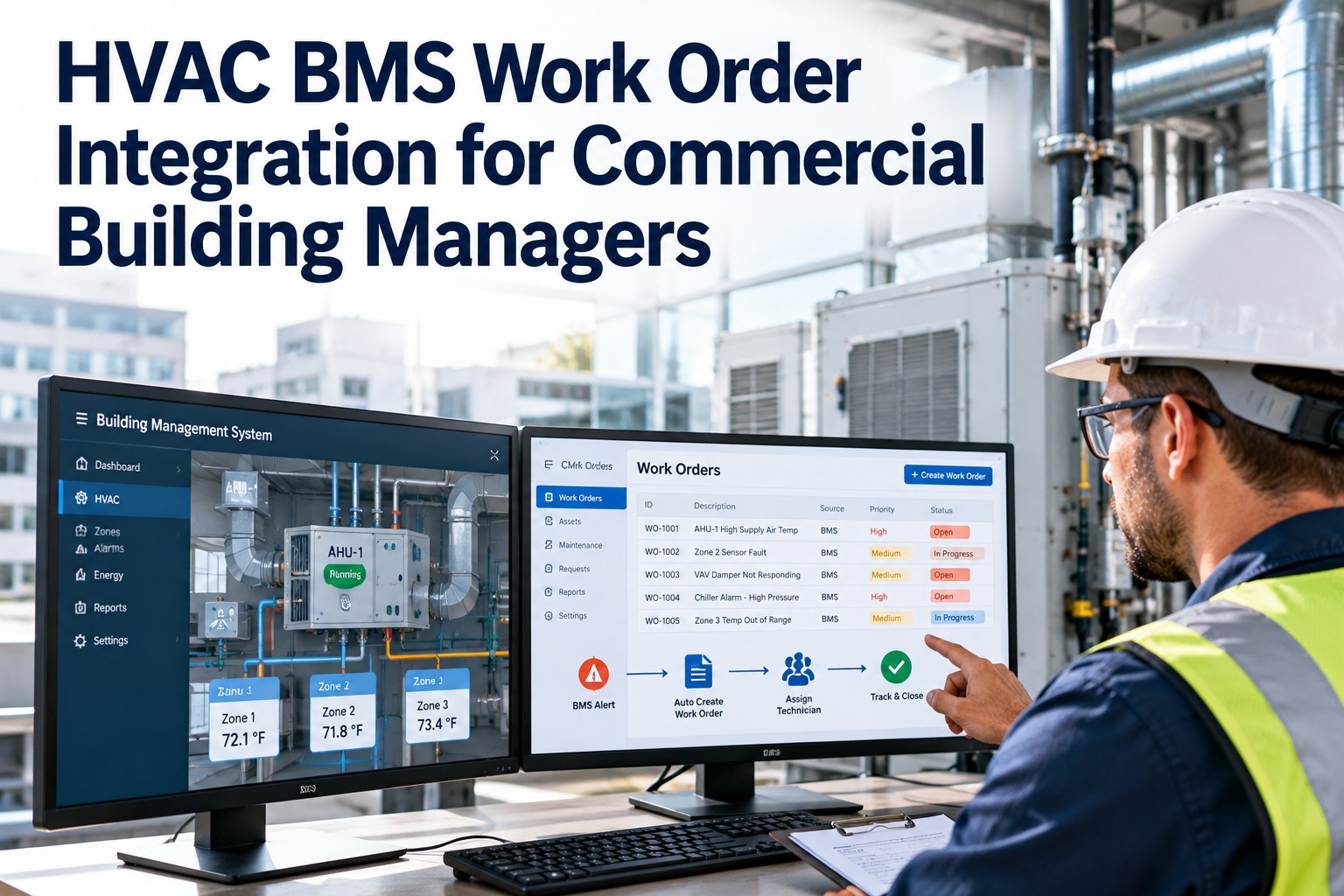
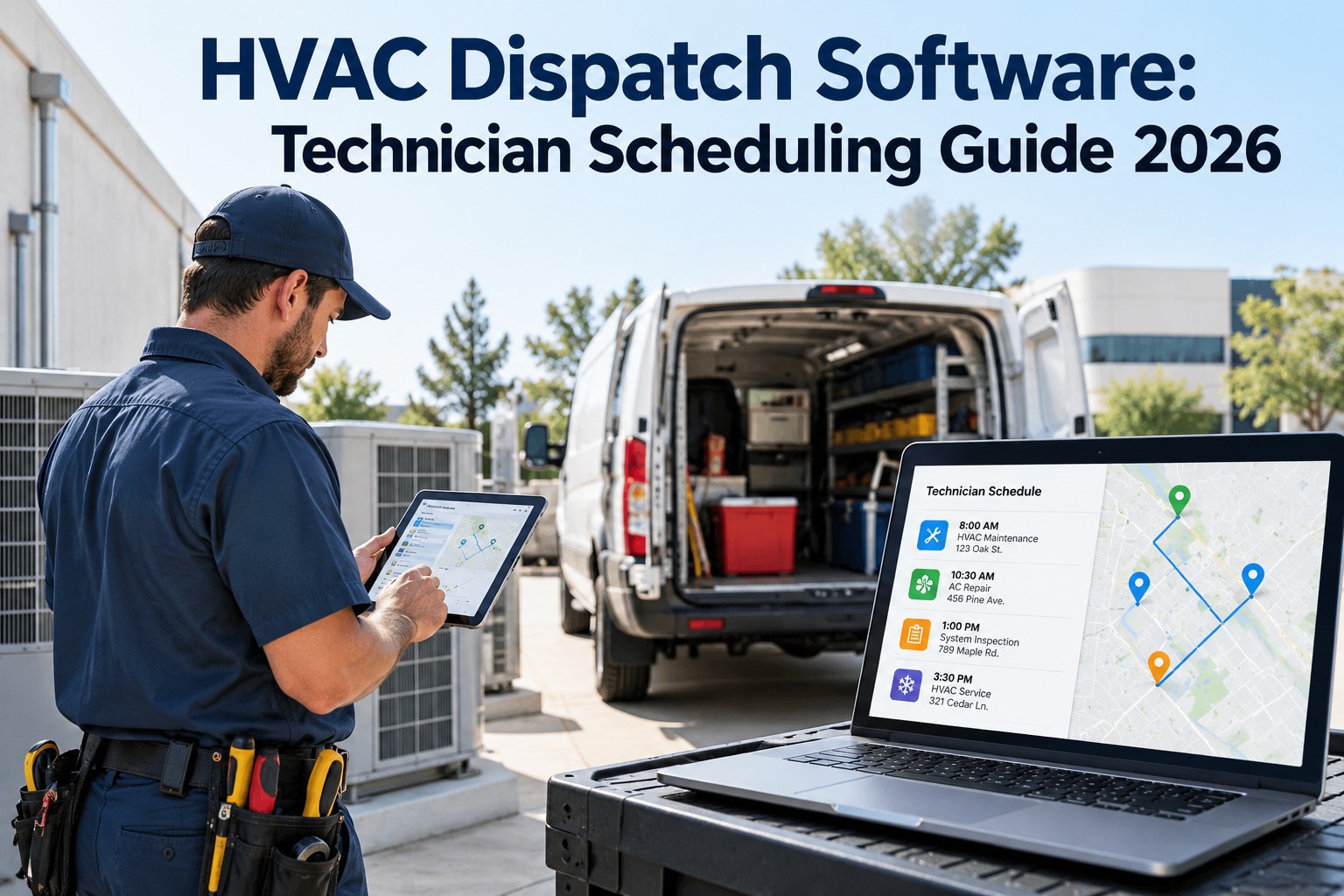
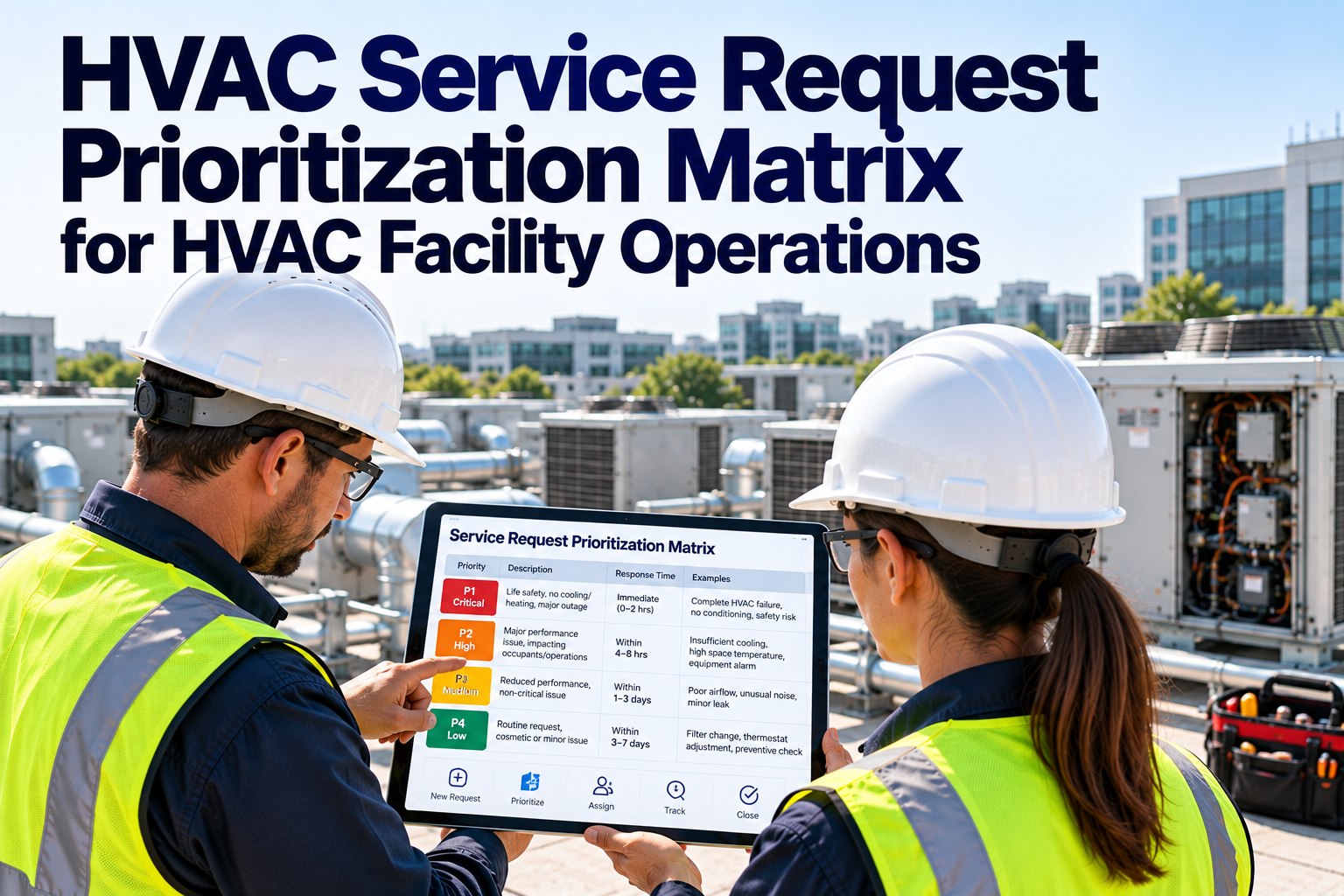
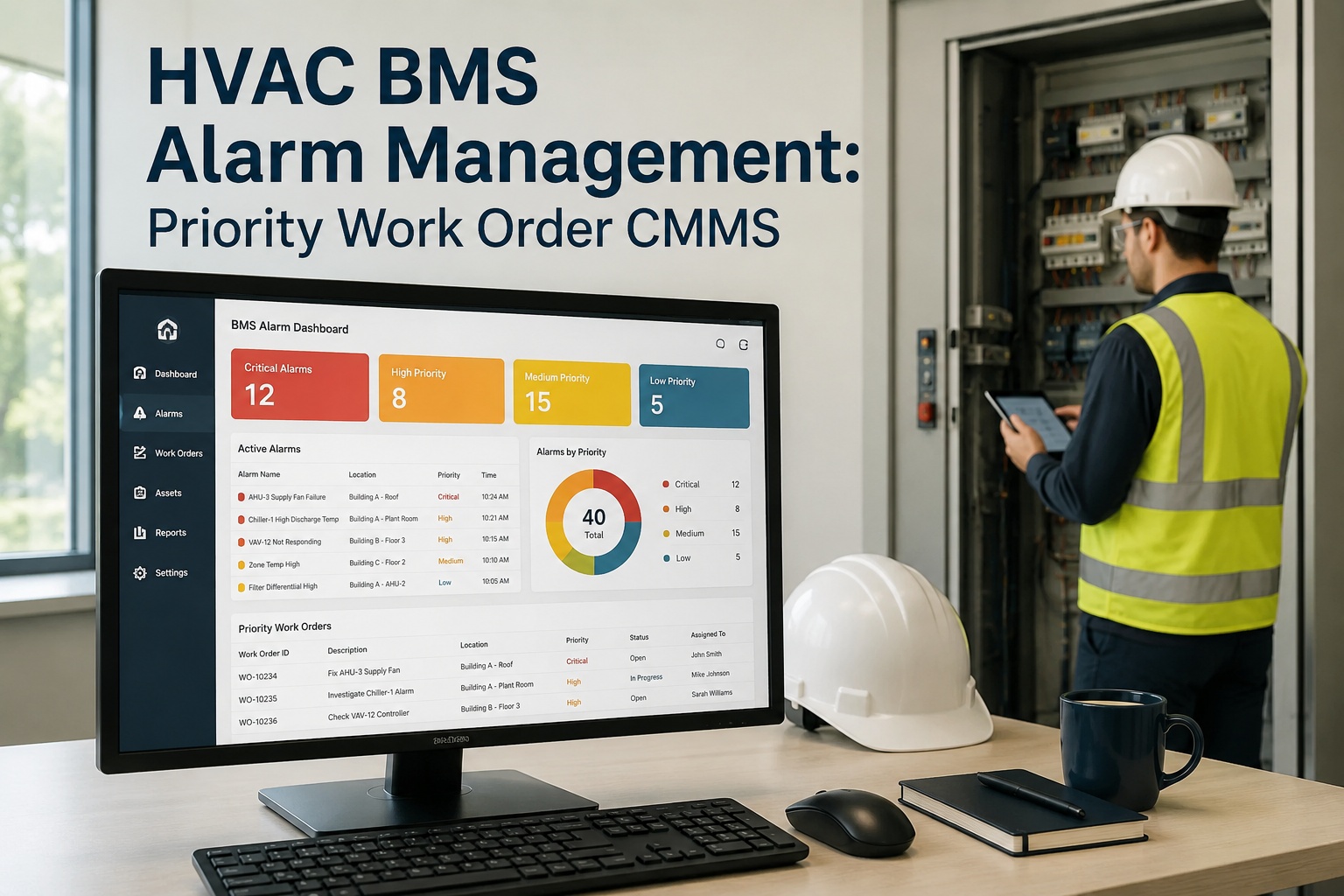
Most HVAC maintenance operations run on two speeds: full emergency and complete neglect. A comfort call comes in at 2 PM on a Friday, everyone scrambles, the repair gets done, and by Monday the incident is forgotten — with no documentation, no root cause recorded, and no trigger to prevent the same failure from happening three months later. On the other side, preventive maintenance gets scheduled with good intentions but slips through the cracks when the week fills with reactive calls. The gap between these two extremes — chaotic emergency response and disciplined preventive scheduling — is exactly where structured digital work order management lives. Facilities that close that gap don't just respond faster to breakdowns; they stop experiencing as many breakdowns in the first place.
Work Order Intelligence
From Chaos to Control:
Every HVAC Request Managed
OxMaint transforms scattered maintenance requests, missed PMs, and paper-based work orders into a structured, trackable, and automated workflow — from the first complaint to the final sign-off.
Live Work Order Queue
P1
Chiller Failure — Building A
Emergency · Assigned · 14 min ago
Open
P2
AHU-07 Noise Complaint
Reactive · Queued · 1 hr ago
Queued
PM
RTU-12 Quarterly Service
Preventive · Auto-Generated · Due Today
Due
PM
Boiler Room — Filter Change
Preventive · Closed · Yesterday
Done
The Work Order Reality in Most HVAC Operations
62%
of HVAC work orders are reactive — generated after a failure, not before it
3.5 hrs
average delay between a comfort complaint and technician dispatch without digital systems
48%
of planned PM tasks are missed or deferred when managed via spreadsheet or paper
2.8×
higher equipment lifespan in facilities with structured PM work order programs
WORK ORDER TYPES
The Three-Tier HVAC Work Order Structure
Not all HVAC work orders are created equal. An emergency cooling failure in a server room demands a fundamentally different response than a scheduled belt inspection on a rooftop unit. Effective work order management starts with a clear taxonomy that separates emergency reactive work, standard reactive work, and preventive maintenance — each with its own priority logic, response time target, and documentation requirement. Without this structure, everything gets treated with the same urgency, which means nothing actually gets prioritized. Sign up for OxMaint to configure your facility's priority tiers and automate assignment rules from day one.
TriggerSystem failure, comfort emergency, safety concern
Target ResponseUnder 2 hours for P1, 4 hours for P2
DocumentationRoot cause, parts used, downtime duration
Follow-upAutomatic PM trigger after recurring emergency
TriggerTenant complaint, reduced performance, minor fault
Target ResponseWithin same business day or next scheduled shift
DocumentationIssue description, corrective action, labor hours
Follow-upFlagged for next PM cycle review
TriggerCalendar date, runtime hours, or condition threshold
Target Compliance95%+ on-time completion rate
DocumentationChecklist completion, readings, and technician sign-off
Follow-upAuto-generate next PM upon closure
EMERGENCY WORKFLOW
Handling the 2 AM Cooling Failure: A Structured Response
1
Request Capture
Occupant submits request via QR code, web portal, or phone. OxMaint creates a timestamped work order with location, reported symptoms, and auto-assigned priority based on asset criticality rules.
›
2
Instant Dispatch
On-call technician receives push notification with full asset history, last three service records, and required tools list. No phone calls to the office. No hunting for paper files at 2 AM.
›
3
Field Documentation
Technician completes guided digital checklist, captures photos of findings, logs parts used, and records refrigerant readings — all from the mobile app before leaving the job site.
›
4
Closure and Analysis
Work order closes with root cause tagged. If this is the second similar failure within 90 days, OxMaint automatically flags the asset for PM review and notifies the maintenance manager.
The difference between a well-managed emergency response and a chaotic one is almost never about technician skill. It's about information availability and workflow structure. When your team has to call three people to find out who's on call, then drive to the office to pull a manual, then write their findings on a napkin — the failure compound. Book a demo to see how OxMaint's emergency dispatch workflow eliminates every one of those friction points.
PREVENTIVE MAINTENANCE ENGINE
Automating PM: The Move from Calendar to Condition
Preventive maintenance scheduling in most facilities is either entirely manual — someone remembers to create the work order — or calendar-based with no flexibility. Neither approach is optimal. True PM automation ties work order generation to multiple trigger types: elapsed time since last service, runtime hours on the equipment, seasonal calendar dates, or condition thresholds measured by sensors. The right trigger depends on the asset type and criticality.
OxMaint's PM engine supports all trigger types and automatically generates work orders with pre-populated checklists, assigned technicians, and required parts lists. Managers review a clean PM calendar rather than manually creating repetitive work orders. Completion rates are tracked automatically, and overdue PMs escalate through the system without requiring someone to chase a technician. Sign up to configure your first automated PM schedule in under 15 minutes.
PM Trigger Types in OxMaint
Calendar-Based
Monthly, quarterly, seasonal service dates
Runtime Hours
Every 500 operating hours for compressors and motors
Condition Threshold
Filter differential pressure exceeds setpoint
Post-Repair Trigger
Follow-up inspection 30 days after emergency repair
Regulatory Deadline
Annual refrigerant leak checks, OSHA compliance tasks
OxMaint Work Order Platform
Ready to Replace Paper and Spreadsheets with a System That Actually Works
OxMaint gives HVAC maintenance teams one platform for emergency dispatch, PM automation, technician tracking, and performance reporting — accessible from desktop or mobile, online or offline.
TECHNICIAN PRODUCTIVITY
Tracking What Matters: From First Assignment to Final Close
A work order system is only as valuable as the data it captures. When work orders are closed properly — with root cause tags, actual labor time, parts consumed, and checklist completion rates — they become the raw material for every meaningful maintenance metric: mean time to repair, PM compliance rate, first-time fix rate, and cost per asset per year. Without that data, managers are making decisions based on gut feel and memory. With it, they're managing with evidence. Book a demo to see OxMaint's analytics dashboard for HVAC work order performance.
MTTR
Mean Time to Repair
Average elapsed time from work order creation to verified closure. Tracks technician response efficiency and parts availability impact.
FTF Rate
First-Time Fix Rate
Percentage of work orders resolved on the first visit without callbacks. Reflects diagnosis quality and parts stocking adequacy.
PM%
PM Compliance Rate
Percentage of scheduled preventive work orders completed on time. The single most predictive metric for future emergency frequency.
$/Asset
Cost Per Asset / Year
Total parts and labor cost per equipment unit annually. Identifies assets approaching the repair-versus-replace decision threshold.
COMPARISON
Paper and Spreadsheet vs. Digital Work Order Management
Workflow Area
Paper / Spreadsheet
OxMaint Digital WO
Request Intake
Phone call or walk-in; manually logged
QR code, portal, or app; auto-timestamped
Priority Assignment
Supervisor judgment; inconsistent
Rules-based auto-priority by asset criticality
Technician Dispatch
Phone call; no asset context provided
Push notification with full history attached
PM Scheduling
Manual calendar entries; frequently missed
Automated generation by date, hours, or condition
Field Documentation
Paper forms; often lost or illegible
Digital checklist, photos, readings in-app
Performance Reporting
Manual weekly compilation; error-prone
Live dashboard, auto-updated on WO close
Teams that have made this transition consistently report the same outcome: the first three months of clean work order data reveal patterns — recurring failures on specific assets, technicians with high callback rates on certain equipment types, PM tasks that consistently get deferred — that were invisible in paper-based systems. Sign up and OxMaint will have your team capturing structured work order data within the first hour of setup.
FREQUENTLY ASKED QUESTIONS
HVAC Work Order Management — Common Questions
What is HVAC work order management and why does it matter
HVAC work order management is the system — whether digital or paper-based — that captures, assigns, tracks, and closes every maintenance task related to HVAC equipment. It matters because without structured work orders, maintenance operations default to pure reaction: the loudest complaint gets addressed first, PMs get deferred indefinitely, and equipment history is never recorded. With a digital work order system, every task has a timestamp, an owner, a documented outcome, and a cost figure — creating the data foundation for informed maintenance decisions and demonstrable performance improvement over time.
How should HVAC emergency work orders be prioritized
HVAC emergency work orders should be prioritized using a combination of asset criticality, occupancy impact, and safety risk. A cooling failure in a server room or medical facility is a P1 — immediate response required. The same failure in an unoccupied storage area might be a P2 or P3. Priority rules should be pre-defined in your work order system so that classification is consistent and automatic, not dependent on whoever happens to receive the call that day. OxMaint supports configurable priority rules tied to asset tags, space type, and failure mode to make this logic automatic.
What is the difference between reactive and preventive HVAC work orders
Reactive work orders are generated in response to a failure or complaint that has already occurred. Preventive maintenance work orders are generated proactively, on a scheduled basis, to inspect and service equipment before failures occur. Industry benchmarks suggest that high-performing HVAC maintenance operations target a 70-to-30 split: 70% of labor hours on planned preventive work, 30% on reactive. Most facilities run the opposite — 70% reactive — which correlates directly with higher emergency frequency, shorter equipment lifespan, and significantly higher total maintenance cost per year.
How does digital work order management reduce HVAC emergency frequency
The mechanism is straightforward: structured preventive maintenance work orders, when completed consistently, catch developing failures before they become emergency breakdowns. A digital work order system improves PM completion rates by automating schedule generation, sending reminders for overdue tasks, and making it easy for technicians to complete and close PMs from their phones. Additionally, every closed work order — whether reactive or preventive — contributes to the asset history that enables pattern recognition: the same failure repeating on the same unit is a signal that a PM interval needs adjusting or a component replacement is overdue.
What metrics should HVAC maintenance managers track through their work order system
The most valuable HVAC work order metrics are: mean time to repair (MTTR) for emergency work orders, which reflects response efficiency; PM compliance rate, which is the percentage of scheduled preventive work orders completed on time; first-time fix rate, which measures whether technicians have the right information and parts to resolve issues on a single visit; and cost per asset per year, which is the total parts and labor cost allocated to each equipment unit through the work order system. These four metrics, tracked consistently over 6 to 12 months, provide a complete picture of maintenance operation health and equipment risk profile.
How quickly can an HVAC team get started with OxMaint work order management
Most HVAC maintenance teams are fully operational with OxMaint within the first hour of setup. The platform guides administrators through asset registration, priority rule configuration, PM schedule creation, and technician onboarding through a structured setup flow. Technicians can begin receiving and closing work orders from their phones immediately after the initial setup is complete. OxMaint's support team provides hands-on onboarding assistance for larger operations with complex asset libraries or multi-facility portfolios.