AI Vision Inspection Systems for Manufacturing Quality Control
By oxmaint on February 16, 2026
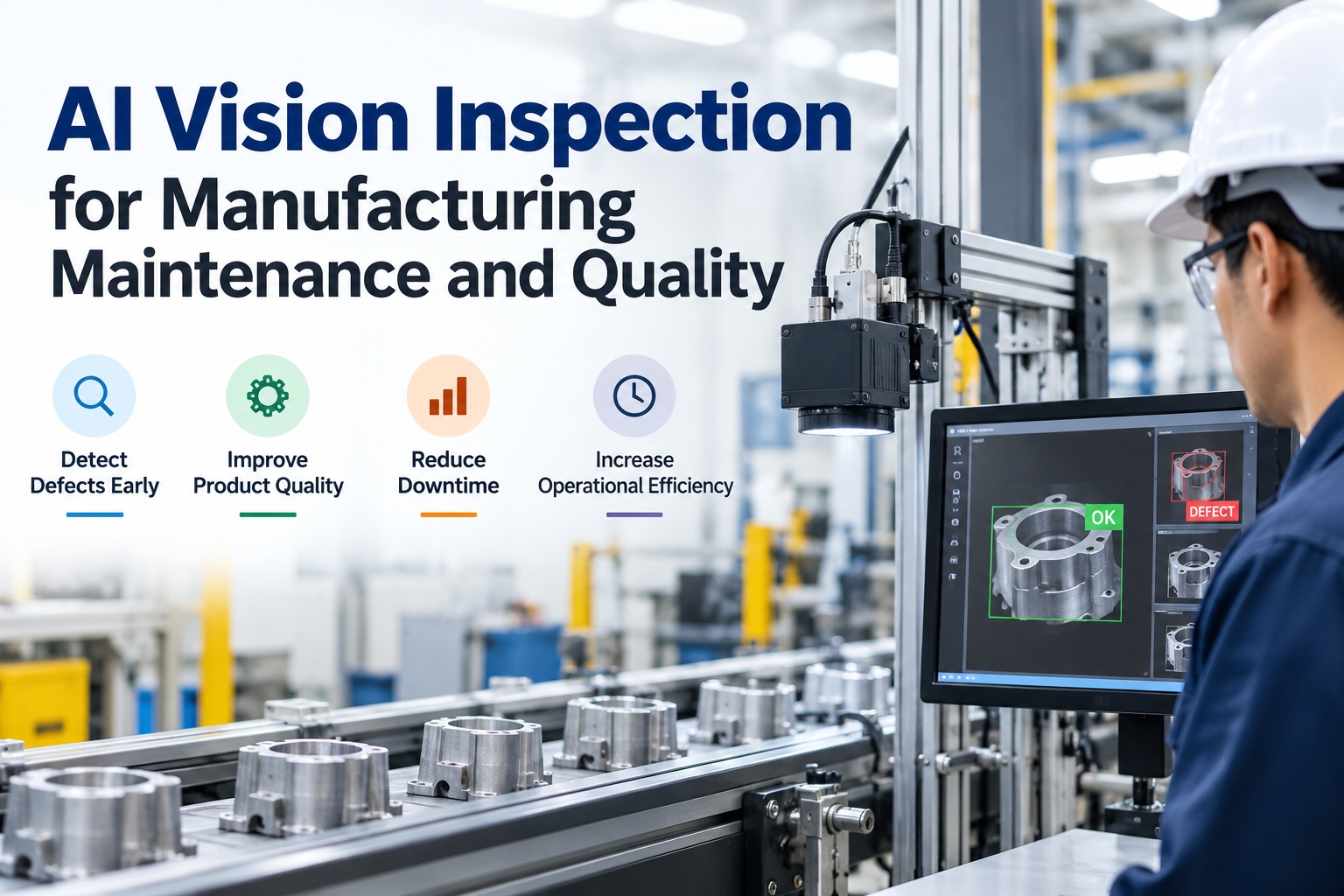
Every minute, a factory somewhere ships a defective product that a tired inspector missed. AI vision inspection systems are changing that reality — industrial cameras powered by deep learning now detect surface flaws, assembly errors, and dimensional deviations with over 99% accuracy in under 200 milliseconds. But detection alone isn't enough. When these systems feed directly into a CMMS like Oxmaint, every defect becomes a maintenance signal — automatically generating work orders, flagging equipment degradation, and closing the loop between quality failures and the machines causing them. Schedule a consultation to discover how AI-powered inspection integrates with Oxmaint at your facility.
The Hidden Cost of Catching Defects Too Late
Manual quality inspection has been the backbone of manufacturing for decades — but it has a hard ceiling. Human inspectors average around 80-85% accuracy, and that number drops sharply with fatigue, monotony, and complex products. The defects that slip through don't just reach customers; they erode trust, trigger recalls, and create a reactive maintenance cycle where equipment problems are discovered through product failures instead of proactive monitoring.
85%
Peak human inspection accuracy — under ideal conditions
99.9%
AI vision detection rate — consistent, 24/7, never fatigues
$89.7B
Projected AI visual inspection market by 2033
What Makes AI Vision Different from Traditional Machine Vision
Traditional machine vision relies on hand-coded rules — specific pixel thresholds, edge patterns, and template matching. Change the product, adjust the lighting, or encounter an unfamiliar defect, and the system breaks. AI vision systems learn from examples. Deep learning models trained on thousands of defect images generalize across product variations, lighting conditions, and defect types never seen during training. They get smarter with every part they inspect.
Rule-Based Vision
Requires manual reprogramming for every product change
Fails on variable surfaces — reflective, curved, textured
Cannot detect novel or previously unseen defect types
High false rejection rates waste good product
AI Deep Learning Vision
Adapts to new products with minimal retraining — as few as 5 images
Handles reflective, transparent, and complex geometries
Detects anomalies it was never explicitly trained on
Reduces false positives by learning acceptable variation
Ready to move beyond manual inspection limits? Join manufacturers using Oxmaint to connect AI vision intelligence with automated maintenance workflows.
From Camera to Work Order: How the Inspection-to-Maintenance Loop Works
The transformative value of AI vision inspection isn't just finding defects — it's what happens next. When cameras connect to Oxmaint's CMMS, defect data becomes maintenance intelligence. A rising scratch count on stamped parts triggers a die replacement work order. Increasing porosity in welds schedules a torch calibration. The system doesn't wait for a quality crisis — it prevents one.
The Closed-Loop Inspection Workflow
Industrial Cameras Capture Every Part
High-resolution cameras with specialized lighting — coaxial, dark-field, structured — image parts at production speed. Multi-angle setups catch defects hidden from a single viewpoint.
Deep Learning Classifies Defects in Real Time
Convolutional neural networks analyze each image in under 200ms — classifying scratches, cracks, porosity, misalignment, contamination, and dimensional errors by type and severity.
Trend Analysis Detects Equipment Degradation
Instead of reacting to individual defects, AI tracks patterns over time. A gradual increase in surface roughness or dimensional drift signals tool wear, misalignment, or calibration loss — before it becomes a quality event.
Oxmaint CMMS Generates Work Orders Automatically
When defect patterns cross thresholds, Oxmaint creates a prioritized maintenance work order — with defect images attached, assigned to the right technician, and linked to the specific asset. No manual handoff, no email chain, no delay. Sign up for Oxmaint to automate your inspection-to-maintenance workflow.
Root Cause Resolution Prevents Recurrence
Oxmaint correlates inspection data with maintenance history, operator shifts, and material batches to pinpoint root causes. The feedback loop ensures the fix is verified by the same AI cameras that detected the problem.
Six Inspection Capabilities That Protect Your Production Line
Modern AI vision platforms go far beyond simple pass/fail sorting. From micron-level surface analysis to complex multi-component assembly verification, these capabilities form a comprehensive quality shield that adapts to your products, tolerances, and compliance requirements.
Surface Defect Detection
Scratches, dents, cracks, discoloration, and porosity identified down to 0.1mm. AI distinguishes true defects from acceptable cosmetic variation — cutting false rejections dramatically.
Assembly Verification
Confirms correct placement, orientation, and completeness across multi-component assemblies. Missing fasteners, reversed connectors, misaligned gaskets — all caught in a single scan at line speed.
Dimensional Gauging
Non-contact measurement verifies critical dimensions against CAD specs in real time. 3D laser profiling provides micron-level accuracy for complex geometries where physical gauges can't reach.
Weld & Joint Analysis
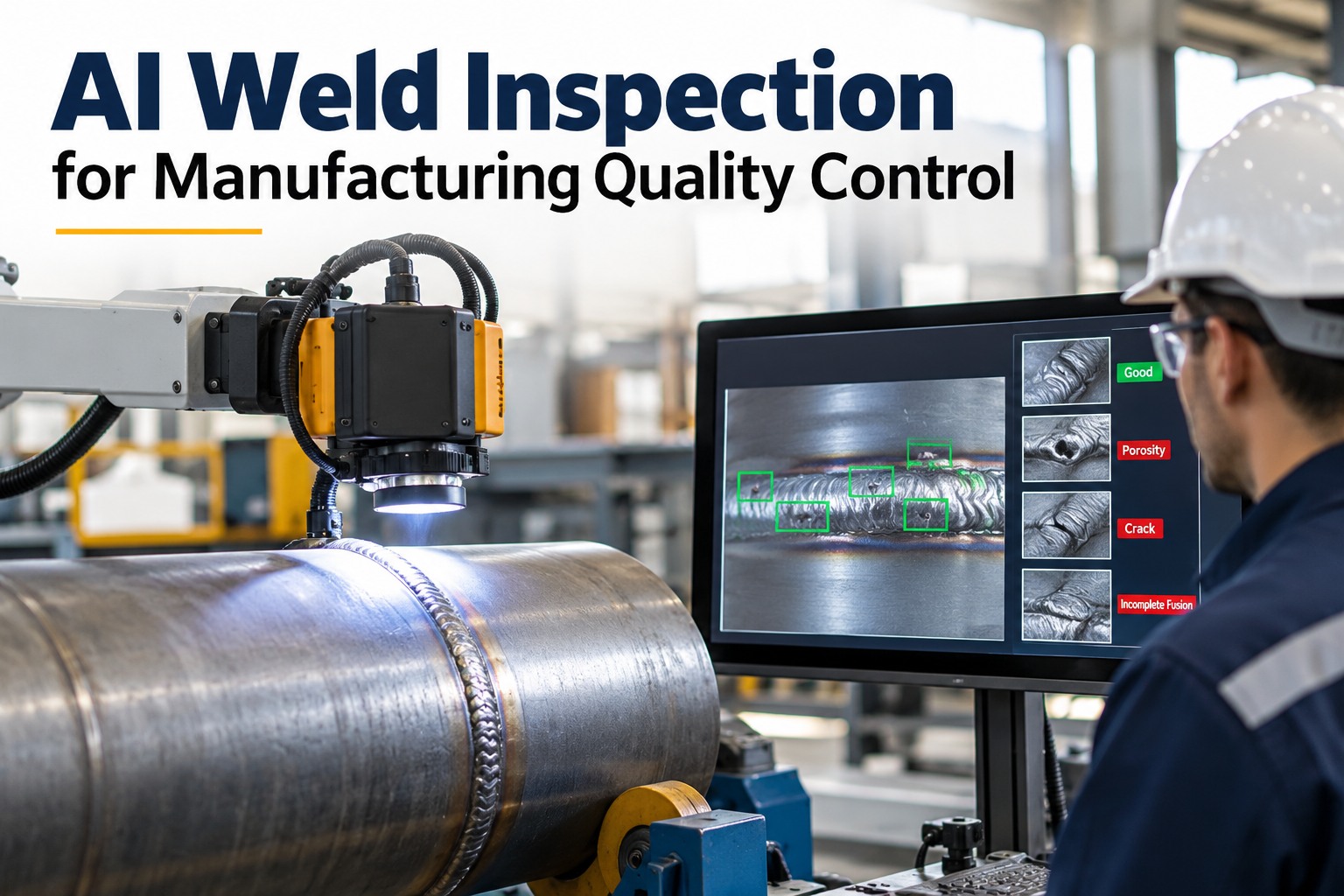
Automatically detects porosity, incomplete fusion, undercut, and spatter on weld seams. Handles reflective and variable surfaces where traditional vision systems consistently fail.
Label & Code Verification
OCR and barcode reading confirm correct labeling, expiry dates, lot numbers, and regulatory markings — essential for pharmaceutical, food safety, and automotive traceability compliance.
Predictive Quality Trending
Correlates defect patterns with machine parameters, material lots, and operator shifts through your CMMS. Predicts when equipment maintenance is needed before quality starts degrading.
See AI inspection linked to maintenance in action. Book a personalized demo and we'll walk through how defect detection triggers automated work orders in Oxmaint.
Where AI Vision Inspection Delivers the Biggest Impact
Different manufacturing sectors face unique quality challenges — from micron-level solder joints in electronics to safety-critical welds in aerospace. AI vision adapts to each, and Oxmaint's CMMS ensures that inspection insights translate into industry-specific maintenance workflows.
InspectsComposite layup, fastener verification, NDT support
EquipmentAutoclaves, CNC routers, fastening systems
CMMS ValueTraceability documentation, compliance records
Quantified Results: What the Numbers Actually Show
AI vision inspection paired with CMMS integration doesn't just improve one metric — it creates a compounding effect across quality, maintenance, and operational costs. Here's what manufacturers are consistently reporting from real-world deployments.
83%Fewer defects escape to customers
50%Reduction in unplanned downtime via predictive triggers
60-75%Lower quality-related costs with CMMS-connected inspection
374%Average 3-year ROI with 6-12 month payback
Model the ROI for your specific operation. Create a free Oxmaint account and our team will help calculate your projected savings from AI vision + CMMS integration.
A phased rollout minimizes risk while proving value fast. Most manufacturers complete initial pilot deployment in 10-16 weeks, with AI models continuously improving from day one as they learn your specific products and defect patterns.
Phase 1
Discovery & Scoping
Week 1-3
Identify highest-impact inspection points. Assess infrastructure readiness — network bandwidth, mounting locations, integration with existing MES/ERP. Define success metrics and ROI targets.
Phase 2
Hardware & Data Collection
Week 4-7
Install cameras, lighting, and edge computing at pilot stations. Collect training images across all product variants, lighting conditions, and production scenarios. Configure Oxmaint CMMS integration points.
Phase 3
AI Training & Validation
Week 8-12
Train deep learning models with production images. Validate accuracy against manual inspection baseline. Test automated work order generation and maintenance workflow triggers in Oxmaint.
Phase 4
Go-Live & Scale
Week 13+
Activate production monitoring with continuous AI learning. Measure performance, refine thresholds, and expand to additional inspection points across your facility. Schedule a consultation to get a customized deployment plan.
AI vision doesn't just find defects — it tells you why they're happening. When that intelligence feeds directly into your CMMS, you stop chasing quality problems and start preventing them. That's the shift from inspection to intelligence.
— Manufacturing Quality Engineering Director
Turn Every Inspection Into a Maintenance Insight
Your quality cameras are only as powerful as the system behind them. Oxmaint connects AI vision inspection data to automated maintenance workflows — defect patterns become work orders, equipment health is tracked in real time, and your factory gets smarter with every part inspected.
How does AI vision inspection connect with Oxmaint's CMMS?
AI vision systems connect to Oxmaint through standard industrial protocols including REST APIs, Modbus, and OPC-UA. When the vision system detects a defect pattern indicating equipment degradation, Oxmaint automatically generates a prioritized work order with defect images attached, assigns it to the right technician, and tracks resolution. Sign up for a free account to explore these integration capabilities.
How many training images do AI vision models need?
Modern self-supervised learning systems can build production-grade models with as few as 5-10 images per defect type. Advanced data augmentation techniques further reduce sample requirements. Once deployed, the AI continues learning from live production data, so accuracy improves continuously without manual retraining.
Will AI cameras work with our existing production equipment?
Yes. AI vision cameras mount inline at inspection stations without modifying conveyors or production equipment. They connect through standard industrial protocols, and most installations are completed during scheduled maintenance windows with minimal production impact. Book a demo to discuss integration with your specific setup.
What kind of ROI can we realistically expect?
Industry data shows an average three-year ROI of 374% with payback periods of 6-12 months. Returns come from reduced scrap, fewer customer returns, lower inspection labor costs, and decreased unplanned downtime through predictive maintenance triggers. The compounding effect of connecting quality and maintenance data typically exceeds standalone deployments of either system.
Which industries see the fastest payback from AI vision + CMMS?
Automotive, electronics, pharmaceutical, food and beverage, steel, and aerospace manufacturers report the strongest returns — particularly where defect costs are high, inspection creates production bottlenecks, or regulatory traceability is mandated. Schedule a consultation to discuss your industry-specific quality challenges.